February 24, 2026


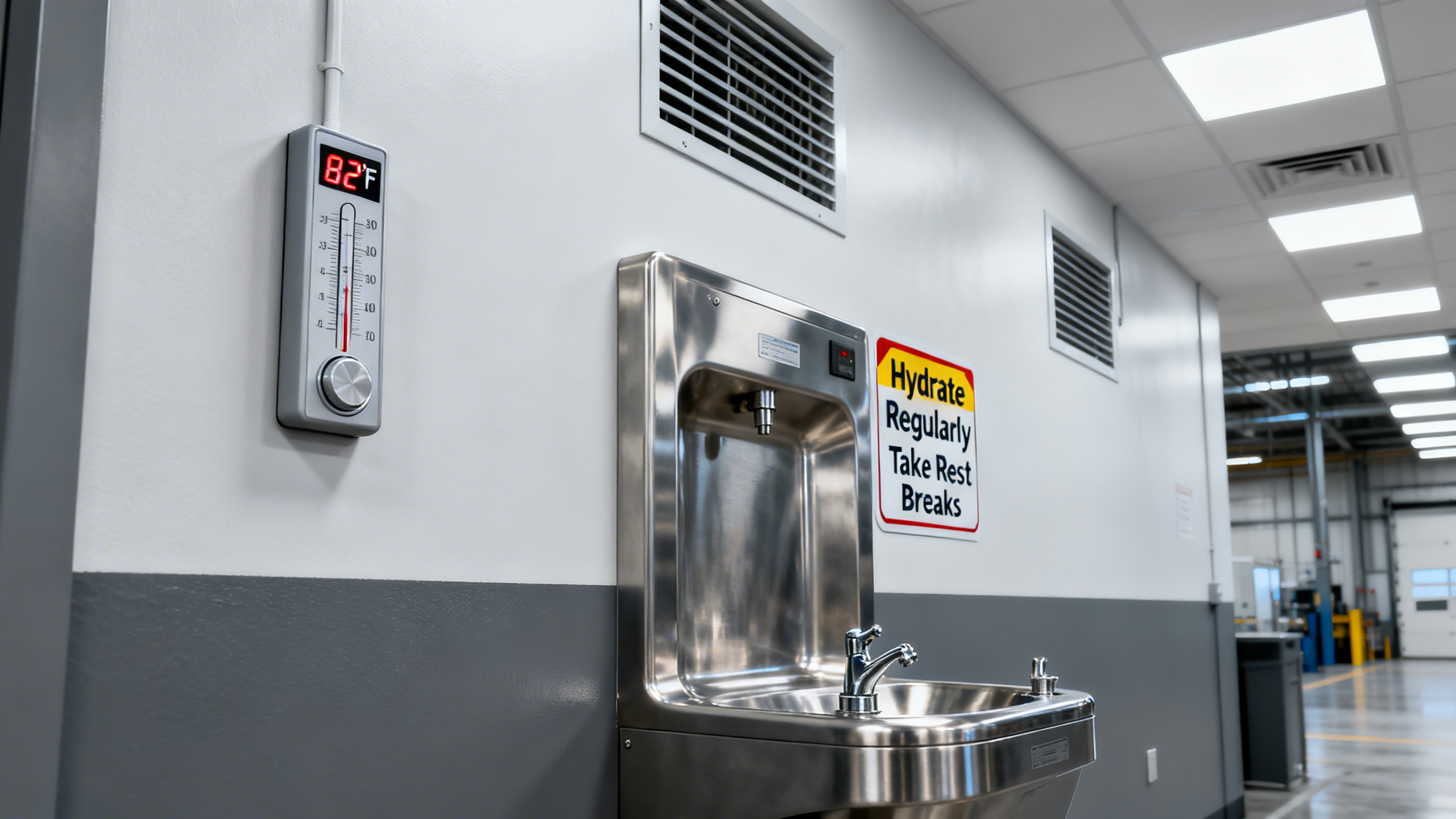
In California, heat illness compliance is no longer just a “summer, outdoor crew” issue. Indoor cultivation and extraction operations can create year-round heat stress due to lighting loads, compressed production tempo, humidity control, and task-specific PPE. At the same time, federal OSHA is actively moving toward a nationwide heat rule that covers indoor and outdoor work settings—meaning the “what will inspectors ask for?” list is getting longer and more standardized.
This article maps current federal OSHA heat emphasis and rulemaking activity to California’s enforceable requirements—especially California’s newer indoor heat illness prevention rule—and translates both into practical controls and documentation strategies tailored to cultivation, processing, and extraction environments.
Focus keyword: OSHA heat illness cannabis cultivation
Informational only: This content is for general compliance education and is not legal advice.
Even when ambient outdoor temperatures are moderate, indoor operations can produce heat stress profiles similar to industrial bakeries or foundries—just with different sources:
From an inspector’s perspective, these are not “comfort” issues—they are potential triggers for heat injury and illness prevention duties.
Federal OSHA’s proposed standard is titled Heat Injury and Illness Prevention in Outdoor and Indoor Work Settings. The NPRM was published in the Federal Register on August 30, 2024, and OSHA conducted an informal public hearing from June 16 through July 2, 2025. OSHA’s post-hearing comment period for participants who filed a Notice of Intention to Appear ended October 30, 2025.
Even before a final federal rule is issued, OSHA has repeatedly emphasized preventable failures found in heat fatality investigations—like lack of water, rest breaks, cooling measures, training, and acclimatization.
OSHA’s National Emphasis Program (NEP) on Outdoor and Indoor Heat-Related Hazards is an enforcement accelerator. OSHA has extended the NEP through April 8, 2026 (or until superseded). Under the NEP, compliance officers are directed to review injury/illness records, interview workers, and evaluate whether an employer has a heat program.
For California operators, the NEP matters because:
California is a bellwether because it has enforceable heat rules—not just guidance.
If you have any outdoor work—loading docks, waste runs, field work, security patrols, maintenance yards—California’s outdoor heat standard applies.
Key concepts inspectors commonly anchor to include:
California’s indoor heat illness prevention rule is codified at 8 CCR §3396.
While the full rule has nuances and exceptions, operators should build around the practical enforcement reality:
Because indoor operations can spike above thresholds during “normal” operations (lights-on cycles, harvest days, equipment faults), a plan that only addresses rare heat waves will look incomplete.
Under both federal emphasis and California’s standards, expect inspectors to focus on whether you have a repeatable system rather than ad hoc responses.
California heat programs are often integrated into the Injury and Illness Prevention Program (IIPP), but the key is that procedures are effective and site-specific.
Cal/OSHA provides sample procedures and tools (useful as a baseline, but you must customize):
For indoor operations, your written plan should clearly describe:
Inspectors routinely look for training that covers:
Federal OSHA’s “Water. Rest. Shade.” campaign is still a baseline reference point:
Heat illness cases frequently involve new employees or employees returning after time away. Your program should define:
Even though acclimatization is often discussed in outdoor terms, indoor operations have the same physiology problem—especially when a worker moves from a cool area (office, break room) to a hot/humid production zone.
NIOSH guidance is widely used as a scientific basis for hydration and acclimatization practices:
Indoor compliance increasingly hinges on whether you can show what conditions were. Practical expectations include:
For multi-room facilities, consider zoning the monitoring strategy:
Inspectors may review OSHA 300/301 logs and first-aid records under federal emphasis programs. You should be able to produce:
Important: document facts and controls, not speculation. If you need privilege-sensitive investigations, coordinate with counsel. The goal is to improve safety without creating unnecessary “admissions.”
California and OSHA both emphasize feasible engineering controls as the preferred layer. For indoor operators, the most defensible plans are those that can point to engineering design choices and maintenance evidence.
Indoor cultivation spaces often experience “designed-for-average” HVAC that fails on:
A strong program includes:
Where radiant heat is significant, prioritize:
If PPE is required that restricts heat removal, treat that zone as higher risk and consider stricter triggers.
“Cool-down areas” should be truly restorative:
High humidity reduces evaporative cooling. For indoor operations:
Engineering controls rarely eliminate all risk. Administrative controls are where many facilities fail because they are informal or inconsistently applied.
Define:
Even if California’s indoor rule doesn’t mirror outdoor “high-heat procedures” wording, inspectors will still expect a trigger-based approach tied to measurements.
Make it easy to comply:
OSHA guidance commonly encourages frequent water intake (e.g., about a cup every 15–20 minutes in heat), and Cal/OSHA training language for outdoor settings emphasizes frequent small quantities.
Heat compliance fails when:
Your plan should include:
Use the following as a repeatable checklist for each facility, room, or department. Treat this as a living document and revisit it after equipment changes or workflow shifts.
You can build strong records while staying disciplined:
If you anticipate litigation or complex investigations, consult qualified counsel about privilege and documentation structure.
If you want help turning these requirements into a facility-specific heat illness program—complete with room-based risk mapping, documentation workflows, and audit-ready checklists—use https://cannabisregulations.ai/ to support your cannabis compliance efforts, reduce inspection risk, and keep your teams safe.
In California, heat illness compliance is no longer just a “summer, outdoor crew” issue. Indoor cultivation and extraction operations can create year-round heat stress due to lighting loads, compressed production tempo, humidity control, and task-specific PPE. At the same time, federal OSHA is actively moving toward a nationwide heat rule that covers indoor and outdoor work settings—meaning the “what will inspectors ask for?” list is getting longer and more standardized.
This article maps current federal OSHA heat emphasis and rulemaking activity to California’s enforceable requirements—especially California’s newer indoor heat illness prevention rule—and translates both into practical controls and documentation strategies tailored to cultivation, processing, and extraction environments.
Focus keyword: OSHA heat illness cannabis cultivation
Informational only: This content is for general compliance education and is not legal advice.
Even when ambient outdoor temperatures are moderate, indoor operations can produce heat stress profiles similar to industrial bakeries or foundries—just with different sources:
From an inspector’s perspective, these are not “comfort” issues—they are potential triggers for heat injury and illness prevention duties.
Federal OSHA’s proposed standard is titled Heat Injury and Illness Prevention in Outdoor and Indoor Work Settings. The NPRM was published in the Federal Register on August 30, 2024, and OSHA conducted an informal public hearing from June 16 through July 2, 2025. OSHA’s post-hearing comment period for participants who filed a Notice of Intention to Appear ended October 30, 2025.
Even before a final federal rule is issued, OSHA has repeatedly emphasized preventable failures found in heat fatality investigations—like lack of water, rest breaks, cooling measures, training, and acclimatization.
OSHA’s National Emphasis Program (NEP) on Outdoor and Indoor Heat-Related Hazards is an enforcement accelerator. OSHA has extended the NEP through April 8, 2026 (or until superseded). Under the NEP, compliance officers are directed to review injury/illness records, interview workers, and evaluate whether an employer has a heat program.
For California operators, the NEP matters because:
California is a bellwether because it has enforceable heat rules—not just guidance.
If you have any outdoor work—loading docks, waste runs, field work, security patrols, maintenance yards—California’s outdoor heat standard applies.
Key concepts inspectors commonly anchor to include:
California’s indoor heat illness prevention rule is codified at 8 CCR §3396.
While the full rule has nuances and exceptions, operators should build around the practical enforcement reality:
Because indoor operations can spike above thresholds during “normal” operations (lights-on cycles, harvest days, equipment faults), a plan that only addresses rare heat waves will look incomplete.
Under both federal emphasis and California’s standards, expect inspectors to focus on whether you have a repeatable system rather than ad hoc responses.
California heat programs are often integrated into the Injury and Illness Prevention Program (IIPP), but the key is that procedures are effective and site-specific.
Cal/OSHA provides sample procedures and tools (useful as a baseline, but you must customize):
For indoor operations, your written plan should clearly describe:
Inspectors routinely look for training that covers:
Federal OSHA’s “Water. Rest. Shade.” campaign is still a baseline reference point:
Heat illness cases frequently involve new employees or employees returning after time away. Your program should define:
Even though acclimatization is often discussed in outdoor terms, indoor operations have the same physiology problem—especially when a worker moves from a cool area (office, break room) to a hot/humid production zone.
NIOSH guidance is widely used as a scientific basis for hydration and acclimatization practices:
Indoor compliance increasingly hinges on whether you can show what conditions were. Practical expectations include:
For multi-room facilities, consider zoning the monitoring strategy:
Inspectors may review OSHA 300/301 logs and first-aid records under federal emphasis programs. You should be able to produce:
Important: document facts and controls, not speculation. If you need privilege-sensitive investigations, coordinate with counsel. The goal is to improve safety without creating unnecessary “admissions.”
California and OSHA both emphasize feasible engineering controls as the preferred layer. For indoor operators, the most defensible plans are those that can point to engineering design choices and maintenance evidence.
Indoor cultivation spaces often experience “designed-for-average” HVAC that fails on:
A strong program includes:
Where radiant heat is significant, prioritize:
If PPE is required that restricts heat removal, treat that zone as higher risk and consider stricter triggers.
“Cool-down areas” should be truly restorative:
High humidity reduces evaporative cooling. For indoor operations:
Engineering controls rarely eliminate all risk. Administrative controls are where many facilities fail because they are informal or inconsistently applied.
Define:
Even if California’s indoor rule doesn’t mirror outdoor “high-heat procedures” wording, inspectors will still expect a trigger-based approach tied to measurements.
Make it easy to comply:
OSHA guidance commonly encourages frequent water intake (e.g., about a cup every 15–20 minutes in heat), and Cal/OSHA training language for outdoor settings emphasizes frequent small quantities.
Heat compliance fails when:
Your plan should include:
Use the following as a repeatable checklist for each facility, room, or department. Treat this as a living document and revisit it after equipment changes or workflow shifts.
You can build strong records while staying disciplined:
If you anticipate litigation or complex investigations, consult qualified counsel about privilege and documentation structure.
If you want help turning these requirements into a facility-specific heat illness program—complete with room-based risk mapping, documentation workflows, and audit-ready checklists—use https://cannabisregulations.ai/ to support your cannabis compliance efforts, reduce inspection risk, and keep your teams safe.
