

February 25, 2026


In 2026, packaging teams for edible and beverage brands are being pulled into a “redesign now” cycle—not because their products changed, but because retail scanning is changing.
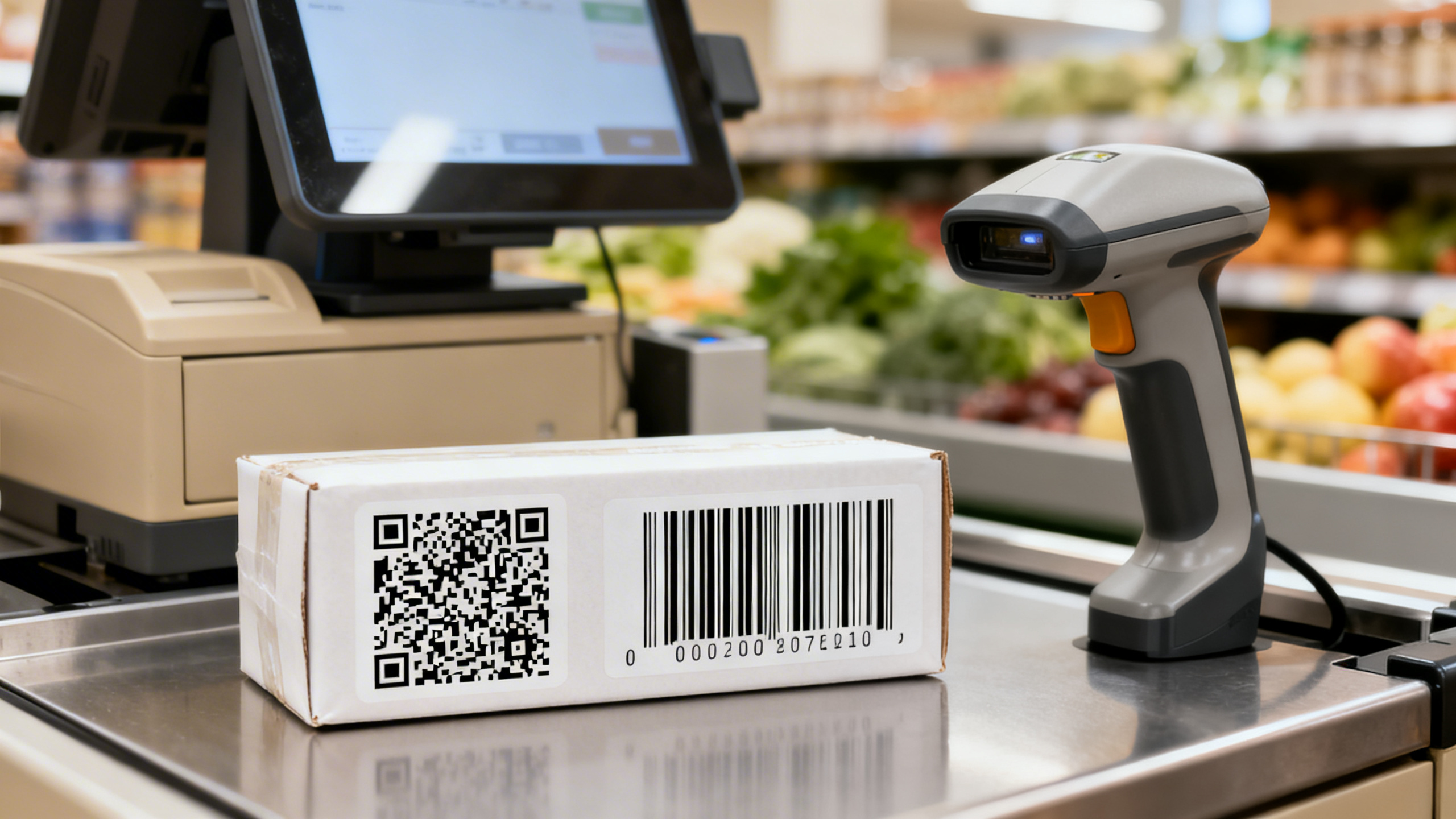
The U.S. retail ecosystem is moving from 1D UPCs to 2D barcodes that can be scanned at checkout and also unlock rich, dynamic product data. GS1 US refers to the industry target as Sunrise 2027: the goal is that by the end of 2027, retailers’ point-of-sale (POS) systems can scan and process 2D barcodes (e.g., QR) in addition to (and eventually instead of) traditional UPCs. GS1 US has also published tools like the Barcode Capabilities Test Kit to help retailers and solution providers assess readiness for scanning and processing 2D symbols at POS.
For cannabinoid and hemp-derived brands, the timing matters. You’re uniquely exposed to:
Done right, a GS1 Digital Link strategy can replace the chaos of “random QR codes everywhere” with a single, standards-based 2D barcode that works across checkout, inventory, compliance, and consumer transparency.
This article is informational only and not legal advice.
The reason 2026 matters is not because 2027 is tomorrow—it’s because packaging cycles are slow.
If you’re a beverage or edible brand, you may have:
GS1 US describes Sunrise 2027 as an industry transition to ensure 2D barcodes can be scanned at retail POS by the end of 2027. During the transition, many brands will carry dual marking (a classic UPC plus a 2D barcode), then later converge to a single multipurpose 2D symbol as scanning capability becomes universal.
Primary sources:
A normal QR code typically encodes a plain URL (or arbitrary text). A GS1 Digital Link QR code encodes a structured URL that contains GS1 identifiers (like a GTIN) using a standardized syntax. That structure is the point: it lets scanners, apps, and backend systems interpret the same scan consistently.
GS1 frames this as a path to “one product, one barcode”—a single multipurpose code that can support retail checkout and also connect to digital content such as certifications, instructions for use, traceability data, and more.
Primary sources:
GS1 Digital Link uses path segments (and optionally query parameters) to express identifiers and attributes. Common pieces include:
A canonical example format looks like:
https://id.gs1.org/01/{gtin}/10/{lot}/17/{expiry}
You can use GS1’s identifier domain (id.gs1.org) or your own brand domain—what matters is the syntax and resolvability.
Many consumer products can treat the 2D migration as a “future retail tech upgrade.” Cannabinoid and hemp-derived products often can’t—because regulators, retailers, and platforms increasingly expect batch-level accountability and rapid access to lab results.
Across the U.S., it’s common for retailers (and some state programs) to expect a consumer-facing way to access lab results.
At the same time, some regulators draw a bright line between required on-pack labeling and off-pack digital content.
For example, California’s Department of Cannabis Control (DCC) labeling checklist for manufactured products states that required “supplemental labeling must be affixed” and that “QR codes, websites, and other methods that separate the information from the product are not acceptable types of supplemental labeling.” In other words: a QR experience can be valuable, but it generally can’t replace required on-pack statements.
Primary source (California DCC labeling checklist PDF, revised June 2024):
When a stop-sale or recall hits, speed matters:
2D barcodes powered by GS1 can carry batch/lot and expiration data in a machine-readable way, enabling faster identification of impacted inventory.
GS1 US explicitly notes that 2D barcodes can include information like batch and lot numbers and expiration date, and can provide access to recall notices.
Primary source:
In higher-risk categories, brands face:
A GS1 Digital Link approach helps by standardizing the identifier (GTIN) and optionally including batch/lot attributes in the scan payload, which can reduce ambiguity and support more robust validation on the landing page.
Many retailers are upgrading, but POS readiness is not uniform. The practical 2026 approach for many brands is:
This is consistent with the broader Sunrise 2027 transition approach: dual marking in the interim, then consolidation later as retailers achieve full 2D processing.
If you want to validate scanner and system behavior, GS1’s retail test materials can help teams understand not just whether a barcode scans, but whether the data is processed correctly downstream.
Primary source:
Below is an implementation blueprint aligned to what typically breaks in real-world rollouts: identification strategy, variable data, secure COA linking, and governance.
Before you generate a single 2D barcode, align internally on GTIN allocation:
If you get GTIN strategy wrong, your “one barcode” future becomes a multi-year cleanup.
Where to start:
For cannabinoid and hemp products, a common minimum viable payload is:
Then, when your operations are ready (or where it’s high value), add:
Be realistic: adding variable data means your print workflow must support dynamic 2D codes (and your QA must verify them).
A GS1 Digital Link scan usually routes through a resolver or your own web service that can:
For regulated products, treat the landing page like an extension of your label. That means:
A common mistake is linking QR codes to a static PDF in a public folder. That creates easy attack paths:
Better patterns (informational considerations):
You can also support a recall workflow by returning a “do not use / stop sale” status for specific lots while keeping the GTIN valid.
A 2D barcode can become a tracking surface if you’re not careful.
Practical privacy-by-design moves:
Even if you’re not thinking “privacy law,” your retail partners and regulators may be.
Your QR landing page is marketing real estate—but it’s also compliance risk.
Two key realities:
1) Regulators may view linked content as part of your labeling/marketing depending on context.2) Health-related claims require proper substantiation standards in advertising.
The U.S. Federal Trade Commission (FTC) Health Products Compliance Guidance emphasizes that health benefit claims must be supported by competent and reliable scientific evidence.
Primary sources:
Also note: FDA warning letters in the CBD space have repeatedly focused on drug/disease claims</strong) made on websites and other marketing channels, reinforcing that “digital” content can trigger enforcement when it crosses into prohibited claims.
Example warning letter index (CBD Social, 2022):
A well-implemented 2D barcode strategy can reduce compliance cost and risk.
When enforcement actions or internal quality holds happen, resolving by lot means you can:
Encoding lot/batch into the barcode and enforcing matching server-side makes it harder for bad actors to present the wrong COA for a product.
Instead of printing:
…you can converge to a single GS1 Digital Link barcode that supports multiple experiences while staying standards-aligned.
If you’re making label decisions in 2026, prioritize these questions:
GS1 Digital Link, 2D barcodes, COA access, and multi-state labeling are converging into a single reality: your packaging is becoming an interface. For cannabinoid and hemp products, that interface must satisfy both retail POS readiness and regulatory compliance.
Use https://www.cannabisregulations.ai/ to:
If you’re redesigning labels in 2026, the best time to align barcode strategy, COA workflows, and claims governance is before you lock print plates.
In 2026, packaging teams for edible and beverage brands are being pulled into a “redesign now” cycle—not because their products changed, but because retail scanning is changing.
The U.S. retail ecosystem is moving from 1D UPCs to 2D barcodes that can be scanned at checkout and also unlock rich, dynamic product data. GS1 US refers to the industry target as Sunrise 2027: the goal is that by the end of 2027, retailers’ point-of-sale (POS) systems can scan and process 2D barcodes (e.g., QR) in addition to (and eventually instead of) traditional UPCs. GS1 US has also published tools like the Barcode Capabilities Test Kit to help retailers and solution providers assess readiness for scanning and processing 2D symbols at POS.
For cannabinoid and hemp-derived brands, the timing matters. You’re uniquely exposed to:
Done right, a GS1 Digital Link strategy can replace the chaos of “random QR codes everywhere” with a single, standards-based 2D barcode that works across checkout, inventory, compliance, and consumer transparency.
This article is informational only and not legal advice.
The reason 2026 matters is not because 2027 is tomorrow—it’s because packaging cycles are slow.
If you’re a beverage or edible brand, you may have:
GS1 US describes Sunrise 2027 as an industry transition to ensure 2D barcodes can be scanned at retail POS by the end of 2027. During the transition, many brands will carry dual marking (a classic UPC plus a 2D barcode), then later converge to a single multipurpose 2D symbol as scanning capability becomes universal.
Primary sources:
A normal QR code typically encodes a plain URL (or arbitrary text). A GS1 Digital Link QR code encodes a structured URL that contains GS1 identifiers (like a GTIN) using a standardized syntax. That structure is the point: it lets scanners, apps, and backend systems interpret the same scan consistently.
GS1 frames this as a path to “one product, one barcode”—a single multipurpose code that can support retail checkout and also connect to digital content such as certifications, instructions for use, traceability data, and more.
Primary sources:
GS1 Digital Link uses path segments (and optionally query parameters) to express identifiers and attributes. Common pieces include:
A canonical example format looks like:
https://id.gs1.org/01/{gtin}/10/{lot}/17/{expiry}
You can use GS1’s identifier domain (id.gs1.org) or your own brand domain—what matters is the syntax and resolvability.
Many consumer products can treat the 2D migration as a “future retail tech upgrade.” Cannabinoid and hemp-derived products often can’t—because regulators, retailers, and platforms increasingly expect batch-level accountability and rapid access to lab results.
Across the U.S., it’s common for retailers (and some state programs) to expect a consumer-facing way to access lab results.
At the same time, some regulators draw a bright line between required on-pack labeling and off-pack digital content.
For example, California’s Department of Cannabis Control (DCC) labeling checklist for manufactured products states that required “supplemental labeling must be affixed” and that “QR codes, websites, and other methods that separate the information from the product are not acceptable types of supplemental labeling.” In other words: a QR experience can be valuable, but it generally can’t replace required on-pack statements.
Primary source (California DCC labeling checklist PDF, revised June 2024):
When a stop-sale or recall hits, speed matters:
2D barcodes powered by GS1 can carry batch/lot and expiration data in a machine-readable way, enabling faster identification of impacted inventory.
GS1 US explicitly notes that 2D barcodes can include information like batch and lot numbers and expiration date, and can provide access to recall notices.
Primary source:
In higher-risk categories, brands face:
A GS1 Digital Link approach helps by standardizing the identifier (GTIN) and optionally including batch/lot attributes in the scan payload, which can reduce ambiguity and support more robust validation on the landing page.
Many retailers are upgrading, but POS readiness is not uniform. The practical 2026 approach for many brands is:
This is consistent with the broader Sunrise 2027 transition approach: dual marking in the interim, then consolidation later as retailers achieve full 2D processing.
If you want to validate scanner and system behavior, GS1’s retail test materials can help teams understand not just whether a barcode scans, but whether the data is processed correctly downstream.
Primary source:
Below is an implementation blueprint aligned to what typically breaks in real-world rollouts: identification strategy, variable data, secure COA linking, and governance.
Before you generate a single 2D barcode, align internally on GTIN allocation:
If you get GTIN strategy wrong, your “one barcode” future becomes a multi-year cleanup.
Where to start:
For cannabinoid and hemp products, a common minimum viable payload is:
Then, when your operations are ready (or where it’s high value), add:
Be realistic: adding variable data means your print workflow must support dynamic 2D codes (and your QA must verify them).
A GS1 Digital Link scan usually routes through a resolver or your own web service that can:
For regulated products, treat the landing page like an extension of your label. That means:
A common mistake is linking QR codes to a static PDF in a public folder. That creates easy attack paths:
Better patterns (informational considerations):
You can also support a recall workflow by returning a “do not use / stop sale” status for specific lots while keeping the GTIN valid.
A 2D barcode can become a tracking surface if you’re not careful.
Practical privacy-by-design moves:
Even if you’re not thinking “privacy law,” your retail partners and regulators may be.
Your QR landing page is marketing real estate—but it’s also compliance risk.
Two key realities:
1) Regulators may view linked content as part of your labeling/marketing depending on context.2) Health-related claims require proper substantiation standards in advertising.
The U.S. Federal Trade Commission (FTC) Health Products Compliance Guidance emphasizes that health benefit claims must be supported by competent and reliable scientific evidence.
Primary sources:
Also note: FDA warning letters in the CBD space have repeatedly focused on drug/disease claims</strong) made on websites and other marketing channels, reinforcing that “digital” content can trigger enforcement when it crosses into prohibited claims.
Example warning letter index (CBD Social, 2022):
A well-implemented 2D barcode strategy can reduce compliance cost and risk.
When enforcement actions or internal quality holds happen, resolving by lot means you can:
Encoding lot/batch into the barcode and enforcing matching server-side makes it harder for bad actors to present the wrong COA for a product.
Instead of printing:
…you can converge to a single GS1 Digital Link barcode that supports multiple experiences while staying standards-aligned.
If you’re making label decisions in 2026, prioritize these questions:
GS1 Digital Link, 2D barcodes, COA access, and multi-state labeling are converging into a single reality: your packaging is becoming an interface. For cannabinoid and hemp products, that interface must satisfy both retail POS readiness and regulatory compliance.
Use https://www.cannabisregulations.ai/ to:
If you’re redesigning labels in 2026, the best time to align barcode strategy, COA workflows, and claims governance is before you lock print plates.
