


March 19, 2026


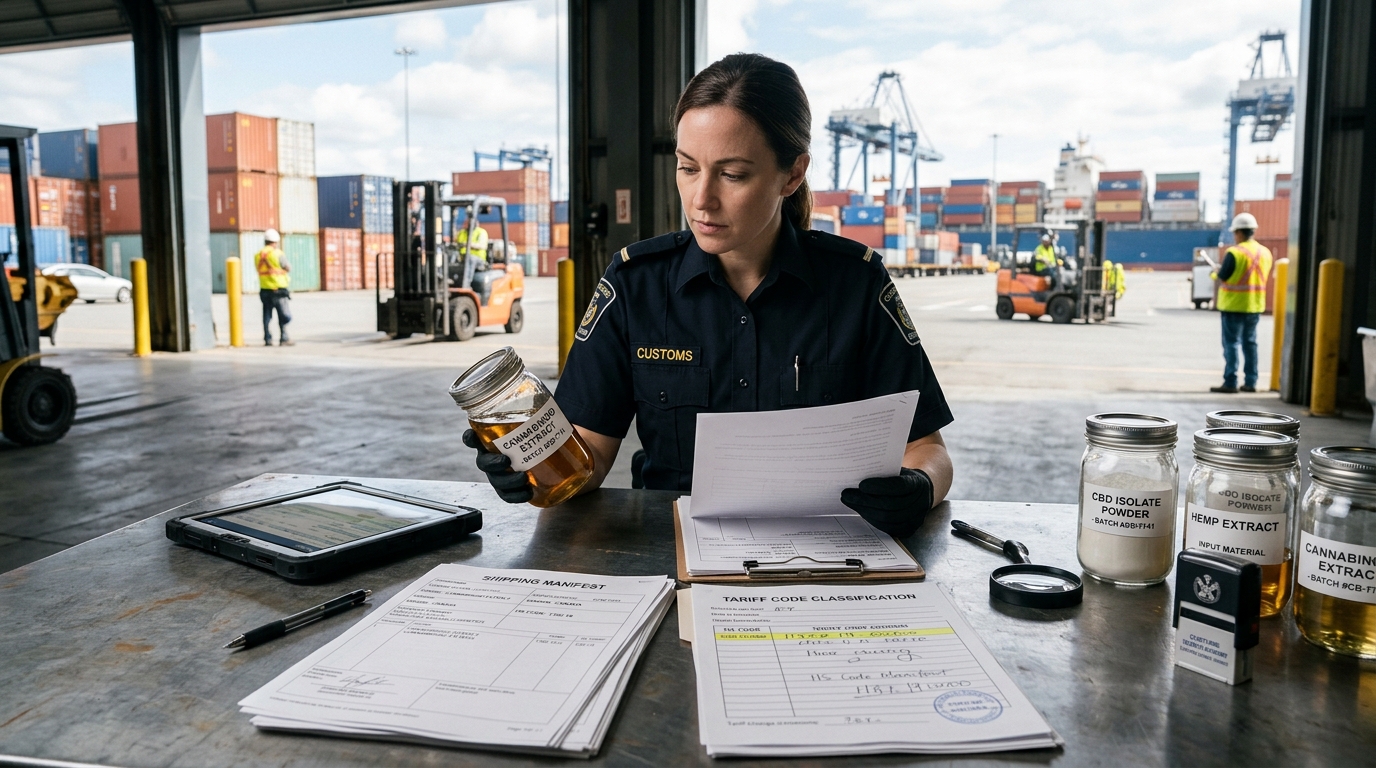
Classification errors are one of the most preventable causes of border disruption in cannabinoid supply chains. Importers focus on sourcing, price, and lead times, then underestimate how much hinges on precise product descriptions, HTS logic, and supporting records. When customs officers see ambiguity, they ask more questions, and in high-scrutiny categories those questions can quickly become detentions, seizures, or costly delays. This guide explains how to tighten classification practices for cannabinoid inputs before shipments move.
Informational only. This content is not legal advice.
Cannabinoid supply chains include ingredients, intermediates, finished consumer products, packaging materials, and hardware components. Each category can carry different classification logic and documentation expectations. Problems arise when teams reuse one broad code across multiple product types or rely on supplier shorthand that is too vague for customs review.
Classification work should start with official resources and documented rationale, not assumptions. Practical starting points include CBP informed compliance publications and the USITC tariff search tool. Broader legal context on evolving hemp standards can also affect risk posture and should be tracked in policy workflows. See CBP informed compliance publications, USITC HTS search, and this federal hemp redefinition article.
Most misclassification starts before tariff analysis. If internal product records are inconsistent, the broker receives contradictory data and classification quality drops. Create a standardized taxonomy that distinguishes cannabinoid inputs from finished products and separates packaging and hardware from chemical or botanical materials.
Each SKU should have one controlled product definition record that includes composition, physical form, intended use, and manufacturing stage. Classification teams should not rely on marketing names or vendor abbreviations.
Do not treat HTS decisions as hidden broker logic. Internal teams should maintain classification memos that explain why a code was selected, what assumptions were used, and what evidence supports the decision. This memo becomes your first response asset if customs challenges an entry.
When teams document rejected alternatives, they show that the decision was reasoned, not random. That can materially improve credibility in a challenge scenario.
Customs risk rises when core documents describe the same product differently. A strong classification program enforces language consistency across commercial invoices, packing lists, broker instructions, and lab documentation. If one file says "hemp extract" and another says "cannabinoid blend," expect follow-up questions.
Use a pre-entry quality gate where trade compliance reviews high-risk entries before submission. This catches mismatches while corrections are still cheap.
One of the most common errors is applying ingredient logic to non-ingredient items, especially when shipments mix components. Packaging and hardware are often routed through the same procurement channels as cannabinoid ingredients, but classification assumptions should be independent unless facts truly overlap.
If a shipment contains both cannabinoid inputs and hardware, maintain clear segregation in paperwork and internal approvals. Mixed documentation invites broad scrutiny.
Classification quality degrades when ownership is unclear. Procurement may own supplier onboarding, logistics may own shipment timing, brokers may own filing, and legal may own policy interpretation. Without a single accountable function, no one maintains end-to-end consistency.
Define service levels so classification reviews do not become bottlenecks. For example, standard entries reviewed in one business day and new SKU families in three business days with documented escalation for urgent lanes.
Do not wait for a detention notice to identify trouble. Monitor leading indicators that signal control drift.
When these signals appear, trigger a focused remediation sprint: refresh taxonomy records, review classification memos, retrain document preparers, and tighten pre-entry gate checks.
Respond with structure and speed. Provide a concise narrative of product identity, intended use, and selected classification rationale, then attach your evidence set in indexed order. Avoid argumentative language and focus on factual consistency. If assumptions changed since prior shipments, acknowledge the change and explain corrective steps clearly.
Most importantly, preserve lessons learned. Every challenge should feed back into taxonomy controls, memo templates, and supplier documentation standards so the same error does not repeat.
Teams that institutionalize post-challenge reviews also gain forecasting benefits. Better classification records improve landed-cost planning, reduce surprise fees, and strengthen supplier accountability in cross-border contracts.
HTS code discipline for cannabinoid inputs is a controllable part of import risk. Teams that define products clearly, document classification reasoning, and align paperwork across the shipment lifecycle face fewer surprises at the border. CannabisRegulations.ai helps importers and supply chain teams maintain a source-of-truth for classification research, track policy changes with citations, and organize the documentation needed to support customs-facing decisions with confidence.
Classification errors are one of the most preventable causes of border disruption in cannabinoid supply chains. Importers focus on sourcing, price, and lead times, then underestimate how much hinges on precise product descriptions, HTS logic, and supporting records. When customs officers see ambiguity, they ask more questions, and in high-scrutiny categories those questions can quickly become detentions, seizures, or costly delays. This guide explains how to tighten classification practices for cannabinoid inputs before shipments move.
Informational only. This content is not legal advice.
Cannabinoid supply chains include ingredients, intermediates, finished consumer products, packaging materials, and hardware components. Each category can carry different classification logic and documentation expectations. Problems arise when teams reuse one broad code across multiple product types or rely on supplier shorthand that is too vague for customs review.
Classification work should start with official resources and documented rationale, not assumptions. Practical starting points include CBP informed compliance publications and the USITC tariff search tool. Broader legal context on evolving hemp standards can also affect risk posture and should be tracked in policy workflows. See CBP informed compliance publications, USITC HTS search, and this federal hemp redefinition article.
Most misclassification starts before tariff analysis. If internal product records are inconsistent, the broker receives contradictory data and classification quality drops. Create a standardized taxonomy that distinguishes cannabinoid inputs from finished products and separates packaging and hardware from chemical or botanical materials.
Each SKU should have one controlled product definition record that includes composition, physical form, intended use, and manufacturing stage. Classification teams should not rely on marketing names or vendor abbreviations.
Do not treat HTS decisions as hidden broker logic. Internal teams should maintain classification memos that explain why a code was selected, what assumptions were used, and what evidence supports the decision. This memo becomes your first response asset if customs challenges an entry.
When teams document rejected alternatives, they show that the decision was reasoned, not random. That can materially improve credibility in a challenge scenario.
Customs risk rises when core documents describe the same product differently. A strong classification program enforces language consistency across commercial invoices, packing lists, broker instructions, and lab documentation. If one file says "hemp extract" and another says "cannabinoid blend," expect follow-up questions.
Use a pre-entry quality gate where trade compliance reviews high-risk entries before submission. This catches mismatches while corrections are still cheap.
One of the most common errors is applying ingredient logic to non-ingredient items, especially when shipments mix components. Packaging and hardware are often routed through the same procurement channels as cannabinoid ingredients, but classification assumptions should be independent unless facts truly overlap.
If a shipment contains both cannabinoid inputs and hardware, maintain clear segregation in paperwork and internal approvals. Mixed documentation invites broad scrutiny.
Classification quality degrades when ownership is unclear. Procurement may own supplier onboarding, logistics may own shipment timing, brokers may own filing, and legal may own policy interpretation. Without a single accountable function, no one maintains end-to-end consistency.
Define service levels so classification reviews do not become bottlenecks. For example, standard entries reviewed in one business day and new SKU families in three business days with documented escalation for urgent lanes.
Do not wait for a detention notice to identify trouble. Monitor leading indicators that signal control drift.
When these signals appear, trigger a focused remediation sprint: refresh taxonomy records, review classification memos, retrain document preparers, and tighten pre-entry gate checks.
Respond with structure and speed. Provide a concise narrative of product identity, intended use, and selected classification rationale, then attach your evidence set in indexed order. Avoid argumentative language and focus on factual consistency. If assumptions changed since prior shipments, acknowledge the change and explain corrective steps clearly.
Most importantly, preserve lessons learned. Every challenge should feed back into taxonomy controls, memo templates, and supplier documentation standards so the same error does not repeat.
Teams that institutionalize post-challenge reviews also gain forecasting benefits. Better classification records improve landed-cost planning, reduce surprise fees, and strengthen supplier accountability in cross-border contracts.
HTS code discipline for cannabinoid inputs is a controllable part of import risk. Teams that define products clearly, document classification reasoning, and align paperwork across the shipment lifecycle face fewer surprises at the border. CannabisRegulations.ai helps importers and supply chain teams maintain a source-of-truth for classification research, track policy changes with citations, and organize the documentation needed to support customs-facing decisions with confidence.
