


February 24, 2026


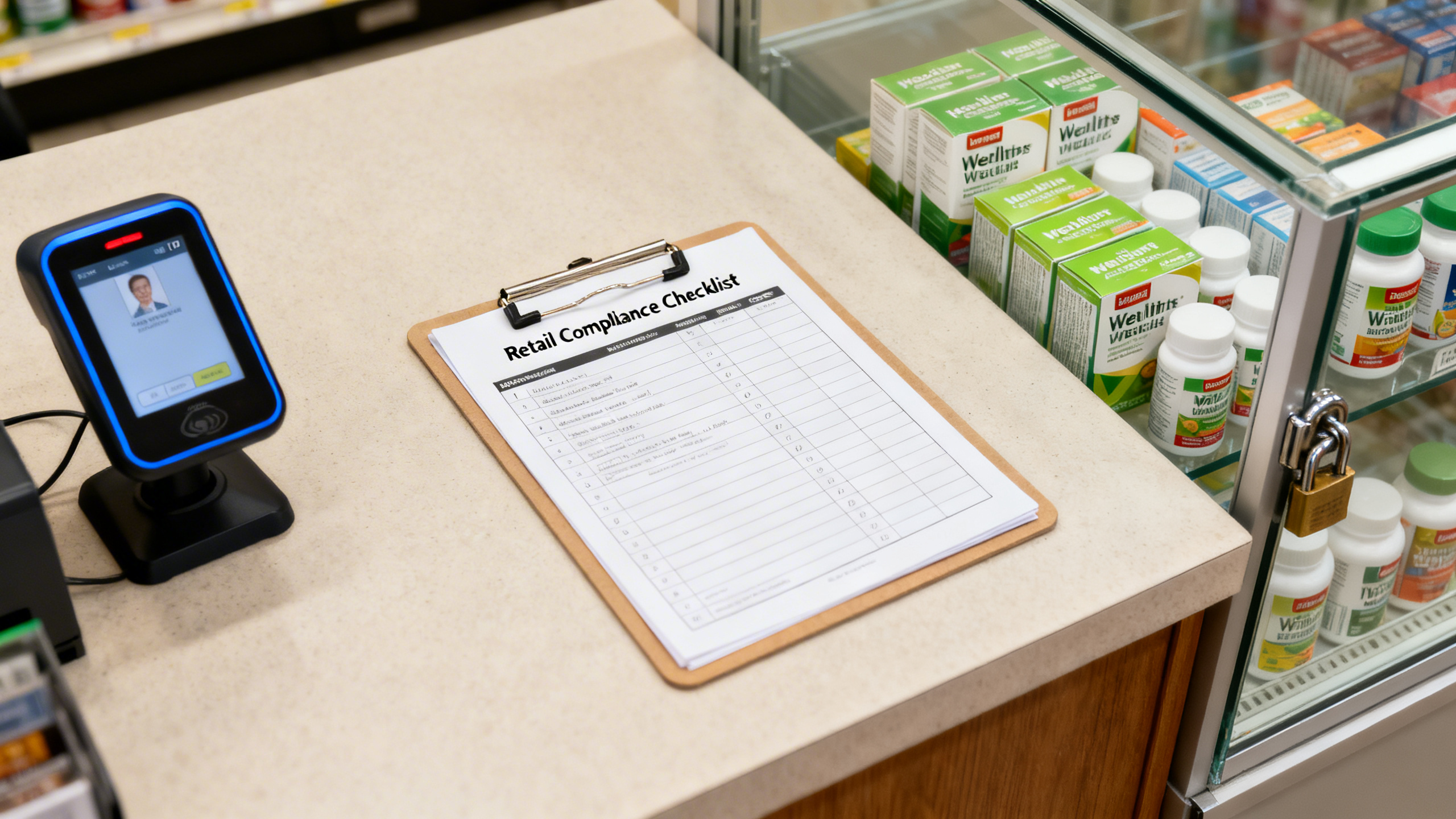
New Jersey’s January 2026 enactment of S4509 is one of the clearest signals yet that the state intends to end the era of loosely controlled “intoxicating hemp” commerce. For operators that built revenue around loophole-era products—especially high-potency edibles, vapes, and other fast-moving SKUs sold through convenience, smoke, and e-commerce channels—S4509 is not a “label tweak.” It is a fundamental compliance reset.
This post breaks down what the New Jersey S4509 hemp law 2026 does, what product categories may still be sold outside the regulated dispensary channel, and what retailers, brands, and distributors should implement immediately: age verification, inventory segregation, COA and labeling retention, and supplier contracting that allocates stop-sale and recall risk.
Informational only: this overview is not legal advice. Always validate interpretations against the statute, agency FAQs, and counsel.
S4509 aligns New Jersey’s hemp-derived cannabinoid rules with updated federal definitions referenced in the bill’s legislative materials and creates state-level prohibitions and controls aimed at products marketed for intoxication.
Two themes drive the framework:
Primary sources:
S4509 was signed January 12, 2026 (per multiple contemporaneous summaries and agency materials). From a compliance perspective, the most important concept is that the law includes a phase-in rather than a single “switch flip,” and it treats beverages differently than other product types.
Even if a specific operational requirement is not yet effective, businesses should treat signing as the start of risk management—auditing inventory, tightening procurement, and preparing to remove or re-route prohibited SKUs.
The CRC explains that before April 13, 2026, products exceeding certain thresholds may still be sold in broader channels; after April 13, 2026, the new definition applies and over-limit products are treated differently. See CRC’s FAQ page for the agency’s interpretation: https://www.nj.gov/cannabis/resources/faqs/intoxicating-hemp/
New Jersey carved out a specific, time-limited regime for beverages. CRC notes that certain Alcoholic Beverage Control (ABC) licensees and licensed retail operators can sell intoxicating hemp beverages until November 13, 2026. After that, beverages over a key threshold are treated as regulated products and must be manufactured/sold through the regulated channel described in the CRC FAQ. Source: CRC FAQ page and PDF.
Operational takeaway: treat beverage SKUs as a separate compliance lane in your item master, because their allowable channels change again in late 2026.
S4509’s commercial impact is best understood as a set of “allowed vs. prohibited” product design rules.
While the exact prohibitions are detailed in the bill text, S4509’s structure—reinforced by agency guidance—signals that New Jersey is aiming to eliminate:
If your 2024–2025 revenue was driven by “intoxicating hemp” gummies, vapes, or concentrates, you should assume S4509 is designed to force those SKUs into a regulated channel—or off the market.
New Jersey’s framework relies heavily on per-serving and per-package/container caps.
From legislative text variants and bill language widely circulated during the legislative process, ingestible categories were discussed with limits such as 0.5 mg per serving and 2.5 mg per package for certain hemp-derived products (see bill text references captured in bill repositories and NJ Legislature bill text pages).
For beverages, the enacted framework and agency interpretations emphasize a different structure. The NJ Legislature bill text indicates that after April 13, 2026, intoxicating hemp beverages are limited to five milligrams per serving or 10 milligrams total THC per container (see: https://www.njleg.state.nj.us/bill-search/2024/S4509/bill-text?f=S5000&n=4509_S2). CRC FAQs further describe how beverages over certain thresholds are treated after November 13, 2026.
Compliance takeaway: your product development and packaging engineering teams should treat New Jersey as a separate spec, not a “Northeast average.” Build SKU logic that can:
S4509’s goal is to narrow who can sell higher-risk items.
The CRC has stated that Class 5 Cannabis Retailers are authorized to sell certain hemp-derived cannabinoid products intended for human consumption, provided the products are labeled in accordance with Commission rules (CRC FAQ PDF, 1/28/26).
That statement matters to two audiences:
Per CRC, the law allows certain ABC licensees (plenary wholesale or plenary retail distribution license holders) to sell intoxicating hemp beverages until November 13, 2026. After that date, beverages exceeding 0.4 mg total THC per container are treated as regulated products under the CRC’s framework, requiring manufacture and sale through the regulated channel described by the agency. Source: https://www.nj.gov/cannabis/resources/faqs/intoxicating-hemp/
Operational takeaway for beverage brands: do not sign multi-year distribution agreements for New Jersey convenience/liquor placement without a sunset clause, conversion pathway, and contingency for November 2026.
Even before the strictest product prohibitions fully bite, S4509’s policy objective is clear: reduce youth access. That means age-gating is not “nice to have.” It becomes the easiest enforcement vector.
Retailers should implement:
Even when a product is technically permitted, an underage sale can trigger rapid enforcement attention and local complaints.
The bill text versions and summaries indicate strong constraints around direct-to-consumer and online sales for intoxicating hemp products (see NJ Legislature bill text page indicating such prohibitions: https://www.njleg.state.nj.us/bill-search/2024/S4509/bill-text?f=S5000&n=4509_I1).
Practical controls to implement:
Compliance takeaway: you want redundant controls (website + carrier/delivery + recipient verification), because enforcement often focuses on whichever layer is weakest.
S4509 creates a compliance environment where “good intentions” won’t protect you. Retailers should be able to prove—quickly—what they sell, why it’s allowed, and where it came from.
Implement physical and system controls:
Why it matters: in an inspection, the fastest way to fail is to have a prohibited item mixed in with allowed inventory.
Keep documentation as if an inspector will ask for it at the counter.
Best practices:
CRC has emphasized labeling compliance for retailers selling hemp-derived cannabinoid products in its FAQ materials (1/28/26 PDF).
S4509 increases the likelihood of:
Protect yourself contractually:
Expect regulators to focus on marketing that appeals to minors.
Operational actions:
S4509 creates multiple pathways for enforcement beyond one single agency.
Likely vectors include:
In practice, the businesses most likely to be targeted early are those that:
New Jersey’s approach is part of a broader Northeast pattern: states are increasingly treating “intoxicating hemp” as something that should either be tightly limited (very low mg caps) or sold only through the regulated channel.
Regional planning considerations:
Business takeaway: build a state-by-state ship-block engine (not a single “Northeast” rule) and maintain a SKU triage list that maps each product to:
S4509 makes several legacy models hard to sustain:
If your margin relied on fast-turn ingestibles and inhalables sold in general retail, the compliance burden and enforcement risk rise sharply. The cost of implementing age-gates, COA tracking, and rigorous SKU governance will increase—and many SKUs may not be eligible at all.
Between direct-to-consumer restrictions for certain product categories and the tightening definition of hemp, “nationwide DTC” models must become jurisdiction-aware, with New Jersey as a hard constraint.
The beverage carve-out can tempt brands into heavy New Jersey distribution. But the regulatory lane changes again on November 13, 2026 (CRC FAQ). Brands should plan now for:
If you sell hemp-derived cannabinoid products in New Jersey today, prioritize these actions immediately:
The headline is simple: New Jersey S4509 hemp law 2026 is designed to replace uncertainty with enforceable product rules and tighter retail controls—especially around youth access. The operators who succeed will be the ones who treat this as a compliance-operations problem, not just a product assortment change.
For ongoing updates, enforcement alerts, and state-by-state compliance workflows, use https://cannabisregulations.ai/ to build repeatable SOPs, ship-block logic, and SKU governance that can scale across New Jersey and the broader region.
New Jersey’s January 2026 enactment of S4509 is one of the clearest signals yet that the state intends to end the era of loosely controlled “intoxicating hemp” commerce. For operators that built revenue around loophole-era products—especially high-potency edibles, vapes, and other fast-moving SKUs sold through convenience, smoke, and e-commerce channels—S4509 is not a “label tweak.” It is a fundamental compliance reset.
This post breaks down what the New Jersey S4509 hemp law 2026 does, what product categories may still be sold outside the regulated dispensary channel, and what retailers, brands, and distributors should implement immediately: age verification, inventory segregation, COA and labeling retention, and supplier contracting that allocates stop-sale and recall risk.
Informational only: this overview is not legal advice. Always validate interpretations against the statute, agency FAQs, and counsel.
S4509 aligns New Jersey’s hemp-derived cannabinoid rules with updated federal definitions referenced in the bill’s legislative materials and creates state-level prohibitions and controls aimed at products marketed for intoxication.
Two themes drive the framework:
Primary sources:
S4509 was signed January 12, 2026 (per multiple contemporaneous summaries and agency materials). From a compliance perspective, the most important concept is that the law includes a phase-in rather than a single “switch flip,” and it treats beverages differently than other product types.
Even if a specific operational requirement is not yet effective, businesses should treat signing as the start of risk management—auditing inventory, tightening procurement, and preparing to remove or re-route prohibited SKUs.
The CRC explains that before April 13, 2026, products exceeding certain thresholds may still be sold in broader channels; after April 13, 2026, the new definition applies and over-limit products are treated differently. See CRC’s FAQ page for the agency’s interpretation: https://www.nj.gov/cannabis/resources/faqs/intoxicating-hemp/
New Jersey carved out a specific, time-limited regime for beverages. CRC notes that certain Alcoholic Beverage Control (ABC) licensees and licensed retail operators can sell intoxicating hemp beverages until November 13, 2026. After that, beverages over a key threshold are treated as regulated products and must be manufactured/sold through the regulated channel described in the CRC FAQ. Source: CRC FAQ page and PDF.
Operational takeaway: treat beverage SKUs as a separate compliance lane in your item master, because their allowable channels change again in late 2026.
S4509’s commercial impact is best understood as a set of “allowed vs. prohibited” product design rules.
While the exact prohibitions are detailed in the bill text, S4509’s structure—reinforced by agency guidance—signals that New Jersey is aiming to eliminate:
If your 2024–2025 revenue was driven by “intoxicating hemp” gummies, vapes, or concentrates, you should assume S4509 is designed to force those SKUs into a regulated channel—or off the market.
New Jersey’s framework relies heavily on per-serving and per-package/container caps.
From legislative text variants and bill language widely circulated during the legislative process, ingestible categories were discussed with limits such as 0.5 mg per serving and 2.5 mg per package for certain hemp-derived products (see bill text references captured in bill repositories and NJ Legislature bill text pages).
For beverages, the enacted framework and agency interpretations emphasize a different structure. The NJ Legislature bill text indicates that after April 13, 2026, intoxicating hemp beverages are limited to five milligrams per serving or 10 milligrams total THC per container (see: https://www.njleg.state.nj.us/bill-search/2024/S4509/bill-text?f=S5000&n=4509_S2). CRC FAQs further describe how beverages over certain thresholds are treated after November 13, 2026.
Compliance takeaway: your product development and packaging engineering teams should treat New Jersey as a separate spec, not a “Northeast average.” Build SKU logic that can:
S4509’s goal is to narrow who can sell higher-risk items.
The CRC has stated that Class 5 Cannabis Retailers are authorized to sell certain hemp-derived cannabinoid products intended for human consumption, provided the products are labeled in accordance with Commission rules (CRC FAQ PDF, 1/28/26).
That statement matters to two audiences:
Per CRC, the law allows certain ABC licensees (plenary wholesale or plenary retail distribution license holders) to sell intoxicating hemp beverages until November 13, 2026. After that date, beverages exceeding 0.4 mg total THC per container are treated as regulated products under the CRC’s framework, requiring manufacture and sale through the regulated channel described by the agency. Source: https://www.nj.gov/cannabis/resources/faqs/intoxicating-hemp/
Operational takeaway for beverage brands: do not sign multi-year distribution agreements for New Jersey convenience/liquor placement without a sunset clause, conversion pathway, and contingency for November 2026.
Even before the strictest product prohibitions fully bite, S4509’s policy objective is clear: reduce youth access. That means age-gating is not “nice to have.” It becomes the easiest enforcement vector.
Retailers should implement:
Even when a product is technically permitted, an underage sale can trigger rapid enforcement attention and local complaints.
The bill text versions and summaries indicate strong constraints around direct-to-consumer and online sales for intoxicating hemp products (see NJ Legislature bill text page indicating such prohibitions: https://www.njleg.state.nj.us/bill-search/2024/S4509/bill-text?f=S5000&n=4509_I1).
Practical controls to implement:
Compliance takeaway: you want redundant controls (website + carrier/delivery + recipient verification), because enforcement often focuses on whichever layer is weakest.
S4509 creates a compliance environment where “good intentions” won’t protect you. Retailers should be able to prove—quickly—what they sell, why it’s allowed, and where it came from.
Implement physical and system controls:
Why it matters: in an inspection, the fastest way to fail is to have a prohibited item mixed in with allowed inventory.
Keep documentation as if an inspector will ask for it at the counter.
Best practices:
CRC has emphasized labeling compliance for retailers selling hemp-derived cannabinoid products in its FAQ materials (1/28/26 PDF).
S4509 increases the likelihood of:
Protect yourself contractually:
Expect regulators to focus on marketing that appeals to minors.
Operational actions:
S4509 creates multiple pathways for enforcement beyond one single agency.
Likely vectors include:
In practice, the businesses most likely to be targeted early are those that:
New Jersey’s approach is part of a broader Northeast pattern: states are increasingly treating “intoxicating hemp” as something that should either be tightly limited (very low mg caps) or sold only through the regulated channel.
Regional planning considerations:
Business takeaway: build a state-by-state ship-block engine (not a single “Northeast” rule) and maintain a SKU triage list that maps each product to:
S4509 makes several legacy models hard to sustain:
If your margin relied on fast-turn ingestibles and inhalables sold in general retail, the compliance burden and enforcement risk rise sharply. The cost of implementing age-gates, COA tracking, and rigorous SKU governance will increase—and many SKUs may not be eligible at all.
Between direct-to-consumer restrictions for certain product categories and the tightening definition of hemp, “nationwide DTC” models must become jurisdiction-aware, with New Jersey as a hard constraint.
The beverage carve-out can tempt brands into heavy New Jersey distribution. But the regulatory lane changes again on November 13, 2026 (CRC FAQ). Brands should plan now for:
If you sell hemp-derived cannabinoid products in New Jersey today, prioritize these actions immediately:
The headline is simple: New Jersey S4509 hemp law 2026 is designed to replace uncertainty with enforceable product rules and tighter retail controls—especially around youth access. The operators who succeed will be the ones who treat this as a compliance-operations problem, not just a product assortment change.
For ongoing updates, enforcement alerts, and state-by-state compliance workflows, use https://cannabisregulations.ai/ to build repeatable SOPs, ship-block logic, and SKU governance that can scale across New Jersey and the broader region.
