November 2, 2025


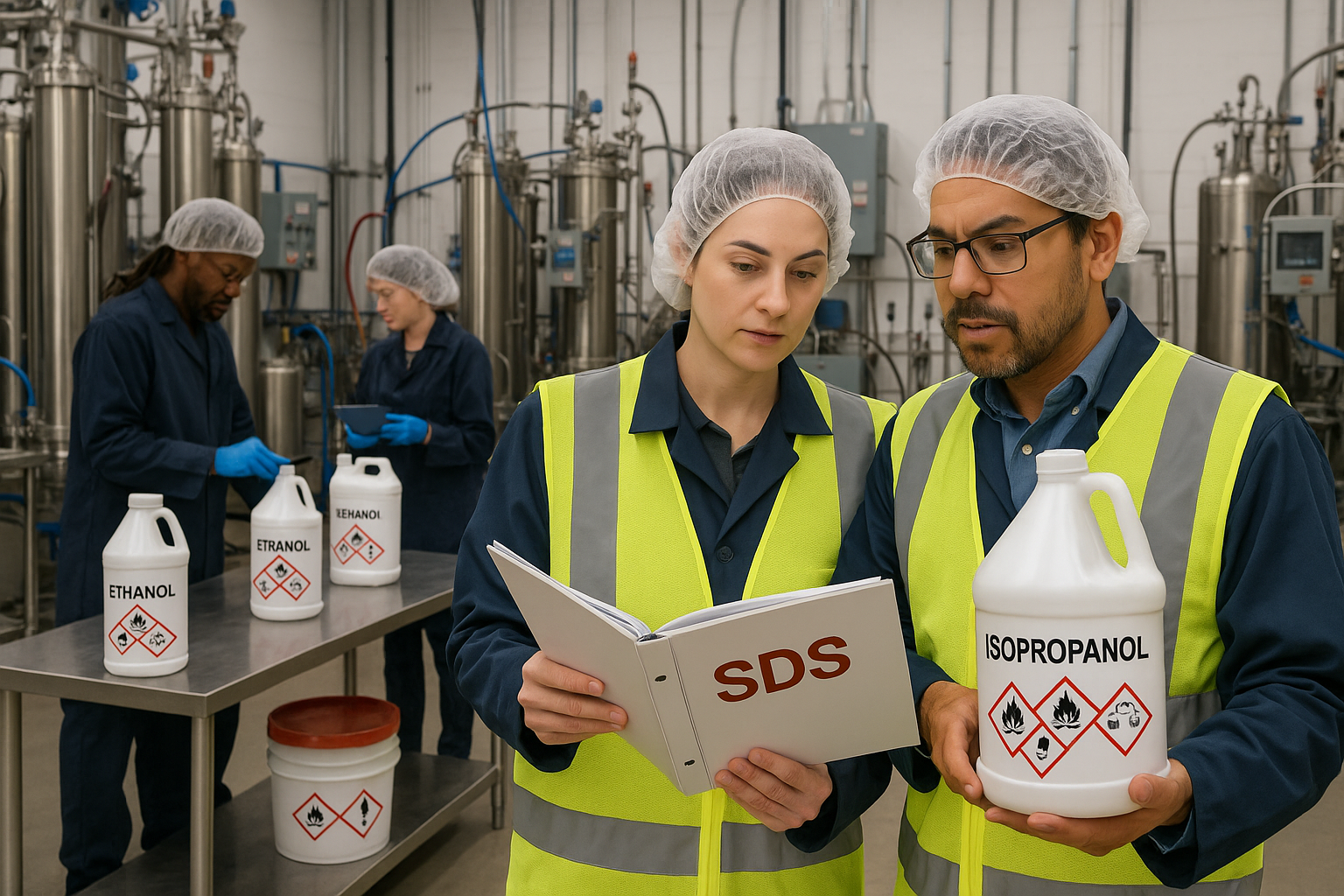
The U.S. Occupational Safety and Health Administration (OSHA) finalized major updates to its Hazard Communication Standard (HCS) to align with the United Nations’ Globally Harmonized System (GHS) Revision 7, effective July 19, 2024. The new rule sets challenging—but manageable—deadlines through 2025 and 2026 for cannabis and hemp manufacturing facilities. Operators handling terpene blends, extraction solvents, flavorants, gases, and device batteries must take immediate action to ensure compliance with stricter hazard classification, labeling, Safety Data Sheet (SDS), and employee training standards.
These requirements are not optional—and noncompliance carries substantial OSHA penalties and operational risks. Here’s how cannabis manufacturers can stay ahead.
Cultivators, extraction labs, infused product manufacturers, vape hardware assemblers, and even dispensary packaging areas have significant exposure under the new HazCom framework. Commonly impacted chemicals and products include:
Any operation storing, mixing, or repackaging these must update their hazard communications and be ready for enforcement actions beginning as soon as late 2025.
OSHA is rolling out compliance dates in phases:
For reference, see official OSHA HazCom rulemaking updates.
Several pivotal changes are now in effect and must be reflected in all cannabis facility programs:
These updated standards affect all links in the cannabis supply chain, from extraction lab to packaging to device assembly.
OSHA enforcement for hazard communication failures routinely results in significant fines, operational shutdowns, and repeat inspection cycles. Maximum penalties may change (adjusted annually), but citations for HazCom violations are among the most frequent in manufacturing, including cannabis facilities. Noncompliance can also lead to regulatory complications at the state level, jeopardizing business licenses.
For updated penalty amounts and enforcement trends, see OSHA Penalties.
Should every aroma or terpene blend get a new hazard review?Yes. Each distinct mixture—especially when components are reformulated—must be evaluated and classified under the new criteria. This includes flavorant/terpene recipes, as their vapors may be newly classified as flammable or as respiratory irritants.
What about lithium-ion batteries?If assembling or storing vape hardware, written HazCom programs must formally address battery hazards (fire, release, chemical burns), provide updated SDS, and offer staff training on proper handling and spill/fire response.
Are small containers and sample vials affected?Yes. Even ounce or milliliter containers require GHS-compliant secondary labeling and SDS access, unless exempted under the new small container rules.
Noncompliance is not only a legal risk but can directly impact workforce safety and business continuity.
For regulatory updates, compliance checklists, and AI-powered documentation management, visit CannabisRegulations.ai—your partner for seamless cannabis regulatory compliance in a fast-changing landscape.
The U.S. Occupational Safety and Health Administration (OSHA) finalized major updates to its Hazard Communication Standard (HCS) to align with the United Nations’ Globally Harmonized System (GHS) Revision 7, effective July 19, 2024. The new rule sets challenging—but manageable—deadlines through 2025 and 2026 for cannabis and hemp manufacturing facilities. Operators handling terpene blends, extraction solvents, flavorants, gases, and device batteries must take immediate action to ensure compliance with stricter hazard classification, labeling, Safety Data Sheet (SDS), and employee training standards.
These requirements are not optional—and noncompliance carries substantial OSHA penalties and operational risks. Here’s how cannabis manufacturers can stay ahead.
Cultivators, extraction labs, infused product manufacturers, vape hardware assemblers, and even dispensary packaging areas have significant exposure under the new HazCom framework. Commonly impacted chemicals and products include:
Any operation storing, mixing, or repackaging these must update their hazard communications and be ready for enforcement actions beginning as soon as late 2025.
OSHA is rolling out compliance dates in phases:
For reference, see official OSHA HazCom rulemaking updates.
Several pivotal changes are now in effect and must be reflected in all cannabis facility programs:
These updated standards affect all links in the cannabis supply chain, from extraction lab to packaging to device assembly.
OSHA enforcement for hazard communication failures routinely results in significant fines, operational shutdowns, and repeat inspection cycles. Maximum penalties may change (adjusted annually), but citations for HazCom violations are among the most frequent in manufacturing, including cannabis facilities. Noncompliance can also lead to regulatory complications at the state level, jeopardizing business licenses.
For updated penalty amounts and enforcement trends, see OSHA Penalties.
Should every aroma or terpene blend get a new hazard review?Yes. Each distinct mixture—especially when components are reformulated—must be evaluated and classified under the new criteria. This includes flavorant/terpene recipes, as their vapors may be newly classified as flammable or as respiratory irritants.
What about lithium-ion batteries?If assembling or storing vape hardware, written HazCom programs must formally address battery hazards (fire, release, chemical burns), provide updated SDS, and offer staff training on proper handling and spill/fire response.
Are small containers and sample vials affected?Yes. Even ounce or milliliter containers require GHS-compliant secondary labeling and SDS access, unless exempted under the new small container rules.
Noncompliance is not only a legal risk but can directly impact workforce safety and business continuity.
For regulatory updates, compliance checklists, and AI-powered documentation management, visit CannabisRegulations.ai—your partner for seamless cannabis regulatory compliance in a fast-changing landscape.
