
November 2, 2025


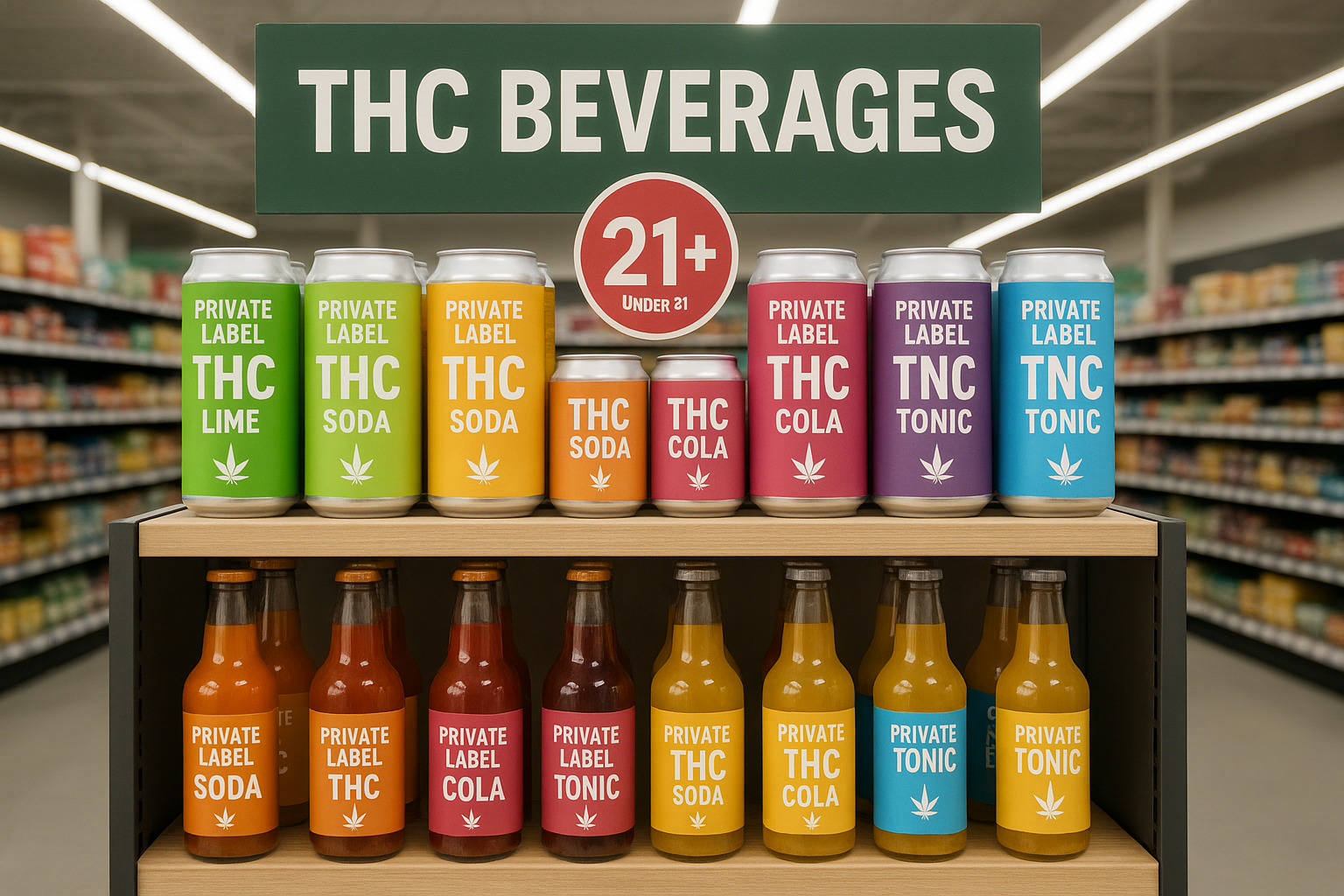
Grocers, convenience stores, and supermarket chains are experiencing a paradigm shift in 2025 as private label THC beverages—especially hemp-derived seltzers—hit shelves nationwide where permitted by law. The compliance risk is substantial: unlike branded suppliers, the retailer launching these products is the “responsible person” for almost every regulatory checkpoint, from labeling and traceability to recalls, age-restriction protocols, excise tax remittance, and packaging mandates. With attorney generals scrutinizing minor exposures and poison-control center data, the stakes for compliance missteps are higher than ever (CannabisRegulations.ai).
This post unpacks the essential elements of private label THC beverages compliance in 2025 for grocers and c-stores, highlighting actionable considerations for retail buyers, compliance teams, and C-suite leaders.
Large retailers are attracted to the margin and branding potential of store-branded THC drinks. By controlling the supply chain and brand identity, they can respond quickly to emerging flavor trends, pricing strategies, and consumer preferences. But this newfound control brings new and heightened compliance obligations.
At the federal level, hemp-derived THC beverages that stay below 0.3% delta-9 THC by dry weight per the Farm Bill remain lawful; however, the lack of unified federal regulations for intoxicating cannabinoids has left states to fill the gaps. By 2025, a substantial patchwork exists:
When a retailer launches a private label, they are the labeler-of-record—their name, not a supplier, appears on packaging and traceability logs. This comes with the burden of:
Before onboarding a co-packer or manufacturer to formulate a store-branded THC beverage, grocers must perform robust due diligence:
Retailers should vet and document:
Private labelers face heightened risk if they overstate effects or make medical-like claims. Must-have elements for 2025 include:
States are cracking down on age gating:
As a labeler-of-record, your store becomes the first point-of-contact for recalls—even for product made by a supplier. Systems should allow:
Cannabis beverages in most states must pass:
Retail procurement teams must bridge these regimes with the food-and-beverage sector’s classic specs (GFSI, SQF, GMP). Retailers may need to contract with multiple labs or employ dedicated QA professionals to interpret and reconcile conflicting standards.
Multiple states introduced THC-specific excise taxes and scanner SKU restrictions in 2025:
Failing to manage excise taxes and scanner controls can result in fines or loss of retail cannabis privileges.
As of late-2025, there is no explicit federal requirement for child-resistant packaging for hemp THC drinks—but an increasing number of states are mandating it (CannabisRegulations.ai).
Retailers must also meet growing state-level recycling/extended producer responsibility (EPR) mandates:
For in-depth support mapping compliance regimes, supplier audits, labeling reviews, and state-specific requirements, partner with CannabisRegulations.ai. We help retailers, procurement teams, and regulatory staff keep store-branded beverages safe, legal, and profitable in the ever-evolving 2025 compliance landscape.
Grocers, convenience stores, and supermarket chains are experiencing a paradigm shift in 2025 as private label THC beverages—especially hemp-derived seltzers—hit shelves nationwide where permitted by law. The compliance risk is substantial: unlike branded suppliers, the retailer launching these products is the “responsible person” for almost every regulatory checkpoint, from labeling and traceability to recalls, age-restriction protocols, excise tax remittance, and packaging mandates. With attorney generals scrutinizing minor exposures and poison-control center data, the stakes for compliance missteps are higher than ever (CannabisRegulations.ai).
This post unpacks the essential elements of private label THC beverages compliance in 2025 for grocers and c-stores, highlighting actionable considerations for retail buyers, compliance teams, and C-suite leaders.
Large retailers are attracted to the margin and branding potential of store-branded THC drinks. By controlling the supply chain and brand identity, they can respond quickly to emerging flavor trends, pricing strategies, and consumer preferences. But this newfound control brings new and heightened compliance obligations.
At the federal level, hemp-derived THC beverages that stay below 0.3% delta-9 THC by dry weight per the Farm Bill remain lawful; however, the lack of unified federal regulations for intoxicating cannabinoids has left states to fill the gaps. By 2025, a substantial patchwork exists:
When a retailer launches a private label, they are the labeler-of-record—their name, not a supplier, appears on packaging and traceability logs. This comes with the burden of:
Before onboarding a co-packer or manufacturer to formulate a store-branded THC beverage, grocers must perform robust due diligence:
Retailers should vet and document:
Private labelers face heightened risk if they overstate effects or make medical-like claims. Must-have elements for 2025 include:
States are cracking down on age gating:
As a labeler-of-record, your store becomes the first point-of-contact for recalls—even for product made by a supplier. Systems should allow:
Cannabis beverages in most states must pass:
Retail procurement teams must bridge these regimes with the food-and-beverage sector’s classic specs (GFSI, SQF, GMP). Retailers may need to contract with multiple labs or employ dedicated QA professionals to interpret and reconcile conflicting standards.
Multiple states introduced THC-specific excise taxes and scanner SKU restrictions in 2025:
Failing to manage excise taxes and scanner controls can result in fines or loss of retail cannabis privileges.
As of late-2025, there is no explicit federal requirement for child-resistant packaging for hemp THC drinks—but an increasing number of states are mandating it (CannabisRegulations.ai).
Retailers must also meet growing state-level recycling/extended producer responsibility (EPR) mandates:
For in-depth support mapping compliance regimes, supplier audits, labeling reviews, and state-specific requirements, partner with CannabisRegulations.ai. We help retailers, procurement teams, and regulatory staff keep store-branded beverages safe, legal, and profitable in the ever-evolving 2025 compliance landscape.
