


February 24, 2026


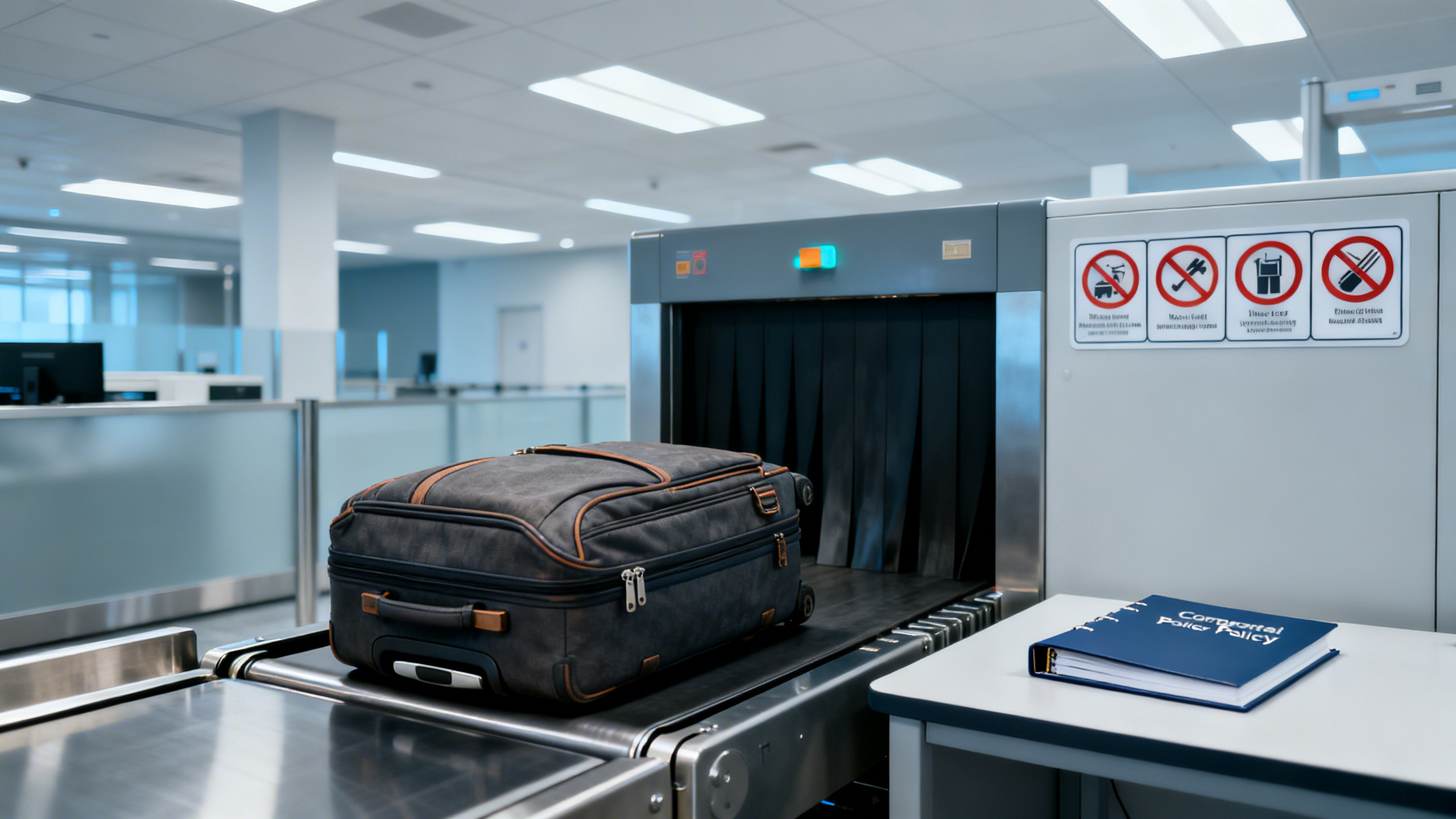
Maybe. TSA does not search for cannabis but will refer any cannabis it finds to local police, where consequences depend on the airport's state law. CBP, by contrast, will seize any THC product at the U.S. border regardless of state legality. Hemp-derived CBD is allowed on planes if it contains under 0.3% delta-9 THC, but international travel is far stricter.
This guide updates the 2026 "risk map" for traveling with cannabinoid products, explains the documentation myths (COAs and "hemp" labels are not magic shields), and ends with a practical corporate travel policy template and response plan.
Informational only; not legal advice. Policies and enforcement change rapidly—confirm rules for each itinerary.
Even in an era of normalization, the U.S. remains a patchwork because different agencies control different chokepoints.
At the federal level, "hemp" was defined by the 2018 Farm Bill as cannabis and derivatives with no more than 0.3% delta-9 THC on a dry-weight basis. Congress and regulators have been moving toward tighter controls on intoxicating hemp products.
A major 2025 federal change (embedded in FY2026 agriculture appropriations) is widely reported as narrowing what qualifies as "hemp," with an effective date in November 2026 and a shift toward total THC concepts and a strict per-container cap for finished products. Businesses should treat 2026 as a transition year: today's "federally compliant" product line may not remain compliant in late 2026.
External references:
TSA screening is designed to detect security threats—not to hunt drugs. But TSA's own guidance is clear: when officers encounter suspected illegal substances, they refer the matter to law enforcement.
TSA's "Medical Marijuana" item page states that:
Source: https://www.tsa.gov/travel/security-screening/whatcanibring/items/medical-marijuana
Practical takeaway for travel with CBD THC compliance 2026: TSA may not be looking for your products, but TSA can be the event that starts a law-enforcement interaction—especially if an item is ambiguous (vape cartridges, oils, gummies) or resembles restricted substances.
Many traveler incidents aren't dramatic federal prosecutions. They are referrals—and the result depends on the airport's jurisdiction (local police, state police, port authority, airport authority police) and what local law allows.
Even when a product arguably meets the federal hemp threshold, you still face:
And none of that addresses the next problem: crossing a state line.
A common "grey-area" assumption is that carrying a small amount between two legal states is "effectively fine." But business compliance should treat interstate transport of THC products as a high-risk activity because it intersects with federal controlled-substance law and triggers workplace and reputational risk.
For consumer-facing guidance on what's legal on federal lands and across borders, see California DCC's consumer explanation (useful even outside California because it clearly distinguishes federal vs state): https://www.cannabis.ca.gov/consumers/whats-legal/
TSA screens for aviation security. CBP enforces border laws and has a different mission and different powers.
CBP has repeatedly issued public reminders that marijuana remains illegal under U.S. federal law, and that possession at the border can lead to seizure and penalties.
Key CBP travel advisory (official): https://www.cbp.gov/newsroom/local-media-release/travel-advisory-personal-use-marijuana-border-crossing-policies-remain
Important for companies: "We were only carrying branded samples" does not change CBP authority.
Canada's federal framework still does not allow travelers to carry cannabis across the border without authorization. Canada's official border guidance states it is illegal to take cannabis across the Canadian border whether entering or leaving.
Source: https://www.cbsa-asfc.gc.ca/travel-voyage/cannabis-eng.html
For cross-border corporate travel: treat the U.S.-Canada trip as zero carry for THC products, and be cautious even with CBD unless you have counsel-confirmed pathways.
Frequent travelers should also understand that CBP can consider admissions about involvement in the cannabis industry during admissibility determinations.
CBP help center guidance (example): https://www.help.cbp.gov/s/article/Article1360
Corporate takeaway: train traveling staff to answer border questions truthfully, narrowly, and consistently with company policy—without oversharing or improvising.
The highest-risk scenario is an international trip that transits or lands in jurisdictions where any THC is treated as a serious offense.
You should assume very high risk for products containing THC (and potentially CBD products with trace THC) when traveling to or transiting through:
A product that is lawful in your destination can still create exposure in a transit country. Corporate policies should treat itineraries with high-risk transit hubs the same as the destination itself.
Most travel incidents happen because someone believed a document made the product "legal everywhere." In 2026, that assumption is increasingly dangerous.
A Certificate of Analysis can help demonstrate what a lab found in a given batch. It does not:
Additionally, mislabeling and variability remain well-documented. CBP has even published internal workplace education noting that over-the-counter CBD products may contain more THC than advertised and that labeling can be inaccurate.
Source: https://www.cbp.gov/employee-resources/health-wellness/substance-abuse-prevention/cbd-know-facts
A label is not a legal determination. Some jurisdictions regulate by:
Medical authorization in one state does not automatically legalize possession in another state, on federal land, in airports, or across international borders.
Some employers and government agencies treat topicals the same as ingestibles for workplace risk because they can still contain THC and trigger positive tests. For example, DoD policy prohibits hemp-derived CBD products for service members.
(If your workforce includes contractors, reservists, or personnel subject to federal rules, this matters.)
Companies with traveling employees (sales teams, field marketers, executives, event staff, brand ambassadors, influencers) need a written policy that addresses:
This is especially important because 2026 policy pressure is rising in adjacent areas:
If you have any safety-sensitive workforce (transport, aviation, certain regulated roles), your travel policy must align with those stricter rules.
Customize this template with counsel and HR. Keep it simple enough to be remembered.
This policy applies to all employees, contractors, brand ambassadors, and sponsored influencers when traveling on company business, attending events, or representing the company.
No employee may carry cannabinoid products across state lines or international borders while traveling on behalf of the company.
Rationale: reduces the highest-impact incidents (border seizures, arrests, media exposure, lost business relationships).
Employees may not transport, check, or carry-on:
If the company elects to permit certain products for domestic travel, require all of the following:
Even with these controls, note: COAs do not guarantee legality.
Instead of hand-carry:
Reminder: USPS policy permits mailing hemp-based products (including CBD) to domestic destinations if compliant with applicable laws, but not to international or military destinations.
USPS reference: https://news.usps.com/2021/01/11/in-the-mail-5/
Also consider product category restrictions like the PACT Act for vapes (see our compliance coverage): https://www.cannabisregulations.ai/cannabis-and-hemp-regulations-compliance-ai-blog/pact-act-hemp-vape-shipping-2025-2026
All traveling personnel must complete annual training covering:
Require signed acknowledgment that:
Speed and message discipline matter. Build a plan before you need it.
If your business has traveling staff, field teams, or brand ambassadors, you need a documented program—policy, training, approvals, and an incident response plan—aligned to cannabis compliance, evolving hemp rules, and real enforcement behavior.
Use https://www.cannabisregulations.ai/ to:
Maybe. TSA does not search for cannabis but will refer any cannabis it finds to local police, where consequences depend on the airport's state law. CBP, by contrast, will seize any THC product at the U.S. border regardless of state legality. Hemp-derived CBD is allowed on planes if it contains under 0.3% delta-9 THC, but international travel is far stricter.
This guide updates the 2026 "risk map" for traveling with cannabinoid products, explains the documentation myths (COAs and "hemp" labels are not magic shields), and ends with a practical corporate travel policy template and response plan.
Informational only; not legal advice. Policies and enforcement change rapidly—confirm rules for each itinerary.
Even in an era of normalization, the U.S. remains a patchwork because different agencies control different chokepoints.
At the federal level, "hemp" was defined by the 2018 Farm Bill as cannabis and derivatives with no more than 0.3% delta-9 THC on a dry-weight basis. Congress and regulators have been moving toward tighter controls on intoxicating hemp products.
A major 2025 federal change (embedded in FY2026 agriculture appropriations) is widely reported as narrowing what qualifies as "hemp," with an effective date in November 2026 and a shift toward total THC concepts and a strict per-container cap for finished products. Businesses should treat 2026 as a transition year: today's "federally compliant" product line may not remain compliant in late 2026.
External references:
TSA screening is designed to detect security threats—not to hunt drugs. But TSA's own guidance is clear: when officers encounter suspected illegal substances, they refer the matter to law enforcement.
TSA's "Medical Marijuana" item page states that:
Source: https://www.tsa.gov/travel/security-screening/whatcanibring/items/medical-marijuana
Practical takeaway for travel with CBD THC compliance 2026: TSA may not be looking for your products, but TSA can be the event that starts a law-enforcement interaction—especially if an item is ambiguous (vape cartridges, oils, gummies) or resembles restricted substances.
Many traveler incidents aren't dramatic federal prosecutions. They are referrals—and the result depends on the airport's jurisdiction (local police, state police, port authority, airport authority police) and what local law allows.
Even when a product arguably meets the federal hemp threshold, you still face:
And none of that addresses the next problem: crossing a state line.
A common "grey-area" assumption is that carrying a small amount between two legal states is "effectively fine." But business compliance should treat interstate transport of THC products as a high-risk activity because it intersects with federal controlled-substance law and triggers workplace and reputational risk.
For consumer-facing guidance on what's legal on federal lands and across borders, see California DCC's consumer explanation (useful even outside California because it clearly distinguishes federal vs state): https://www.cannabis.ca.gov/consumers/whats-legal/
TSA screens for aviation security. CBP enforces border laws and has a different mission and different powers.
CBP has repeatedly issued public reminders that marijuana remains illegal under U.S. federal law, and that possession at the border can lead to seizure and penalties.
Key CBP travel advisory (official): https://www.cbp.gov/newsroom/local-media-release/travel-advisory-personal-use-marijuana-border-crossing-policies-remain
Important for companies: "We were only carrying branded samples" does not change CBP authority.
Canada's federal framework still does not allow travelers to carry cannabis across the border without authorization. Canada's official border guidance states it is illegal to take cannabis across the Canadian border whether entering or leaving.
Source: https://www.cbsa-asfc.gc.ca/travel-voyage/cannabis-eng.html
For cross-border corporate travel: treat the U.S.-Canada trip as zero carry for THC products, and be cautious even with CBD unless you have counsel-confirmed pathways.
Frequent travelers should also understand that CBP can consider admissions about involvement in the cannabis industry during admissibility determinations.
CBP help center guidance (example): https://www.help.cbp.gov/s/article/Article1360
Corporate takeaway: train traveling staff to answer border questions truthfully, narrowly, and consistently with company policy—without oversharing or improvising.
The highest-risk scenario is an international trip that transits or lands in jurisdictions where any THC is treated as a serious offense.
You should assume very high risk for products containing THC (and potentially CBD products with trace THC) when traveling to or transiting through:
A product that is lawful in your destination can still create exposure in a transit country. Corporate policies should treat itineraries with high-risk transit hubs the same as the destination itself.
Most travel incidents happen because someone believed a document made the product "legal everywhere." In 2026, that assumption is increasingly dangerous.
A Certificate of Analysis can help demonstrate what a lab found in a given batch. It does not:
Additionally, mislabeling and variability remain well-documented. CBP has even published internal workplace education noting that over-the-counter CBD products may contain more THC than advertised and that labeling can be inaccurate.
Source: https://www.cbp.gov/employee-resources/health-wellness/substance-abuse-prevention/cbd-know-facts
A label is not a legal determination. Some jurisdictions regulate by:
Medical authorization in one state does not automatically legalize possession in another state, on federal land, in airports, or across international borders.
Some employers and government agencies treat topicals the same as ingestibles for workplace risk because they can still contain THC and trigger positive tests. For example, DoD policy prohibits hemp-derived CBD products for service members.
(If your workforce includes contractors, reservists, or personnel subject to federal rules, this matters.)
Companies with traveling employees (sales teams, field marketers, executives, event staff, brand ambassadors, influencers) need a written policy that addresses:
This is especially important because 2026 policy pressure is rising in adjacent areas:
If you have any safety-sensitive workforce (transport, aviation, certain regulated roles), your travel policy must align with those stricter rules.
Customize this template with counsel and HR. Keep it simple enough to be remembered.
This policy applies to all employees, contractors, brand ambassadors, and sponsored influencers when traveling on company business, attending events, or representing the company.
No employee may carry cannabinoid products across state lines or international borders while traveling on behalf of the company.
Rationale: reduces the highest-impact incidents (border seizures, arrests, media exposure, lost business relationships).
Employees may not transport, check, or carry-on:
If the company elects to permit certain products for domestic travel, require all of the following:
Even with these controls, note: COAs do not guarantee legality.
Instead of hand-carry:
Reminder: USPS policy permits mailing hemp-based products (including CBD) to domestic destinations if compliant with applicable laws, but not to international or military destinations.
USPS reference: https://news.usps.com/2021/01/11/in-the-mail-5/
Also consider product category restrictions like the PACT Act for vapes (see our compliance coverage): https://www.cannabisregulations.ai/cannabis-and-hemp-regulations-compliance-ai-blog/pact-act-hemp-vape-shipping-2025-2026
All traveling personnel must complete annual training covering:
Require signed acknowledgment that:
Speed and message discipline matter. Build a plan before you need it.
If your business has traveling staff, field teams, or brand ambassadors, you need a documented program—policy, training, approvals, and an incident response plan—aligned to cannabis compliance, evolving hemp rules, and real enforcement behavior.
Use https://www.cannabisregulations.ai/ to:
