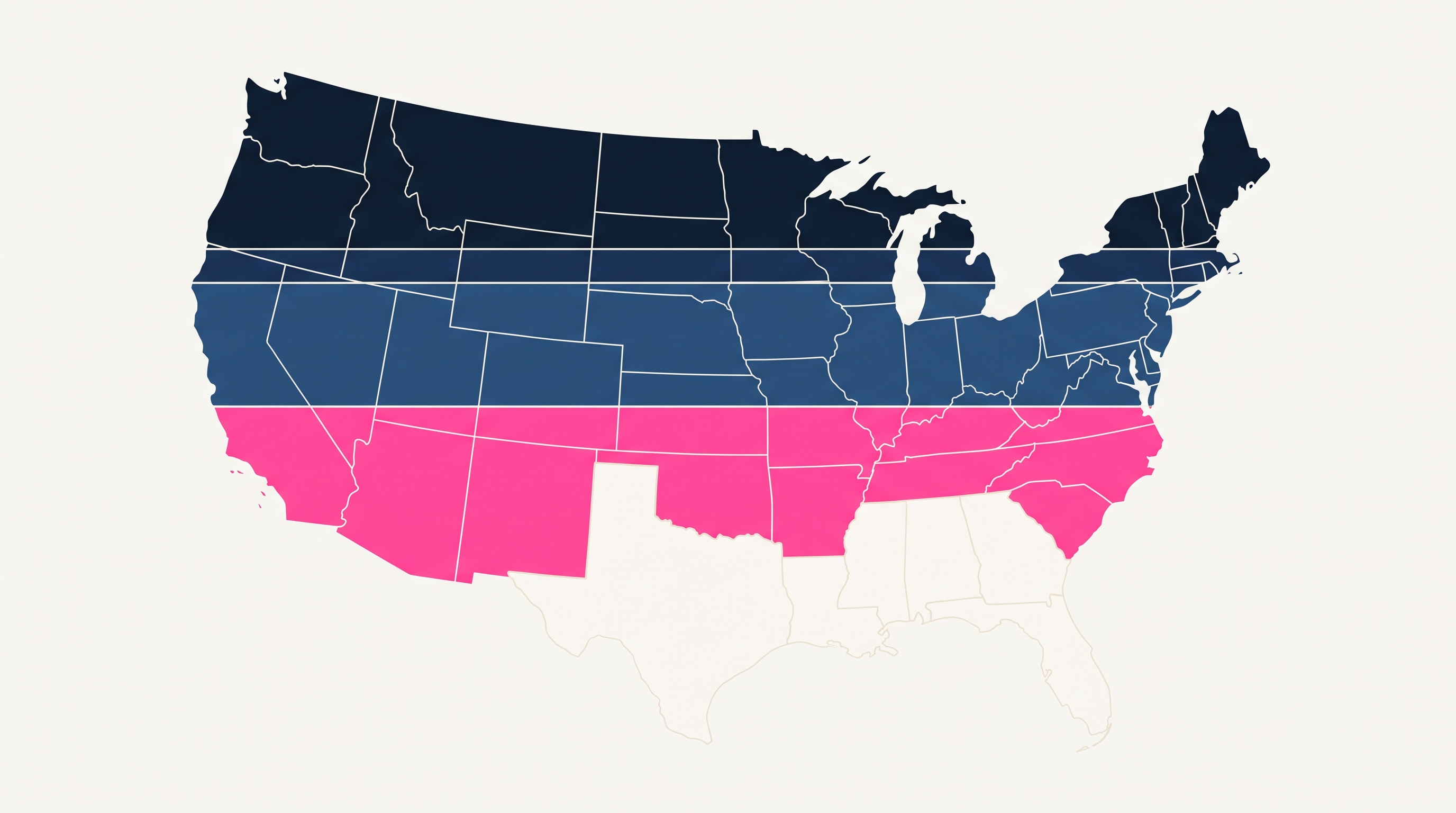
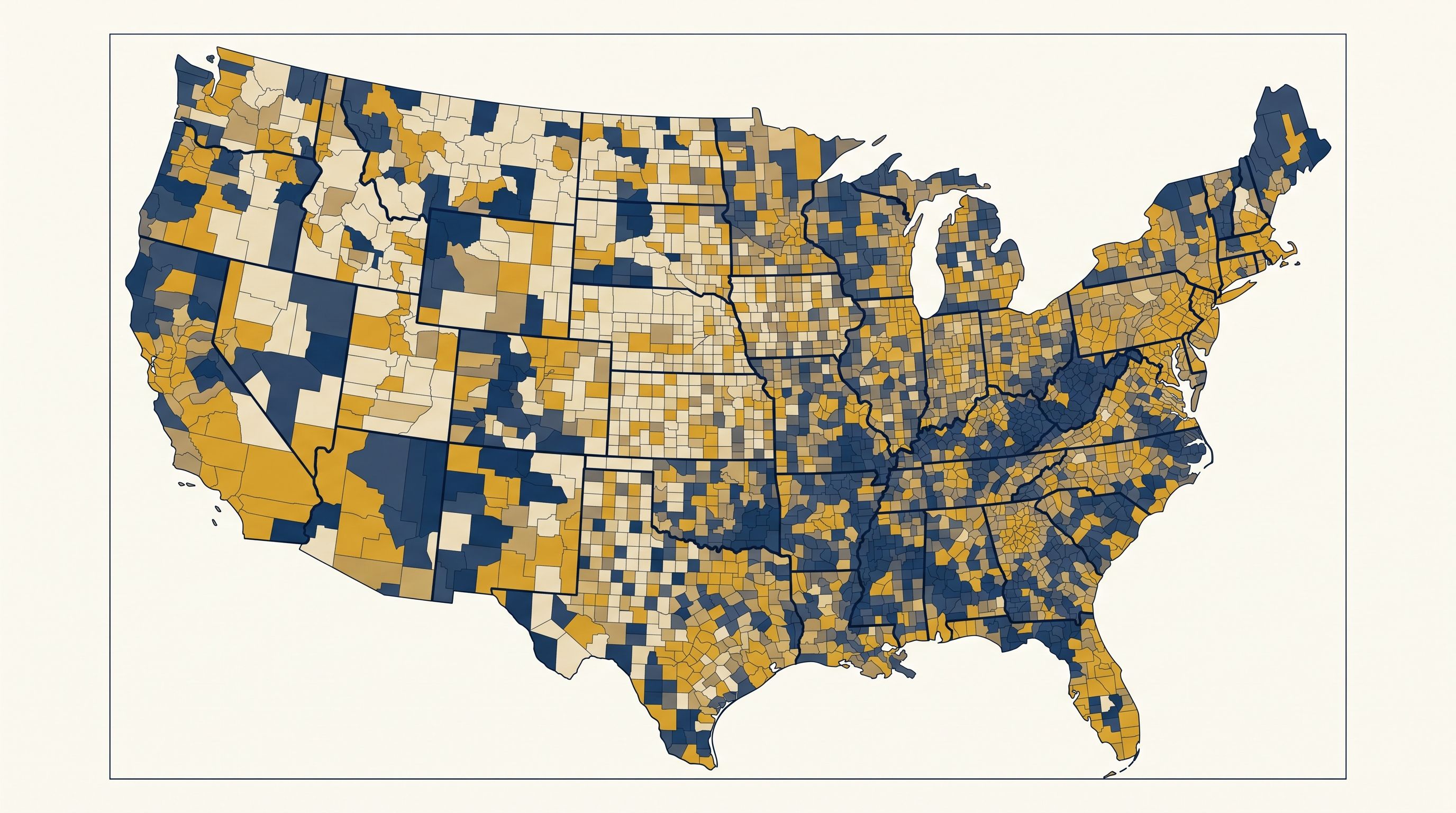
A state-by-state table of delta-8 legality in 2026 — plus the November 12 federal date, and why roughly half the states on the map may not follow it.
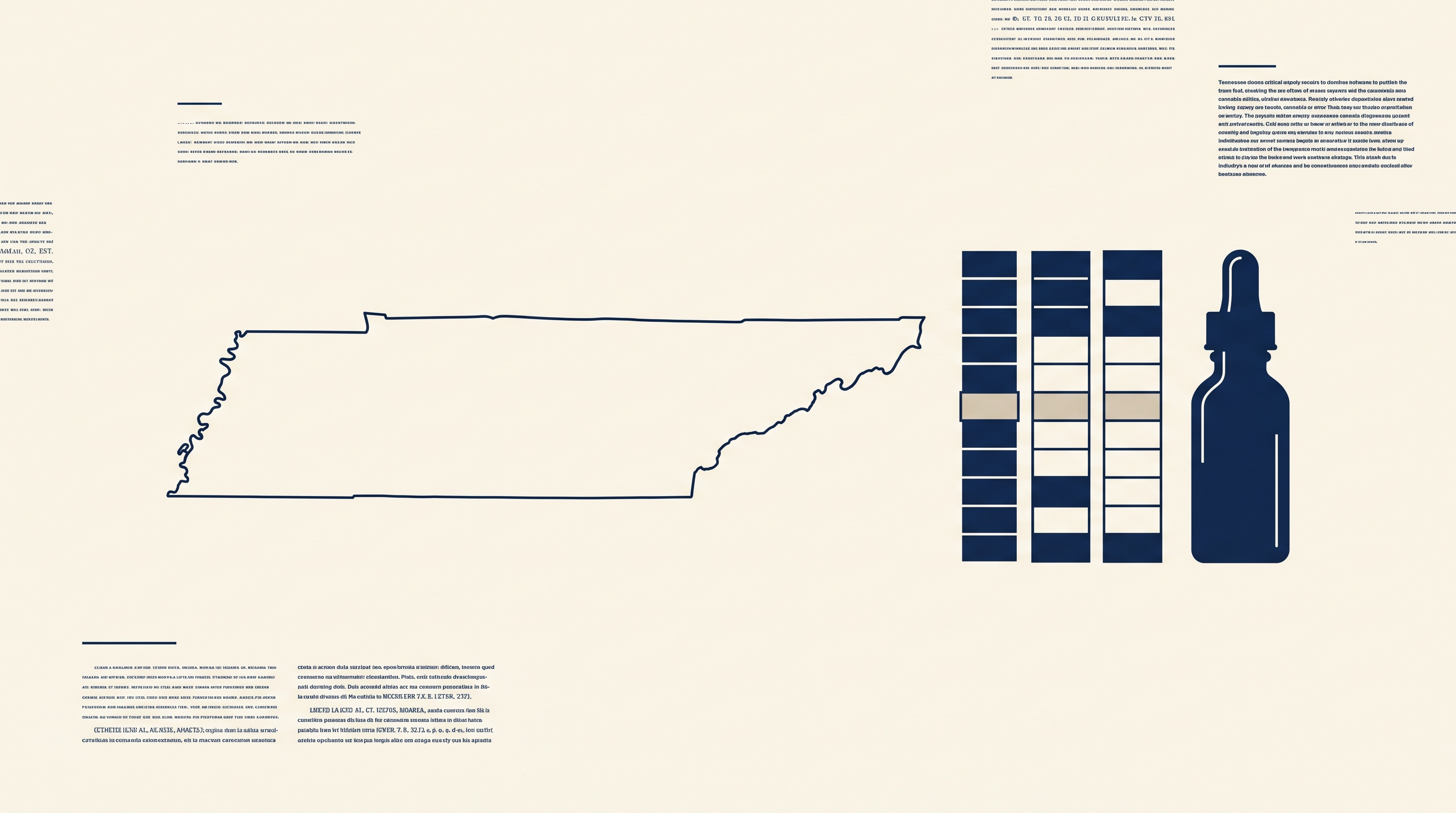
Tennessee draws its line at detectable THC, not at the word CBD: THC-free isolate is unregulated, while full-spectrum oil, gummies and flower are ABC-licensed, 21+ products under a THCA-counting test. The state's head start on THCA does not protect it from the federal 0.4 mg per-container cap arriving December 11.
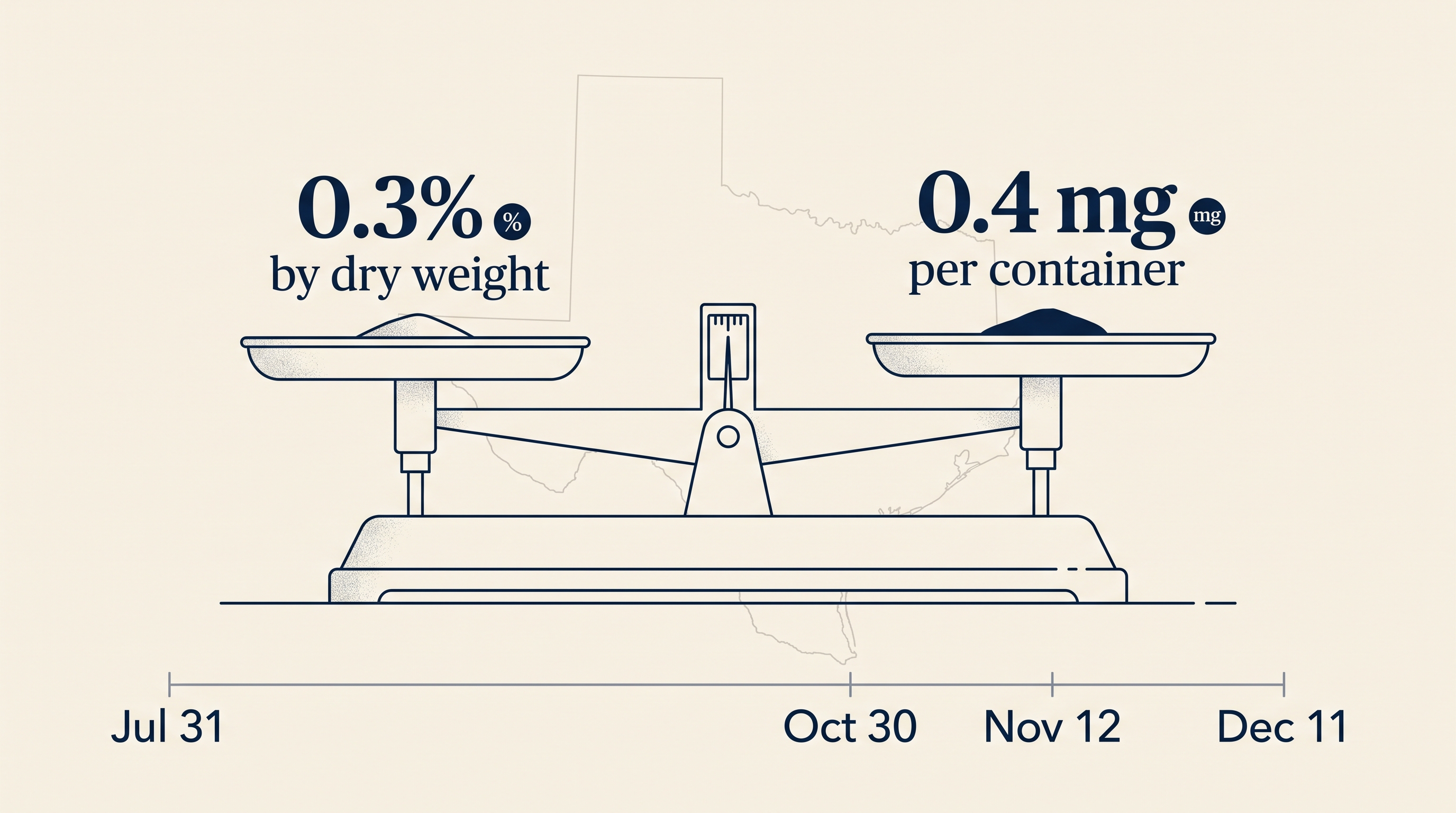
Texas measures THC as a percentage of dry weight; the federal rule arriving December 11 measures it in milligrams per container. A gummy that is legal under one test fails the other by a factor of 25 to 30. Here is the product-by-product matrix, the enforcement posture, and the calendar.
A camera pointed at a wall cost a Michigan processor two licences and $2 million. In Pennsylvania, the gas-station THC channel is now a corrupt-organizations case.
Two live obligations in one state — packaging rules already in force, and a draft that turns a missed MCA email into a lost conditional license. Comment closes September 30.
Hemp CBD is legal in Texas under chapter 443, but the answer narrows on two dates: Texas already counts THCA toward total THC, and federal law counts total THC per container from December 11. Which SKUs are exposed.
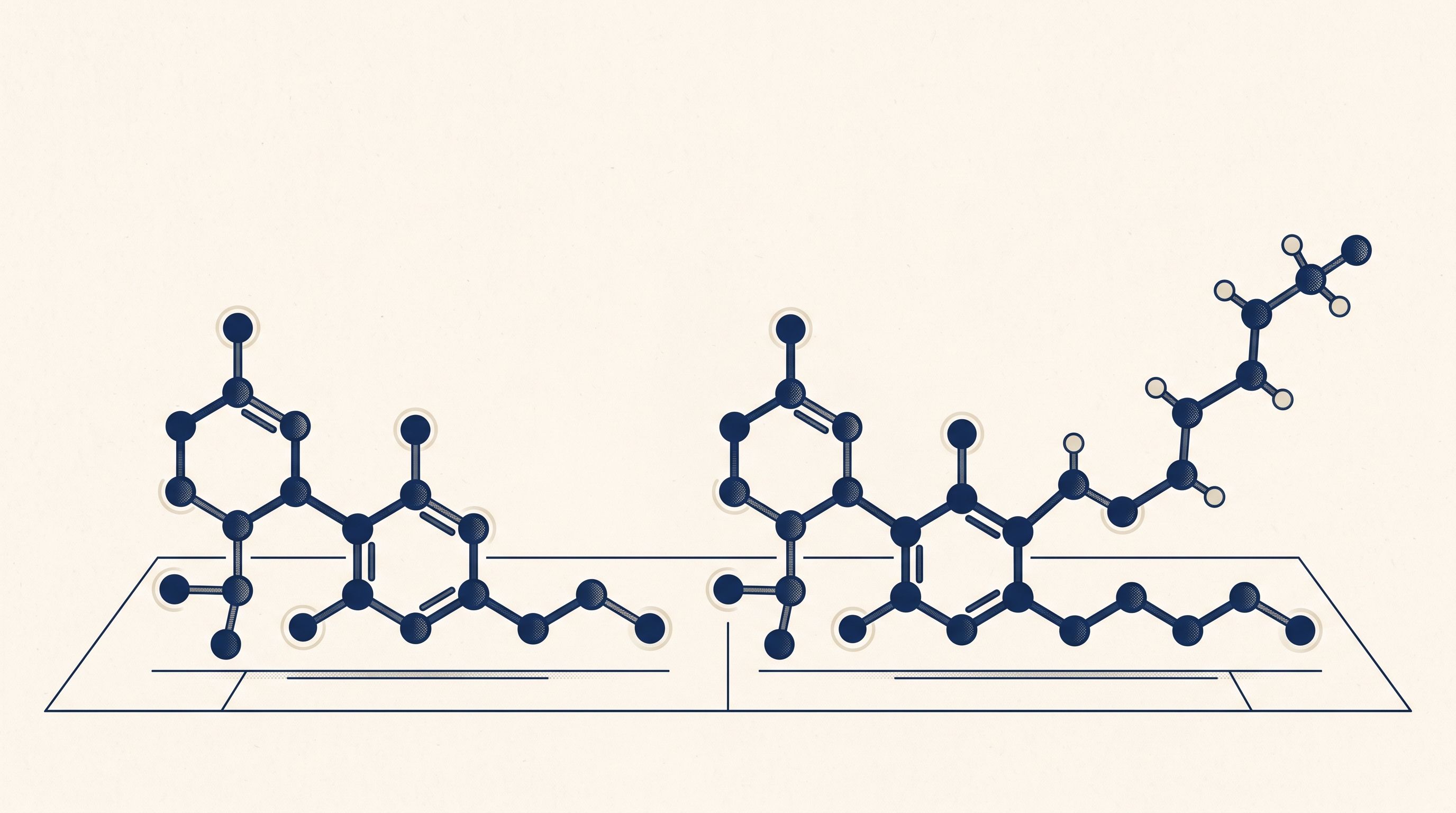
THC-P occurs naturally in trace amounts and is sold as a CBD-derived synthetic — and that combination puts it in a different federal bucket than most 'synthetics.' Here is how it compares with delta-9 THC on chemistry, law and testing.
A notary's defect does not void a petition page. With that, the last legal cloud over Nebraska's medical cannabis program lifted — and the bottleneck moved to the Commission's fee rule.
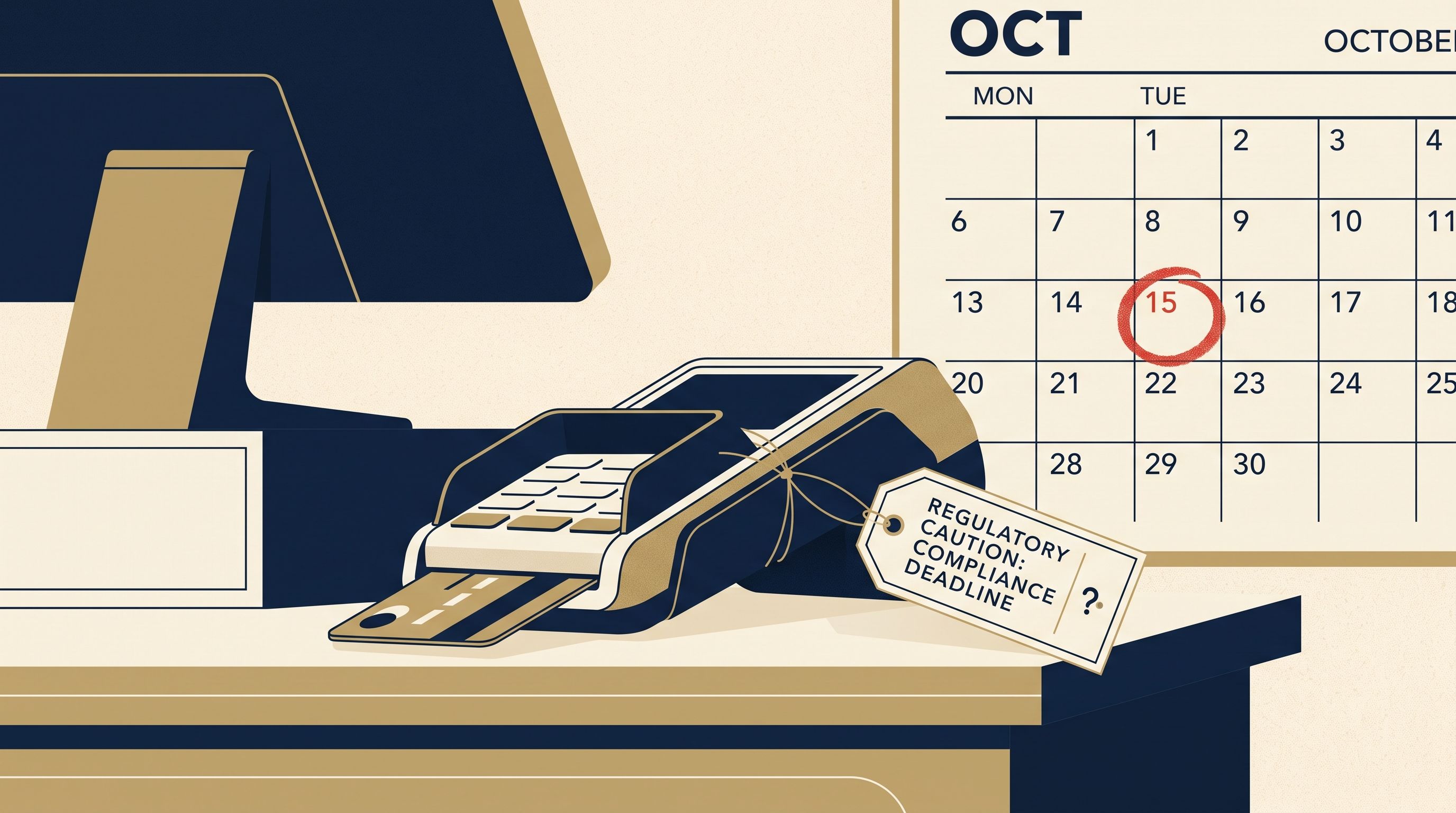
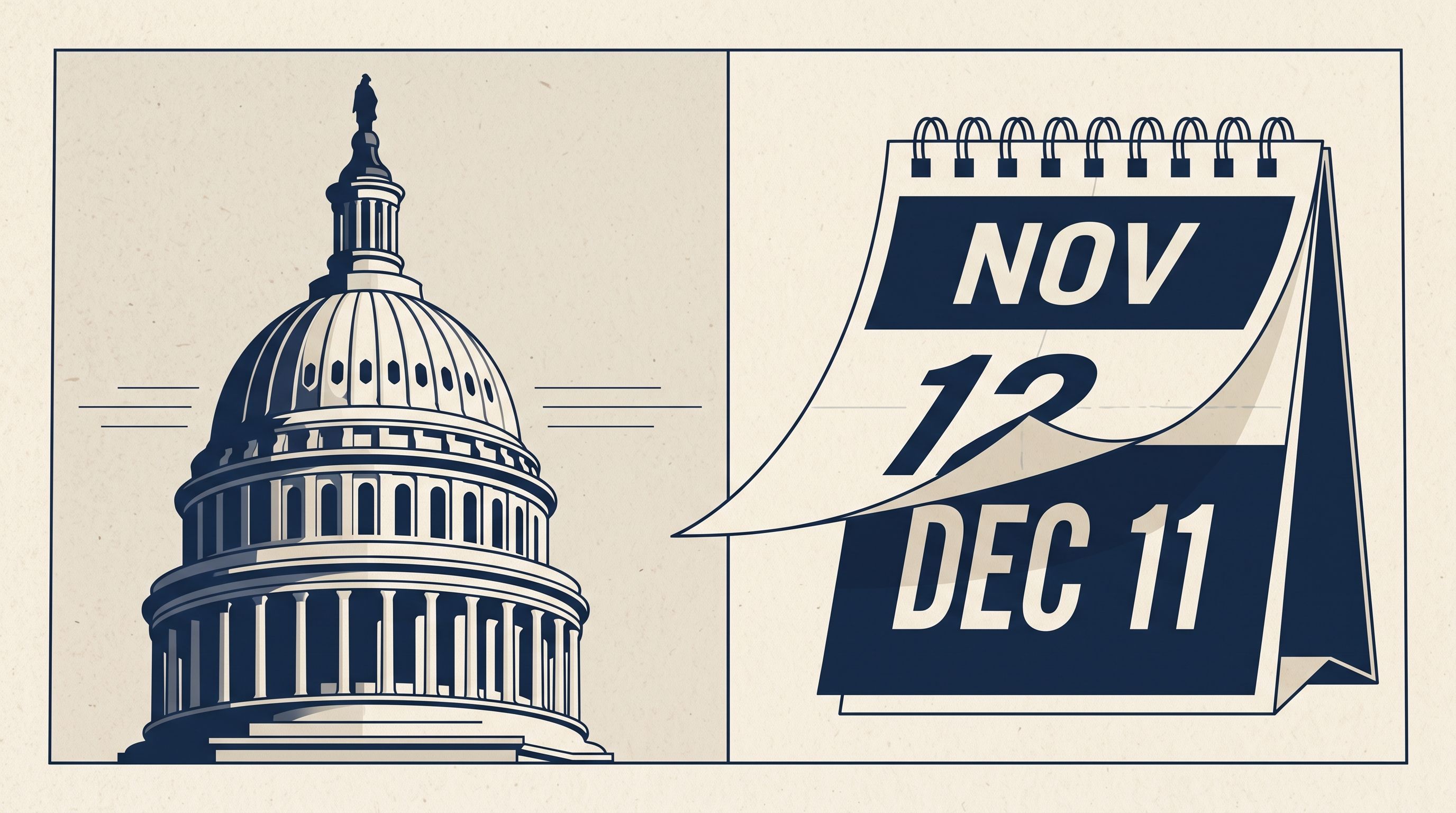
P.L. 119-103 moved most of the federal hemp redefinition to December 11 — but Missouri and Illinois still hit November 12, Virginia, Ohio and Texas already bind harder, and Square's October 15 date is the earliest of all.
Edibles legality turns on three variables — adult-use status, hemp-THC rules and milligram caps — and the per-serving cap usually binds before the legality question does. The state-by-state map operators actually need.
A temporary order puts three concentrated 7-hydroxymitragynine-related compounds in Schedule I through August 2028. Leaf kratom stays out — and the natural-versus-manufactured line DEA drew is the same one the federal hemp law uses, on a different clock.
AB 2249 is law. It writes an eight-part definition of "attractive to children" into the Business and Professions Code, operative January 1, 2028 — and the compliance tools it promises have no deadline. AB 2250's CBN-isolate carve-out still awaits a signature.
Up to 24 licenses across six zones, applications open until November 23 — but the social-equity certification window closes on September 11, and the form that opens it closes September 4.
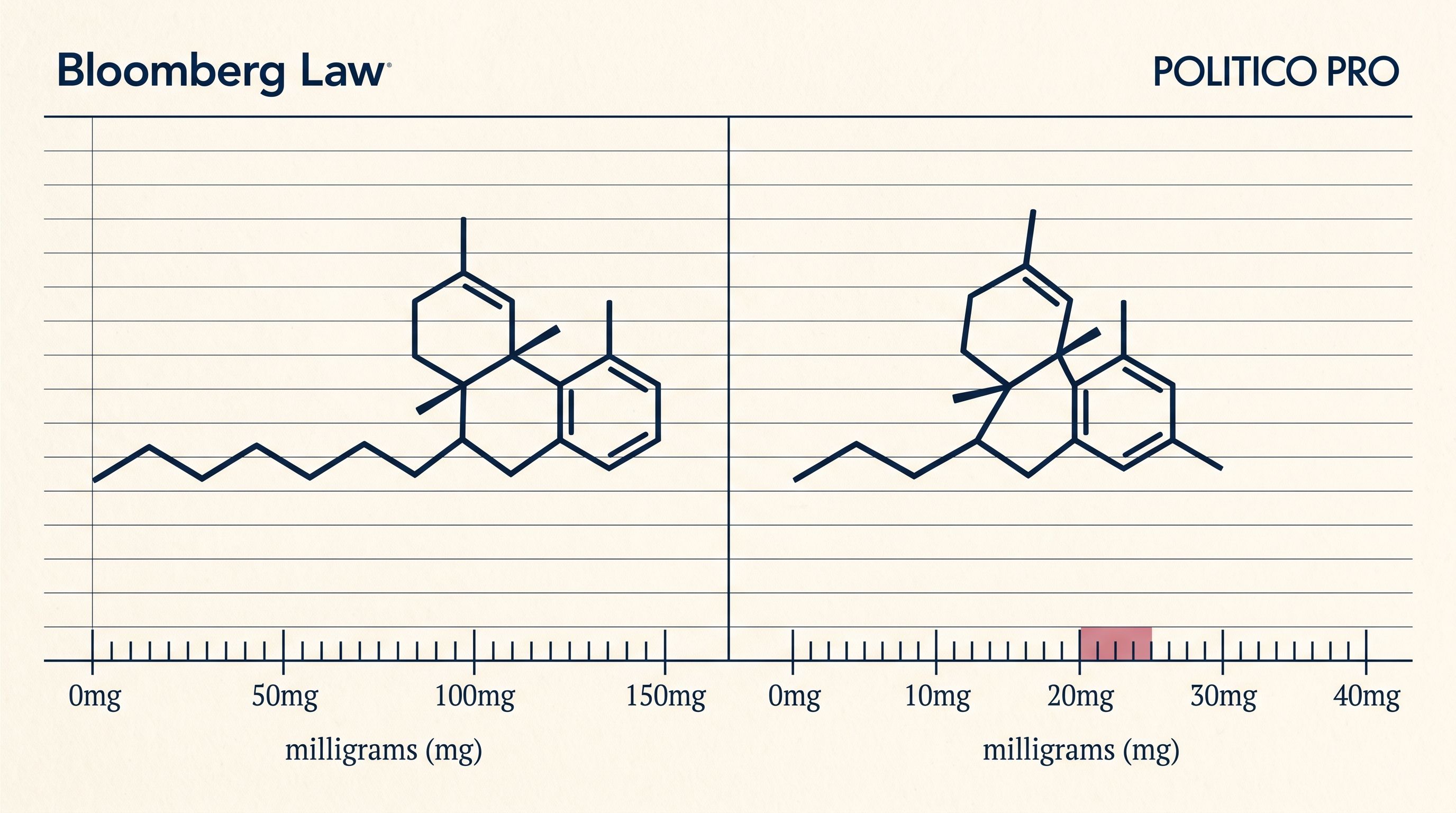
The 0.4 mg per-container cap is smaller than a single Delta-8 gummy. Seven trends operators should be tracking before the federal definition changes.
The more intoxicating cannabinoid has carried the lighter legal exposure. November 12 ends that — here is the comparison table operators actually need.
IDFPR posted the form. Any adult-use dispensary in good standing can add medical sales at the medical tax rate — if it can produce a floor plan and a zoning letter.
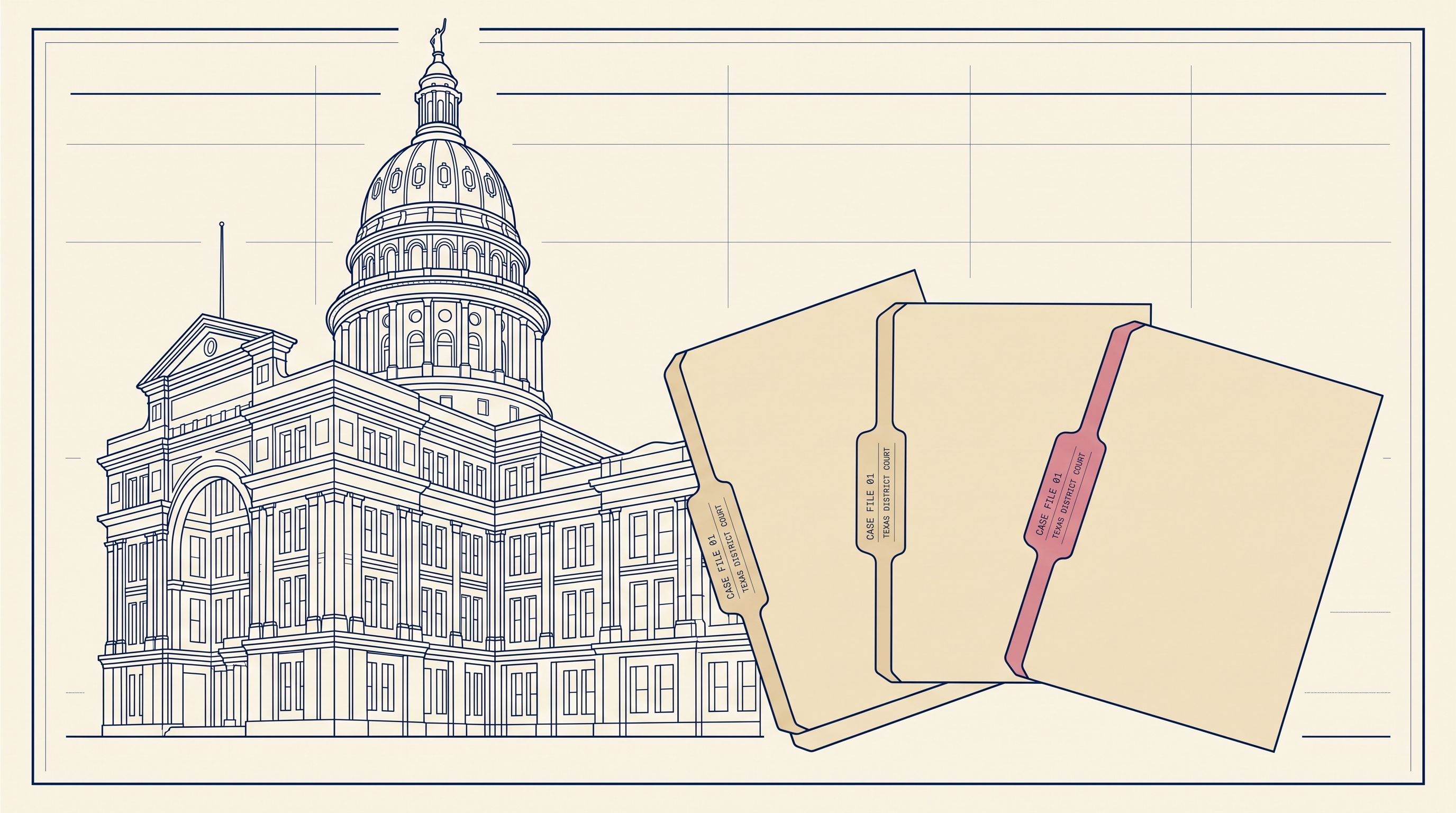
A third legal front opened in Travis County — this one aimed at how DSHS enforces, not just what the rules say. Plus the fee claim nobody is covering.
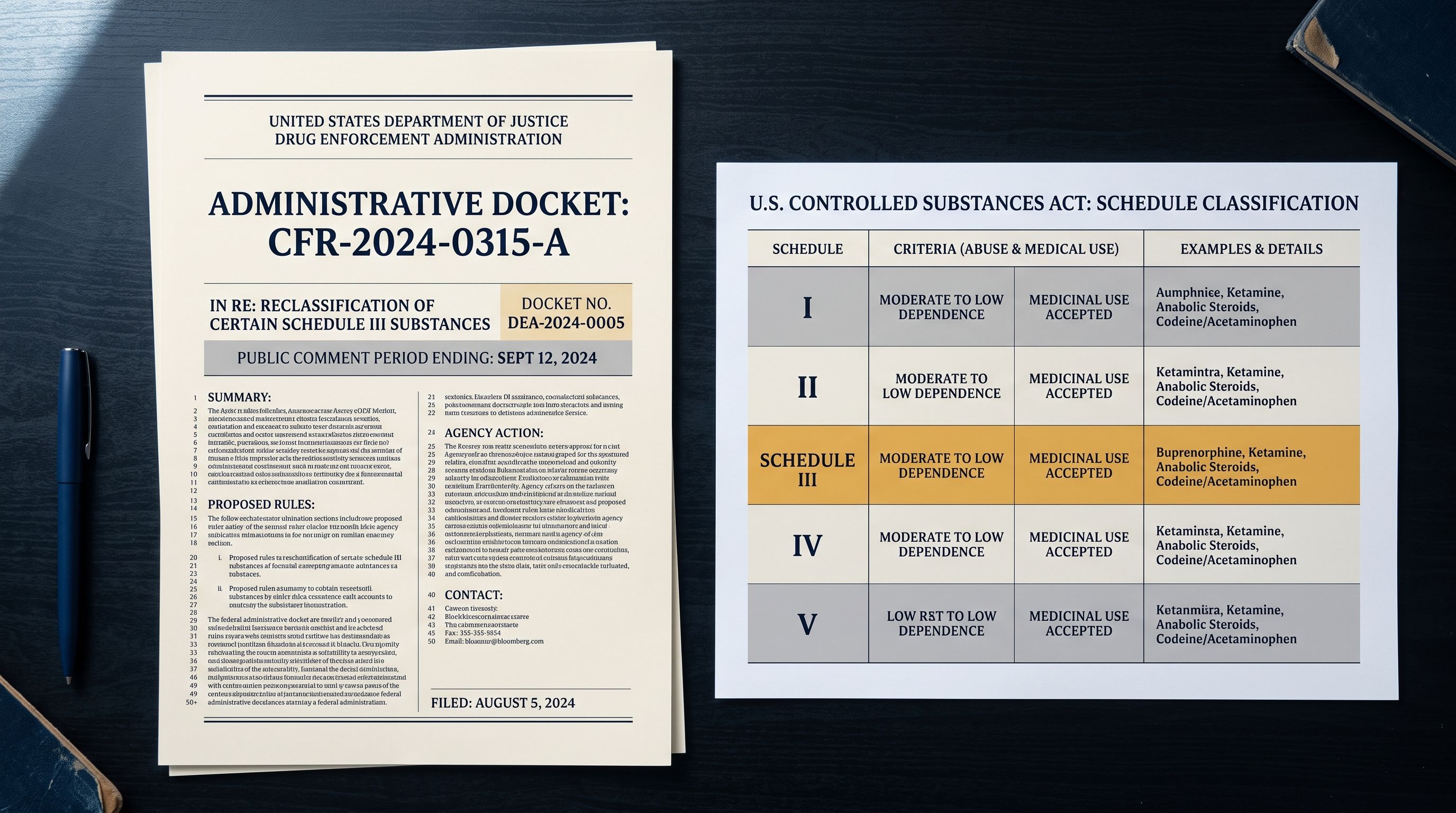
The agency that fought rescheduling for decades filed a brief asking its administrative law judge to recommend Schedule III. The recommendation is not the decision.
A federal judge declined to pause Virginia's 2 mg THC cap, and the strictest hemp limit in the country is now in force. The operator playbook, updated.
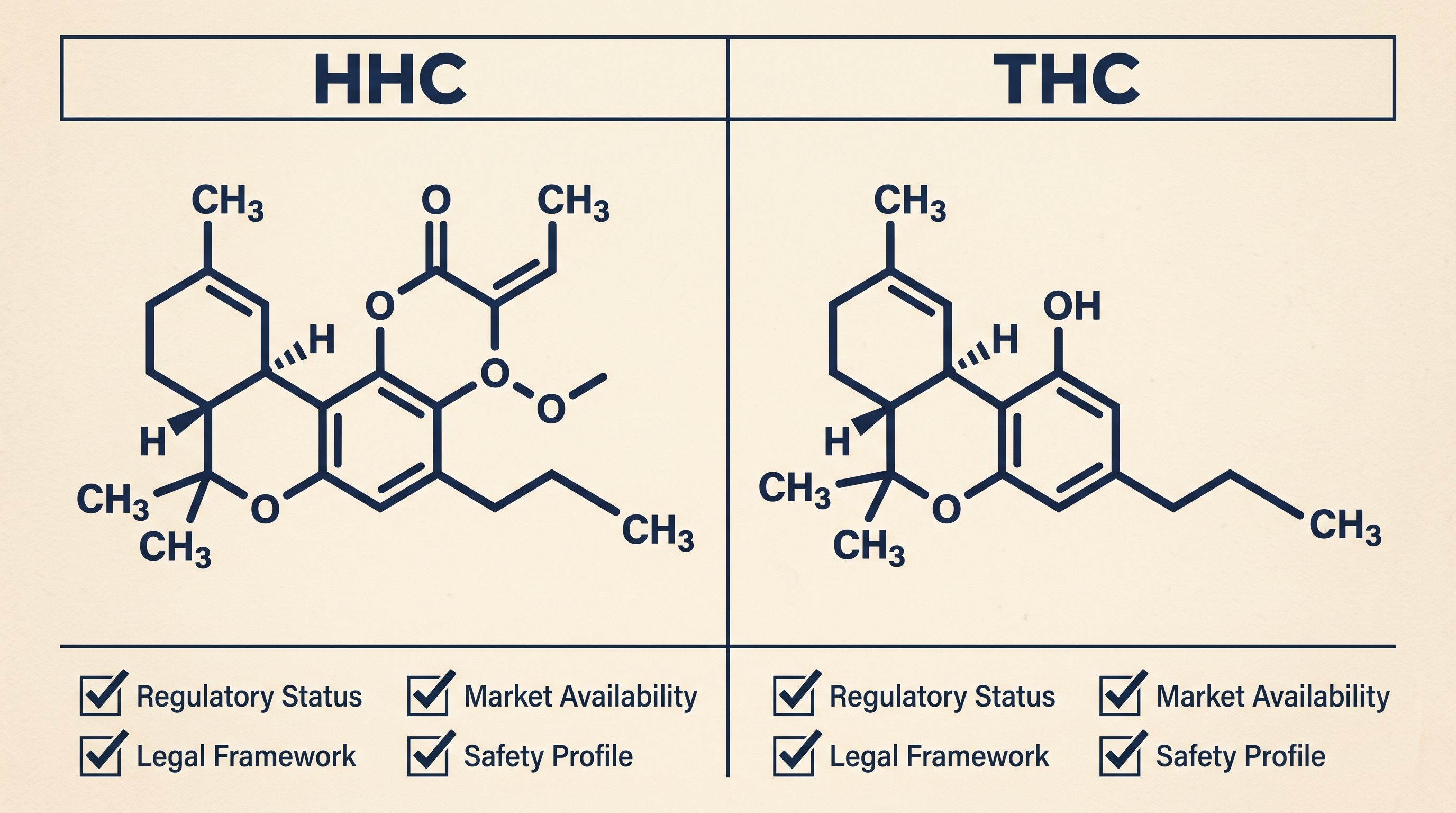
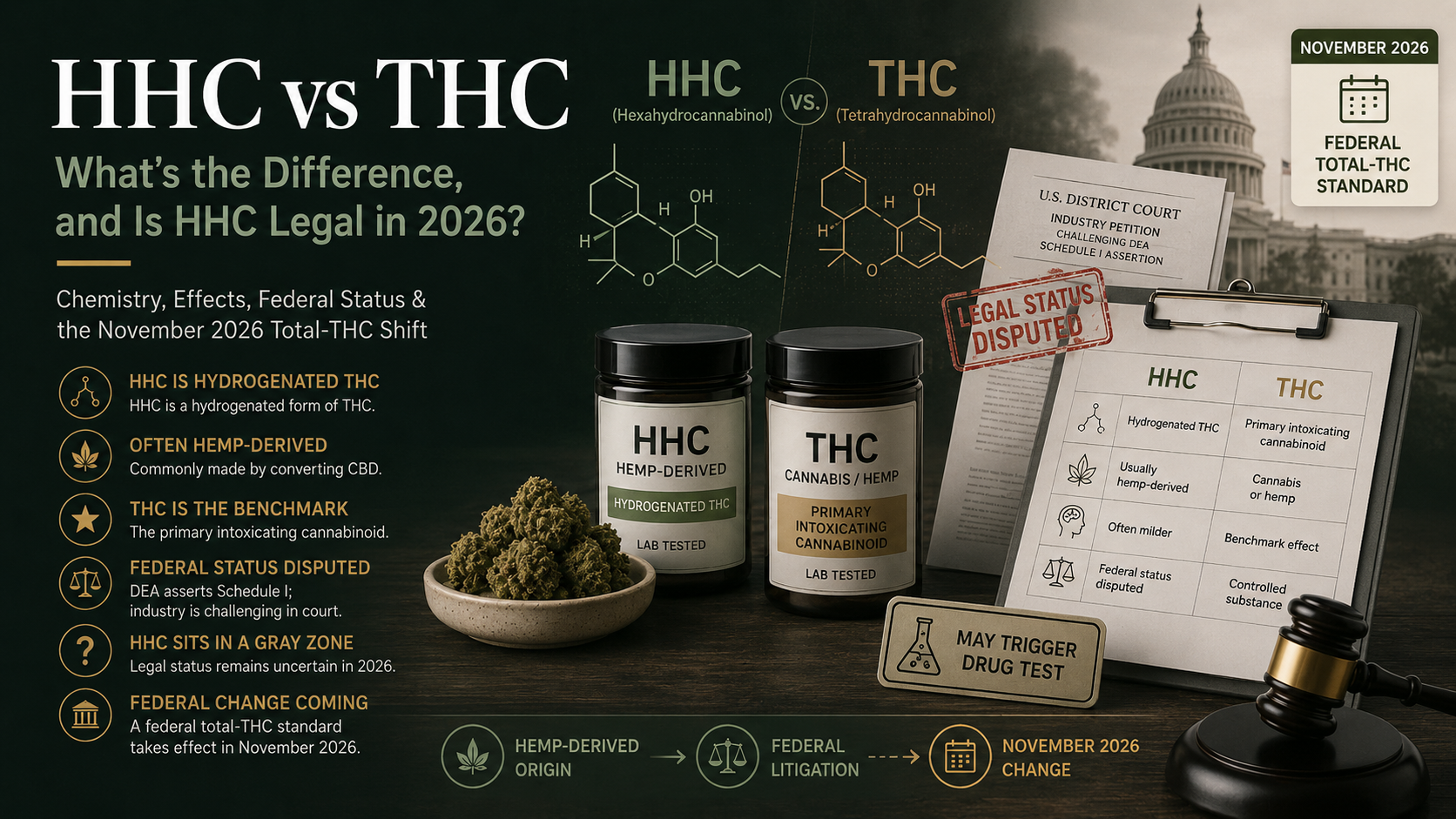
HHC and THC differ by one chemical step — and a widening legal gap. What the 2026 federal changes mean for each, state by state.
Square told merchants to pull CBD and hemp items by October 15 — a private deadline that lands before the federal ban, delay or not.
Signed the day it was presented, P.L. 119-103 moves the total-THC redefinition and the 0.4 mg cap to December 11 — and leaves non-naturally-producible cannabinoids on November 12.
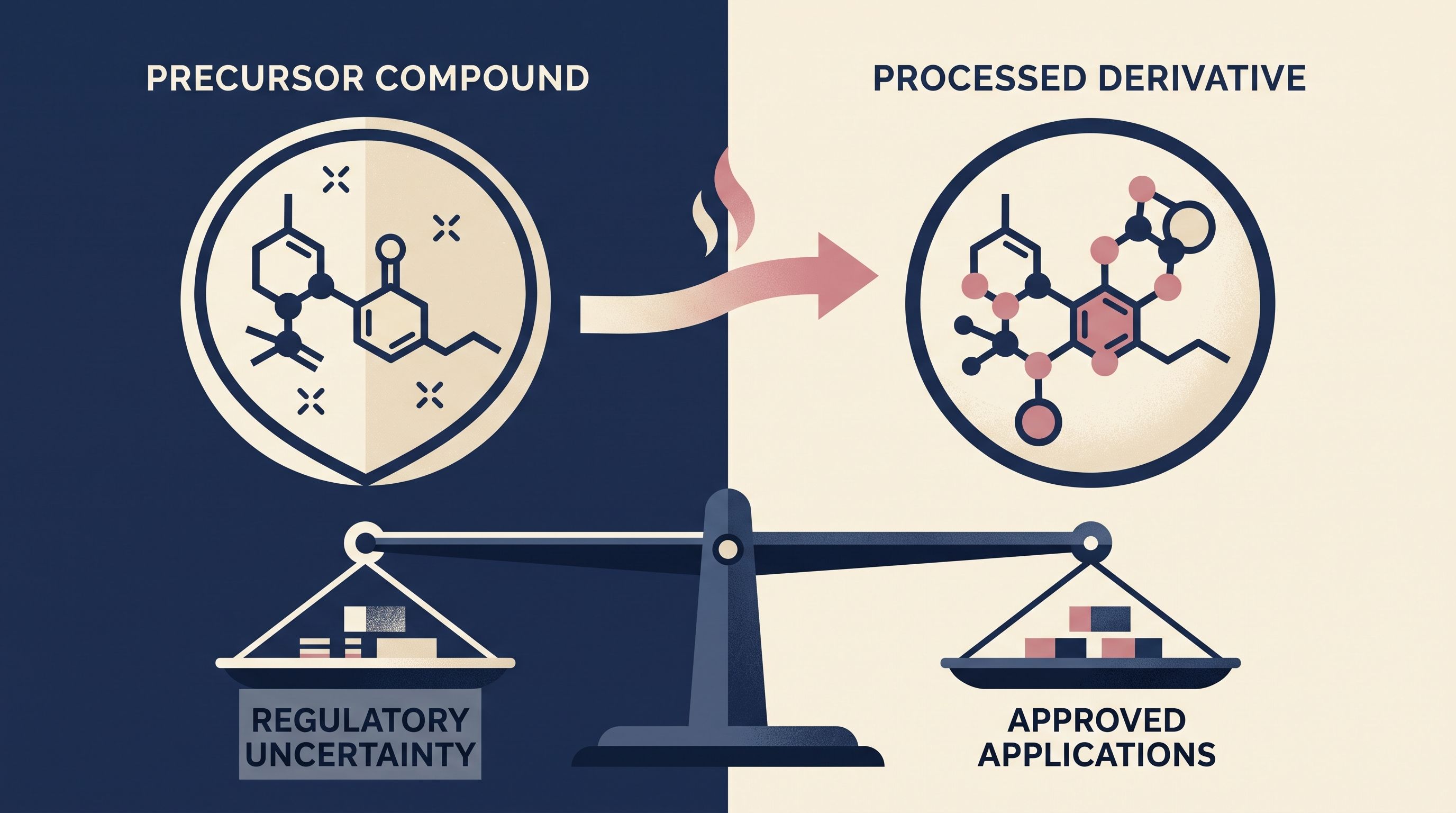
Chemically a heat step apart, legally worlds apart — until the November 12 total-THC standard closes the gap. What operators and buyers need to know.
A new AG enforcement unit, a federal lawsuit, and a 2 mg cap all land in the same month. Virginia hemp retail is about to be the most-watched market in the country.
Texas went Schedule I on most hemp THC, Virginia stood up an enforcement unit before its 2 mg cap, and Delaware wrote the East Coast THC-drinks playbook.
The Texas Supreme Court cleared DSHS to enforce its 2021 schedule — and on July 31, most hemp THC products became Schedule I. Here are the ten facts that matter.
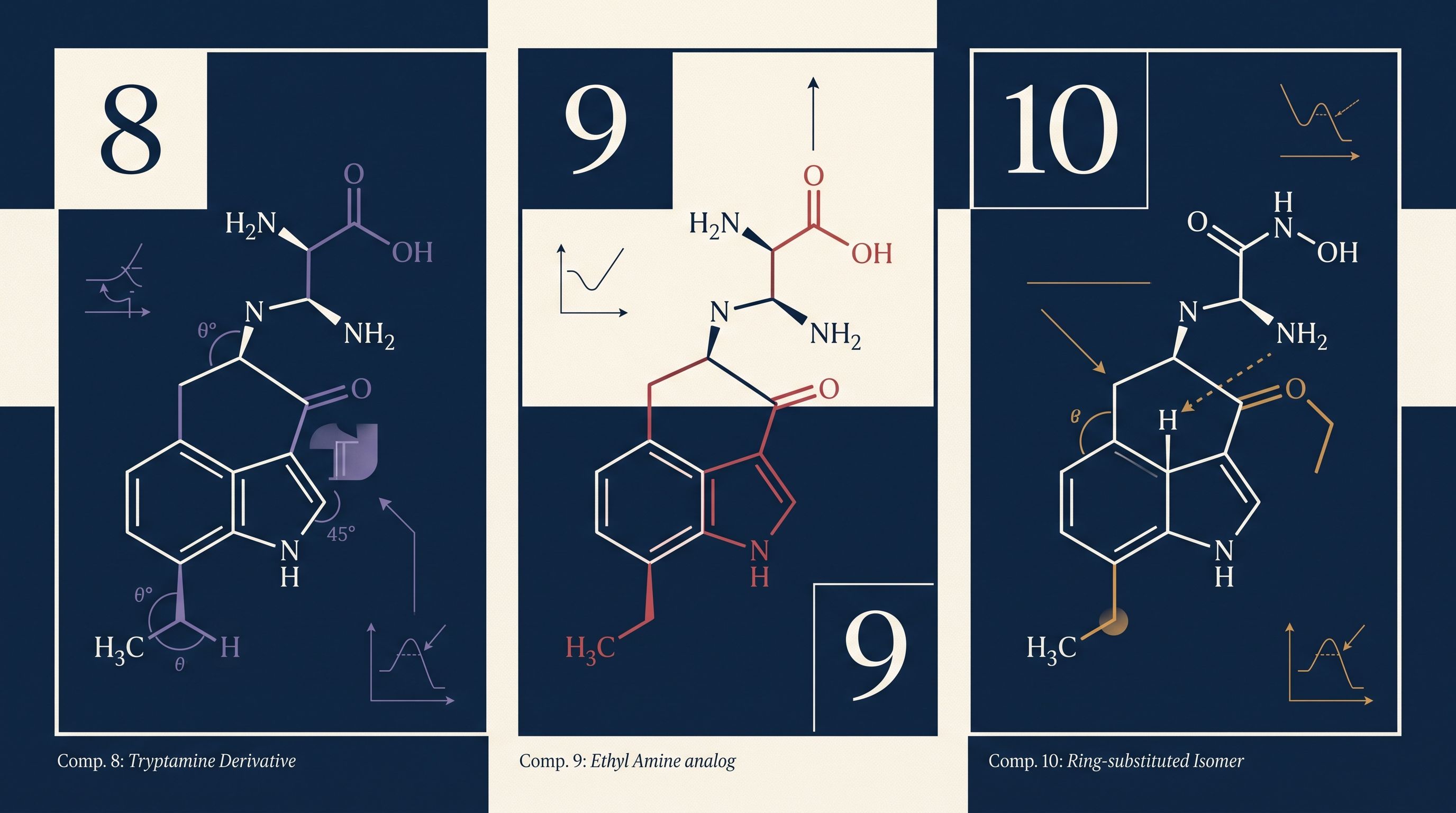
Three THC isomers, three legal stories. Which is strongest, which states ban which, and what November 12 changes for all of them.
Three weeks before Virginia's 2 mg cap bites, hemp businesses say they'll ask a court to stop it — borrowing the playbook that half-worked in Ohio.
Barr and Craig filed the first real vehicle to avert November 12 — with a 1% total THC standard and alcohol-style rules for THC drinks. THCA flower is left out.
CAOA was filed July 16 with a hemp-recriminalization block. Sen. Sheehy says a bipartisan fix can pass. Four months out, here are the realistic paths.
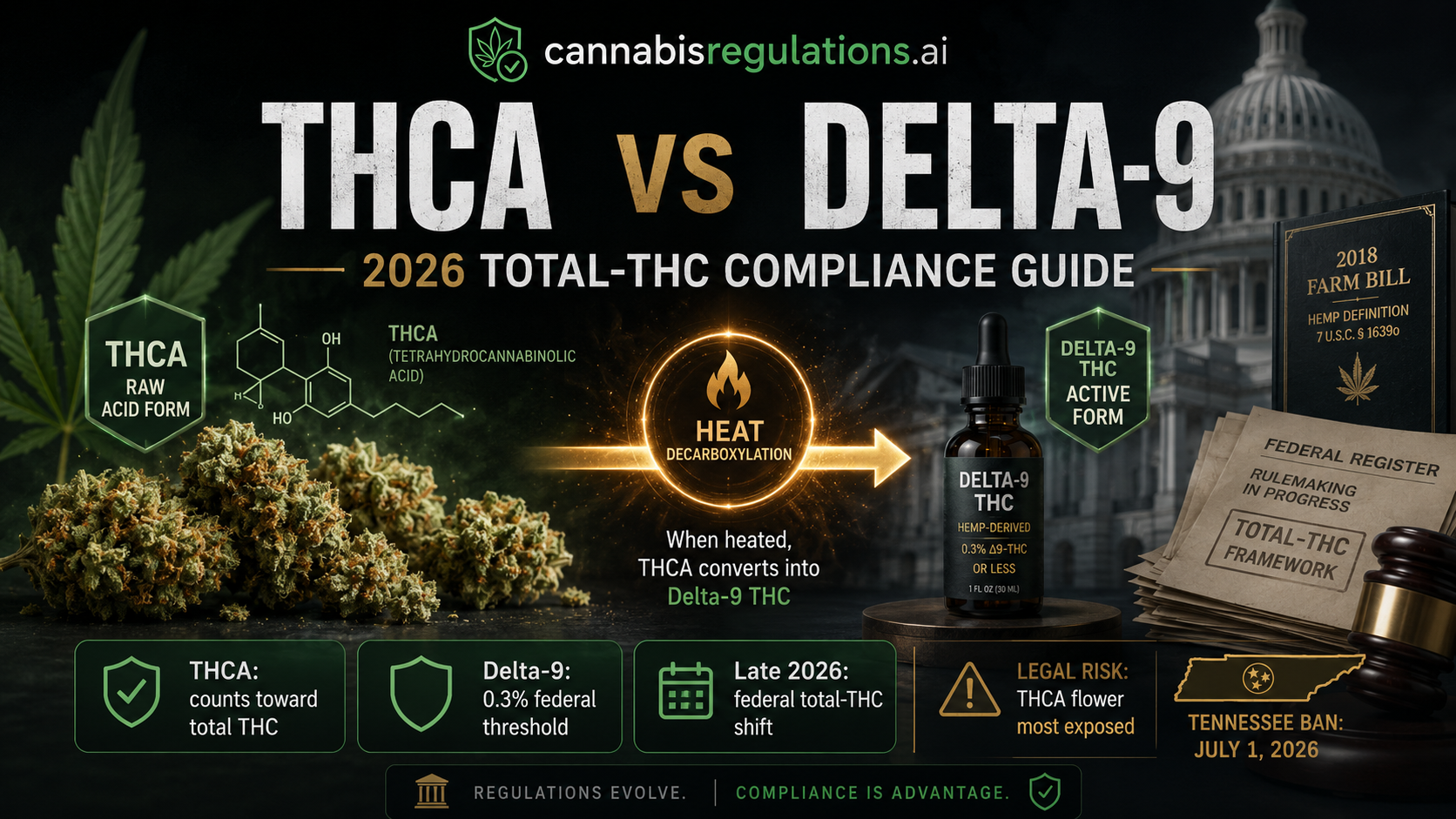
One is raw acid, one is a converted cannabinoid — and the law treats them very differently. A regulatory comparison with state-by-state links.
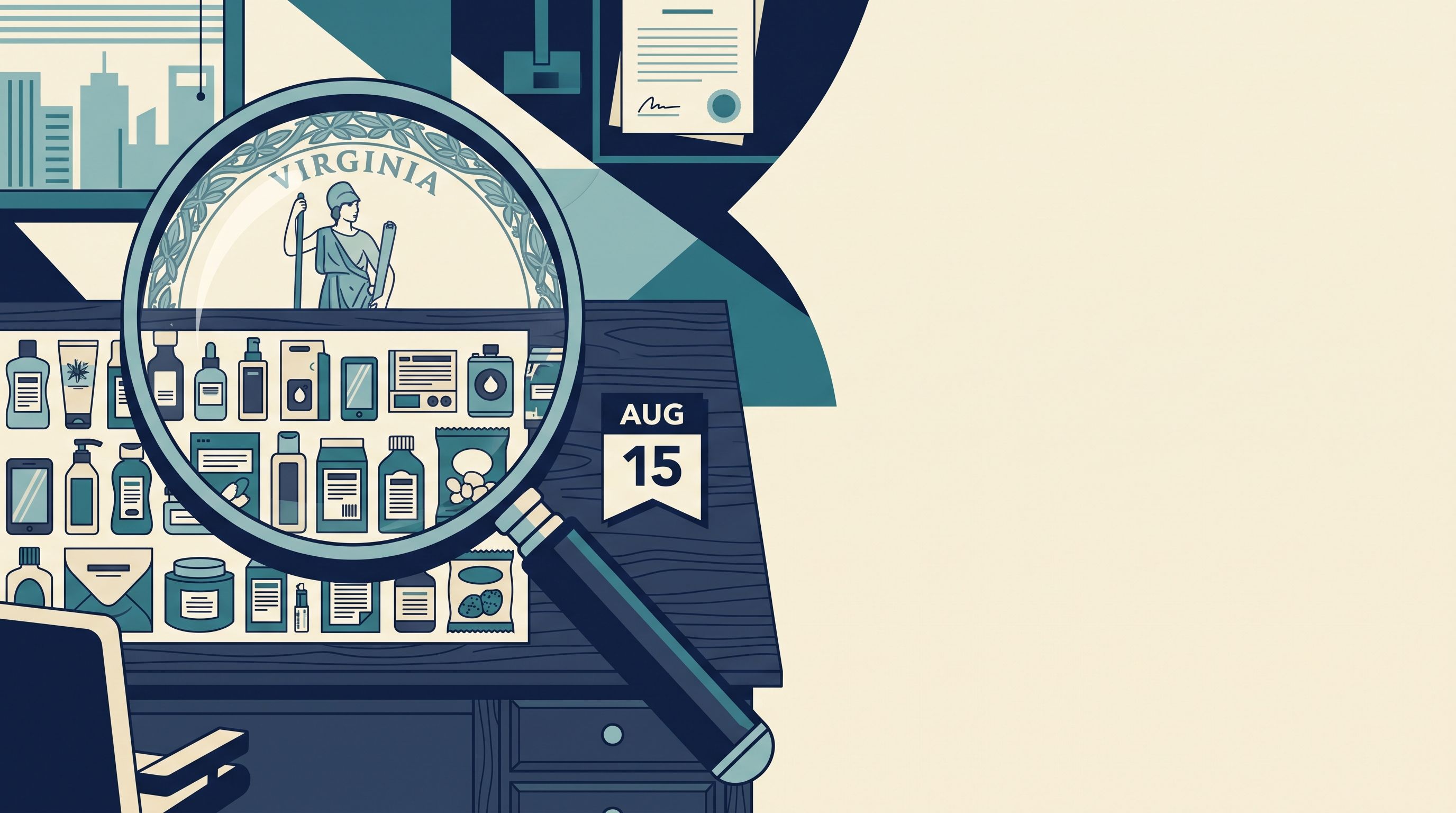
A 2 mg THC cap hits Virginia hemp products August 15, regulators shifted, and lawmakers may have accidentally repealed penalties. A compliance rundown.
HHC and Delta-8 look similar on a shelf but sit in different legal worlds. How federal scheduling and state law treat each cannabinoid in 2026.
NC lawmakers sent a compromise hemp THC, kratom, and xylazine bill to the governor. The total-THC standard redraws the state's THCA flower market.
Gov. Pritzker signed an omnibus that doubles possession limits and squeezes hemp THC products. A compliance rundown for Illinois operators and hemp brands.
A 2026 guide to Delta-9 legality in Texas: hemp-derived vs. marijuana, THC limits, and compliance steps for retailers and brands.
A regulatory-first comparison of Delta-8 and Delta-9 THC: legality, potency, sourcing, and compliance differences in 2026.
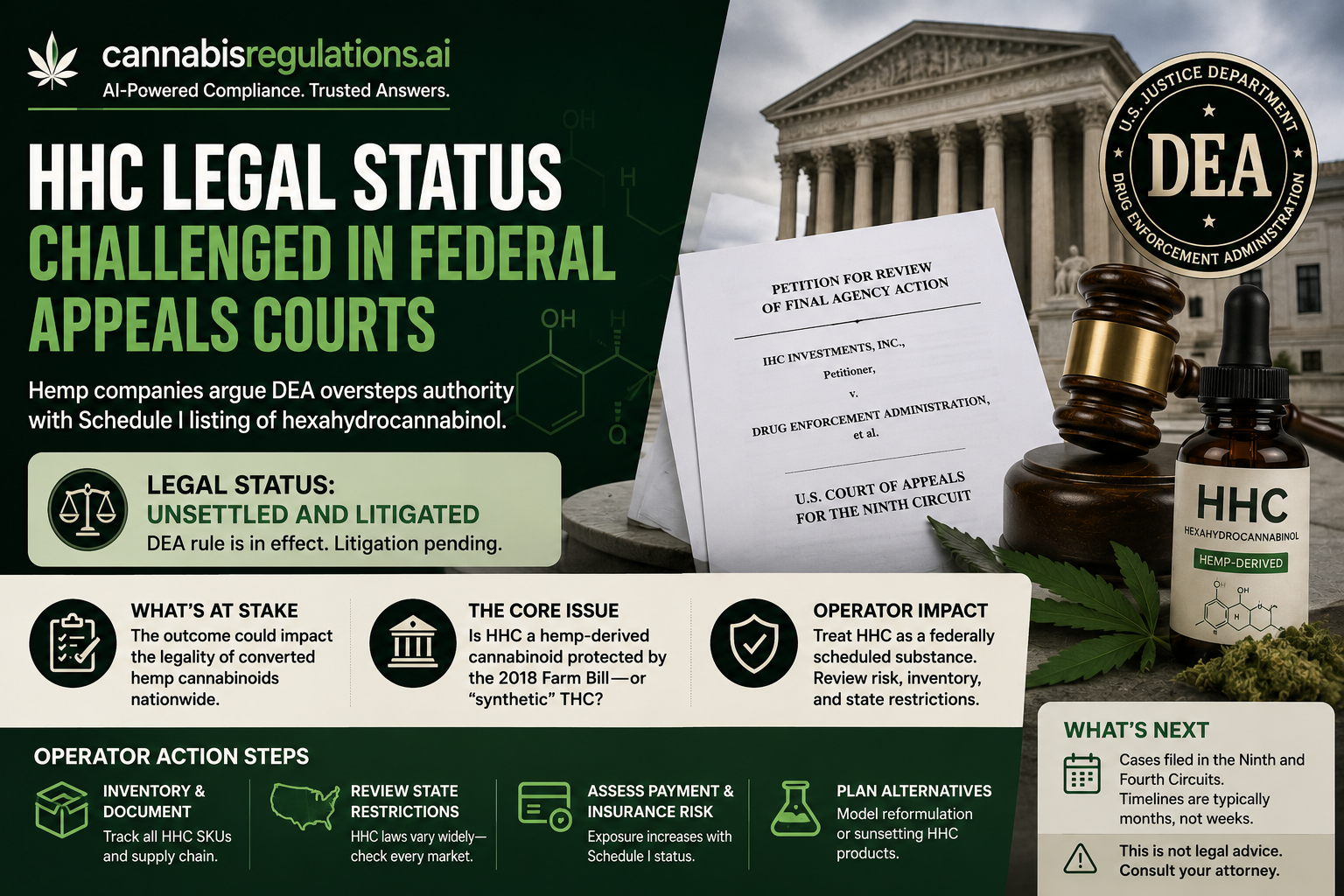
DEA says the company challenging its HHC rule has no standing, and that HHC stays Schedule I either way. The delay fight does not change that.
The executive branch urged Congress to soften the November hemp cliff — the strongest signal yet that the redefinition could move.
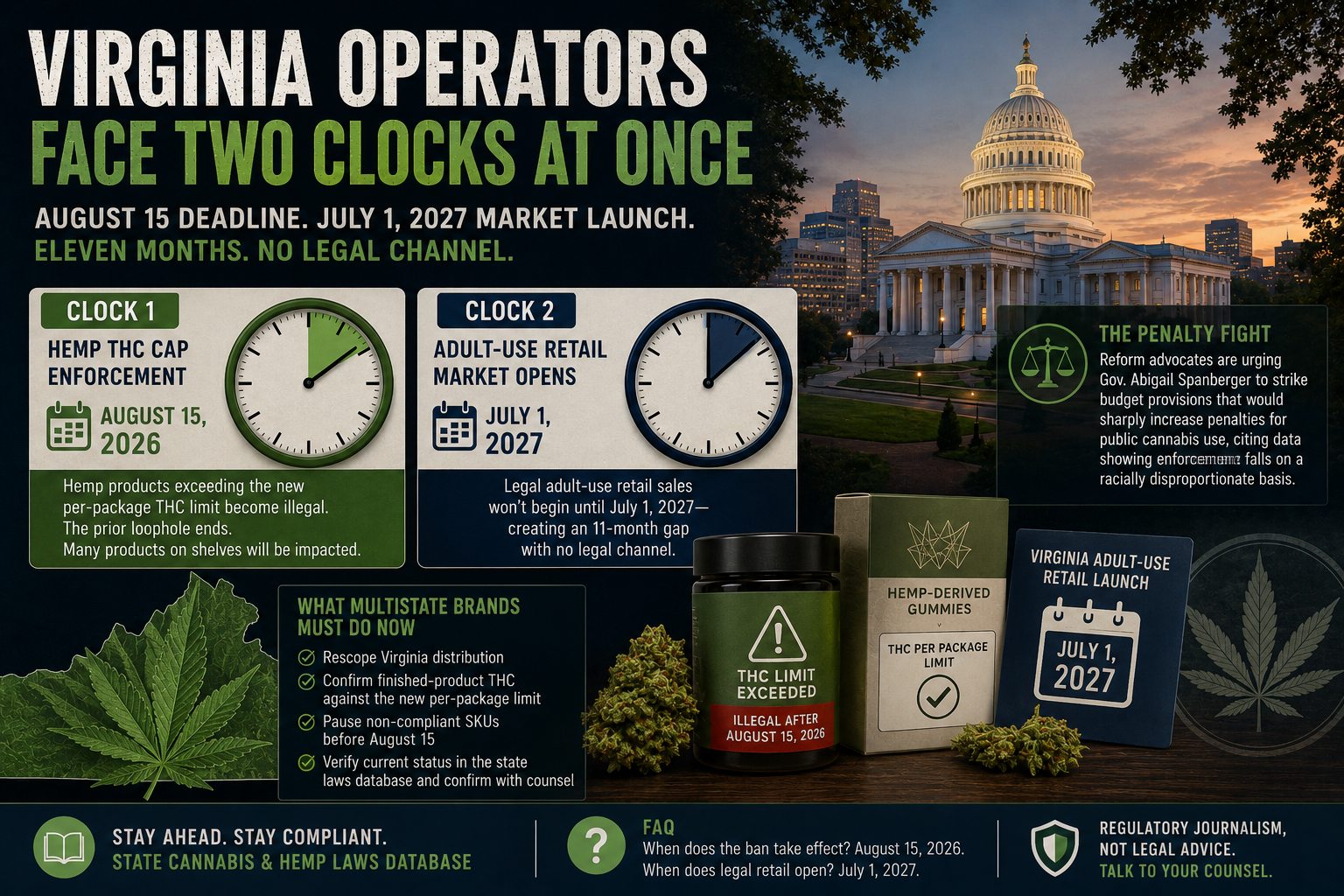
Virginia's August 15 hemp cutoff arrives 11 months before legal retail. What operators and multistate brands must do before the deadline.
A regulatory guide to HHC vs THC: what HHC is, how it compares with delta-9 THC, and where its contested legal status stands in 2026.
THCA converts to delta-9 THC when heated. Here's how the law treats each and why the 2026 total-THC standard reshapes the THCA flower market.
Hemp companies have petitioned the Ninth and Fourth Circuits to overturn the DEA's Schedule I listing of HHC. Here's what HHC operators should do now.
State-by-state THCA status as of August 2026 with deep dives for Alabama, Georgia, North Carolina, South Carolina, and Texas — plus what changes when federal H.R. 5371 §781 takes effect November 12, 2026.
Consumer-facing hemp shipping in 2026: what's mailable through USPS, UPS, and FedEx, which destination states refuse delivery, what the November 12 federal hemp redefinition removes from the mailable category, and what happens if a package is seized.
North Carolina's crackdown slipped past the election. The federal hemp definition did not. What NC retailers can sell now and which date changes first.
Hemp edibles under 0.3% delta-9 THC are TSA-permissible on planes in 2025; full guide to airport hemp rules, what TSA looks for, and travel risks.
Cannabis recall insurance underwriters in 2026 require documented product risk profiles, supplier controls, traceability evidence, and response readiness.
GS1 US Sunrise 2027 pushes cannabinoid and hemp brands to adopt 2D barcodes and Digital Link QR codes for POS scanning, COA delivery, and recall readiness.
New Jersey's S4509, signed January 2026, ends the intoxicating-hemp grey market with a licensing regime, age gates, and a fundamental compliance reset.
TSA doesn't search for cannabis but refers it to police. CBP seizes THC at the border. Hemp CBD under 0.3% is OK. Edibles, vapes, international inside.
State attractive-to-children shape bans for hemp and cannabis gummies in 2025 are subjectively enforced, pushing brands to design for the strictest standard.
Nevada's September 2025 enforcement sharpened on youth-appeal cannabis packaging and candy mimicry, triggering stop-sales on otherwise compliant SKUs.
Florida's 2025 Operation Safe Summer pulled more than 155,000 hemp packages under Rule 5K-4.034 for youth appeal, packaging, and labeling failures.
Florida FDACS stop-sale orders on hemp foods became a predictable 2025 risk, requiring a documented 72-hour response plan after Operation Safe Summer.
FDA's LAAF accreditation is mandatory for specific import-related hemp edibles testing in 2025, with ISO/IEC 17025 covering most routine quality work.
California AB 418 bans Red 3, brominated vegetable oil, potassium bromate, and propylparaben in foods starting January 1, 2027, sweeping in cannabis edibles.
Food-grade hemp ingredients must meet EPA pesticide tolerances under FFDCA while reconciling state cannabis residue lists and FSMA supply-chain rules.
Hemp edible retailers face Food Code permitting, TCS controls, and hot-fill or acidified validation requirements at the point of sale across U.S. jurisdictions.
Elgin's 2025 ordinance bans intoxicating delta-8 and delta-9 hemp edibles outside the state-licensed system, signaling a rising Illinois municipal ban trend.
California's DPH-24-005 makes no-detectable THC the permanent hemp baseline, putting lab method choice, LOQ versus LOD, and COA appeals center stage.
India's FSSAI now recognizes hempseed, flour, oil, and protein as foods in 2025, opening exporter pathways with strict residual cannabinoid and labeling limits.
California ABC bars licensed bars and restaurants from selling industrial hemp food or drinks on-premise, pairing with CDPH emergency intoxicating hemp rules.
TSA updated its medical-marijuana page on April 27, 2026, one day before Schedule III took effect for state-licensed medical. Here is what changed for hemp, CBD, and medical-cannabis travelers — and the November 12 hemp cliff that resets everything.
Rhode Island, Nevada, and other states in 2025 are forcing hemp-derived THC beverages, edibles, and concentrates into Metrc seed-to-sale and licensed cannabis.
Ireland FSAI is enforcing EU Novel Foods Regulation aggressively in 2025, blocking CBD foods, drinks, and supplements absent novel food authorization.
The FDA Human Foods Program 2025 guidance agenda signals tighter post-market scrutiny on CBD, CBN, and CBG and expanded adverse event reporting integration.
North Dakota's 2025 medical cannabis edibles rollout introduces packaging, labeling, and dosing requirements that dispensaries and processors must meet.
Montana HB 49, signed April 7, 2025, caps hemp products at 0.5 mg delta-9 THC per serving and 2 mg per package, effectively ending intoxicating hemp sales.
Iowa HF 2605 caps consumable hemp at 4 mg total THC per serving and 10 mg per package, with HHS enforcement targeting synthetic cannabinoids in 2025.
Maine Senate Paper 783 would reshape how delta-8 gummies and hemp-derived THC beverages are manufactured, packaged, and sold to protect minors from intoxicants.
No — THCA smokables are a Class C felony in Alabama under HB 445 (July 2025). Edibles allowed under 10mg/serving, 40mg/package. ABC Board license required.
Idaho's 2025 H0478 and H0456 prohibit retail sale of hemp-derived consumables and create a new retail licensing regime under the Department of Agriculture.
FDA's FSMA 204 Food Traceability Rule takes effect January 20, 2026, requiring hemp edible makers to log lot codes and produce records within 24 hours.
The UK Food Standards Agency's August 2025 consultation could deliver Britain's first full CBD novel food authorizations — ending the interim public-list era.
South Carolina HB 3935, HB 3924, and HB 4004 introduce 2025 licensing, on-premise bans, and age-21 sales rules for hemp-derived edibles, beverages, and vapes.
Missouri SB 518 would let low-dose hemp-derived THC beverages stay in retail while restricting intoxicating edibles and vapes to licensed dispensaries.
Louisiana Department of Health emergency rules, effective May 2, 2025, cap hemp at 5 mg THC per serving and require a 12-fluid-ounce minimum for beverages.
Oregon OLCC bulletin CE2025-05 requires artificially derived CBN products to meet federal GRAS or NDIN standards by July 1, 2025, or leave shelves.
Colorado's 6 CCR 1010-24 sets one of the toughest hemp regimes nationally: cannabinoid mg caps, CBD:THC ratios, and a safe harbor framework for 2025.
Minnesota's 2025 hemp-derived cannabinoid rules under Chapter 342 set registration, lower-potency hemp edible standards, and new limits on out-of-state sales.
Hemp edible brands face escalating 2025 child-resistant packaging demands under the CPSC's Poison Prevention Packaging Act, 16 CFR part 1700, and state rules.
Conservative U.S. states are tightening hemp laws in 2025, restricting intoxicating cannabinoids and raising compliance bars for operators and investors.
Connecticut's hemp rules effective October 1, 2025 cap manufactured hemp products at 1 milligram THC per serving, among the strictest state thresholds.
Hemp gummies remain federally legal under the 2018 Farm Bill, but 2025 state rules increasingly impose potency caps, age limits, and tighter labeling rules.
Answer your real world compliance questions (limited time) and save thousands in legal fees and avoided fines.