


Sign Up
Ready to replace complexity with clarity?
Answer your real world compliance questions (limited time) and save thousands in legal fees and avoided fines.
Automate Compliance Today

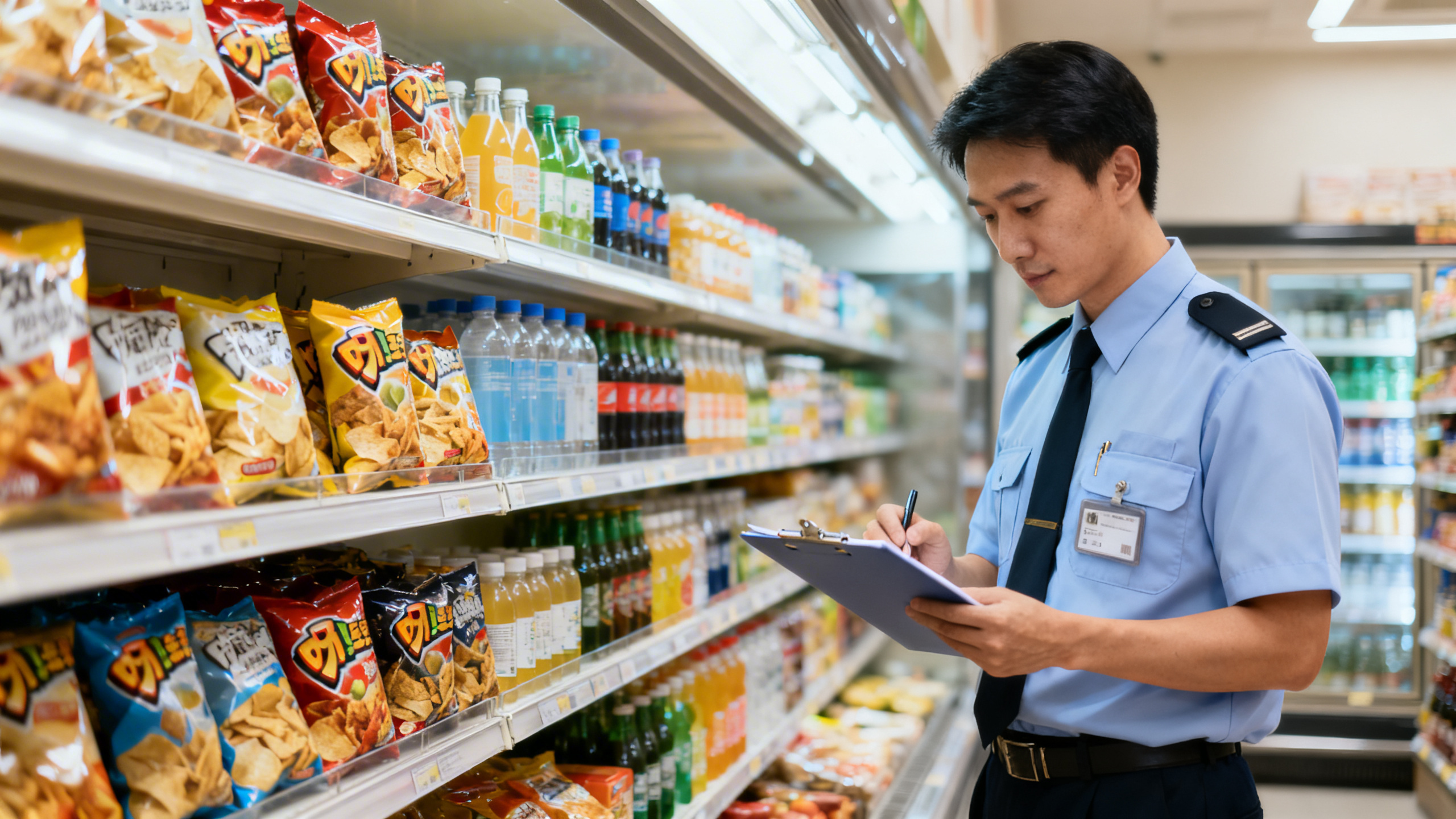
As hemp-derived gummies, baked goods, and infused beverages expand into mainstream channels like grocery, convenience, cafés, and hospitality, many brands are learning a hard lesson: even when a product is fully prepackaged, the point of sale is still a food business—and local health departments regulate food businesses primarily through their state’s adoption of the FDA Food Code (2022).
That shift matters because retail inspections are built around Food Code expectations—permits, temperature controls, sanitation, employee training, and consumer information (including allergens). And on the manufacturing side, an increasing number of shelf-stable drink formats are forcing teams to re-check whether they’ve accidentally wandered into acidified foods territory (21 CFR Part 114), where hot-fill parameters, scheduled processes, and process authority oversight become core elements of compliance.
This article is informational only and not legal advice.
The FDA Food Code is a model code used by state, local, tribal, and territorial regulators to build and update retail food rules. FDA tracks how jurisdictions adopt Food Code versions, and the 2024 annual report shows widespread adoption across the U.S., with adoption versions varying by state and sometimes by agency.
External reference: FDA’s Food Code hub and adoption tracking
In many jurisdictions, retailers assume they’re exempt if they only sell sealed, shelf-stable items. In reality, permit requirements are local and depend on how the state/local code defines a “food establishment,” what activities occur on-site, and whether any product is:
Even a store that “only sells packaged gummies” may be asked to show:
Local inspectors often use Food Code concepts and standard inspection factors (improper holding temperatures, cross-contamination, employee health, etc.). The hemp-edibles angle is that these products are now routinely merchandised alongside mainstream foods and beverages—so they are scrutinized through a retail food safety lens.
If a product is designated or treated as TCS, the retailer may need to hold it at Food Code temperature limits. A commonly referenced holding benchmark is:
Food Code reference commonly cited by regulators: § 3-501.16 (time/temperature control for safety food—hot and cold holding).
Why this matters to hemp products:
Retail takeaway: If you’re cold-holding any infused item, you should expect inspectors to ask for a thermometer, temperature logs, and corrective action procedures for excursions.
Retail food codes frequently enforce date marking for ready-to-eat (RTE) TCS foods held under refrigeration beyond 24 hours.
Food Code references:
Even if a packaged product is commercially manufactured, retailers can create date-marking obligations when they:
Brand takeaway: If your go-to-market plan includes delis, cafés, or grab-and-go coolers, provide retailers with a date-marking instruction card that aligns with their local code.
Allergen compliance keeps tightening. Sesame became the 9th major food allergen under federal law starting January 1, 2023, and FDA has specific retail-facing resources to reinforce that expectation.
External reference: FDA retail poster and guidance page
Food Code update context:
Where hemp edibles often fail in practice:
Retail inspections often focus on whether the person in charge can demonstrate knowledge and ensure staff follow food safety procedures.
Food Code training emphasis is strengthened in the 2022 update, including guidance around food allergy awareness training elements.
Retail takeaway: If you’re a café, bar, or grocer selling infused beverages or edibles, train staff to answer:
Permit rules are local, but most regulatory programs separate:
Food Code plan review references often cited include § 8-201.11 and § 8-201.12 (plans and specifications).
You’re more likely to trigger plan review and stricter permitting when you add any of the following:
Reduced oxygen packaging (ROP) is specifically addressed in the Food Code (variance and criteria sections are commonly referenced as § 3-502.11 and § 3-502.12).
Retail takeaway: If you are selling infused beverages from a tap system, preparing mocktails, or repackaging items, talk to your local health department early—before buildout and menu launch.
Retail inspectors expect repeatable systems, not improvisation. For hemp products, the key is building routine SOPs that align to Food Code fundamentals.
If you have food-contact surfaces, you should expect requirements for:
The Food Code includes provisions on determining sanitizer concentration (commonly referenced in the warewashing sections, e.g., § 4-501.116 is highlighted in the 2022 change summary).
Also note: the Food Code supplement adds a Part 4-10 concept for disinfection when pathogens of concern are not controlled by available sanitizers (e.g., contamination events), and the Food Code requires written procedures for vomiting/diarrheal events (commonly referenced as § 2-501.11).
External reference (vomit/diarrhea cleanup requirement explained in many local handouts):
Sealed products don’t eliminate storage rules. Inspectors commonly enforce:
External reference (state-code mirror of Food Code storage requirement):
Many infused beverages are marketed as shelf-stable, ambient, and distributed through conventional channels. That can raise a crucial federal question: does the product fall under acidified foods regulations?
Under 21 CFR Part 114, acidified foods are low-acid foods to which acid(s) or acid foods are added to reduce the equilibrium pH to 4.6 or below. Acidified foods are regulated because improper acidification and process control can create a severe public health risk.
Official source:
If a beverage or syrup is:
…you should assess whether 21 CFR 114/108 process filing obligations apply.
“Hot-fill” is not just a marketing term. For an acidified drink, a safe commercial process usually requires documented control of:
In the acidified foods framework, deviations from a scheduled process require evaluation, reprocessing, or other corrective action, and processors must maintain processing and production records, including pH measurements.
Official source (records/deviations):
Many brands are unfamiliar with process authority requirements because they started in supplement-style channels and then moved into conventional retail.
If your product is an acidified food subject to 21 CFR 108/114, you should expect:
Official FDA overview:
Manufacturer takeaway: If you are selling shelf-stable infused beverages, do not assume “low pH” alone equals safety. The compliance expectation is controlled processing with records.
The FDA’s Human Foods Program (HFP) operating model took effect October 1, 2024, and the agency published FY 2025 Priority Deliverables describing its first-year focus areas.
Official source:
While HFP priorities span the full foods portfolio, hemp edible and beverage brands should pay special attention to areas that tend to drive inspections and enforcement outcomes:
FDA has continued to publicize allergen labeling enforcement actions. For example, FDA issued a warning letter to Bimbo Bakeries USA in 2024 concerning allergen labeling issues.
Official source:
Brand takeaway: Allergen controls are a frequent enforcement lane; align your label QA process accordingly.
The goal is to make compliance repeatable. Below are field-tested checklist structures that map to how inspectors think.
Use this before opening, adding a new product category, or expanding into beverage service.
If any infused item is stored in refrigeration or treated as TCS:
Tip: Inspectors often care less about “perfect logs” and more about whether staff actually understands what to do when something is out of range.
Where refrigerated RTE/TCS handling occurs:
Food Code references commonly used: § 3-501.17 and § 3-501.18
If you have food-contact surfaces:
Build a short training module (15–20 minutes) and refresh quarterly.
Use this to triage shelf-stable beverage risk.
Official references:
Separate from food code issues, FDA continues to warn companies about unlawfully marketing CBD-containing foods and beverages and has also coordinated actions around copycat products and child safety risks.
Official source:
Business takeaway: Retail food code compliance does not substitute for federal food law compliance. Brands should build an integrated compliance strategy that covers labeling, manufacturing controls, and channel-specific retail requirements.
If you sell or manufacture hemp-derived edibles and beverages in the U.S., the fastest way to reduce risk is to assemble a simple, organized “compliance binder” with:
For ongoing monitoring across jurisdictions—and to keep your cannabis compliance and hemp compliance program aligned with evolving state and local expectations—use https://www.cannabisregulations.ai/ to track regulatory changes, build SOPs, and stay inspection-ready.