
February 20, 2026

Thank you! Your submission has been received!
Oops! Something went wrong while submitting the form.

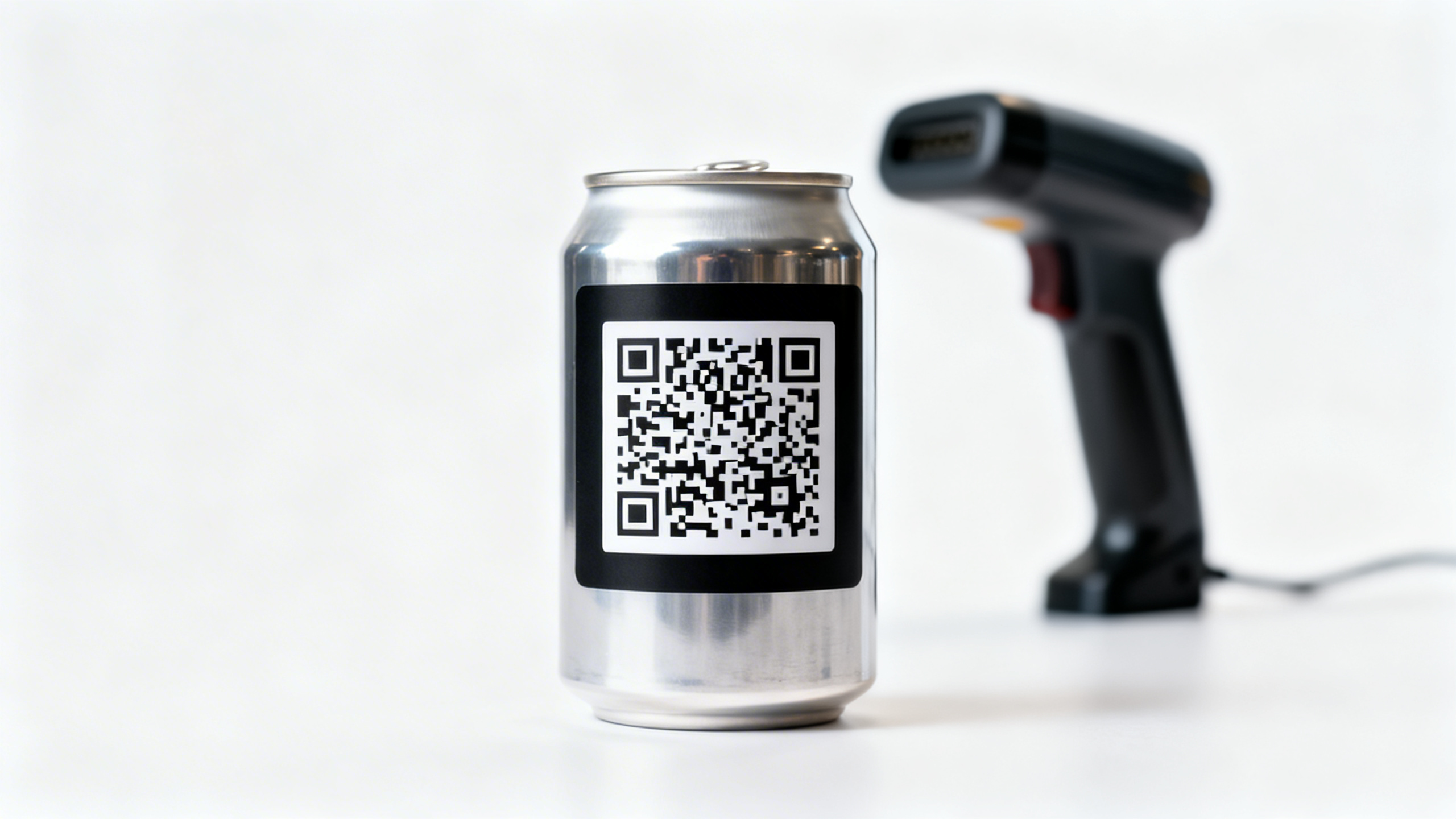
In 2025, the “2D barcode at checkout” conversation stopped being a future-looking innovation project and became an operational deadline for brand owners who want mainstream retail distribution.
GS1 US has set a widely adopted target known as the 2D Barcode Sunrise 2027: by 2027, retailers and solution providers are expected to be able to scan a 2D barcode (most commonly a QR code or DataMatrix) at the point of sale (POS) for primary identification—meaning the same scan can support price lookup and item identification, and (when properly implemented) unlock richer data such as lot/batch, expiration date, and recall workflows.
For hemp‑THC beverages, this matters for two reasons:
This article explains how to build a GS1 Digital Link migration plan in 2025 that keeps you POS‑ready for Sunrise 2027 while also staying aligned with evolving hemp‑THC labeling expectations across the U.S. (Informational only; not legal advice.)
GS1’s Sunrise is not a single federal law or a single retailer mandate. It’s an industry alignment target driven by GS1 members across retail, CPG, healthcare, and solution providers.
At a practical level, Sunrise 2027 is pushing the market toward:
In 2025, retailer pilots and technology refresh cycles are accelerating because:
If you wait until 2026 to begin, you may end up:
A common misconception is: “We already have a QR code on pack.” For Sunrise 2027 readiness, that’s not enough.
A marketing QR often encodes a single URL, such as:
https://brand.com/product/blue-raspberryThis can be useful for campaigns, but it’s not a consistent product identifier and doesn’t tell a retailer system what the item is. It also typically lacks:
A GS1 Digital Link QR code encodes a URL that contains GS1 identifiers in a standardized syntax so many systems can interpret the same scan.
A simplified example structure looks like:
https://id.gs1.org/01/00012345678905Where 01 is the GS1 Application Identifier indicating a GTIN, and the following digits represent the GTIN.
It can also include key attributes commonly needed for quality and safety workflows, such as:
That means a single 2D can support:
Retailers and their solution providers increasingly want:
GS1 Digital Link supports this by allowing “one code” that can resolve differently depending on context (consumer scan vs. retailer app scan vs. internal quality scan), while the embedded identifiers remain standard.
External reference: GS1 US overview of the Sunrise initiative and 2D barcodes (start here): https://www.gs1us.org/industries/retail-grocery/2d-barcodes
Hemp‑THC beverage requirements are not unified federally. They vary by state and change quickly. Still, several states that explicitly regulate hemp‑derived cannabinoid products have moved toward requiring that consumers can access lab testing information.
Common patterns businesses are encountering in 2024–2026 rulemaking and guidance include:
The compliance risk: if you print a separate “COA QR” that points to a PDF without governance, you can end up with:
For hemp‑THC beverages targeting grocery/c‑store distribution, the pragmatic 2025 goal is:
This reduces label clutter and creates a single governed identifier for product transparency.
Many compliance programs expect the QR to take a consumer to testing results quickly. You can meet that expectation with GS1 Digital Link by:
Important operational nuance: COAs are often issued per batch/lot. If your QR code is static and points to a generic “COA library,” it may satisfy a basic expectation but creates mismatch risk. A lot-aware Digital Link strategy is more recall-ready.
Even without naming specific chain mandates, the 2025 signals coming from GS1 forums and retailer technology roadmaps are consistent:
If you’re selling hemp‑THC beverages, your additional signal is the speed at which states add packaging and testing transparency requirements. Building your link and data governance in 2025 helps you adapt without reprinting everything.
Below is a practical implementation checklist designed for beverage brands and co-packers.
To participate in standards-based scanning:
Takeaway: A perfect QR code won’t fix messy item identity. Start with the GTIN.
Most Sunrise strategies use either:
For beverages, QR is frequently preferred for consumer engagement, but you must still design for:
Work with your printer and packaging engineer early. Changing varnish, ink density, or can curvature can materially impact scan rates.
Even if you don’t print variable lot information in 2025, design your architecture to support it.
A mature path looks like:
Treat Digital Link as regulated infrastructure, not a marketing microsite.
Minimum controls to implement in 2025:
To support POS, recall, and transparency, define a canonical dataset that includes:
Avoid “PDF-only compliance.” Make your product data queryable so you can respond quickly during an enforcement inquiry or retailer audit.
Many hemp‑THC beverage programs use some form of age restriction messaging. If you implement an age gate on the consumer destination page:
A common pattern is:
A recall-ready Digital Link program includes:
If you can’t change the destination quickly and audibly during an event, the 2D code becomes a liability.
External reference on product identification and recall concepts (GS1): https://www.gs1.org/standards/barcodes/2d
Lot-aware 2D codes often require:
Put this in co‑packing agreements now:
Many brands will run with both a UPC/EAN and a 2D code for a period.
Key controls:
Treat your labeling and link program like a compliance system:
This documentation is often what enforcement agencies, retailers, and insurers ask for when there’s a complaint or adverse event.
Even though the hemp‑THC beverage landscape is not governed by a single unified federal product framework, the broader U.S. supply chain is moving toward stronger traceability and faster recalls.
If your organization sells into mainstream channels, your buyers will increasingly expect:
A GS1 Digital Link 2D strategy is a practical way to align with those expectations while keeping your label footprint under control.
If you do only five things this year, do these:
As 2D codes become common at checkout, consumers will likely see:
The key is that the code on pack becomes a trusted pointer—not an ad hoc marketing link.
Sunrise 2027 is a catalyst, but hemp‑THC beverage requirements are still evolving state by state. The brands that win shelf space will be the ones that treat cannabis compliance, labeling, and digital identity as a single system—not separate tasks owned by different teams.
To track state-by-state labeling rules, COA access expectations, and upcoming changes—and to build a defensible compliance workflow around GS1 Digital Link—use https://cannabisregulations.ai/ for ongoing compliance support, monitoring, and implementation guidance.
In 2025, the “2D barcode at checkout” conversation stopped being a future-looking innovation project and became an operational deadline for brand owners who want mainstream retail distribution.
GS1 US has set a widely adopted target known as the 2D Barcode Sunrise 2027: by 2027, retailers and solution providers are expected to be able to scan a 2D barcode (most commonly a QR code or DataMatrix) at the point of sale (POS) for primary identification—meaning the same scan can support price lookup and item identification, and (when properly implemented) unlock richer data such as lot/batch, expiration date, and recall workflows.
For hemp‑THC beverages, this matters for two reasons:
This article explains how to build a GS1 Digital Link migration plan in 2025 that keeps you POS‑ready for Sunrise 2027 while also staying aligned with evolving hemp‑THC labeling expectations across the U.S. (Informational only; not legal advice.)
GS1’s Sunrise is not a single federal law or a single retailer mandate. It’s an industry alignment target driven by GS1 members across retail, CPG, healthcare, and solution providers.
At a practical level, Sunrise 2027 is pushing the market toward:
In 2025, retailer pilots and technology refresh cycles are accelerating because:
If you wait until 2026 to begin, you may end up:
A common misconception is: “We already have a QR code on pack.” For Sunrise 2027 readiness, that’s not enough.
A marketing QR often encodes a single URL, such as:
https://brand.com/product/blue-raspberryThis can be useful for campaigns, but it’s not a consistent product identifier and doesn’t tell a retailer system what the item is. It also typically lacks:
A GS1 Digital Link QR code encodes a URL that contains GS1 identifiers in a standardized syntax so many systems can interpret the same scan.
A simplified example structure looks like:
https://id.gs1.org/01/00012345678905Where 01 is the GS1 Application Identifier indicating a GTIN, and the following digits represent the GTIN.
It can also include key attributes commonly needed for quality and safety workflows, such as:
That means a single 2D can support:
Retailers and their solution providers increasingly want:
GS1 Digital Link supports this by allowing “one code” that can resolve differently depending on context (consumer scan vs. retailer app scan vs. internal quality scan), while the embedded identifiers remain standard.
External reference: GS1 US overview of the Sunrise initiative and 2D barcodes (start here): https://www.gs1us.org/industries/retail-grocery/2d-barcodes
Hemp‑THC beverage requirements are not unified federally. They vary by state and change quickly. Still, several states that explicitly regulate hemp‑derived cannabinoid products have moved toward requiring that consumers can access lab testing information.
Common patterns businesses are encountering in 2024–2026 rulemaking and guidance include:
The compliance risk: if you print a separate “COA QR” that points to a PDF without governance, you can end up with:
For hemp‑THC beverages targeting grocery/c‑store distribution, the pragmatic 2025 goal is:
This reduces label clutter and creates a single governed identifier for product transparency.
Many compliance programs expect the QR to take a consumer to testing results quickly. You can meet that expectation with GS1 Digital Link by:
Important operational nuance: COAs are often issued per batch/lot. If your QR code is static and points to a generic “COA library,” it may satisfy a basic expectation but creates mismatch risk. A lot-aware Digital Link strategy is more recall-ready.
Even without naming specific chain mandates, the 2025 signals coming from GS1 forums and retailer technology roadmaps are consistent:
If you’re selling hemp‑THC beverages, your additional signal is the speed at which states add packaging and testing transparency requirements. Building your link and data governance in 2025 helps you adapt without reprinting everything.
Below is a practical implementation checklist designed for beverage brands and co-packers.
To participate in standards-based scanning:
Takeaway: A perfect QR code won’t fix messy item identity. Start with the GTIN.
Most Sunrise strategies use either:
For beverages, QR is frequently preferred for consumer engagement, but you must still design for:
Work with your printer and packaging engineer early. Changing varnish, ink density, or can curvature can materially impact scan rates.
Even if you don’t print variable lot information in 2025, design your architecture to support it.
A mature path looks like:
Treat Digital Link as regulated infrastructure, not a marketing microsite.
Minimum controls to implement in 2025:
To support POS, recall, and transparency, define a canonical dataset that includes:
Avoid “PDF-only compliance.” Make your product data queryable so you can respond quickly during an enforcement inquiry or retailer audit.
Many hemp‑THC beverage programs use some form of age restriction messaging. If you implement an age gate on the consumer destination page:
A common pattern is:
A recall-ready Digital Link program includes:
If you can’t change the destination quickly and audibly during an event, the 2D code becomes a liability.
External reference on product identification and recall concepts (GS1): https://www.gs1.org/standards/barcodes/2d
Lot-aware 2D codes often require:
Put this in co‑packing agreements now:
Many brands will run with both a UPC/EAN and a 2D code for a period.
Key controls:
Treat your labeling and link program like a compliance system:
This documentation is often what enforcement agencies, retailers, and insurers ask for when there’s a complaint or adverse event.
Even though the hemp‑THC beverage landscape is not governed by a single unified federal product framework, the broader U.S. supply chain is moving toward stronger traceability and faster recalls.
If your organization sells into mainstream channels, your buyers will increasingly expect:
A GS1 Digital Link 2D strategy is a practical way to align with those expectations while keeping your label footprint under control.
If you do only five things this year, do these:
As 2D codes become common at checkout, consumers will likely see:
The key is that the code on pack becomes a trusted pointer—not an ad hoc marketing link.
Sunrise 2027 is a catalyst, but hemp‑THC beverage requirements are still evolving state by state. The brands that win shelf space will be the ones that treat cannabis compliance, labeling, and digital identity as a single system—not separate tasks owned by different teams.
To track state-by-state labeling rules, COA access expectations, and upcoming changes—and to build a defensible compliance workflow around GS1 Digital Link—use https://cannabisregulations.ai/ for ongoing compliance support, monitoring, and implementation guidance.