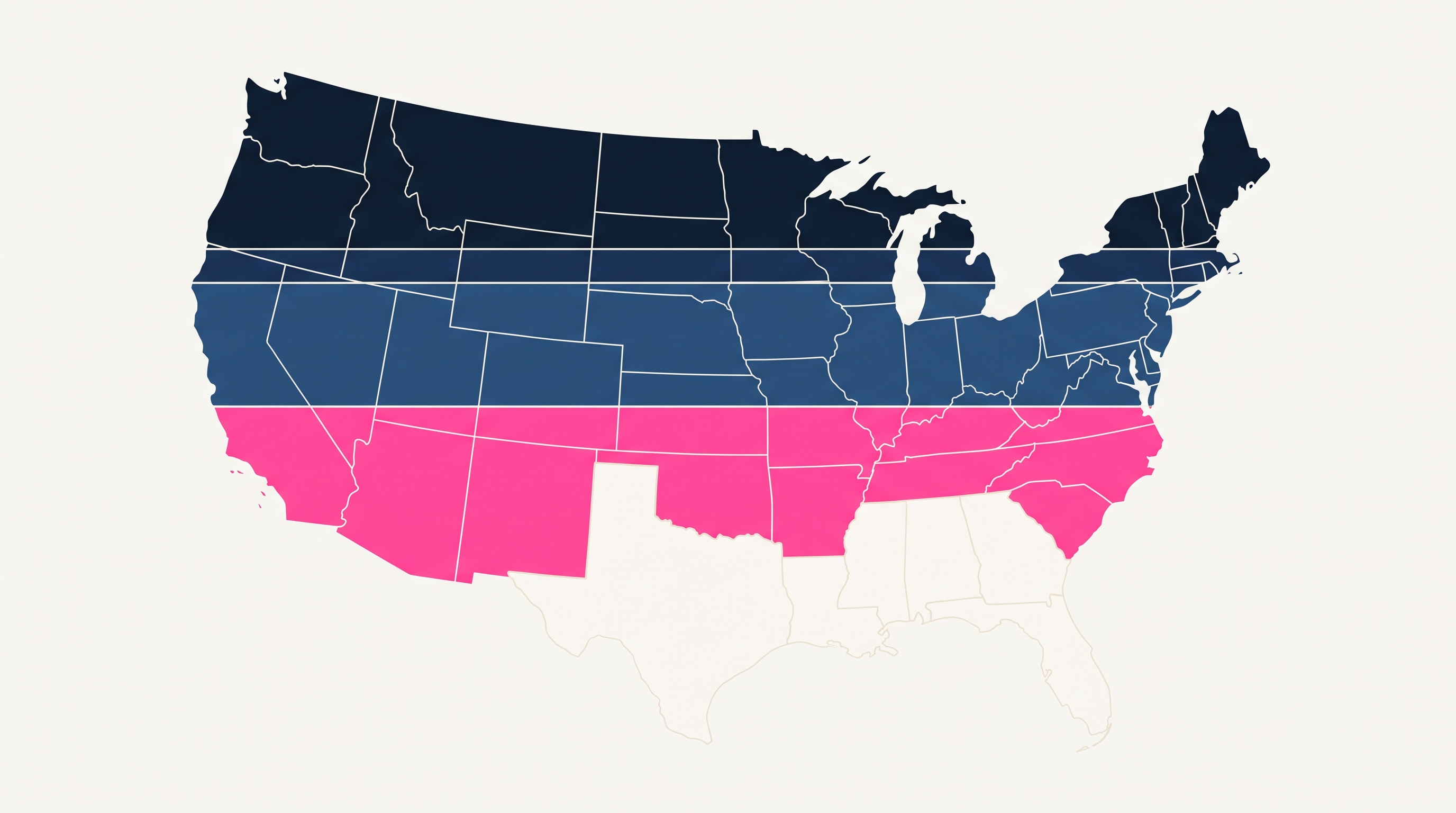
The April 2026 order created a two-tier federal cannabis market — Schedule III for medical, Schedule I for recreational. Here is what it means and what comes next.
How the April 2026 rescheduling changes 280E for medical operators — the Treasury transition rule, the retroactive refund question, and a CFO playbook for FY2026.
What the Trump administration's April 22, 2026 final order actually rescheduled, what stayed in Schedule I, and what operators and advisors should do next.
How cannabis and hemp operators handle credit cards, ACH, banking, and payment workarounds in 2026 amid persistent federal restrictions on financial services.
Delta-8 sits in a grey zone in Oklahoma in 2026, with OMMA actions complicating retail sales of hemp-derived cannabinoids under state and federal rules.
Google, Meta, and TikTok each set distinct 2026 rules for hemp and CBD ads, with LegitScript certification governing what runs and what bans accounts.
Delta-8 is legal in Arkansas in 2026 following the Eighth Circuit ruling, with distinct treatment for delta-9, CBD, and THCA under state hemp law.
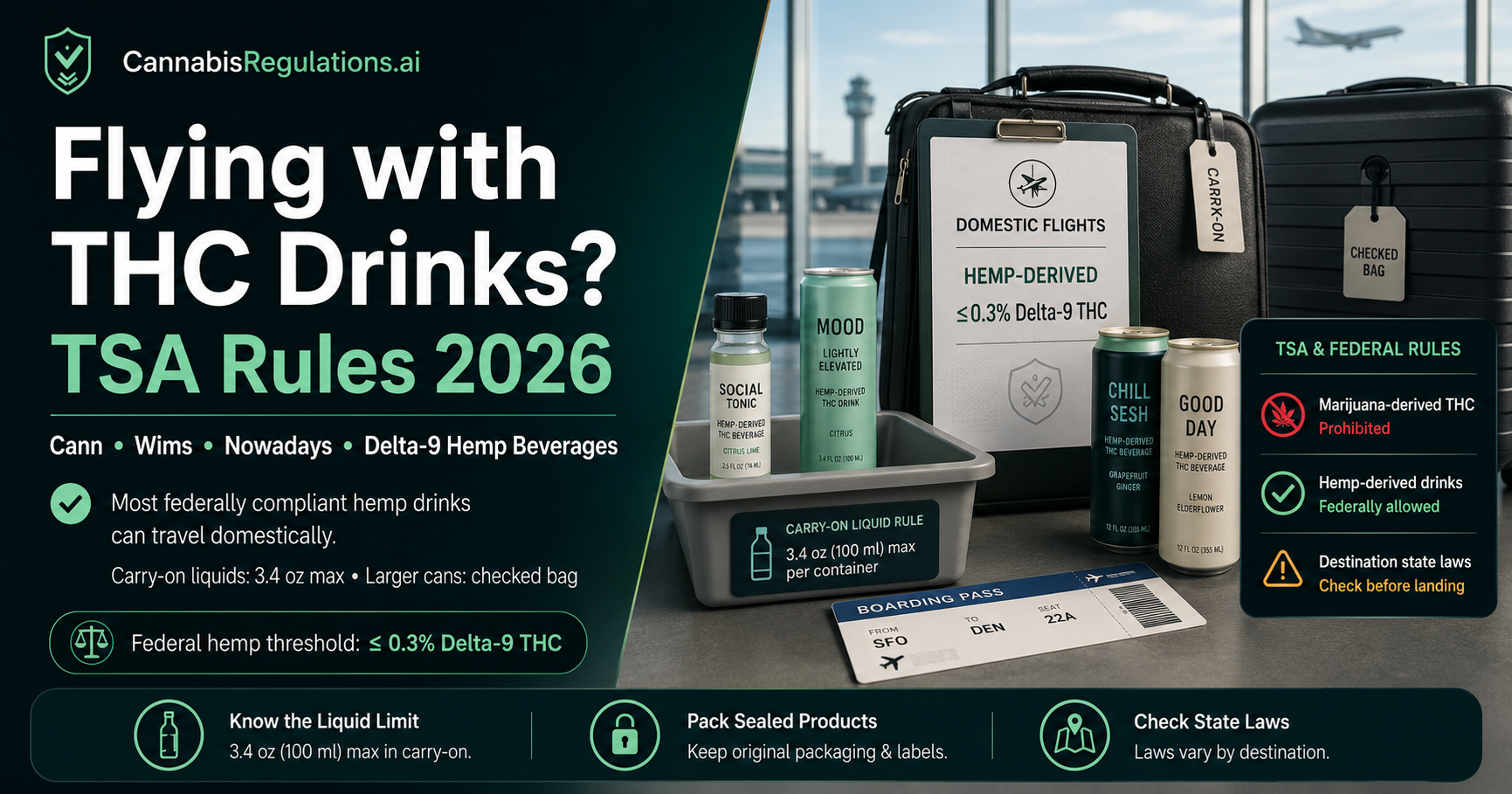
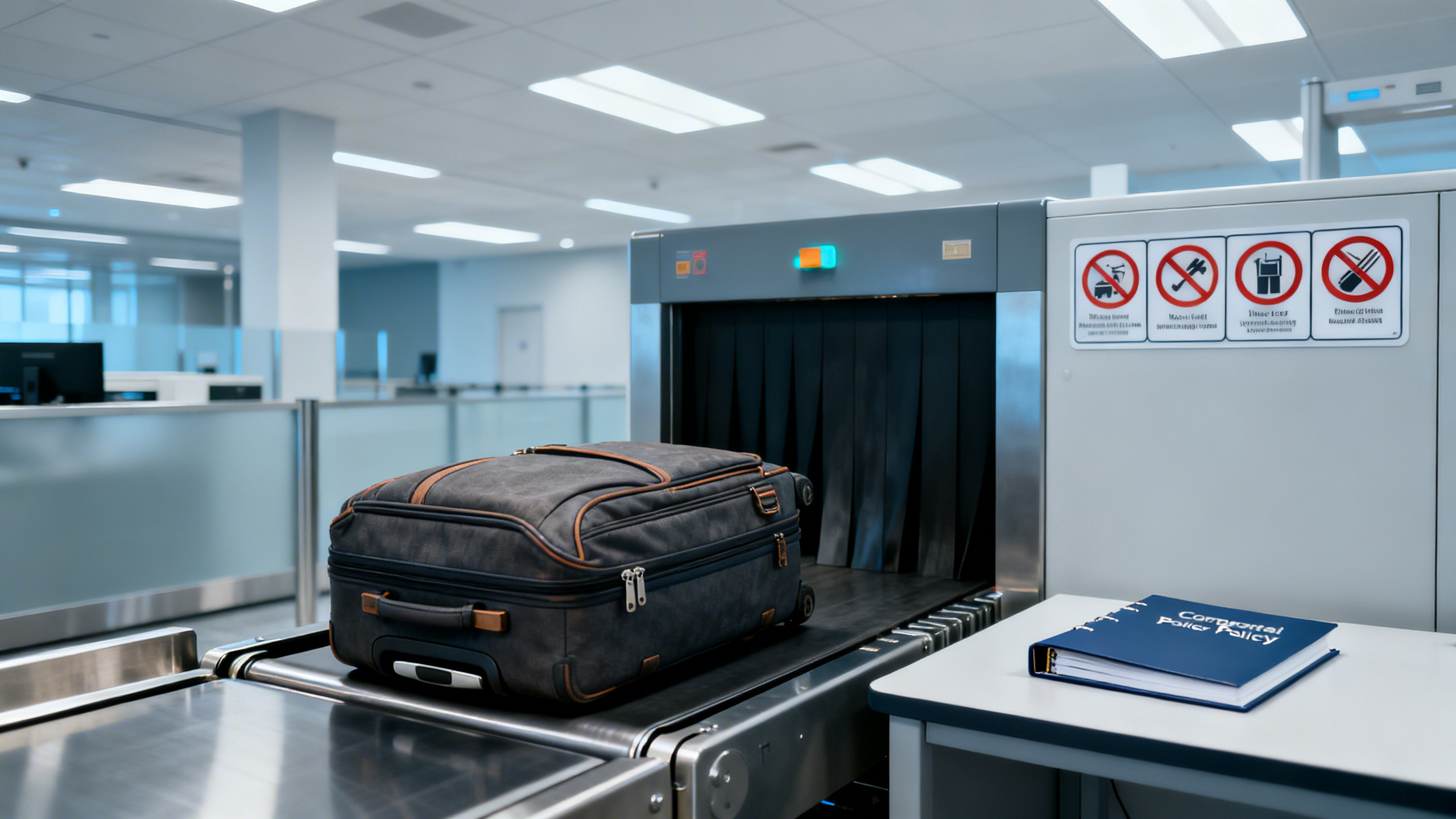
Most hemp-derived delta 9 beverages like Cann, Wims, and Nowadays comply with federal TSA rules, though state laws and airline policies vary at the gate.
California bans all flavored vapes in 2026 under SB 793 + AB 3218. Only Unflavored Tobacco List (UTL) products are legal. Penalties up to $4,000 per violation.
USPS, UPS, and FedEx each apply different rules to hemp, CBD, delta 8, and THC shipments under the federal PACT Act and 2026 carrier policies.
Hemp edibles under 0.3% delta-9 THC are TSA-permissible on planes in 2025; full guide to airport hemp rules, what TSA looks for, and travel risks.
Section 781 of H.R. 5371, signed November 12, 2025, narrows the federal hemp definition and sets a compliance deadline expiring November 12, 2026.
Executive Order 14370, signed December 18, 2025, directs the Attorney General to expedite federal cannabis rescheduling from Schedule I to Schedule III.
Schedule III rescheduling removes Schedule I criminal risk but does not automatically unlock cannabis banking, payments, lending, or public listings in 2026.
Executive Order 14370, signed December 18, 2025, requires cannabis operators to build a Schedule III operational readiness checklist before DEA rules finalize.
In March 2026 the FDA sent its first CBD compliance and enforcement policy to White House OIRA review, signaling new federal expectations for hemp brands.
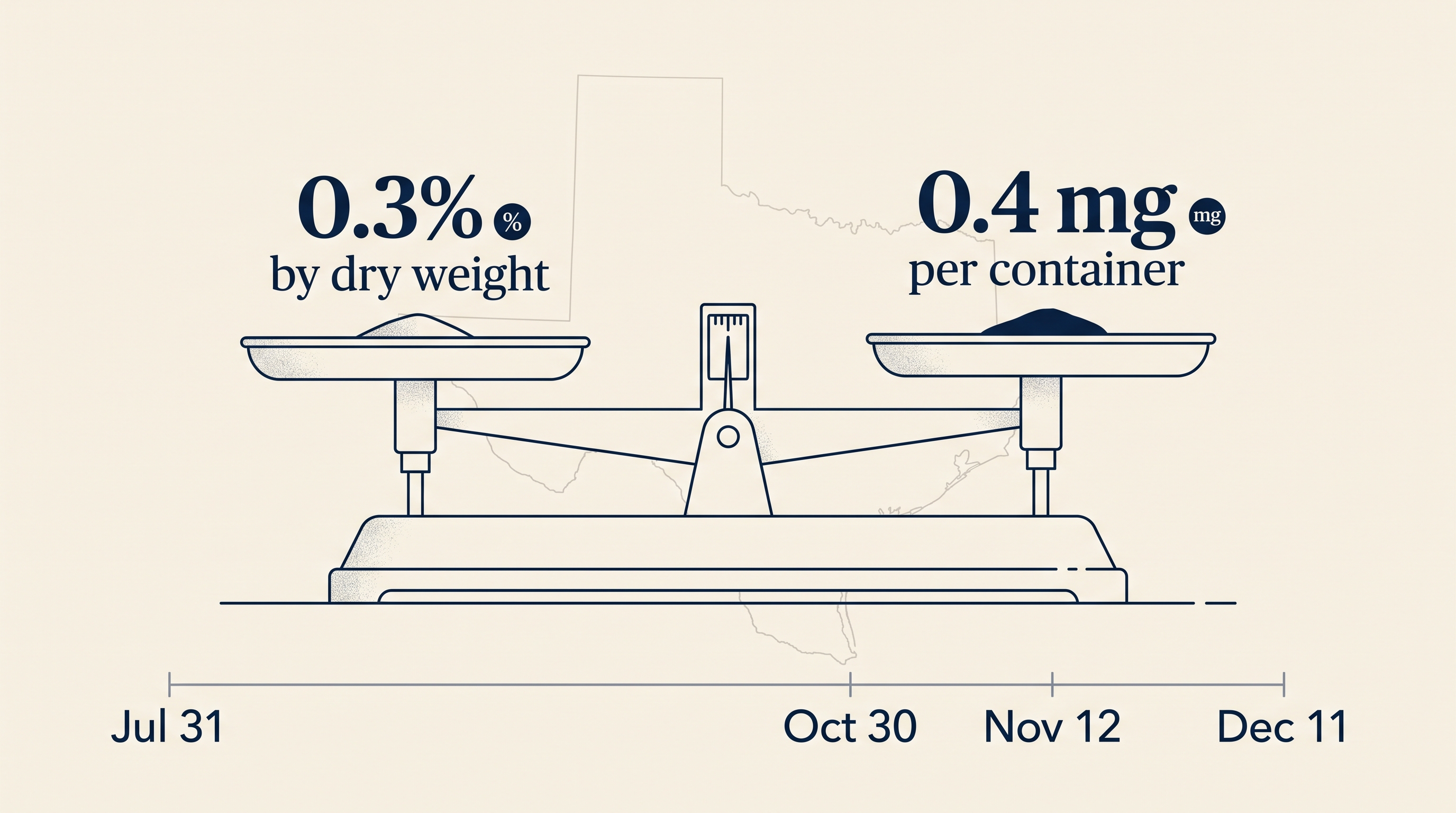
The Continuing Appropriations and Extensions Act, signed November 12, 2025, replaces the 0.3 percent THC standard with a 0.4 milligram per-container limit.
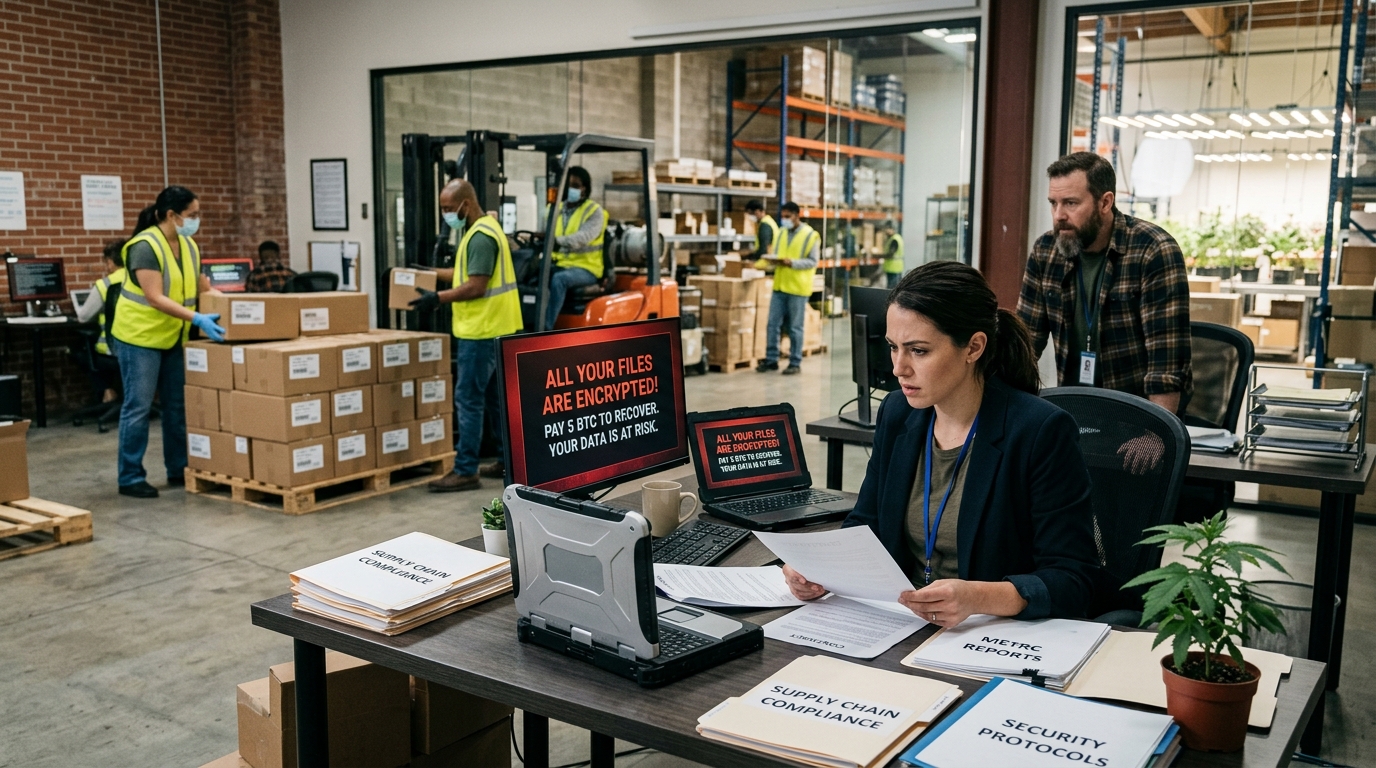
Hemp-THC operators in 2026 need AML programs documenting licensing posture, product profile, lab controls, ownership, and geography to retain banking access.
Cannabis CFOs can defend IRC 280E positions at year-end by hardening chart of accounts, inventory costing, intercompany flows, and document retention.
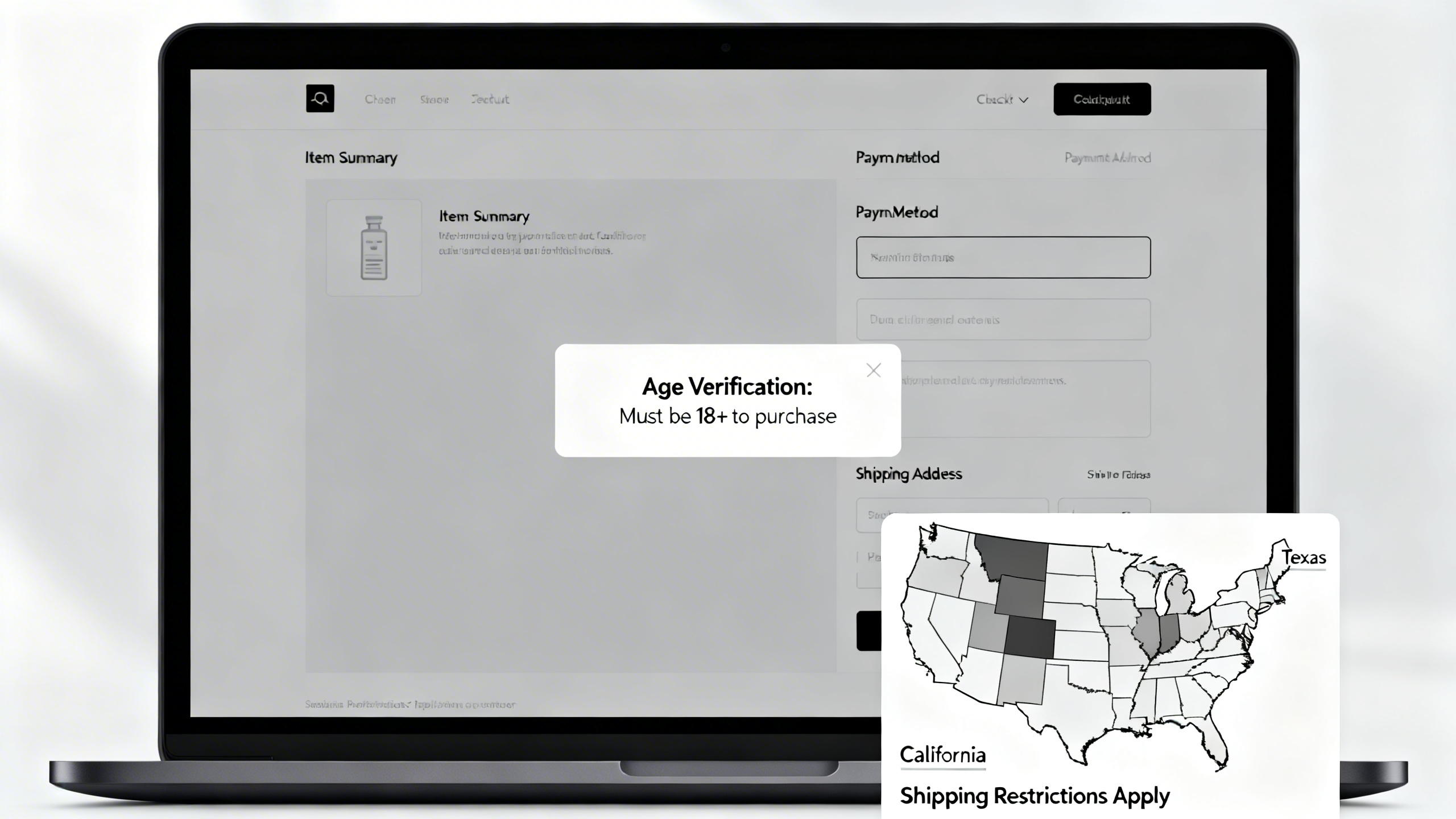
NIST SP 800-63-4 reshapes what reasonable age-gating looks like for hemp-THC and cannabis e-commerce in 2026, even though it is not a cannabis rulebook.
USPS still allows hemp CBD shipping in 2026 under Pub 52 § 453.37 with documentation. UPS needs a dedicated account. International mail is prohibited.
TSA doesn't search for cannabis but refers it to police. CBP seizes THC at the border. Hemp CBD under 0.3% is OK. Edibles, vapes, international inside.
How hemp operators build a 2026 ship-block-by-law engine as federal definitions tighten, states get aggressive, and carriers enforce prohibited-goods policies.
Why 2026 enforcement treats many hemp products as synthetic or artificially derived, and what evidence proves cannabinoids are naturally derived from hemp.
Medical cannabis telehealth in 2026 faces tighter remote-prescribing oversight, scrutiny of patient acquisition, and enforcement on kickback referrals.
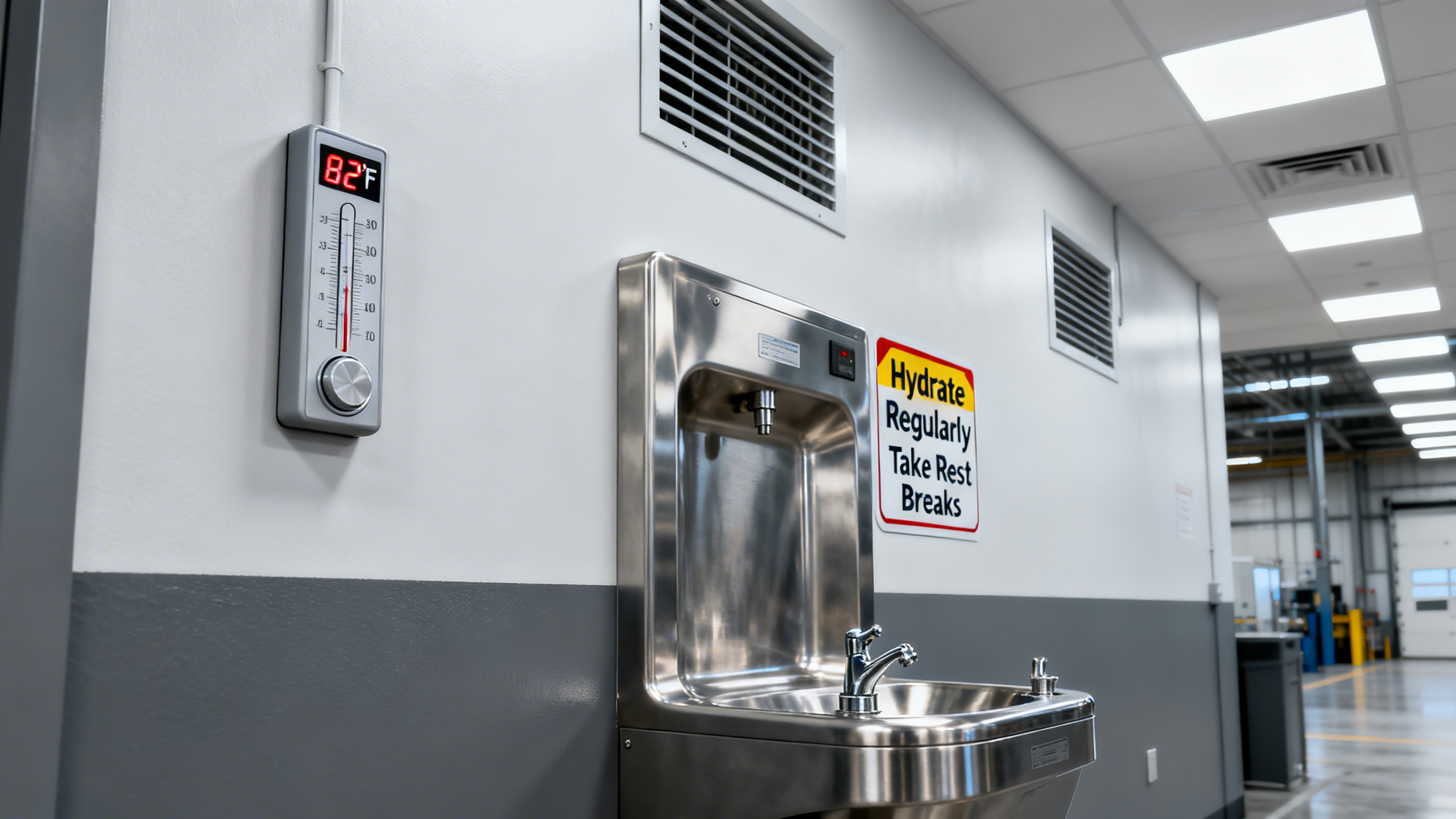
California's OSHA indoor heat illness rule applies year-round to cannabis cultivation and extraction — engineering controls and records inspectors want.
After Loper Bright and Corner Post, hemp operators face new 2026 litigation openings against FDA, DEA, and state rules where statutory text controls outcomes.
A GAO report urging FDA to strengthen its Food Contact Substances program raises packaging migration and audit risk for THC and CBD beverage brands.
UFLPA creates a 2025 import-compliance trap for hemp packaging and textiles tied to Xinjiang; how brands prove supply chains are not from XUAR.
After the FTC announced September 5, 2025 it would accept vacatur of its 2024 Non-Compete Rule, cannabis employers should reset NDAs and trade secret programs.
FTC, FDA, and platforms now use automated scraping to flag CBD and THC ad claims at scale, with faster takedowns and regulator referrals in late 2025.
FDA's 2025 focus on naturally derived color additives raises label risk for THC and CBD beverages using spirulina, beet, or no-artificial-color claims.
NIST SP 800-63-4 final, released July 2025, sets the benchmark for cannabis and hemp e-commerce age gates, ID proofing, and delivery checks at checkout.
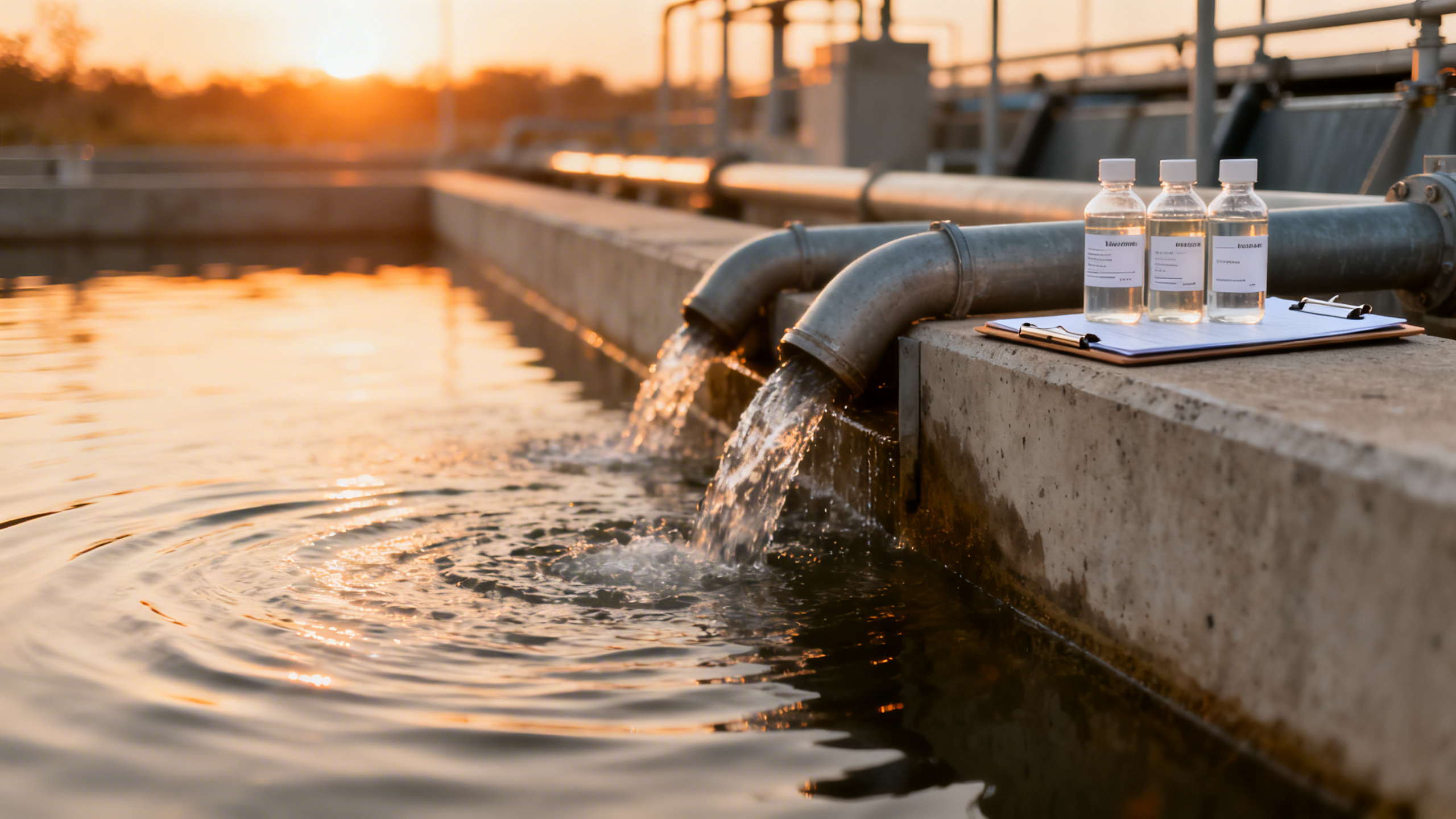
EPA's September 2025 Aquatic Life Benchmarks update indirectly raises wastewater, pretreatment, and pesticide risk for cannabis and hemp processing.
The April 2, 2025 Supreme Court ruling in Medical Marijuana, Inc. v. Horn widens civil RICO exposure for CBD label and potency claims and treble damages.
After the August and September 2025 vape crackdown, USPS and private carriers tightened screening, forcing non-vape hemp shippers to re-audit DTC SKUs.
THC beverage brands in 2025 face BPA-NI and PFAS-free can liner attestations, driven by EPA PFAS rules, state packaging bans, and retailer vendor specs.
Building an AI-assisted rules monitor for cannabis and hemp in 2025 requires fragmented-source ingestion, change-control workflows, and 90-day audit trails.
THC beverage brands in 2025 face FDA food-label scrutiny on major allergen disclosure, fortification rules, and vegan or natural claims at wider retail.
Hemp-THC fundraising via Reg CF and Reg A in 2025 must align SEC securities rules, FTC ad oversight, and payments and banking risk controls together.
UL 8139, IEC 62133-2, and UN 38.3 form the 2025 procurement spec retailers should demand from THC vape suppliers to survive carrier and hazmat rules.
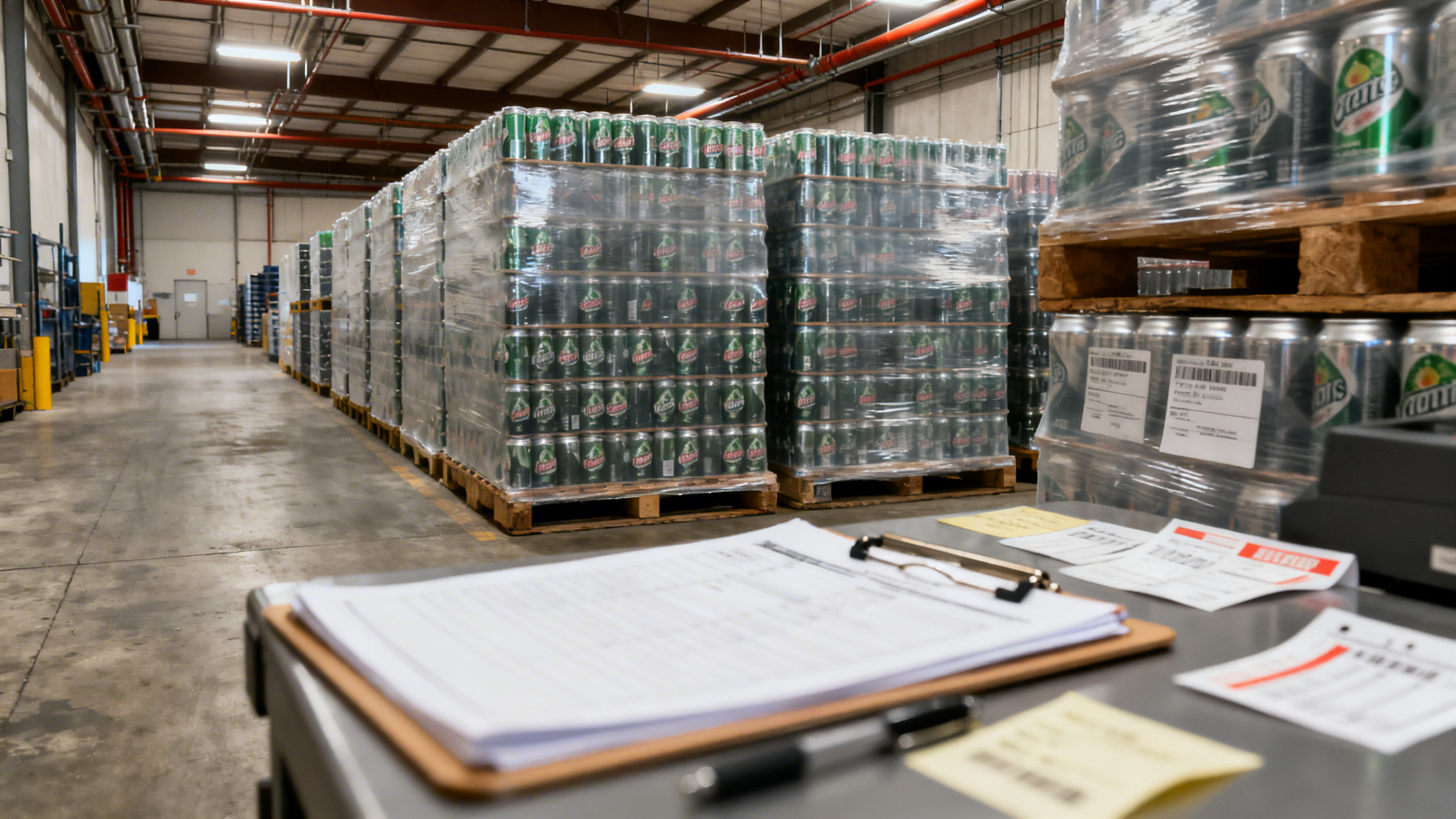
Hemp-THC beverage operators must align FDA FSMA 204 Food Traceability Rule records with state Metrc track-and-trace before the January 20, 2026 deadline.
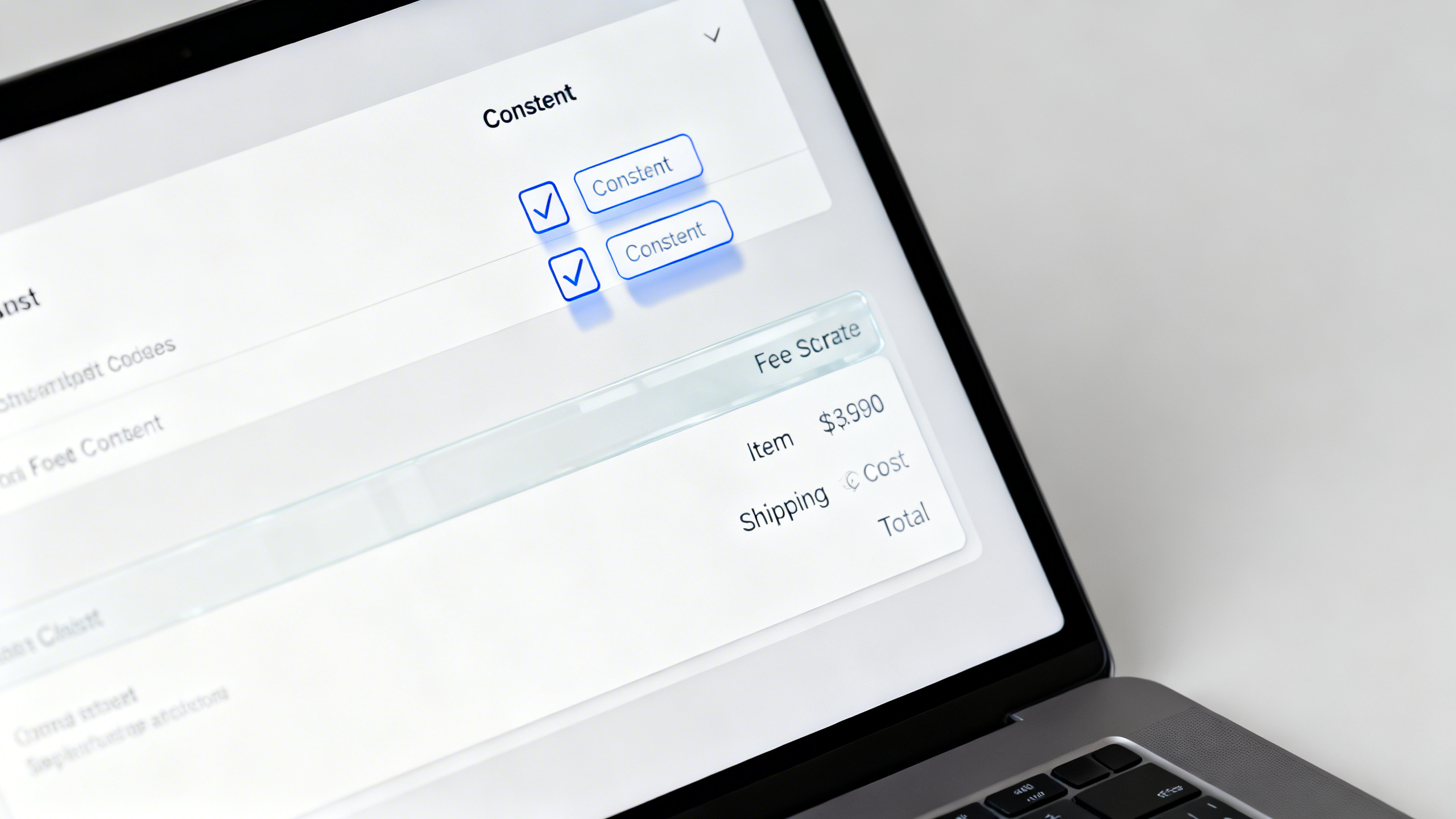
Cannabis e-commerce checkout flows in 2025 face FTC Section 5 and ROSCA exposure for dark patterns, with the Amazon Prime case shaping enforcement.
After 2025 state hemp-THC beverage bans, brands must choose destroy, divert, or donate while reconciling the 2018 Farm Bill, CSA, and product-format limits.
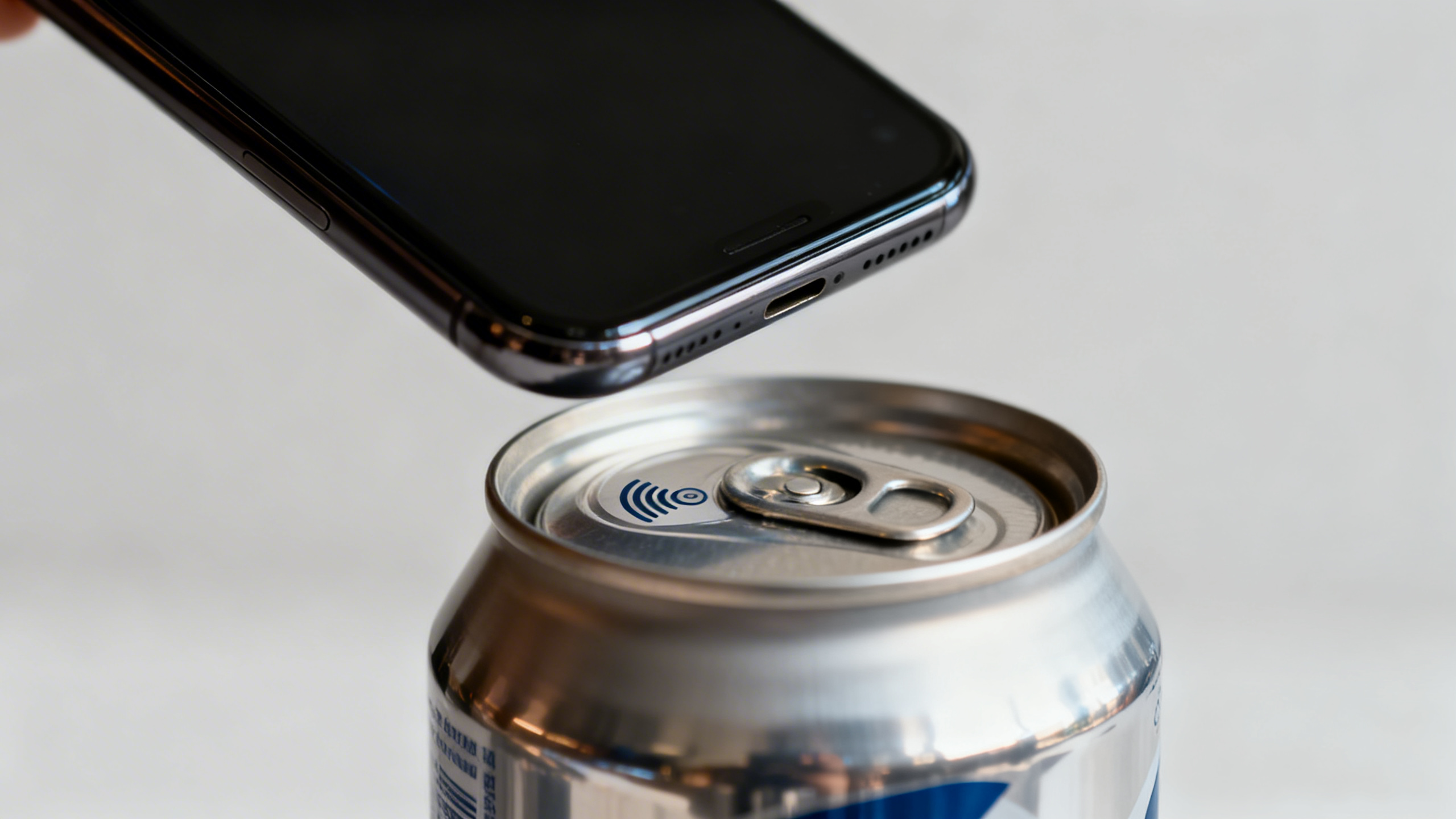
NFC age-gated packaging for hemp-THC beverages in 2025 to 2026 must reconcile tap-to-verify flows with state privacy laws and Global Privacy Control.
All-natural and sugar-free claims on THC drinks in 2025 carry NAD challenge and class-action risk under FDA labeling rules and FTC substantiation.
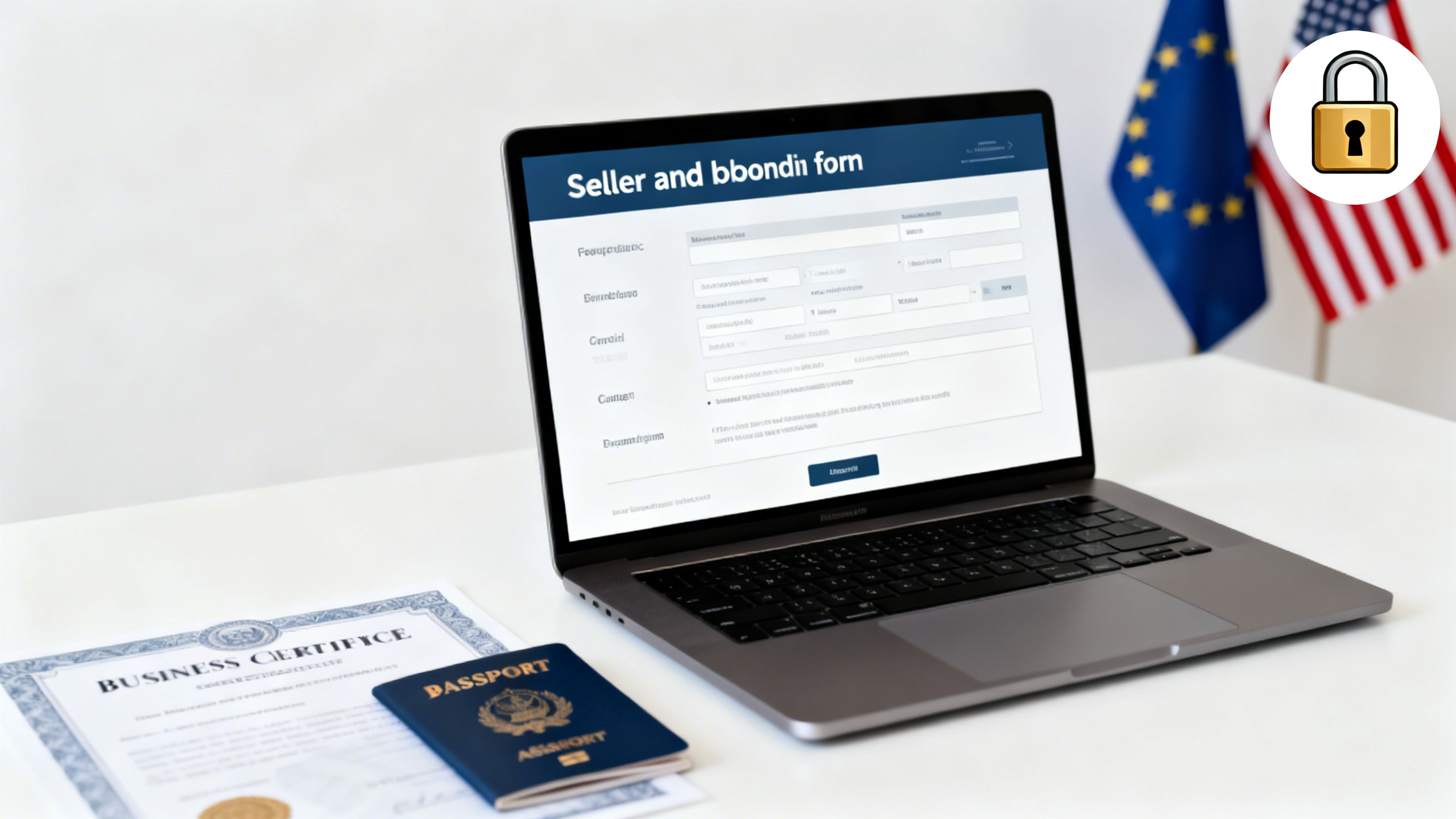
Cross-border CBD and hemp-THC sellers in 2025 must align U.S. INFORM Consumers Act seller verification with EU Digital Services Act marketplace KYC duties.
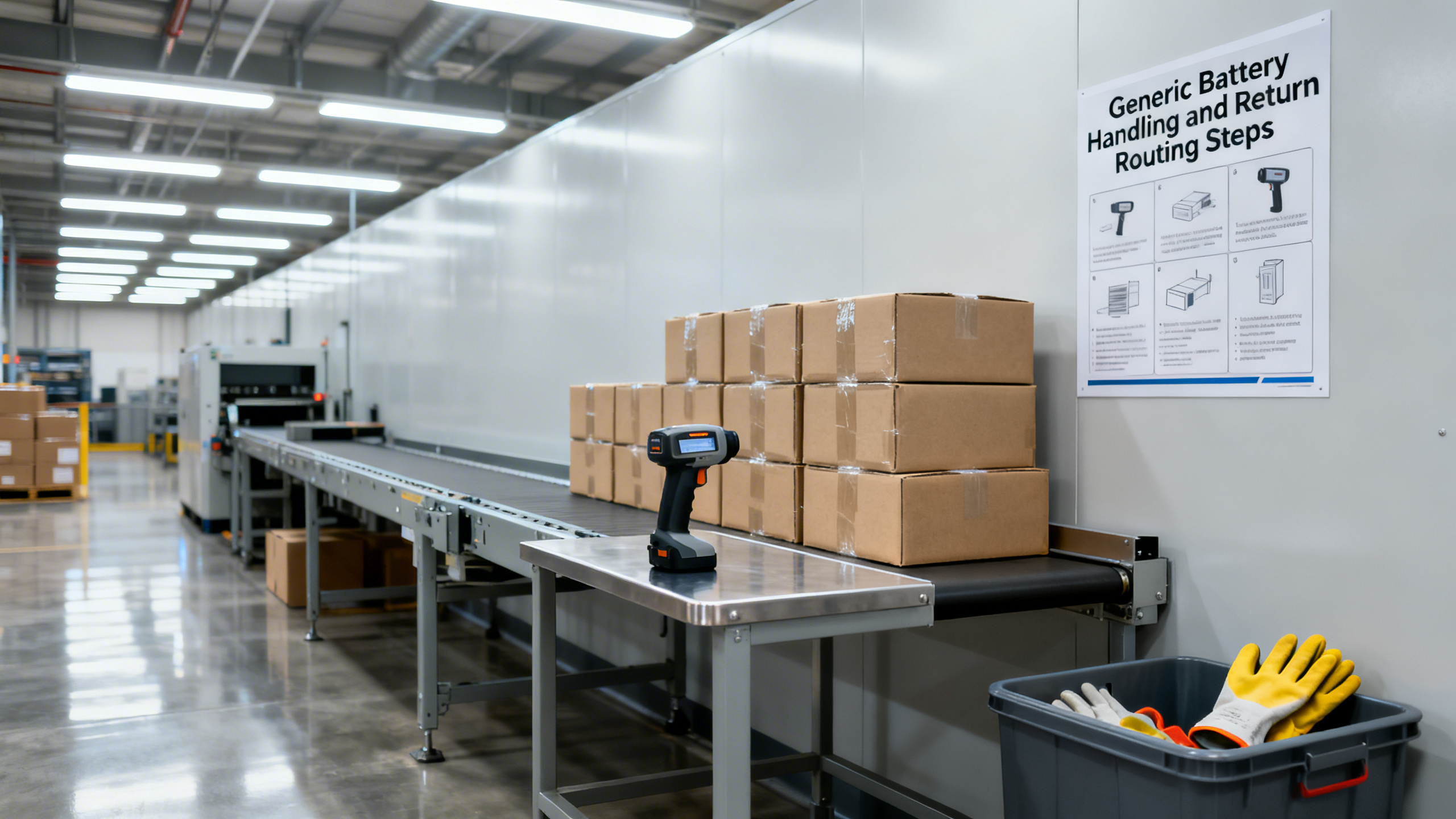
PHMSA's July 1, 2025 package of 17 lithium battery NPRMs reshapes vape device reverse logistics, hazmat training, and 3PL returns workflows through 2026.
USPTO's lawful-use-in-commerce rule still drives refusals of CBD and hemp-THC beverage marks in 2025 to 2026, shaping Madrid Protocol filings and specimens.

Kosher and halal certification for cannabinoid beverages in 2025 hinges on ingredient acceptability, audit readiness, and change-control at scaling co-packers.

Expired THC drinks trigger RCRA hazardous waste determinations and Clean Water Act pretreatment risks, making sewer disposal a frequent federal pitfall.

Nanoemulsified cannabinoid beverages face heightened 2025 FSMA scrutiny under 21 CFR Part 117, requiring updated hazard analyses and shelf-life challenge plans.
Chain restaurants serving THC mocktails must reconcile FDA menu labeling under 21 CFR 101.11, federal allergen rules, and state intoxicant warnings on dosing.
Hemp and THC brands cleared 2025 ad moderation on Meta, Google, and TikTok by making campaigns machine-readable as compliant across copy, imagery, and pages.
Hemp-THC e-commerce on Shopify, BigCommerce, and WooCommerce in 2025 must align Farm Bill compliance with FDA, FTC, card-network, and carrier acceptable use.
FDA's September 9, 2025 deceptive drug advertising push and roughly 100 cease-and-desist letters raise the claim-substantiation bar for CBD and THC drinks.
An FY2026 Agriculture-FDA appropriations directive on intoxicating hemp could become the first durable federal framework for finished-product potency limits.
FDA's 2025 Human Foods Program signaled new natural color additive guidance, exposing THC beverages to color additive premarket review and misbranding risk.
USP republished draft General Chapter 1568 and the proposed CBD monograph in Pharmacopeial Forum 51(3) for September to October 2025 cannabis research review.
Hemp retailers in 2025 face a reverse-logistics squeeze as parcel carriers refuse universal-waste vape returns and federal lithium battery rules tighten.
ASTM D37 voluntary cannabinoid labeling standards give U.S. retailers a defensible framework to reduce label-driven enforcement and litigation risk.
FDA's LAAF accreditation is mandatory for specific import-related hemp edibles testing in 2025, with ISO/IEC 17025 covering most routine quality work.
Cannabis extraction facilities storing bulk butane or propane may cross EPA Risk Management Program thresholds, triggering PHA and 2027 planning duties.
Fermented kombucha above 0.5% ABV triggers TTB jurisdiction, and adding hemp cannabinoids layers state ABC, age-gate, and retail venue restrictions on top.
Bulk CO2 systems in hemp-derived THC beverage facilities trigger OSHA, NFPA 55, and local fire code obligations operators must address in 2025 and 2026.
Marketing minor cannabinoids as hemp-derived or naturally occurring when chemically converted is driving 2025 litigation and NAD challenges for U.S. brands.
Food-grade hemp ingredients must meet EPA pesticide tolerances under FFDCA while reconciling state cannabis residue lists and FSMA supply-chain rules.
Regulators treat caffeine plus intoxicating cannabinoid drinks as a higher-risk category in 2025, raising ingredient ban, warning, and youth-appeal exposure.
DOJ's September 2025 Federal Register notice withdrew DEA rulemakings on analytical labs and hemp (RIN 1117-AB77) and cannabis research (RIN 1117-AB83).
EPA's September 2025 request to the D.C. Circuit to vacate parts of its PFAS drinking water rule reshapes water testing duties for THC and CBD beverage plants.
A 2025 congressional bill would authorize USPS to carry state-legal cannabis, creating a federal last-mile compliance map operators should pressure-test now.
FAAAA preemption may limit how states block common carriers from delivering federally lawful hemp-THC products under the 2018 Farm Bill in 2025 litigation.
Hemp-THC M&A buyers in 2025 underwrite regulatory survivability, discounting SKUs at risk under state caps, 4th and 8th Circuit rulings, and FTC exposure.
FDA's 2025 import posture enforces 21 CFR Part 1 Subpart L FSVP duties on hemp-derived ingredients, citing importers even before resolving CBD-in-food legality.
California's DPH-24-005 makes no-detectable THC the permanent hemp baseline, putting lab method choice, LOQ versus LOD, and COA appeals center stage.
The SABER state attorneys general consortium escalated 2025 enforcement against synthetic hemp cannabinoids, driving new retailer defense tactics nationwide.
THC beverage subscription compliance in 2025-2026 must align SMS, ACH, and click-to-cancel rules with carrier, payment-network, and federal consumer standards.
HHS is advancing hair testing for DOT safety-sensitive roles, signaling a longer cannabis detection window that employers must prep for in late 2025.
CBP, FDA, and USPS intensified 2025 de minimis enforcement against vape device imports, raising new compliance and seizure risk for hemp hardware buyers.
The FTC's amended Negative Option Rule begins enforcement July 14, 2025, forcing CBD autoship and subscription clubs to rebuild cancellation and consent flows.
Nacha's 2025-2026 fraud rules add ACH risk-monitoring duties for hemp and THC e-commerce merchants leaning on account-to-account payments as cards tighten.
10DLC SMS for cannabis and hemp in 2025 carries SHAFT content restrictions, carrier fines, and campaign registration duties dispensaries and brands cannot skip.
Cannabis and hemp SMS marketers face 2025 FCC one-to-one consent and faster opt-out duties under TCPA, with lead-generation funnels needing immediate cleanup.
FTC 2025 Made in USA enforcement against hemp and CBD brands extends to Amazon and Walmart marketplaces, raising the evidentiary bar for origin label claims.
After Loper Bright ended Chevron deference, FDA, FTC, and DEA cannabinoid rules face independent judicial review, reshaping 2025-2026 compliance playbooks.
EPA pushed TSCA Section 8(a)(7) PFAS reporting to an April 13, 2026 start date, giving cannabis and hemp packaging supply chains time to inventory exposure.
EPA's AIM Act HFC phasedown, upheld by the D.C. Circuit in August 2025, forces cannabis grow facilities to refit HVAC and adopt A2L refrigerant safety controls.
PCI DSS 4.0 controls become mandatory March 31, 2025, requiring hemp and THC drink checkout pages to harden scripts, CSP, and third-party oversight.
The FTC's updated Negative Option Rule took effect January 2025, reshaping hemp-derived CBD auto-ship and subscription compliance before mid-year enforcement.
EPA extended TSCA Section 8(a)(7) PFAS reporting to October 13, 2026, giving cannabis and CBD brands time to inventory packaging, coatings, and device exposure.
OSHA's GHS Revision 7 HazCom update took effect July 19, 2024, with 2025-2026 deadlines that reshape SDS, labels, and training for cannabis manufacturers.
Loper Bright and Corner Post expand cannabis and hemp APA challenges to FDA and DEA rules, raising 2025-2026 stakes for ambiguous statutes and rescheduling.
The Eighth Circuit vacated the FTC's Click-to-Cancel Rule in July 2025, forcing CBD and hemp THC DTC brands back to a patchwork of state auto-renew laws.
Beer distributors carrying hemp THC seltzers in late 2025 face antitrust and three-tier exposure as TTB, state ABCs, and DOJ test alcohol-style structures.
NAD, CARU, and FTC stepped up 2025 review of hemp CBD and THC ads, targeting fast-acting nano claims, microdosing language, and youth-appeal creative.
The Cannabis Regulators Association 2025 Model Policy for intoxicating hemp is shaping more than 80 state bills across 27 jurisdictions on THC drinks.
The DOL's phased 2025 FLSA salary thresholds force cannabis dispensaries and hemp manufacturers to reclassify exempt staff and retool payroll and tip handling.
NAD's 2025 enforcement against unsubstantiated health claims sets a tighter substantiation bar for CBD, CBG, and cannabinoid beverage advertising.
Hemp-THC sellers face a state-by-state tax patchwork in 2026 — marketplace facilitator rules rarely apply when Amazon and TikTok Shop ban the listings.
PCI DSS 4.0.1 ends its transition March 31, 2025, making once-optional controls mandatory for U.S. cannabis and hemp e-commerce and marketplace facilitators.
Answer your real world compliance questions (limited time) and save thousands in legal fees and avoided fines.