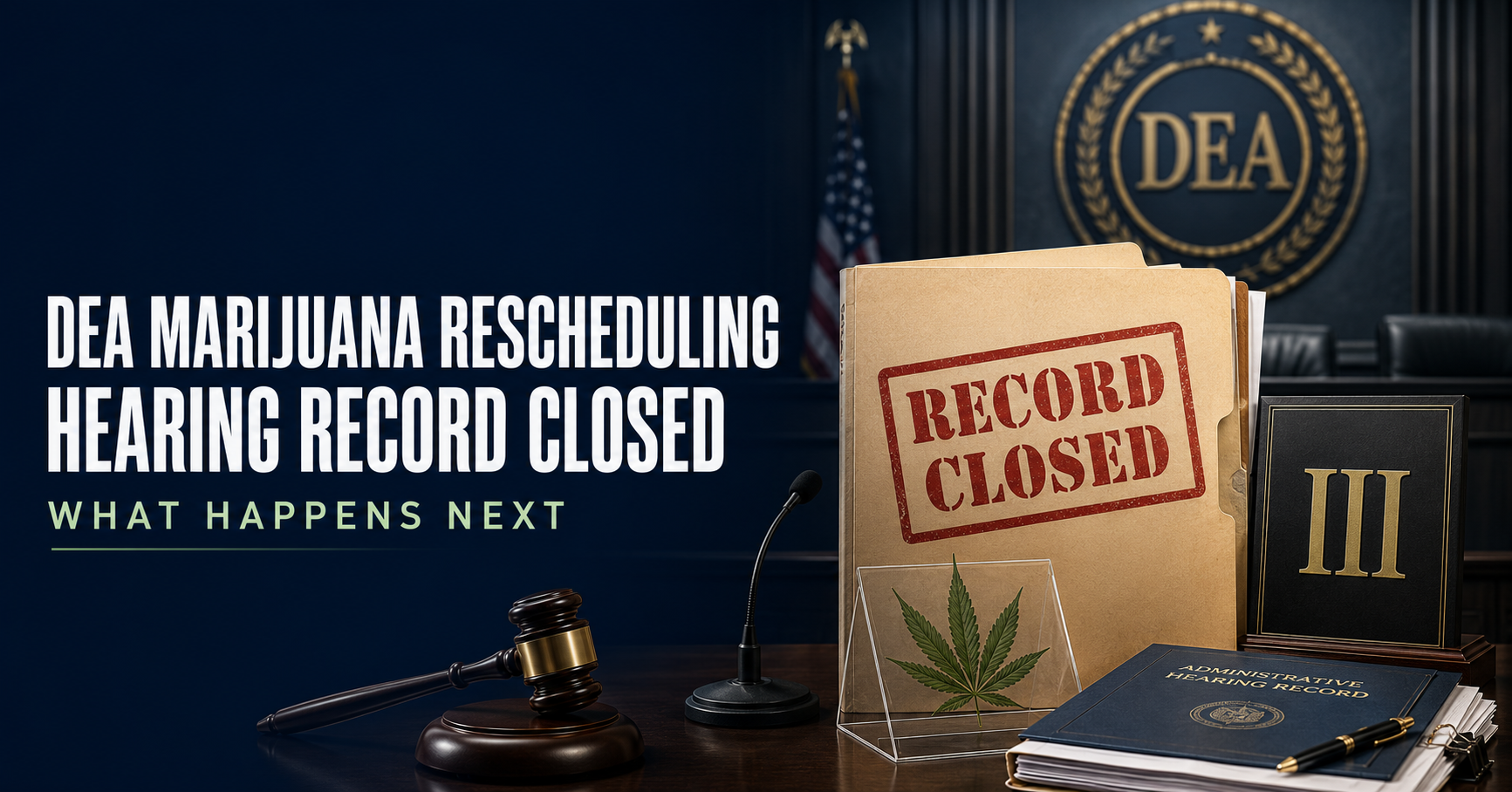
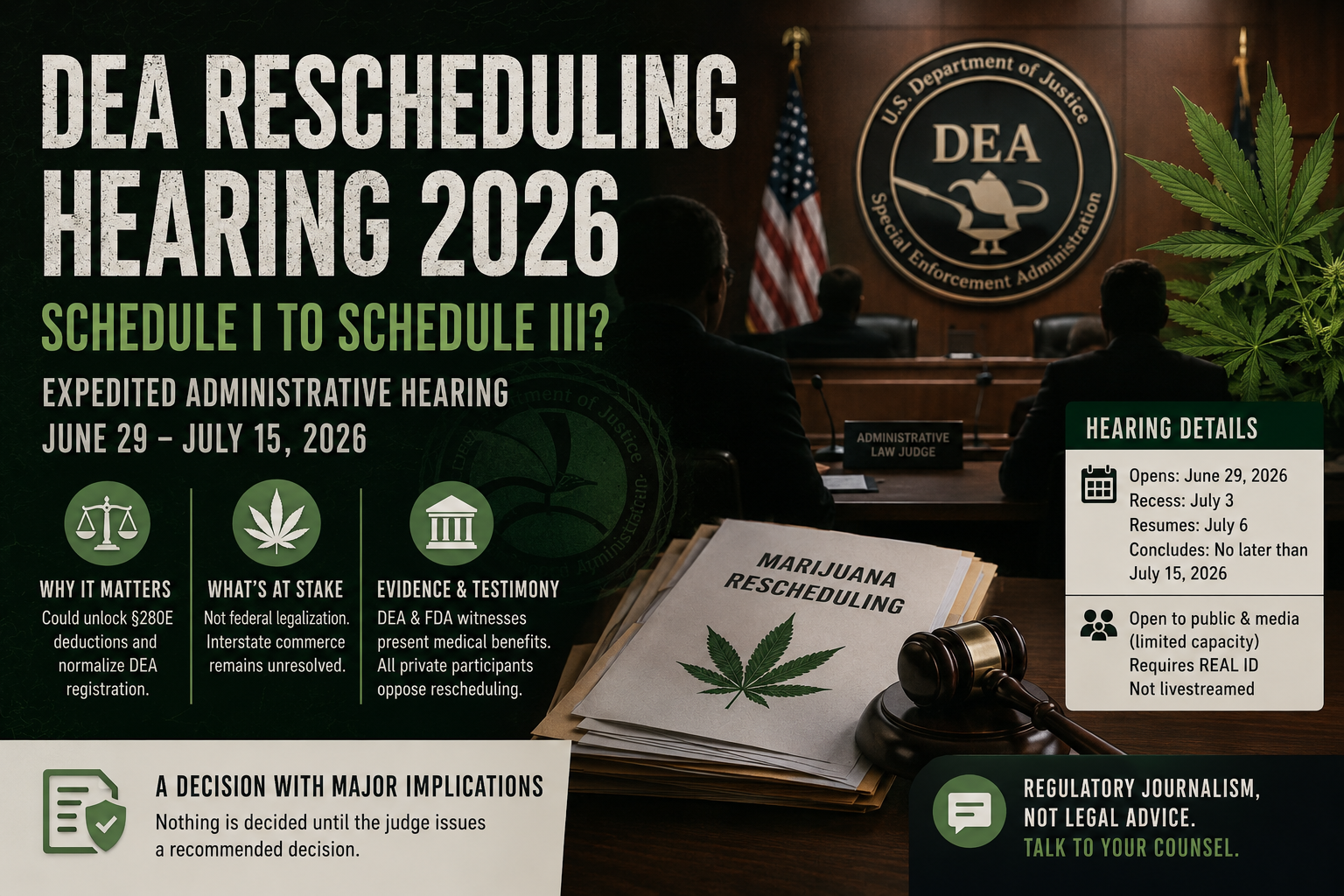
The April 2026 order created a two-tier federal cannabis market — Schedule III for medical, Schedule I for recreational. Here is what it means and what comes next.
What the Trump administration's April 22, 2026 final order actually rescheduled, what stayed in Schedule I, and what operators and advisors should do next.
California bans all flavored vapes in 2026 under SB 793 + AB 3218. Only Unflavored Tobacco List (UTL) products are legal. Penalties up to $4,000 per violation.
Switzerland runs a CBD-only framework with 2025 cannabis club pilots; Denmark, Sweden, and Norway laws compared for European hemp brands and travelers.
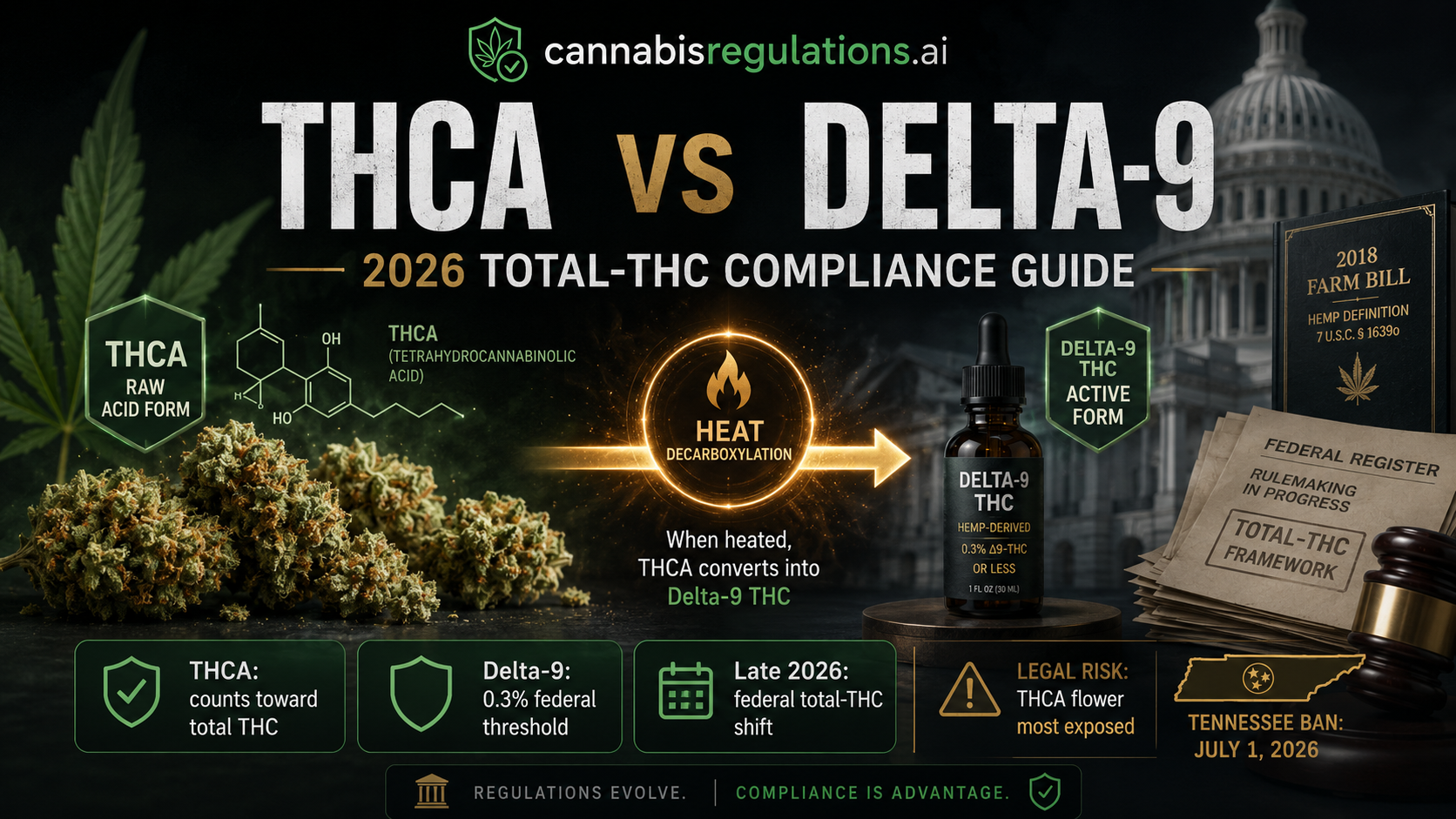
Section 781 of H.R. 5371, signed November 12, 2025, narrows the federal hemp definition and sets a compliance deadline expiring November 12, 2026.
Executive Order 14370, signed December 18, 2025, directs the Attorney General to expedite federal cannabis rescheduling from Schedule I to Schedule III.
Spring 2026 hemp legislation in Georgia, Indiana, Kentucky, Minnesota, Missouri, Virginia, and Washington is creating a fragmented multi-state compliance map.
Cannabis lab testing standards in 2026 are tightening through potency audits, lab shopping crackdowns, and broader ISO 17025 accreditation expectations.
Schedule III rescheduling removes Schedule I criminal risk but does not automatically unlock cannabis banking, payments, lending, or public listings in 2026.
In March 2026 the FDA sent its first CBD compliance and enforcement policy to White House OIRA review, signaling new federal expectations for hemp brands.
The Continuing Appropriations and Extensions Act, signed November 12, 2025, replaces the 0.3 percent THC standard with a 0.4 milligram per-container limit.
NIST SP 800-63-4 reshapes what reasonable age-gating looks like for hemp-THC and cannabis e-commerce in 2026, even though it is not a cannabis rulebook.
USPS still allows hemp CBD shipping in 2026 under Pub 52 § 453.37 with documentation. UPS needs a dedicated account. International mail is prohibited.
Germany's Pillar 2 pilot retail projects remain unsettled for 2026, but medical-grade compliance controls now will position operators for any approved program.
EFSA's provisional 2 mg per day safe intake level for CBD is reshaping EU 2026 labels, novel food dossiers, and enforcement against legacy ingestible doses.
Why 2026 enforcement treats many hemp products as synthetic or artificially derived, and what evidence proves cannabinoids are naturally derived from hemp.
Medical cannabis telehealth in 2026 faces tighter remote-prescribing oversight, scrutiny of patient acquisition, and enforcement on kickback referrals.
After Loper Bright and Corner Post, hemp operators face new 2026 litigation openings against FDA, DEA, and state rules where statutory text controls outcomes.
Canada signaled a shift from 13 province-specific cannabis excise stamps toward a unified national stamp, with packaging and co-pack implications for beverages.
A GAO report urging FDA to strengthen its Food Contact Substances program raises packaging migration and audit risk for THC and CBD beverage brands.
Belgium FAMHP and FASFC are tightening CBD classification controls in 2025 while the EU novel food bar for ingestible cannabidiol products remains high.
Massachusetts CCC social consumption regulations took effect in early 2026, setting dual-track planning for on-premise adult-use service and hemp THC drinks.
Canada signaled 2025-2026 cannabis excise reform on the dollar-per-gram or 10 percent minimum duty and a move toward a single national excise stamp.
The UK Digital Markets, Competition and Consumers Act took effect 6 April 2025, exposing CBD e-commerce to CMA enforcement on drip pricing and reviews.
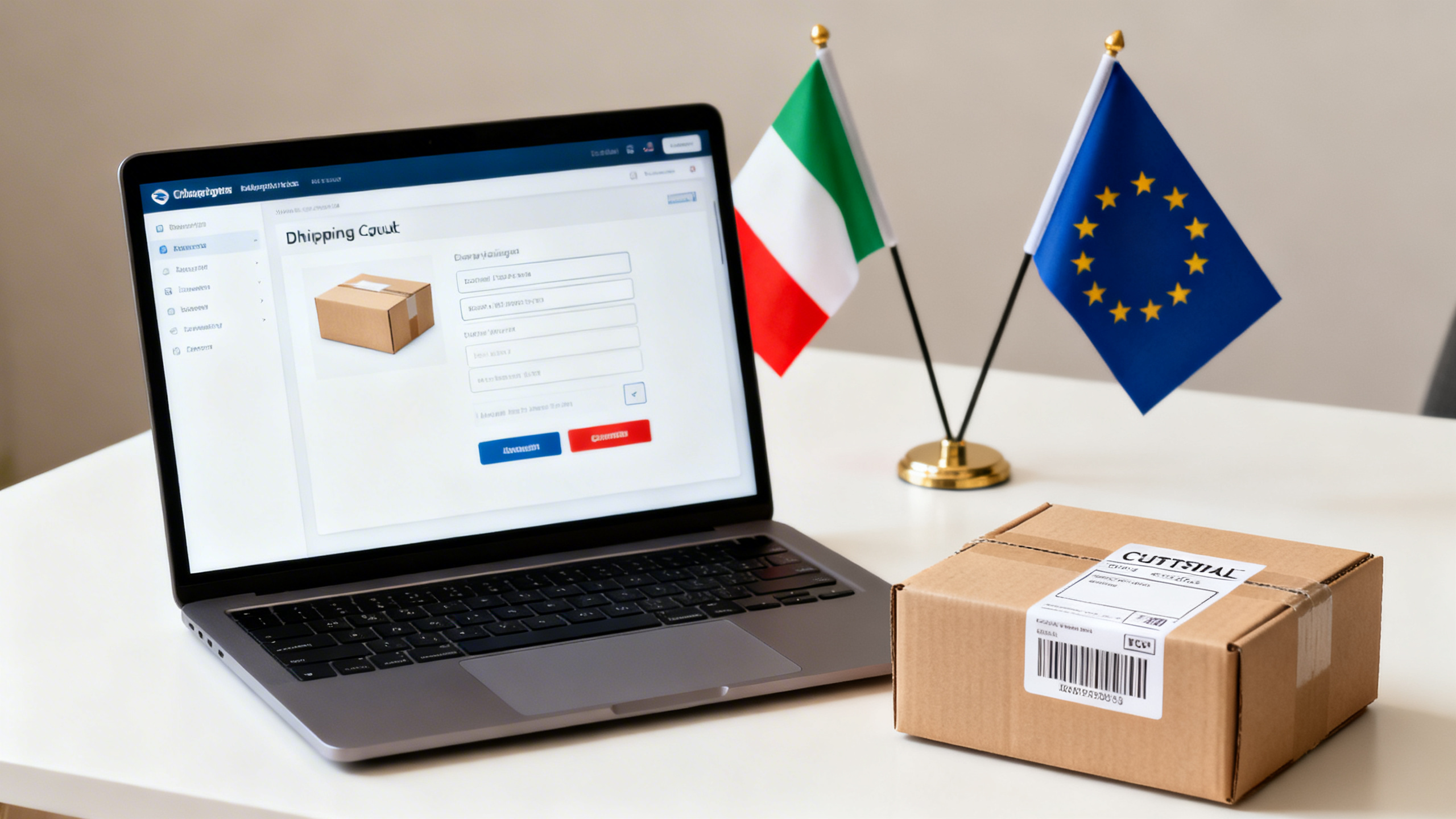
Italy Decree-Law No. 48 of 11 April 2025 sharply restricted hemp inflorescences and CBD derivatives, raising EU infringement risk for cross-border sellers.
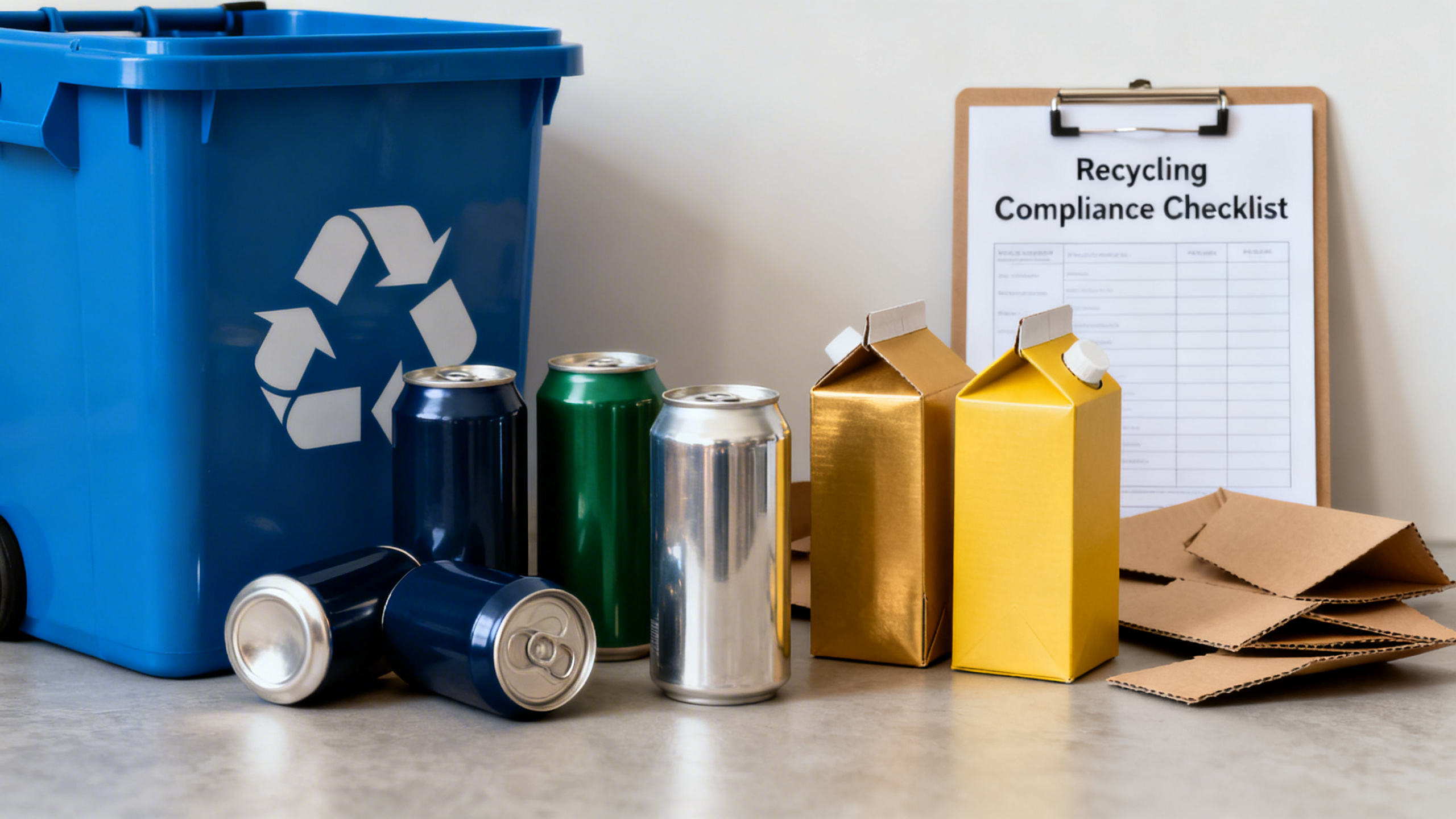
Ontario Blue Box EPR transition under O. Reg. 391/21 is adding 2025 cost pressure and labeling scrutiny for THC and CBD beverage producers in the province.
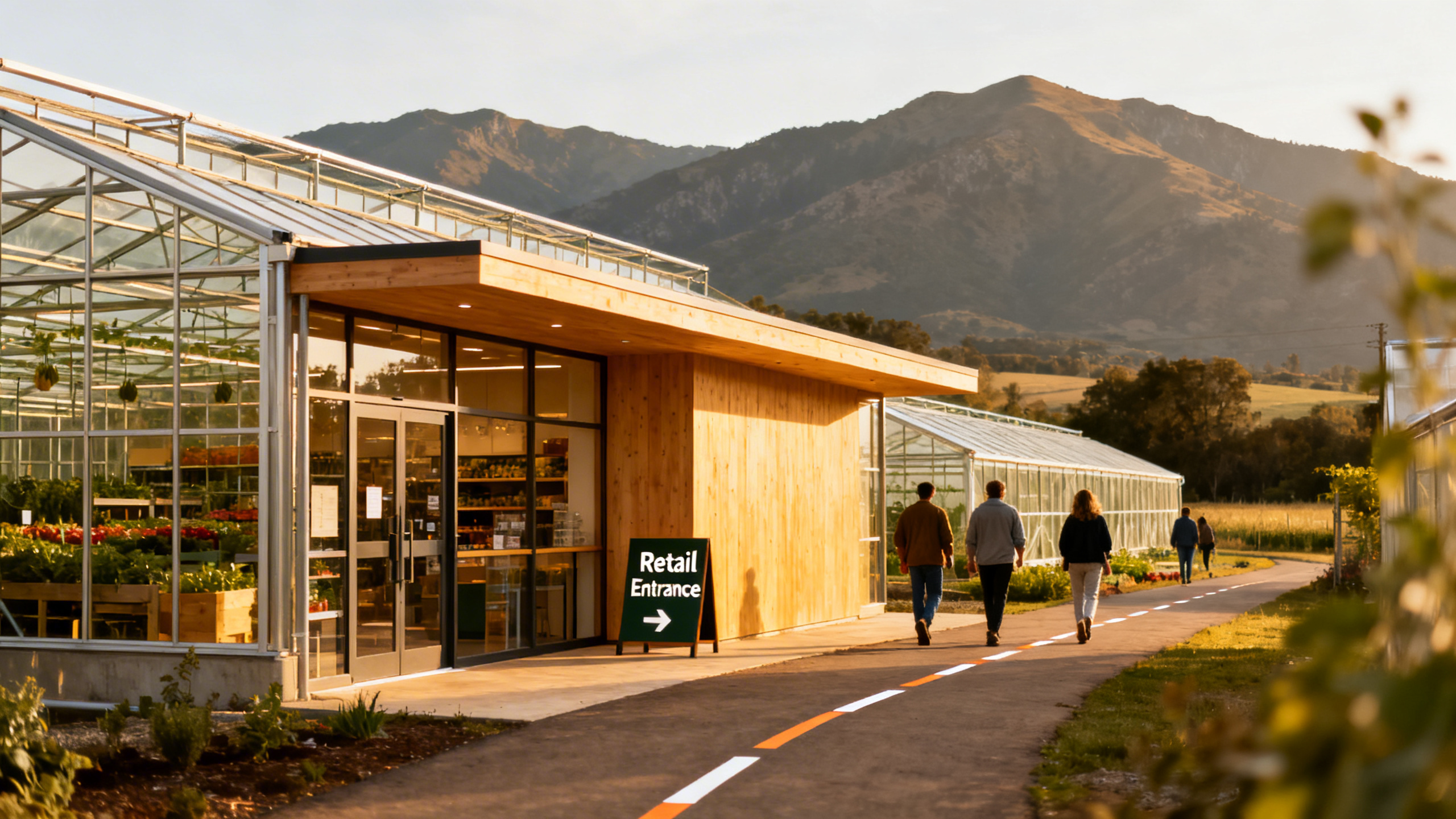
British Columbia LCRB weekly Producer Retail Store statistics offer a near-real-time read on 2025 farmgate pipeline activity and direct-sales sentiment.
Massachusetts CCC approved final social consumption rules December 11, 2025 and the Secretary promulgated them January 2, 2026, shaping THC beverage events.
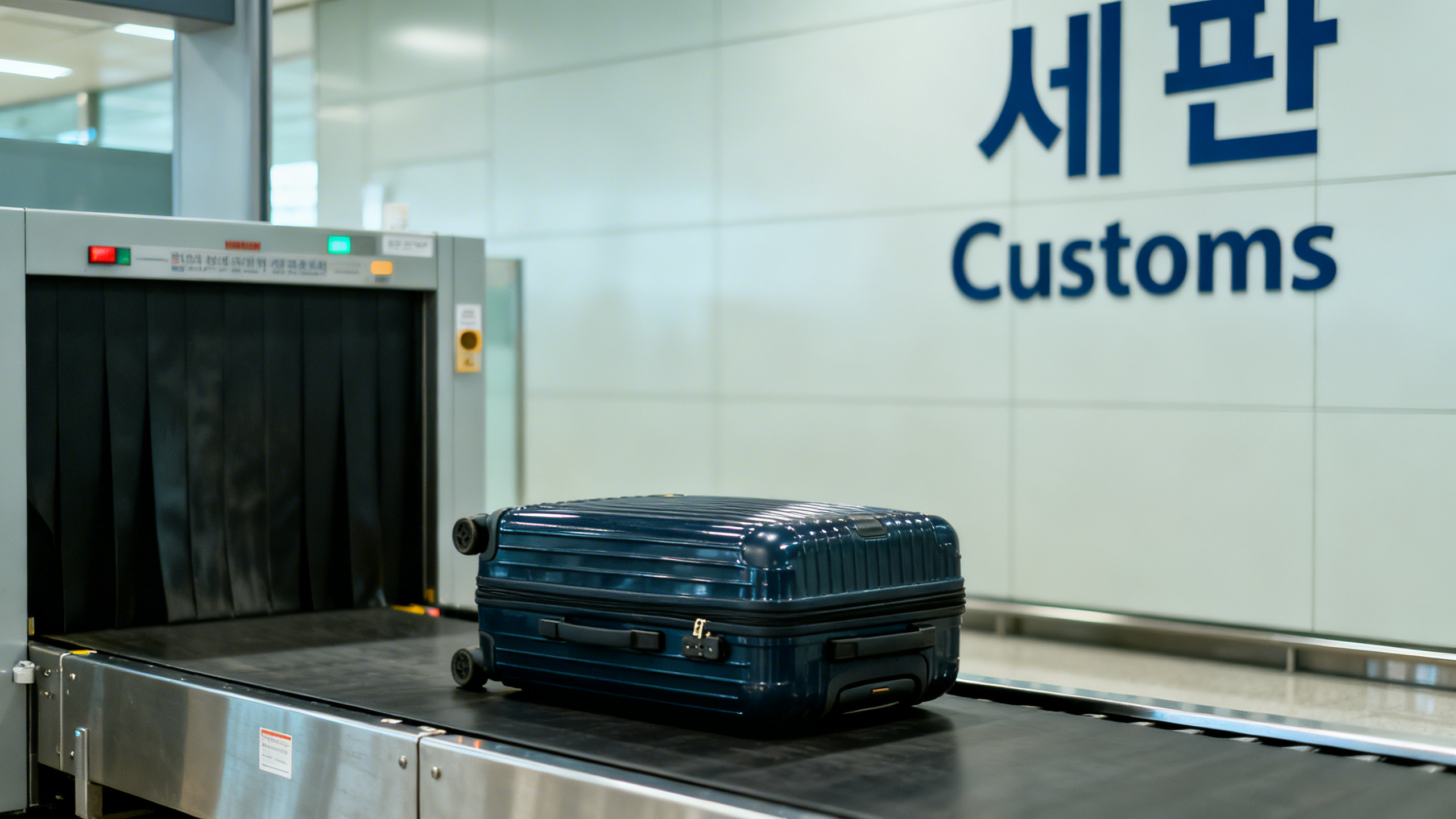
South Korea continues to treat CBD as a controlled narcotic in 2025, with the Supreme Court upholding CBD cosmetic import restrictions in a June 2025 ruling.
Alberta AGLC 2025 secondary testing program shows potency variance and labeling issues drive most compliance breakdowns rather than contamination findings.
Ontario's 2025 OCS THC potency testing pilot exposes label inflation in high-THC SKUs and reshapes supplier audits across the regulated adult-use catalog.
Missouri cities and counties used 2025 emergency ordinances and ballot measures to restrict intoxicating hemp sales to 21-plus buyers or licensed dispensaries.
The UAE under Federal Decree-Law 30 of 2021 and Saudi Arabia maintain zero-tolerance CBD enforcement in 2025, with active airport screening and mail seizures.
State attractive-to-children shape bans for hemp and cannabis gummies in 2025 are subjectively enforced, pushing brands to design for the strictest standard.
Massachusetts is weighing a $4.05 per gallon excise on hemp beverages and CCC oversight; this models price impact and retailer pass-through scenarios.
Thailand tightened, Japan moved to residue limits, Hong Kong enforces a CBD ban, and Singapore stays zero-tolerance, reshaping APAC compliance for 2025.
FTC, FDA, and platforms now use automated scraping to flag CBD and THC ad claims at scale, with faster takedowns and regulator referrals in late 2025.
FDA's 2025 focus on naturally derived color additives raises label risk for THC and CBD beverages using spirulina, beet, or no-artificial-color claims.
Greece's 2025 push to expand medical cannabis exports hinges on EU-GMP readiness across GACP cultivation, EudraLex Volume 4 manufacturing, and release.
Alabama, Tennessee, and Kentucky are moving hemp-derived THC beverages to ABC three-tier distribution, age-21 gating, and alcohol-style excise in 2025.
The April 2, 2025 Supreme Court ruling in Medical Marijuana, Inc. v. Horn widens civil RICO exposure for CBD label and potency claims and treble damages.
On-premise hemp THC drink service in 2025 splits states into allow, ban, and unclear buckets, with 21+ controls and serving caps driving license risk.
California's late 2025 intoxicating hemp enforcement is a county patchwork using nuisance abatement, padlock closures, and online sting operations.
PHMSA's July 1, 2025 package of 17 lithium battery NPRMs reshapes vape device reverse logistics, hazmat training, and 3PL returns workflows through 2026.
Great Britain's CBD novel food market faces devolution risk after the FSA's 2025 consultation, with Scotland's FSS free to diverge from England and Wales.
Hong Kong's CBD prohibition under Schedule 1 of the Dangerous Drugs Ordinance entered year two of zero-tolerance enforcement with continued airport seizures.
An FY2026 Agriculture-FDA appropriations directive on intoxicating hemp could become the first durable federal framework for finished-product potency limits.
Poland's 2025 Reimbursement Act reform reshapes pricing, target import, and patient access pathways for medical cannabis manufacturers and importers.
Colombia's 2025 VUCE foreign trade updates and Decree 1138 of 2025 reshape medical cannabis exports and authorize pharmacy flower under EU-GMP prescription.
California cannabis terpene emissions face 2025 to 2026 air-permitting scrutiny as VOCs under Clean Air Act ozone planning and SIP nonattainment pressure.
New Jersey's NJDPA took effect January 15, 2025, forcing cannabis e-commerce to honor Global Privacy Control, a 15-day opt-out, and youth-ad targeting limits.
Luxembourg's concept paper outlines a tightly controlled state-run adult-use retail model with seed-to-sale tracking and an ad ban, still uncertain in 2026.
FDA's 2025 Human Foods Program signaled new natural color additive guidance, exposing THC beverages to color additive premarket review and misbranding risk.
Hemp retailers in 2025 face a reverse-logistics squeeze as parcel carriers refuse universal-waste vape returns and federal lithium battery rules tighten.
Norway's 2025 CBD import posture demands zero detectable THC, with seizures through September 2025 and Novel Food or medicines hurdles for ingestibles.
Colombia's July 2025 draft decree and October 2025 Decree 1138 outline a prescription-only adult-use model dispensed through pharmacies under medical-gate.
Poland in 2025 separates legal hemp from legal ingestible CBD under EU novel food rules while tightening medical cannabis telehealth prescribing.
Florida's Digital Bill of Rights, effective July 1, 2024, reshapes targeted ads and kids' data rules for cannabis and hemp e-commerce operators.
Marketing minor cannabinoids as hemp-derived or naturally occurring when chemically converted is driving 2025 litigation and NAD challenges for U.S. brands.
Regulators treat caffeine plus intoxicating cannabinoid drinks as a higher-risk category in 2025, raising ingredient ban, warning, and youth-appeal exposure.
Chicago's 260-plus hemp cannabinoid retailers are driving 2025-2026 local ordinance activity that will reshape Illinois compliance for operators and brands.
Poland's 2025 enforcement shift tightens medical cannabis remote prescribing and pressures CBD retail, reshaping cross-border supply for importers and brands.
Greece's 2025 Falsified Medicines Directive update adds new serialization and repackaging controls for cannabis-derived prescription medicines.
Poland's 2025 reset targets receptomaty telemedicine and enforces CBD novel food rules, forcing importers to overhaul sourcing and clinical channels.
Costa Rica's Law 10113 framework reached 57 hemp authorizations in 2025, splitting compliance between MAG activity licenses and Ministry of Health rules.
Panama's MINSA confirmed seven Ley 242 medical cannabis licenses, shifting compliance focus to GMP readiness, product authorization, and import-export work.
Ghana's government will lay 0.3% THC cultivation guidelines before Parliament in late 2025, anchored to the Narcotics Control Commission Act framework.
India's 2025 FSSAI license renewal overhaul reshapes CBD compliance for food and AYUSH pathways, with new implications for imports and e-commerce listings.
Pennsylvania faces three competing models for hemp-THC beverages: PLCB alcohol oversight, Department of Agriculture food rules, or dispensary-only channels.
A September 2025 Missouri initiative would replace the constitutional cannabis program with an alcohol-model framework covering THC and hemp beverages.
EPA's September 2025 request to the D.C. Circuit to vacate parts of its PFAS drinking water rule reshapes water testing duties for THC and CBD beverage plants.
A 2025 congressional bill would authorize USPS to carry state-legal cannabis, creating a federal last-mile compliance map operators should pressure-test now.
FAAAA preemption may limit how states block common carriers from delivering federally lawful hemp-THC products under the 2018 Farm Bill in 2025 litigation.
A 2025 wave of influencer class actions alleges hemp and CBD brands ran sponsored posts without FTC-compliant disclosures, raising contract review risk.
Poland's 2025 telemedicine clampdown and a possible CBD ban reshape the legal outlook for hemp wellness retailers and medical-patient supply importers.
The SABER state attorneys general consortium escalated 2025 enforcement against synthetic hemp cannabinoids, driving new retailer defense tactics nationwide.
Morocco shipped its first legal medical cannabis export in 2025 and approved 67 products, raising the bar on EU-GMP standards and export documentation.
EFSA's September 2025 opinion proposes a 2 mg per day CBD acceptable daily intake, reshaping EU Novel Food dossiers, labels, and member-state enforcement.
HHS is advancing hair testing for DOT safety-sensitive roles, signaling a longer cannabis detection window that employers must prep for in late 2025.
The EU Digital Services Act drove 2025 marketplace enforcement against CBD and neo-cannabinoid listings, redefining seller liability and platform duties.
Nacha's 2025-2026 fraud rules add ACH risk-monitoring duties for hemp and THC e-commerce merchants leaning on account-to-account payments as cards tighten.
FTC 2025 Made in USA enforcement against hemp and CBD brands extends to Amazon and Walmart marketplaces, raising the evidentiary bar for origin label claims.
After Loper Bright ended Chevron deference, FDA, FTC, and DEA cannabinoid rules face independent judicial review, reshaping 2025-2026 compliance playbooks.
EFSA's September 8, 2025 CBD safety update raises the dose-response and impurity bar for EU Novel Food applications heading into 2026 authorizations.
Loper Bright and Corner Post expand cannabis and hemp APA challenges to FDA and DEA rules, raising 2025-2026 stakes for ambiguous statutes and rescheduling.
Beer distributors carrying hemp THC seltzers in late 2025 face antitrust and three-tier exposure as TTB, state ABCs, and DOJ test alcohol-style structures.
California SB 253 and SB 261 climate disclosure laws are pushing 2025 Scope 3 packaging data requests down to THC beverage co-packers and aluminum suppliers.
NAD, CARU, and FTC stepped up 2025 review of hemp CBD and THC ads, targeting fast-acting nano claims, microdosing language, and youth-appeal creative.
The Cannabis Regulators Association 2025 Model Policy for intoxicating hemp is shaping more than 80 state bills across 27 jurisdictions on THC drinks.
NAD's 2025 enforcement against unsubstantiated health claims sets a tighter substantiation bar for CBD, CBG, and cannabinoid beverage advertising.
Hemp-THC sellers face a state-by-state tax patchwork in 2026 — marketplace facilitator rules rarely apply when Amazon and TikTok Shop ban the listings.
Loper Bright ended Chevron deference in June 2024, exposing FDA, USDA, DEA, DOT, and CPSC cannabis and hemp rules to direct statutory challenges in 2025.
CPSC and the PPPA do not require child-resistant closures on THC beverages, leaving 2025 brands to navigate a state-by-state patchwork of CR and warning rules.
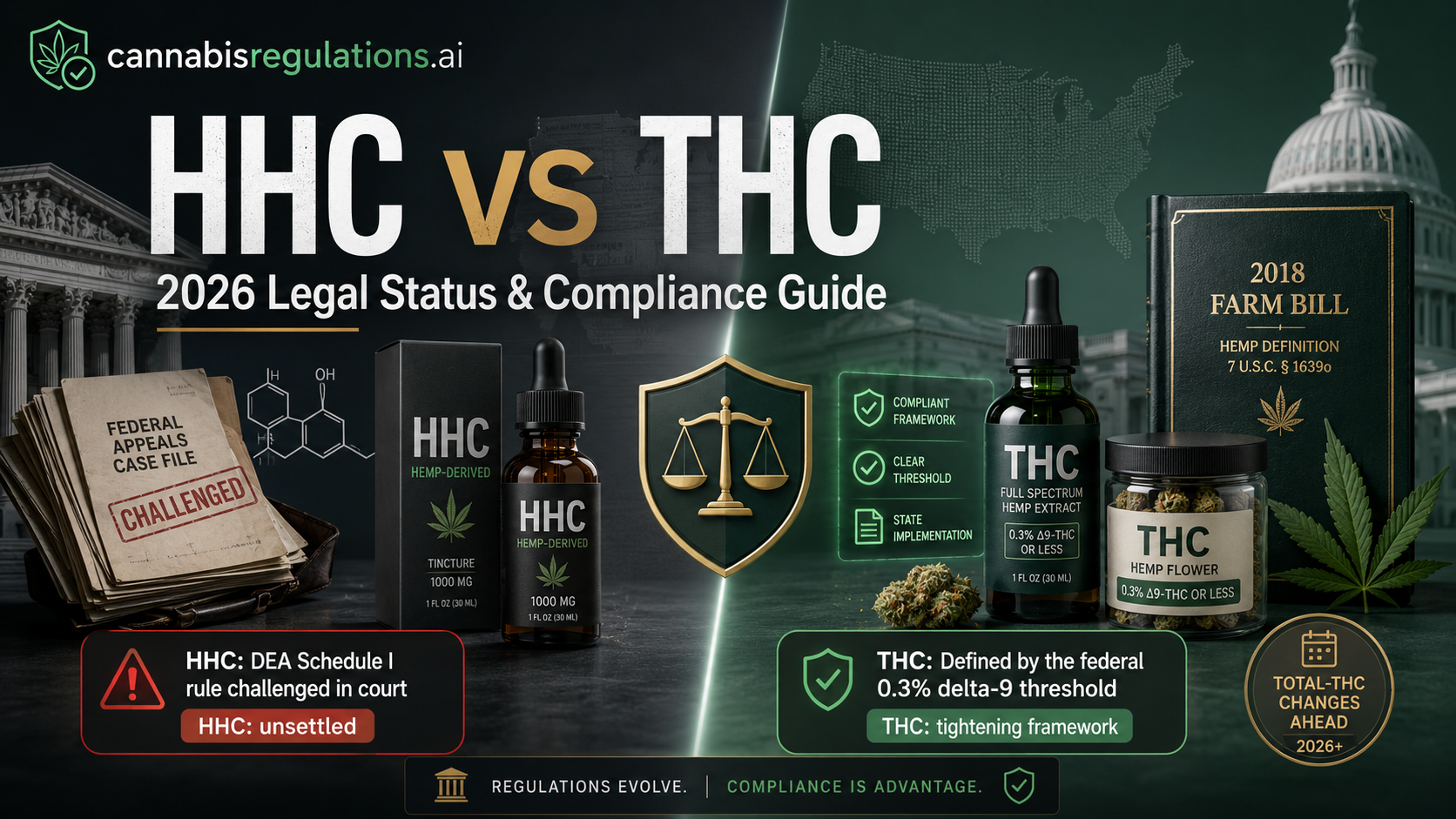
A 2025 wave of state laws bans HHC, THCP, THC-O and other hemp analogs, using broad isomer and synthetic language that reshapes formulator R&D playbooks.
Hemp THC vending machines in 2025 face a patchwork of state legality, biometric age-verification rules, ADA accessibility duties, and BIPA litigation exposure.
California's Delete Act (SB 362) forces cannabis loyalty programs and adtech vendors to register as brokers and honor DROP deletion requests by August 2026.
EU Digital Services Act guidelines from July 14, 2025 require CBD marketplaces to deploy real age assurance, drop dark patterns, and run minor-risk assessments.
China NMPA continues to prohibit CBD and all cannabis-derived ingredients in cosmetics in 2025, with tightened ingredient testing and ad enforcement controls.

The 2024 Loper Bright decision ended Chevron deference, reshaping how courts review FDA and DEA authority over CBD and intoxicating hemp derivatives in 2025.

Nevada SB 370 consumer health data rules in force since 31 March 2024 reach hemp and CBD retailers in 2025, expanding what counts as regulated health data.
April 19, 2026
Answer your real world compliance questions (limited time) and save thousands in legal fees and avoided fines.