
February 20, 2026

Thank you! Your submission has been received!
Oops! Something went wrong while submitting the form.

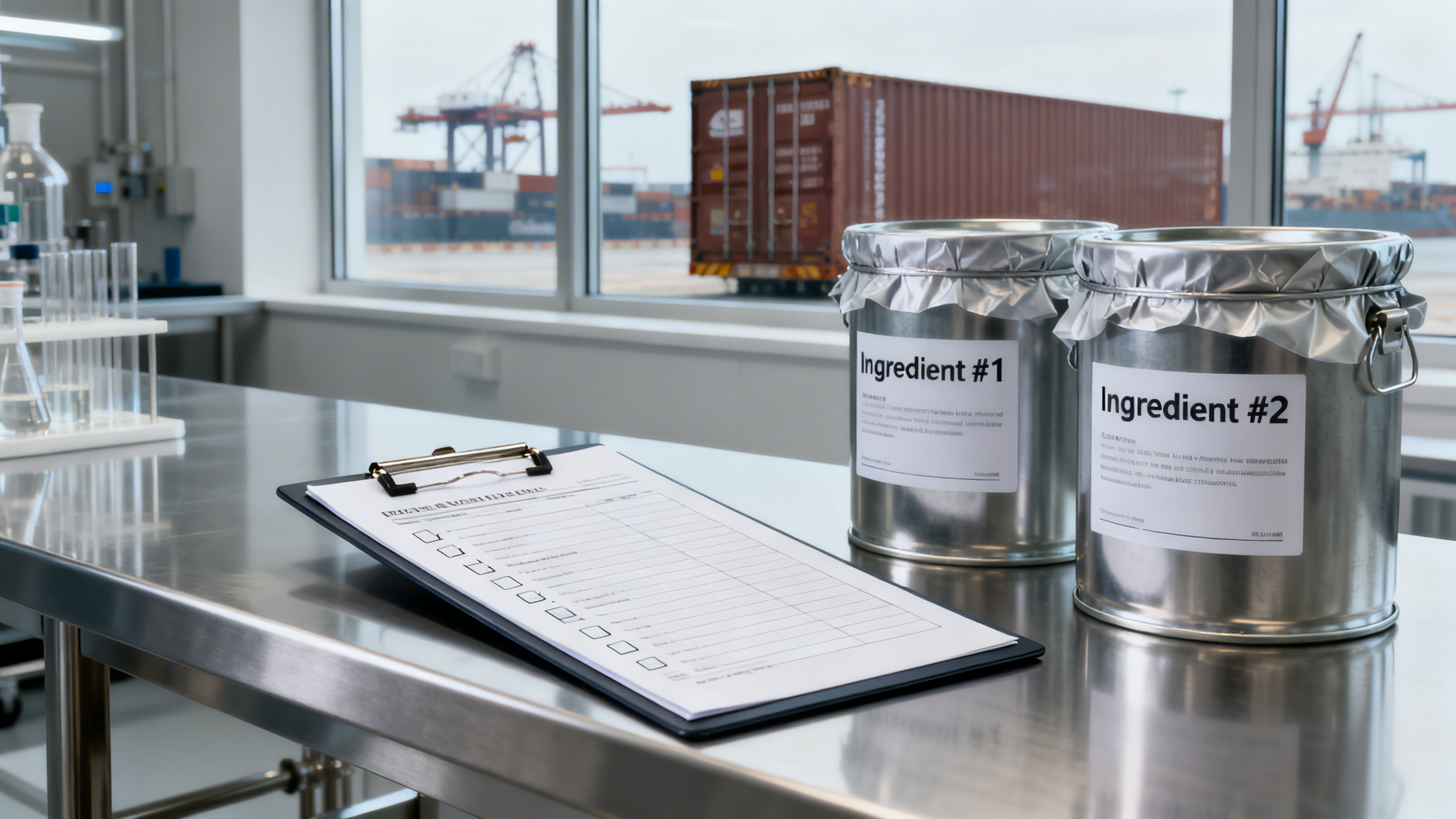
In 2025, FDA’s import enforcement posture around Foreign Supplier Verification Programs (FSVP) has become much less forgiving—especially for imported botanical extracts and concentrates that are marketed as “hemp-derived” ingredients (including CBD, minor cannabinoids, and nanoemulsified preparations). Even though the broader federal policy questions about CBD in conventional foods remain unresolved, FDA has continued to treat the import side as a clear compliance lane: if you import an ingredient that is a food (or will become a food ingredient), you must meet 21 CFR Part 1, Subpart L.
For beverage brands and co-packers, the practical message is straightforward:
This post is informational only and not legal advice.
FSVP is the FSMA-era rule that makes the U.S. importer responsible for ensuring foreign-supplied food is produced in a manner that provides the same level of public health protection as U.S. requirements, and that the food is not adulterated or misbranded with respect to allergen labeling.
FSVP’s core requirements (at a high level) include:
Official references:
Under FSVP, the “importer” is generally the U.S. owner or consignee of the food at the time of entry. If there is no U.S. owner or consignee, the U.S. agent/representative of the foreign owner/consignee can be the FSVP importer.
Why this matters in 2025: FDA warning letters and import entry reviews frequently highlight situations where firms cannot clearly identify:
Beverage brands that “never touch the ingredient” (because a co-packer or broker arranges drop shipment) can still end up as the FSVP importer if they are the U.S. owner/consignee.
If you are manufacturing a conventional beverage in the U.S., the facility is typically subject to 21 CFR Part 117 (Current Good Manufacturing Practice, Hazard Analysis, and Risk-Based Preventive Controls for Human Food), unless a specific exemption applies.
Relevant Part 117 concepts that often overlap with FSVP work:
Part 117 reference: https://www.ecfr.gov/current/title-21/chapter-I/subchapter-B/part-117
Practical takeaway: Don’t treat FSVP as “the importer’s paperwork” and Part 117 as “the plant’s paperwork.” FDA inspectors may expect alignment between:
Some ingestible products are marketed as dietary supplements even when they look like beverages. If your finished product meets the legal definition of a dietary supplement and is labeled as such, 21 CFR Part 111 (dietary supplement CGMP) can apply.
Part 111 reference: https://www.ecfr.gov/current/title-21/chapter-I/subchapter-B/part-111
Part 111 has a strong focus on:
Important: Whether a cannabinoid-containing ingestible can lawfully be marketed as a dietary supplement is a separate federal legal question; this post focuses on the FSVP/import and manufacturing compliance mechanics.
FDA continues to post FSVP warning letters (across many categories), and the recurring FSVP gaps that matter most for imported cannabinoid ingredients used in beverages tend to cluster in a few buckets.
Use FDA’s warning letter database and filter by “FSVP” to see current postings: https://www.fda.gov/inspections-compliance-enforcement-and-criminal-investigations/compliance-actions-and-activities/warning-letters
For hemp-derived distillates, isolates, and nanoemulsions, the hazard analysis often needs to address chemical hazards that are common for botanical extracts and concentrate-type ingredients.
FDA commonly expects the hazard analysis to consider, as applicable:
When firms rely solely on a supplier COA without documenting the hazard evaluation logic, it can look like they skipped the required analysis.
FSVP verification is not “one size fits all.” FDA expects verification activities to be risk-based and tied to the hazard analysis.
Common verification activities include:
When the imported input is a high-value, high-concentration ingredient that will be used in a ready-to-consume beverage, FDA may expect more than periodic COAs.
FSVP inspections are document-driven. A frequent failure mode is simply not being able to produce:
If your brand uses a broker, freight forwarder, or co-packer, you still need written clarity about where the FSVP records live and how fast you can access them.
A practical enforcement trigger is when entry information is inconsistent or incomplete.
Brands should watch for:
These issues can create avoidable delays and elevate scrutiny.
Even if you have strong FSVP documentation, certain attributes can raise the odds of shipment holds:
FDA’s import enforcement toolbox includes examinations, sampling, and Detention Without Physical Examination (DWPE) through Import Alerts.
FDA Import Alert database: https://www.accessdata.fda.gov/cms_ia/ialist.html
Compliance takeaway: If your ingredient category is already prone to heightened attention, the cost of “documentation gaps” is higher—because you may need those records to respond rapidly during an admissibility challenge.
Beverage brands often buy cannabinoid ingredients through complex channels (foreign manufacturer → trader → U.S. broker → co-packer). Under FSVP, you need enough documentation to support both supplier approval and ongoing verification.
Below is a practical, audit-ready set of documents to request and maintain.
COAs should be lot-specific and tied to validated/fit-for-purpose methods.
Ask for:
Tip: If you are relying on supplier COAs as a key control, your program should document why that reliance is appropriate, and how you confirm COA integrity (e.g., periodic third-party verification testing).
Depending on risk, assemble:
A frequent 2025 risk scenario is a “drop-ship” model:
If your co-packer is named as the FSVP importer at entry, that co-packer must have a compliant FSVP. Many co-packers are surprised by this during an FDA inspection.
Use this as a practical internal control list.
If you are importing or planning to import hemp-derived ingredients in 2026 planning cycles, take these steps immediately.
Many beverage teams assume that if they have strong FSVP records and contaminant testing, they are “cleared” federally. In practice, there are two separate layers:
A mature compliance program addresses both—but FSVP is the piece that can stop your supply chain immediately at the border.
If your supply chain includes imported distillates, isolates, or emulsified ingredients, use CannabisRegulations.ai to centralize your cannabis compliance documentation, map responsibilities across brands and co-packers, and stay current on evolving licensing and regulations that affect product development and distribution. Get started at https://cannabisregulations.ai/
In 2025, FDA’s import enforcement posture around Foreign Supplier Verification Programs (FSVP) has become much less forgiving—especially for imported botanical extracts and concentrates that are marketed as “hemp-derived” ingredients (including CBD, minor cannabinoids, and nanoemulsified preparations). Even though the broader federal policy questions about CBD in conventional foods remain unresolved, FDA has continued to treat the import side as a clear compliance lane: if you import an ingredient that is a food (or will become a food ingredient), you must meet 21 CFR Part 1, Subpart L.
For beverage brands and co-packers, the practical message is straightforward:
This post is informational only and not legal advice.
FSVP is the FSMA-era rule that makes the U.S. importer responsible for ensuring foreign-supplied food is produced in a manner that provides the same level of public health protection as U.S. requirements, and that the food is not adulterated or misbranded with respect to allergen labeling.
FSVP’s core requirements (at a high level) include:
Official references:
Under FSVP, the “importer” is generally the U.S. owner or consignee of the food at the time of entry. If there is no U.S. owner or consignee, the U.S. agent/representative of the foreign owner/consignee can be the FSVP importer.
Why this matters in 2025: FDA warning letters and import entry reviews frequently highlight situations where firms cannot clearly identify:
Beverage brands that “never touch the ingredient” (because a co-packer or broker arranges drop shipment) can still end up as the FSVP importer if they are the U.S. owner/consignee.
If you are manufacturing a conventional beverage in the U.S., the facility is typically subject to 21 CFR Part 117 (Current Good Manufacturing Practice, Hazard Analysis, and Risk-Based Preventive Controls for Human Food), unless a specific exemption applies.
Relevant Part 117 concepts that often overlap with FSVP work:
Part 117 reference: https://www.ecfr.gov/current/title-21/chapter-I/subchapter-B/part-117
Practical takeaway: Don’t treat FSVP as “the importer’s paperwork” and Part 117 as “the plant’s paperwork.” FDA inspectors may expect alignment between:
Some ingestible products are marketed as dietary supplements even when they look like beverages. If your finished product meets the legal definition of a dietary supplement and is labeled as such, 21 CFR Part 111 (dietary supplement CGMP) can apply.
Part 111 reference: https://www.ecfr.gov/current/title-21/chapter-I/subchapter-B/part-111
Part 111 has a strong focus on:
Important: Whether a cannabinoid-containing ingestible can lawfully be marketed as a dietary supplement is a separate federal legal question; this post focuses on the FSVP/import and manufacturing compliance mechanics.
FDA continues to post FSVP warning letters (across many categories), and the recurring FSVP gaps that matter most for imported cannabinoid ingredients used in beverages tend to cluster in a few buckets.
Use FDA’s warning letter database and filter by “FSVP” to see current postings: https://www.fda.gov/inspections-compliance-enforcement-and-criminal-investigations/compliance-actions-and-activities/warning-letters
For hemp-derived distillates, isolates, and nanoemulsions, the hazard analysis often needs to address chemical hazards that are common for botanical extracts and concentrate-type ingredients.
FDA commonly expects the hazard analysis to consider, as applicable:
When firms rely solely on a supplier COA without documenting the hazard evaluation logic, it can look like they skipped the required analysis.
FSVP verification is not “one size fits all.” FDA expects verification activities to be risk-based and tied to the hazard analysis.
Common verification activities include:
When the imported input is a high-value, high-concentration ingredient that will be used in a ready-to-consume beverage, FDA may expect more than periodic COAs.
FSVP inspections are document-driven. A frequent failure mode is simply not being able to produce:
If your brand uses a broker, freight forwarder, or co-packer, you still need written clarity about where the FSVP records live and how fast you can access them.
A practical enforcement trigger is when entry information is inconsistent or incomplete.
Brands should watch for:
These issues can create avoidable delays and elevate scrutiny.
Even if you have strong FSVP documentation, certain attributes can raise the odds of shipment holds:
FDA’s import enforcement toolbox includes examinations, sampling, and Detention Without Physical Examination (DWPE) through Import Alerts.
FDA Import Alert database: https://www.accessdata.fda.gov/cms_ia/ialist.html
Compliance takeaway: If your ingredient category is already prone to heightened attention, the cost of “documentation gaps” is higher—because you may need those records to respond rapidly during an admissibility challenge.
Beverage brands often buy cannabinoid ingredients through complex channels (foreign manufacturer → trader → U.S. broker → co-packer). Under FSVP, you need enough documentation to support both supplier approval and ongoing verification.
Below is a practical, audit-ready set of documents to request and maintain.
COAs should be lot-specific and tied to validated/fit-for-purpose methods.
Ask for:
Tip: If you are relying on supplier COAs as a key control, your program should document why that reliance is appropriate, and how you confirm COA integrity (e.g., periodic third-party verification testing).
Depending on risk, assemble:
A frequent 2025 risk scenario is a “drop-ship” model:
If your co-packer is named as the FSVP importer at entry, that co-packer must have a compliant FSVP. Many co-packers are surprised by this during an FDA inspection.
Use this as a practical internal control list.
If you are importing or planning to import hemp-derived ingredients in 2026 planning cycles, take these steps immediately.
Many beverage teams assume that if they have strong FSVP records and contaminant testing, they are “cleared” federally. In practice, there are two separate layers:
A mature compliance program addresses both—but FSVP is the piece that can stop your supply chain immediately at the border.
If your supply chain includes imported distillates, isolates, or emulsified ingredients, use CannabisRegulations.ai to centralize your cannabis compliance documentation, map responsibilities across brands and co-packers, and stay current on evolving licensing and regulations that affect product development and distribution. Get started at https://cannabisregulations.ai/