
February 20, 2026

Thank you! Your submission has been received!
Oops! Something went wrong while submitting the form.

Pennsylvania’s lawmakers spent much of 2025 publicly acknowledging what retailers, beverage brands, and enforcement agencies have been grappling with for years: hemp‑derived THC beverages are widely available, but Pennsylvania does not yet have a single, explicit “beverage regime” that clearly answers the questions everyone asks first—who can sell, to whom, and how strong.
For operators, that “gray area” is not just a policy problem. It’s a cannabis compliance risk: product seizures, consumer safety scrutiny, labeling disputes, and the possibility that a bill moves quickly late in a session—forcing sudden operational changes (and unsellable inventory).
This brief summarizes: (1) what current Pennsylvania law does (and doesn’t) say today, (2) the major policy themes that Pennsylvania legislators and stakeholders floated in 2025—Age‑21 sales, potency caps, and retail channel restrictions, and (3) a readiness checklist for brands and retailers preparing for a potential late‑2025/early‑2026 legislative push.
Important: This article is informational only and not legal advice. Always confirm requirements with counsel and regulators.
Pennsylvania participates in a state hemp program administered through the Pennsylvania Department of Agriculture under the federal framework created by the 2018 Farm Bill. The hemp program primarily addresses cultivation/production and the definition of hemp as material that meets the federal THC threshold on a dry‑weight basis.
What Pennsylvania does not currently have is a comprehensive, beverage‑specific statewide system that clearly addresses:
The result is uneven practices across the supply chain—some brands adopt rigorous controls, while others sell products that look like mainstream beverages with minimal standardized warnings.
At the federal level, the definition of hemp in the 2018 Farm Bill created an incentive for products that can remain below 0.3% Δ9 THC by dry weight, including beverages where water weight can make the percentage appear small even when the total milligrams are meaningful.
Meanwhile, federal agencies have signaled consumer‑protection concerns. The U.S. Food and Drug Administration continues to emphasize that many cannabinoid products (especially novel cannabinoids) raise safety and misbranding issues, and it has issued public statements and enforcement actions focused on consumer harm and unlawful medical claims. See FDA’s general cannabinoid policy updates here: https://www.fda.gov/news-events/public-health-focus/fda-regulation-cannabis-and-cannabis-derived-products.
Pennsylvania policymakers in 2025 repeatedly framed the issue as: federal definitions don’t equal a state retail safety program, especially for beverages that may be consumed quickly and mistaken for non‑intoxicating drinks.
Across public comments and legislative drafting activity in 2025, three concepts showed up again and again. Even where final bill text was not yet consolidated into a single statewide program, the direction of travel was clear.
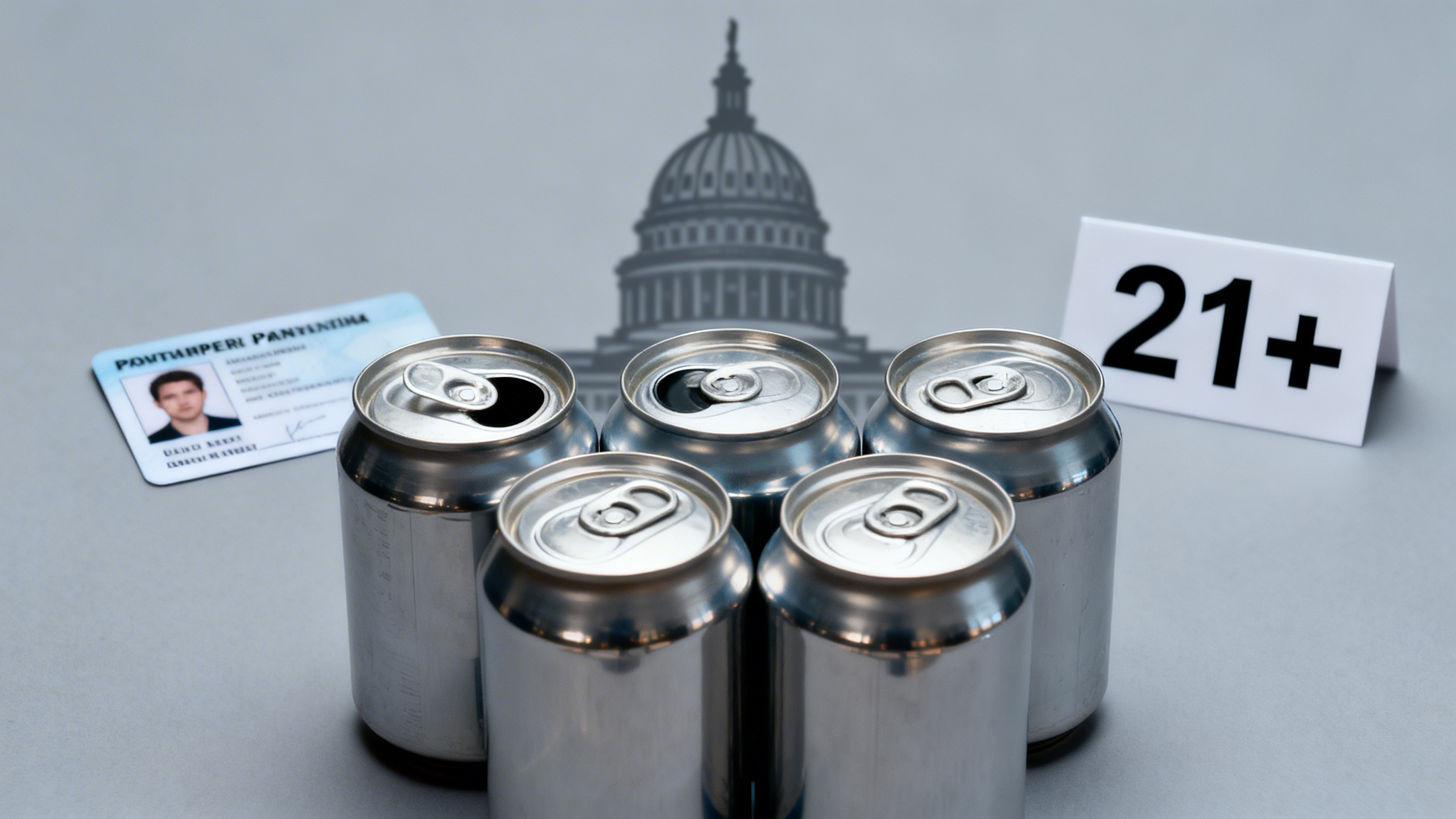
The simplest political message has been: if a beverage can intoxicate, treat access like alcohol—21+ only.
Expect any serious Pennsylvania proposal to include:
This matters operationally because “age‑gating” is not a web banner. It’s a system: POS configuration, employee training, mystery‑shop protocols, and incident logs.
Pennsylvania lawmakers in 2025 also focused on “dose clarity.” In multi‑state legislative trends, the most common approach is a two‑part cap:
Why both? Because beverages are often packaged in single containers that consumers treat as one serving—even if the label says “2 servings.” Legislatures respond by capping both the “unit dose” and the total amount in the container.
Operational implications for brands:
The third pillar is the hardest politically and commercially: retail channels.
Stakeholders often break into two camps:
Pennsylvania’s 2025 discussion frequently mirrored the question other states faced: should intoxicating hemp beverages be treated like:
A common “middle‑path” in other states has been: allow sales, but require registration, product approval, trackable sourcing, and restricted outlets.
Even if the exact numbers and licensing structure change, 2025’s policy conversations point to a familiar set of compliance requirements. Brands and retailers should treat these as the leading indicators.
Expect proposals to require:
If Pennsylvania follows neighboring patterns, testing could include heavy metals, residual solvents, pesticides, microbiological contaminants, and potentially verification of cannabinoid conversions.
Common elements seen in other states’ intoxicating hemp proposals include:
Because beverages sit next to mainstream drinks, Pennsylvania lawmakers have shown interest in ensuring packages are not easily confused with soda/energy drinks.
Watch for:
The biggest practical change for the market will come from enforcement tools. Bills often include:
For retailers, the key risk is that enforcement frequently targets the “last mile” point of sale first.
Pennsylvania rarely legislates in a vacuum. In 2024–2025, multiple states in the region moved to draw bright lines around intoxicating hemp products, particularly beverages.
New York has used a combination of legislation and agency guidance/enforcement to tighten controls over cannabinoid products sold outside its adult‑use program. While details vary across product categories, New York’s broader trajectory has emphasized:
New York’s regulator hub is the Office of Cannabis Management: https://cannabis.ny.gov/.
New Jersey lawmakers have explicitly targeted “intoxicating hemp” in recent policy discussions, reflecting a trend toward:
New Jersey’s Cannabis Regulatory Commission is here: https://www.nj.gov/cannabis/.
Maryland and Delaware have each grappled with how to cap dose and define where intoxicating hemp products can be sold. Across these states, the recurring policy pattern is:
These regional moves matter for Pennsylvania because operators often distribute across state lines. A multi‑state beverage SKU strategy increasingly requires state‑specific potency, label, and channel compliance.
Pennsylvania’s 2025 conversation showed familiar stakeholder dynamics:
If a bill advances, expect intense debate over whether a registration program should sit under agriculture, health, consumer protection, or an existing regulated‑products framework.
Pennsylvania legislative calendars can move quickly when leadership aligns. If lawmakers decide to “solve” the beverage gray area, the critical triggers to monitor are:
For primary sources, track the Pennsylvania General Assembly’s bill database: https://www.legis.state.pa.us/.
If you sell (or plan to sell) hemp‑derived THC beverages in Pennsylvania, here is a pragmatic compliance readiness plan you can implement now—designed to reduce risk if a bill advances late in the year.
Pennsylvania’s “intoxicating hemp beverage” policy is evolving quickly, and details can change between bill introduction, committee amendments, and final passage.
Use https://cannabisregulations.ai/ to monitor Pennsylvania hemp THC beverages 2025 legislation, track proposed potency and age‑gating requirements, and operationalize compliant SOPs for labeling, testing documentation, and retail rollout.
Pennsylvania’s lawmakers spent much of 2025 publicly acknowledging what retailers, beverage brands, and enforcement agencies have been grappling with for years: hemp‑derived THC beverages are widely available, but Pennsylvania does not yet have a single, explicit “beverage regime” that clearly answers the questions everyone asks first—who can sell, to whom, and how strong.
For operators, that “gray area” is not just a policy problem. It’s a cannabis compliance risk: product seizures, consumer safety scrutiny, labeling disputes, and the possibility that a bill moves quickly late in a session—forcing sudden operational changes (and unsellable inventory).
This brief summarizes: (1) what current Pennsylvania law does (and doesn’t) say today, (2) the major policy themes that Pennsylvania legislators and stakeholders floated in 2025—Age‑21 sales, potency caps, and retail channel restrictions, and (3) a readiness checklist for brands and retailers preparing for a potential late‑2025/early‑2026 legislative push.
Important: This article is informational only and not legal advice. Always confirm requirements with counsel and regulators.
Pennsylvania participates in a state hemp program administered through the Pennsylvania Department of Agriculture under the federal framework created by the 2018 Farm Bill. The hemp program primarily addresses cultivation/production and the definition of hemp as material that meets the federal THC threshold on a dry‑weight basis.
What Pennsylvania does not currently have is a comprehensive, beverage‑specific statewide system that clearly addresses:
The result is uneven practices across the supply chain—some brands adopt rigorous controls, while others sell products that look like mainstream beverages with minimal standardized warnings.
At the federal level, the definition of hemp in the 2018 Farm Bill created an incentive for products that can remain below 0.3% Δ9 THC by dry weight, including beverages where water weight can make the percentage appear small even when the total milligrams are meaningful.
Meanwhile, federal agencies have signaled consumer‑protection concerns. The U.S. Food and Drug Administration continues to emphasize that many cannabinoid products (especially novel cannabinoids) raise safety and misbranding issues, and it has issued public statements and enforcement actions focused on consumer harm and unlawful medical claims. See FDA’s general cannabinoid policy updates here: https://www.fda.gov/news-events/public-health-focus/fda-regulation-cannabis-and-cannabis-derived-products.
Pennsylvania policymakers in 2025 repeatedly framed the issue as: federal definitions don’t equal a state retail safety program, especially for beverages that may be consumed quickly and mistaken for non‑intoxicating drinks.
Across public comments and legislative drafting activity in 2025, three concepts showed up again and again. Even where final bill text was not yet consolidated into a single statewide program, the direction of travel was clear.
The simplest political message has been: if a beverage can intoxicate, treat access like alcohol—21+ only.
Expect any serious Pennsylvania proposal to include:
This matters operationally because “age‑gating” is not a web banner. It’s a system: POS configuration, employee training, mystery‑shop protocols, and incident logs.
Pennsylvania lawmakers in 2025 also focused on “dose clarity.” In multi‑state legislative trends, the most common approach is a two‑part cap:
Why both? Because beverages are often packaged in single containers that consumers treat as one serving—even if the label says “2 servings.” Legislatures respond by capping both the “unit dose” and the total amount in the container.
Operational implications for brands:
The third pillar is the hardest politically and commercially: retail channels.
Stakeholders often break into two camps:
Pennsylvania’s 2025 discussion frequently mirrored the question other states faced: should intoxicating hemp beverages be treated like:
A common “middle‑path” in other states has been: allow sales, but require registration, product approval, trackable sourcing, and restricted outlets.
Even if the exact numbers and licensing structure change, 2025’s policy conversations point to a familiar set of compliance requirements. Brands and retailers should treat these as the leading indicators.
Expect proposals to require:
If Pennsylvania follows neighboring patterns, testing could include heavy metals, residual solvents, pesticides, microbiological contaminants, and potentially verification of cannabinoid conversions.
Common elements seen in other states’ intoxicating hemp proposals include:
Because beverages sit next to mainstream drinks, Pennsylvania lawmakers have shown interest in ensuring packages are not easily confused with soda/energy drinks.
Watch for:
The biggest practical change for the market will come from enforcement tools. Bills often include:
For retailers, the key risk is that enforcement frequently targets the “last mile” point of sale first.
Pennsylvania rarely legislates in a vacuum. In 2024–2025, multiple states in the region moved to draw bright lines around intoxicating hemp products, particularly beverages.
New York has used a combination of legislation and agency guidance/enforcement to tighten controls over cannabinoid products sold outside its adult‑use program. While details vary across product categories, New York’s broader trajectory has emphasized:
New York’s regulator hub is the Office of Cannabis Management: https://cannabis.ny.gov/.
New Jersey lawmakers have explicitly targeted “intoxicating hemp” in recent policy discussions, reflecting a trend toward:
New Jersey’s Cannabis Regulatory Commission is here: https://www.nj.gov/cannabis/.
Maryland and Delaware have each grappled with how to cap dose and define where intoxicating hemp products can be sold. Across these states, the recurring policy pattern is:
These regional moves matter for Pennsylvania because operators often distribute across state lines. A multi‑state beverage SKU strategy increasingly requires state‑specific potency, label, and channel compliance.
Pennsylvania’s 2025 conversation showed familiar stakeholder dynamics:
If a bill advances, expect intense debate over whether a registration program should sit under agriculture, health, consumer protection, or an existing regulated‑products framework.
Pennsylvania legislative calendars can move quickly when leadership aligns. If lawmakers decide to “solve” the beverage gray area, the critical triggers to monitor are:
For primary sources, track the Pennsylvania General Assembly’s bill database: https://www.legis.state.pa.us/.
If you sell (or plan to sell) hemp‑derived THC beverages in Pennsylvania, here is a pragmatic compliance readiness plan you can implement now—designed to reduce risk if a bill advances late in the year.
Pennsylvania’s “intoxicating hemp beverage” policy is evolving quickly, and details can change between bill introduction, committee amendments, and final passage.
Use https://cannabisregulations.ai/ to monitor Pennsylvania hemp THC beverages 2025 legislation, track proposed potency and age‑gating requirements, and operationalize compliant SOPs for labeling, testing documentation, and retail rollout.