


Sign Up
Ready to replace complexity with clarity?
Answer your real world compliance questions (limited time) and save thousands in legal fees and avoided fines.
Automate Compliance Today

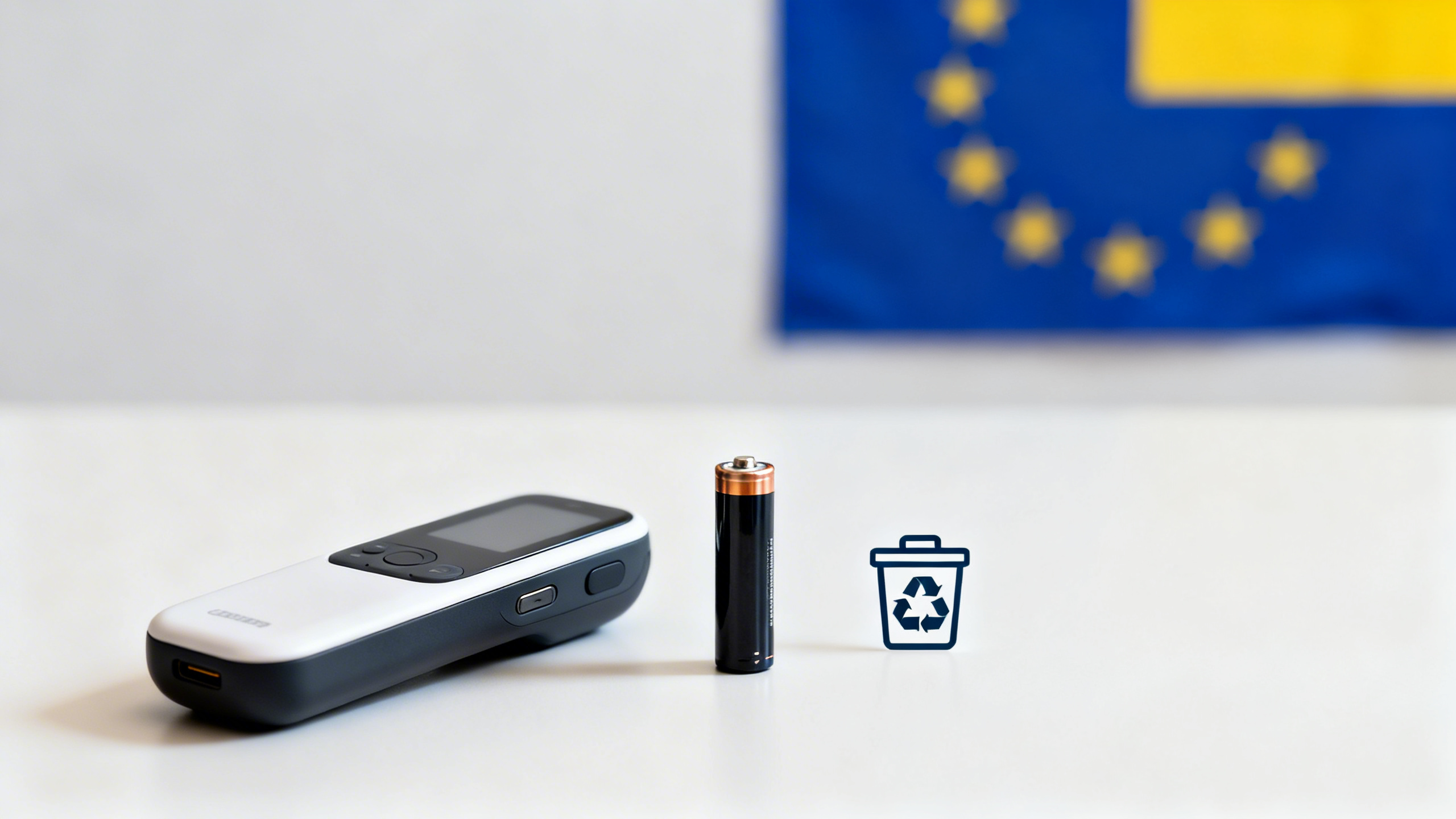
Regulation (EU) 2023/1542 (the EU Batteries Regulation) is no longer a “battery industry” issue—it’s a product-market-access issue for any brand selling battery-powered devices into the EU. It repeals and replaces the old Batteries Directive 2006/66/EC, and it does so with a multi-year rollout that touches design, marking/labeling, traceability, and end-of-life take-back.
For vape device brands, the key point is simple: if your product contains an integrated lithium cell (or ships with removable cells), you’re in scope as soon as you make batteries available in an EU Member State—whether that happens through your own site, through a distributor, or through an online marketplace.
The regulation’s “waste” chapter becomes especially real starting 18 August 2025, when Member States must have the updated producer responsibility and enforcement frameworks operating, and when producers should expect tighter verification by marketplaces and market-surveillance authorities. The official legal text is available via EUR-Lex: https://eur-lex.europa.eu/legal-content/EN/TXT/PDF/?uri=CELEX:32023R1542
This article is informational only, not legal advice.
Regulation (EU) 2023/1542 applies broadly to batteries placed on the EU market, including batteries that are:
Most vape devices use sealed rechargeable lithium batteries that almost always fall into the category of a portable battery (generally sealed, ≤ 5 kg, and not specifically designed for industrial use).
The regulation defines multiple battery categories, including portable, LMT (light means of transport), industrial, and EV batteries. LMT batteries are designed for traction of wheeled vehicles (e-bikes, scooters) and can weigh up to 25 kg. Vape devices are not traction devices, so they will almost never be LMT.
Where brands can get tripped up is not LMT—but “portable vs. industrial.” For example:
If a company sells a high-capacity rechargeable pack used for shop operations (not typical), that could trigger industrial battery obligations (including, eventually, passport-style requirements for certain capacities). Definitions and timeline summaries are discussed by notified bodies and conformity services such as TÜV Rheinland: https://www.tuv.com/landingpage/en/eu-new-battery-regulation-eu-2023-1542/
A frequent misconception is that “the device is the product, not the battery.” Under EU rules, the battery is regulated even when incorporated into equipment—meaning you should plan for:
Across EU EPR regimes, the “producer” is typically the entity that first makes the product available in a national market under its name/brand, or imports it into that Member State.
If you are a non-EU brand selling directly to EU consumers (DTC), you can still be the producer for batteries in each Member State where you sell.
If you sell via:
…you should assume you may need to register and report in multiple Member States, even if you do not have a physical presence.
Member States commonly require a local Authorised Representative (AR) or local entity for certain producer registrations, particularly for non-established sellers. This is also a familiar concept under WEEE distance-selling guidance and national implementations.
Extended Producer Responsibility under the Batteries Regulation generally means you (or your appointed Producer Responsibility Organisation) must finance and organize end-of-life management, including:
The regulation also increases requirements around transparency and reporting, and it requires Member States to implement penalties and enforcement mechanisms. Legal and regulatory summaries emphasize 18 August 2025 as a key date when the directive-era framework is fully replaced and the waste-management chapter is expected to be operational across Member States.
For a high-level EU summary and related Commission materials, see EUR-Lex’s summary page: https://eur-lex.europa.eu/EN/legal-content/summary/sustainability-rules-for-batteries-and-waste-batteries.html
The regulation sets collection-rate targets for waste portable batteries of 63% by 2027 and 73% by 2030 (and separate targets for other categories). While collection targets are measured at national level, they drive:
(See industry-facing summaries and EU recap sources referencing the targets and regulation scope.)
The regulation is directly applicable EU law, but the administration of EPR (registration portals, reporting formats, PRO membership mechanics, verification by marketplaces) still happens Member State by Member State.
To illustrate:
Germany uses Stiftung ear as a key registration authority for batteries and e-waste. Producer registrations must be properly maintained and (during transition periods) linked to approved compliance organizations. Service providers note transition deadlines and requirements in the German market tied to the post-2025 framework. Example background: https://erp-recycling.org/en-de/what-we-cover/streams/batteries/authorised-representative-for-batteries/
France operates a register and Producer Responsibility Organisation model overseen via ADEME’s EPR directories. ADEME’s page listing PROs is a useful starting point: https://filieres-rep.ademe.fr/producer-responsibility-organisations
Netherlands provides government-facing guidance on battery producer responsibility and registration routes, including the role of national organizations for different battery types: https://www.kvk.nl/en/sustainability/epr-batteries-and-accumulators-rules-for-producers-and-importers/
The takeaway: a U.S. brand selling into multiple EU countries should plan for multi-registration, not “one EU registration.”
Regulation (EU) 2023/1542 strengthens labeling and information requirements so that batteries are easier to identify, sort, and recycle.
At a minimum, brands should plan for:
Many compliance practitioners expect implementing acts to further harmonize label specifications. Because vape batteries are physically small and often integrated, brands should design packaging artwork and device markings with enough space and durability to support the coming requirements.
One of the most operationally disruptive requirements for consumer devices is the rule that products incorporating portable batteries should be designed so the batteries can be readily removable and replaceable, with limited exemptions.
Commission guidance and legal analyses highlight that, for most products, the battery must be removable and replaceable by the end user (or, in narrower cases, by independent professionals using commercially available tools). Commentary on the Commission’s guidance and the practical implications for product design can be found here: https://products.cooley.com/2025/02/13/european-commission-publishes-guidance-on-eu-batteries-regulation-removability-requirements/
For vape device manufacturers, this intersects with:
If your EU strategy includes 2027+ sales, engineering should be involved now.
The regulation’s digital battery passport is legally tied to categories like EV batteries and rechargeable industrial batteries above certain thresholds, with the passport expected to be required by February 2027 for those categories (and for LMT batteries as specified).
Even if most vape devices use portable batteries (and therefore may not require a full battery passport), vape brands should care for three reasons:
The regulation’s passport framework is designed to make lifecycle and circularity data accessible with role-based permissions. In practice, companies are preparing to manage structured data around:
Industry initiatives and analysis (including passport pilots and guidance) show the direction of travel: QR-driven access to structured compliance datasets that can be shared with authorities and recyclers.
A vape device is typically electrical and electronic equipment (EEE). That means you likely have WEEE obligations such as:
The European Commission’s WEEE overview is a good starting point: https://environment.ec.europa.eu/topics/waste-and-recycling/waste-electrical-and-electronic-equipment-weee_en
Packaging placed on the EU market triggers separate packaging EPR obligations. In addition, the newer Packaging and Packaging Waste Regulation (PPWR) begins applying from mid-2026 and adds more design and labeling harmonization over time.
For official EU-level background on packaging changes: https://environment.ec.europa.eu/topics/waste-and-recycling/packaging-waste/packaging-packaging-waste-regulation_en
Practical impact for vape brands:
Separate from batteries and WEEE, the EU’s SCIP database requires notifications for articles containing SVHCs above thresholds. This is not battery-specific, but it often affects electronics supply chains.
Official ECHA SCIP overview: https://echa.europa.eu/scip-suppliers-of-articles
By the time the post-directive framework is fully active (notably 18 August 2025), U.S. brands should aim to have:
If you sell via marketplaces, expect them to request registration numbers and compliance confirmations. Marketplaces have strong incentives to reduce their own regulatory exposure.
2026 is a systems year:
By 2027, regulators expect products to reflect the new circularity assumptions. For vape devices, the biggest likely operational pressure points are:
Even if your products are outside formal battery passport scope, being able to provide structured, verifiable battery information can reduce market-access friction.
The regulation requires Member States to establish penalty frameworks and enforcement mechanisms, and it ties into broader EU market surveillance and product compliance expectations. Practically, consequences often show up as:
Because enforcement is national, your risk profile depends on where you sell—not just what you sell.
Tracking the EU’s rolling deadlines, Member State registrations, and marketplace verification requirements can overwhelm even mature compliance programs. Use https://cannabisregulations.ai/ to monitor regulatory updates, map obligations by market, and build a repeatable compliance workflow for cross-border sales.