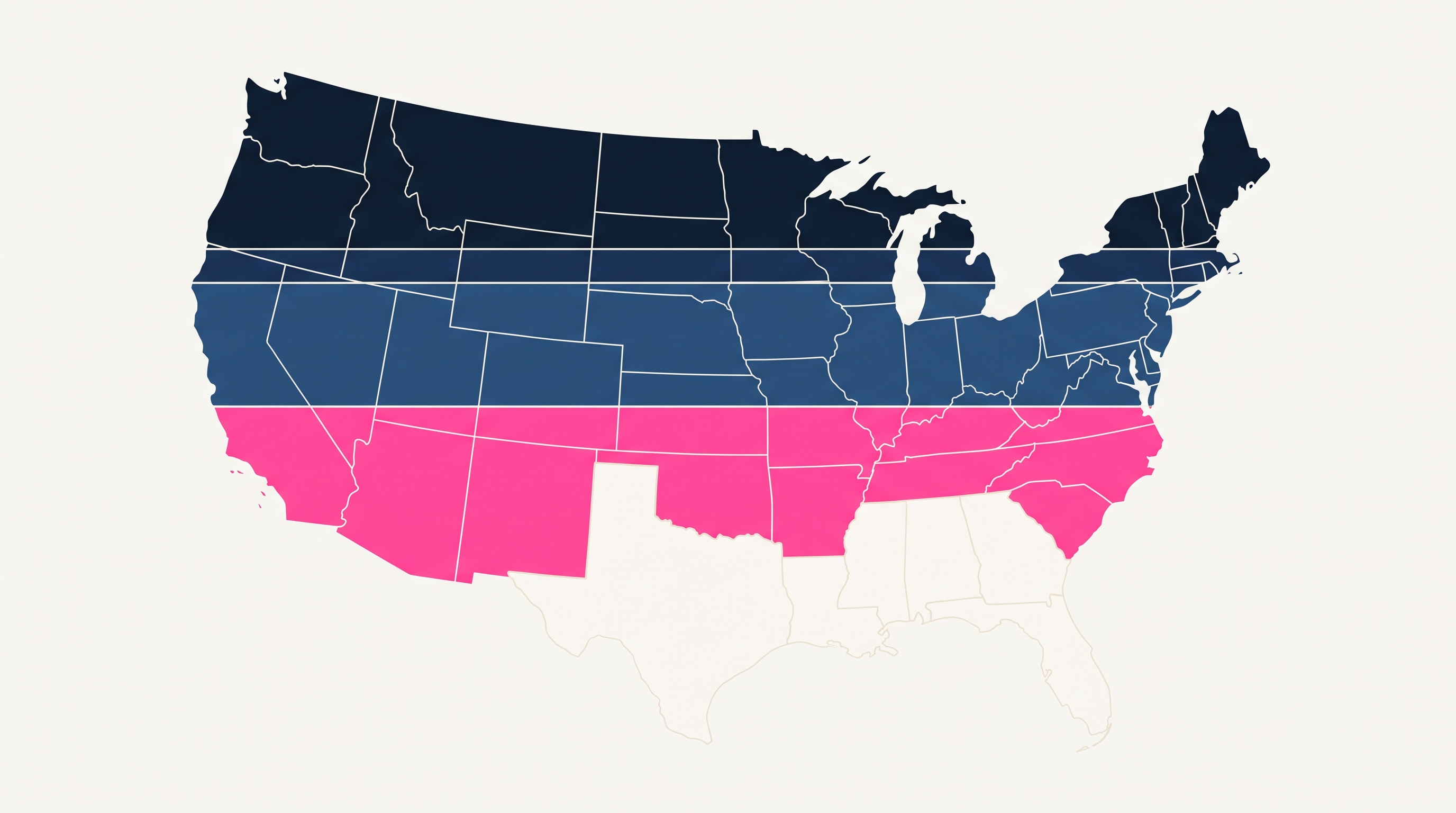
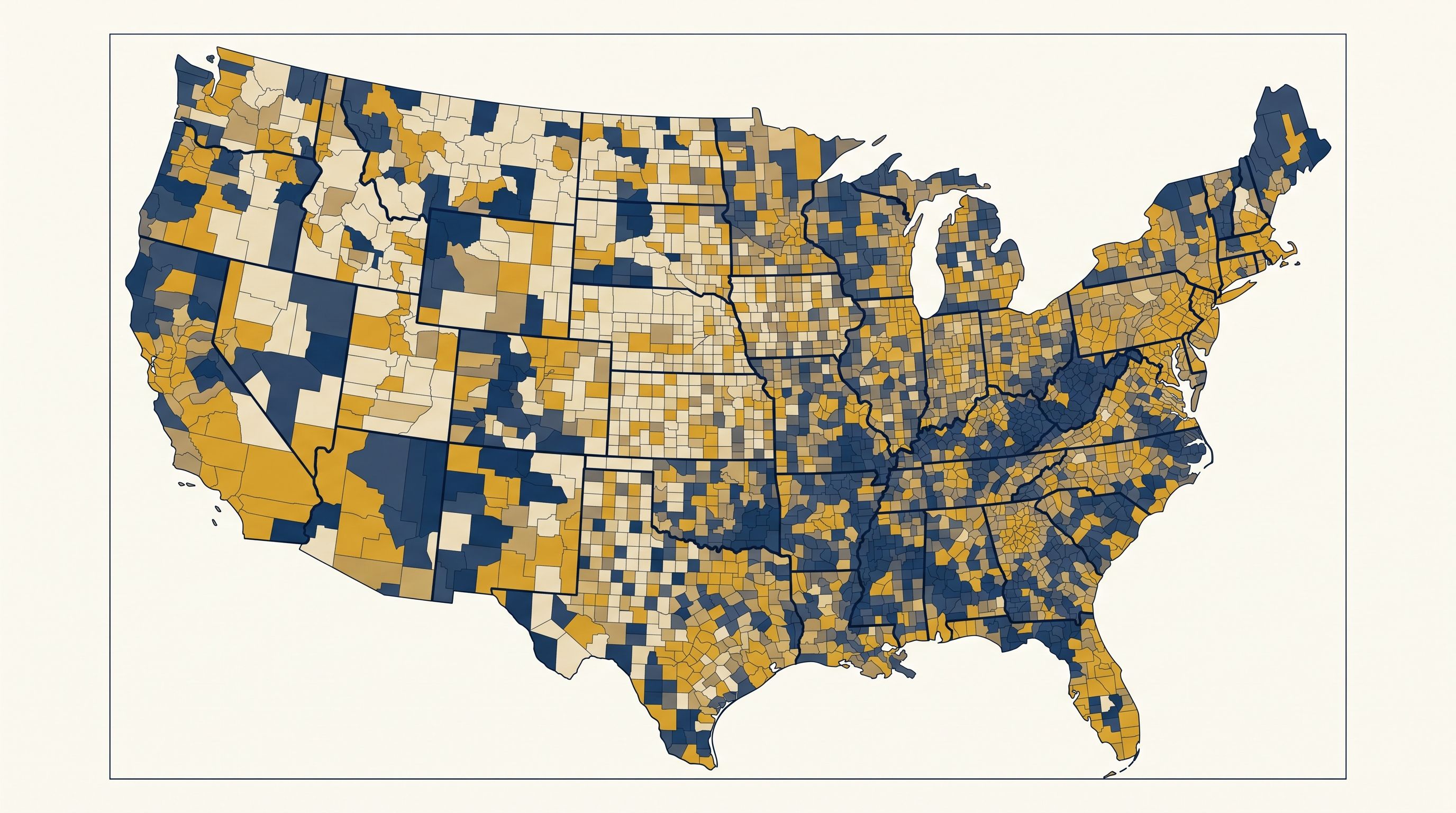
A state-by-state table of delta-8 legality in 2026 — plus the November 12 federal date, and why roughly half the states on the map may not follow it.
Tennessee draws its line at detectable THC, not at the word CBD: THC-free isolate is unregulated, while full-spectrum oil, gummies and flower are ABC-licensed, 21+ products under a THCA-counting test. The state's head start on THCA does not protect it from the federal 0.4 mg per-container cap arriving December 11.
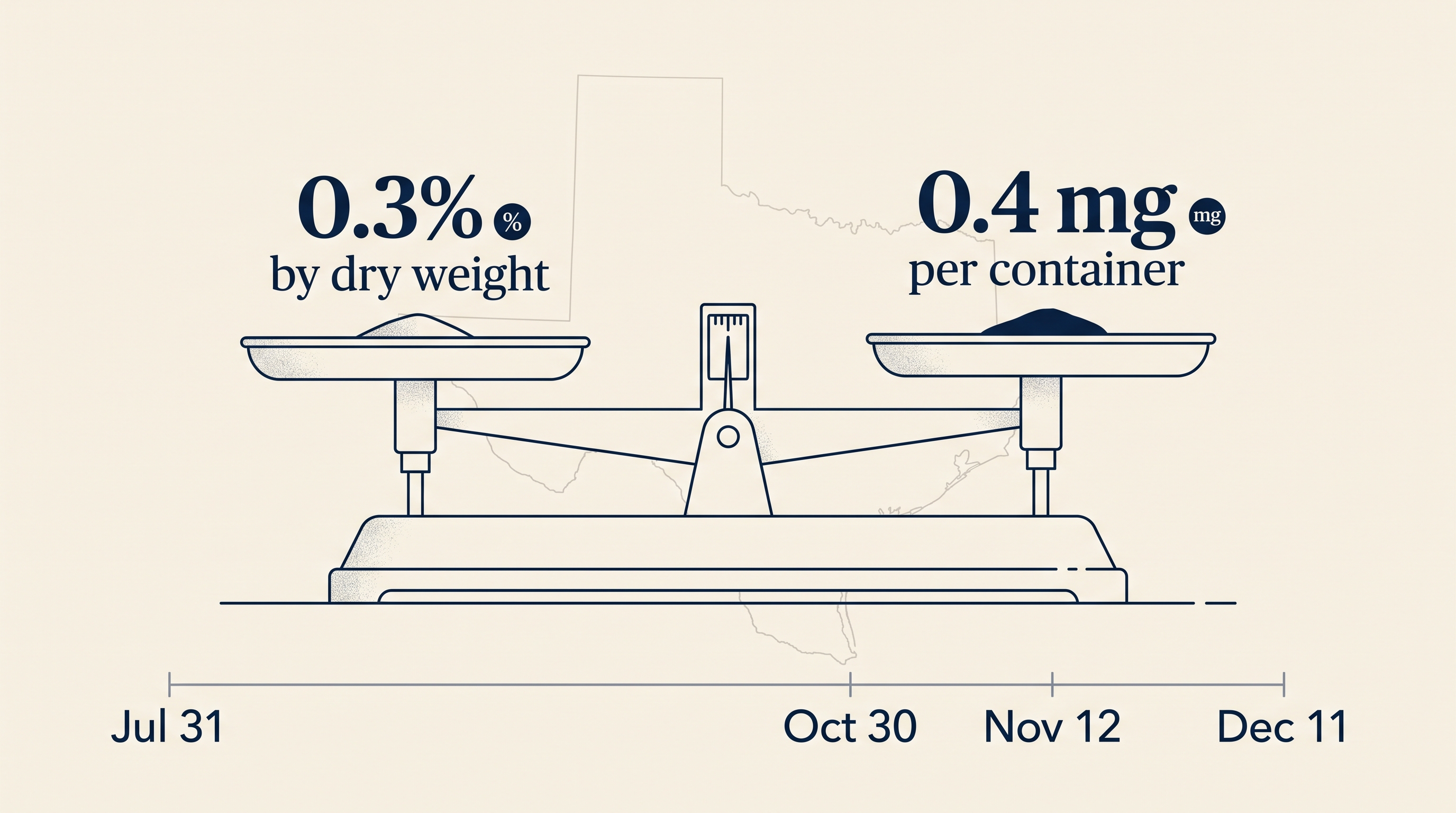
Texas measures THC as a percentage of dry weight; the federal rule arriving December 11 measures it in milligrams per container. A gummy that is legal under one test fails the other by a factor of 25 to 30. Here is the product-by-product matrix, the enforcement posture, and the calendar.
Hemp CBD is legal in Texas under chapter 443, but the answer narrows on two dates: Texas already counts THCA toward total THC, and federal law counts total THC per container from December 11. Which SKUs are exposed.
THC-P occurs naturally in trace amounts and is sold as a CBD-derived synthetic — and that combination puts it in a different federal bucket than most 'synthetics.' Here is how it compares with delta-9 THC on chemistry, law and testing.
Edibles legality turns on three variables — adult-use status, hemp-THC rules and milligram caps — and the per-serving cap usually binds before the legality question does. The state-by-state map operators actually need.
The more intoxicating cannabinoid has carried the lighter legal exposure. November 12 ends that — here is the comparison table operators actually need.
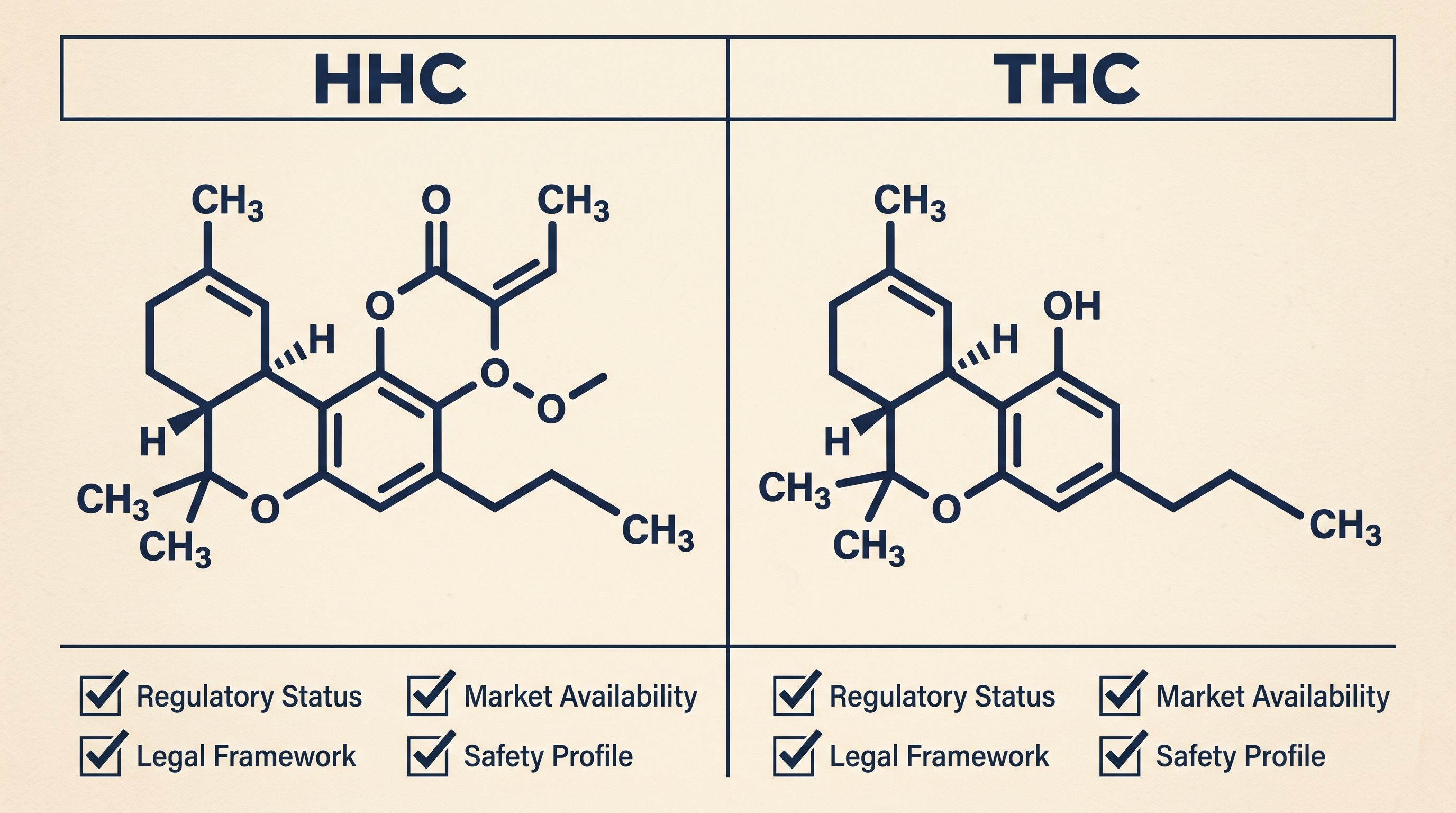
HHC and THC differ by one chemical step — and a widening legal gap. What the 2026 federal changes mean for each, state by state.
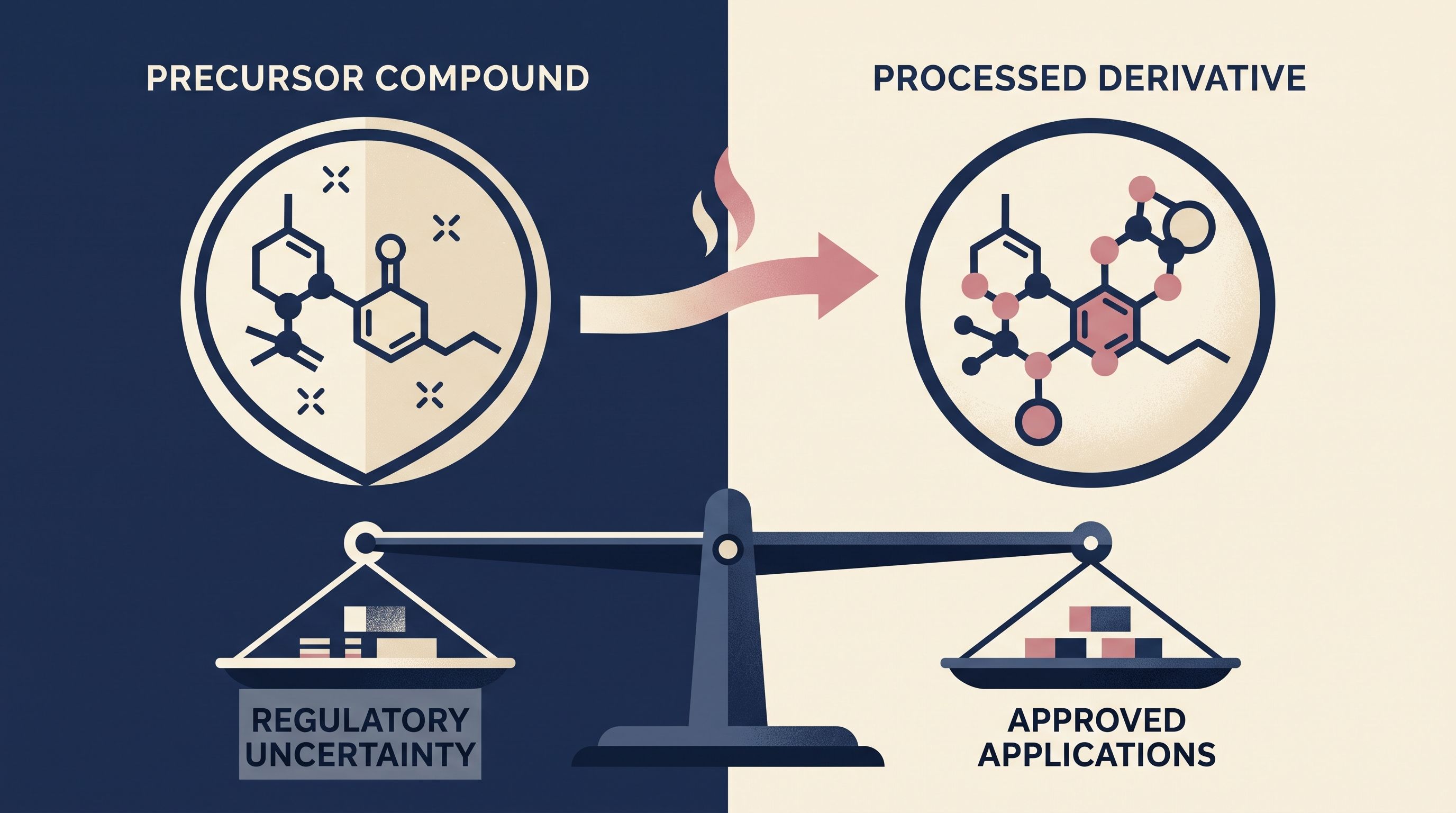
Chemically a heat step apart, legally worlds apart — until the November 12 total-THC standard closes the gap. What operators and buyers need to know.
Three THC isomers, three legal stories. Which is strongest, which states ban which, and what November 12 changes for all of them.
One is raw acid, one is a converted cannabinoid — and the law treats them very differently. A regulatory comparison with state-by-state links.
HHC and Delta-8 look similar on a shelf but sit in different legal worlds. How federal scheduling and state law treat each cannabinoid in 2026.
A 2026 guide to Delta-9 legality in Texas: hemp-derived vs. marijuana, THC limits, and compliance steps for retailers and brands.
A regulatory-first comparison of Delta-8 and Delta-9 THC: legality, potency, sourcing, and compliance differences in 2026.
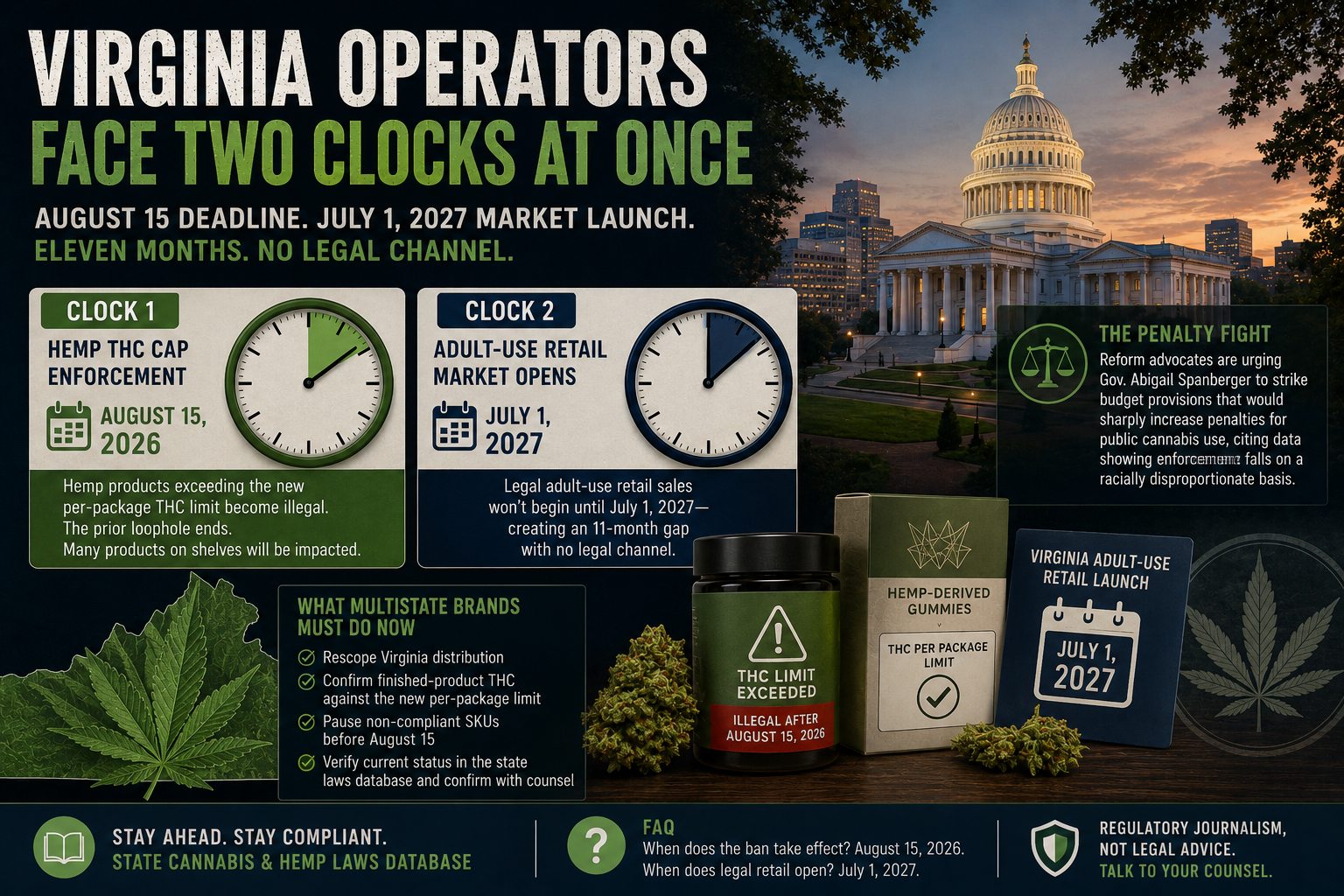
Virginia's August 15 hemp cutoff arrives 11 months before legal retail. What operators and multistate brands must do before the deadline.
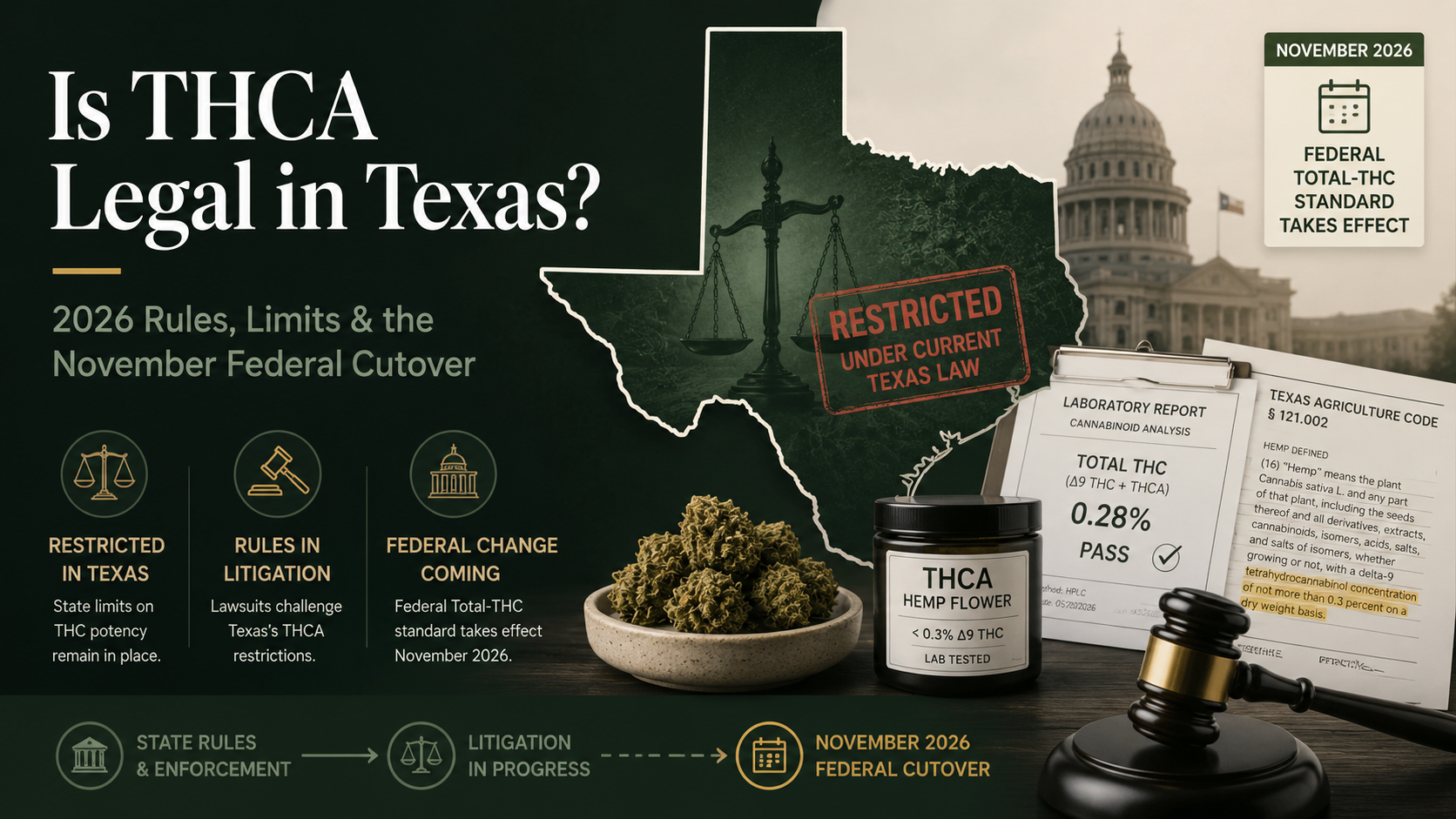
Texas now counts THCA toward its THC limit, restricting THCA flower and concentrates. A look at the 2026 rule, the litigation, and the November federal cutover.
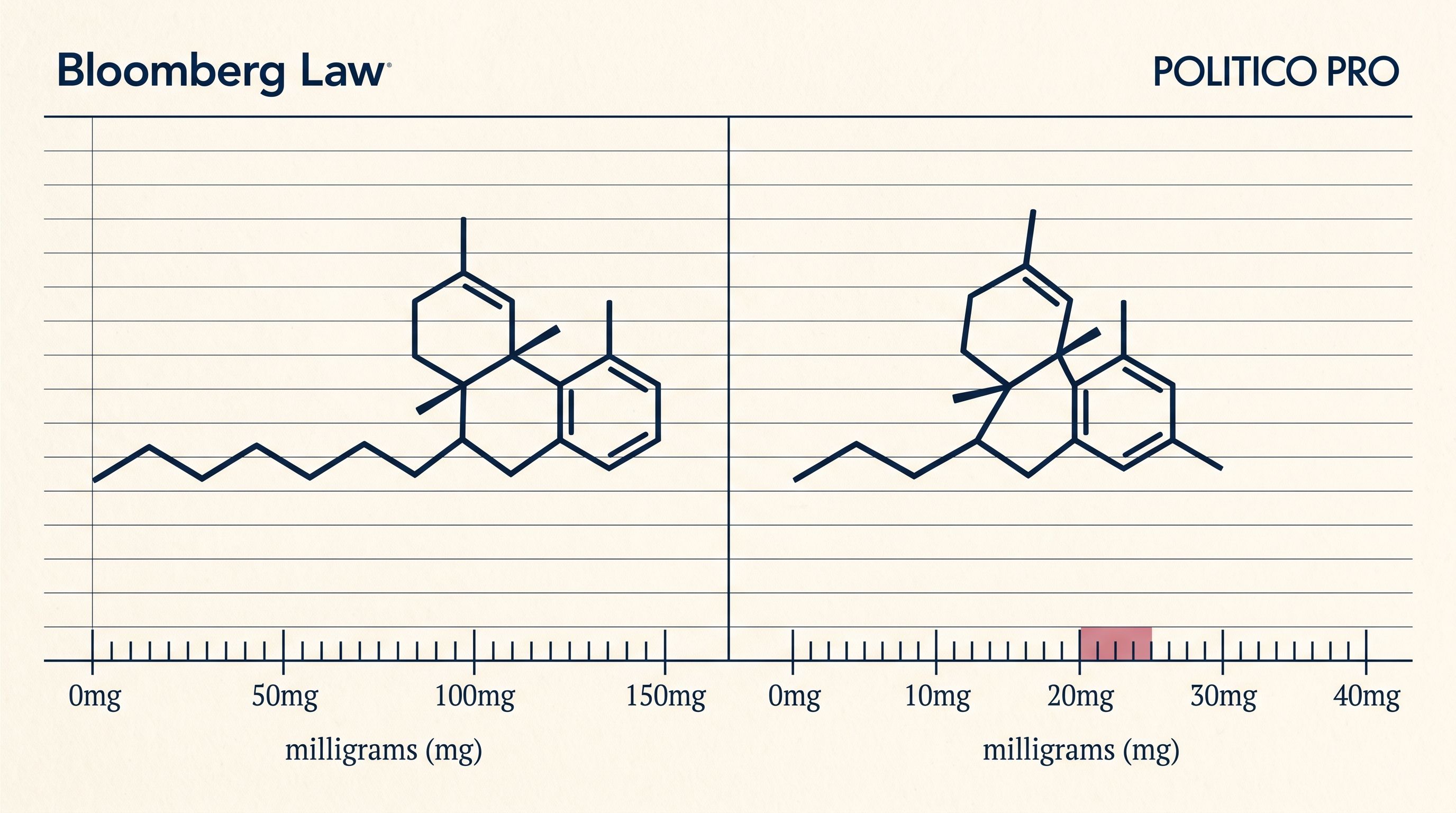
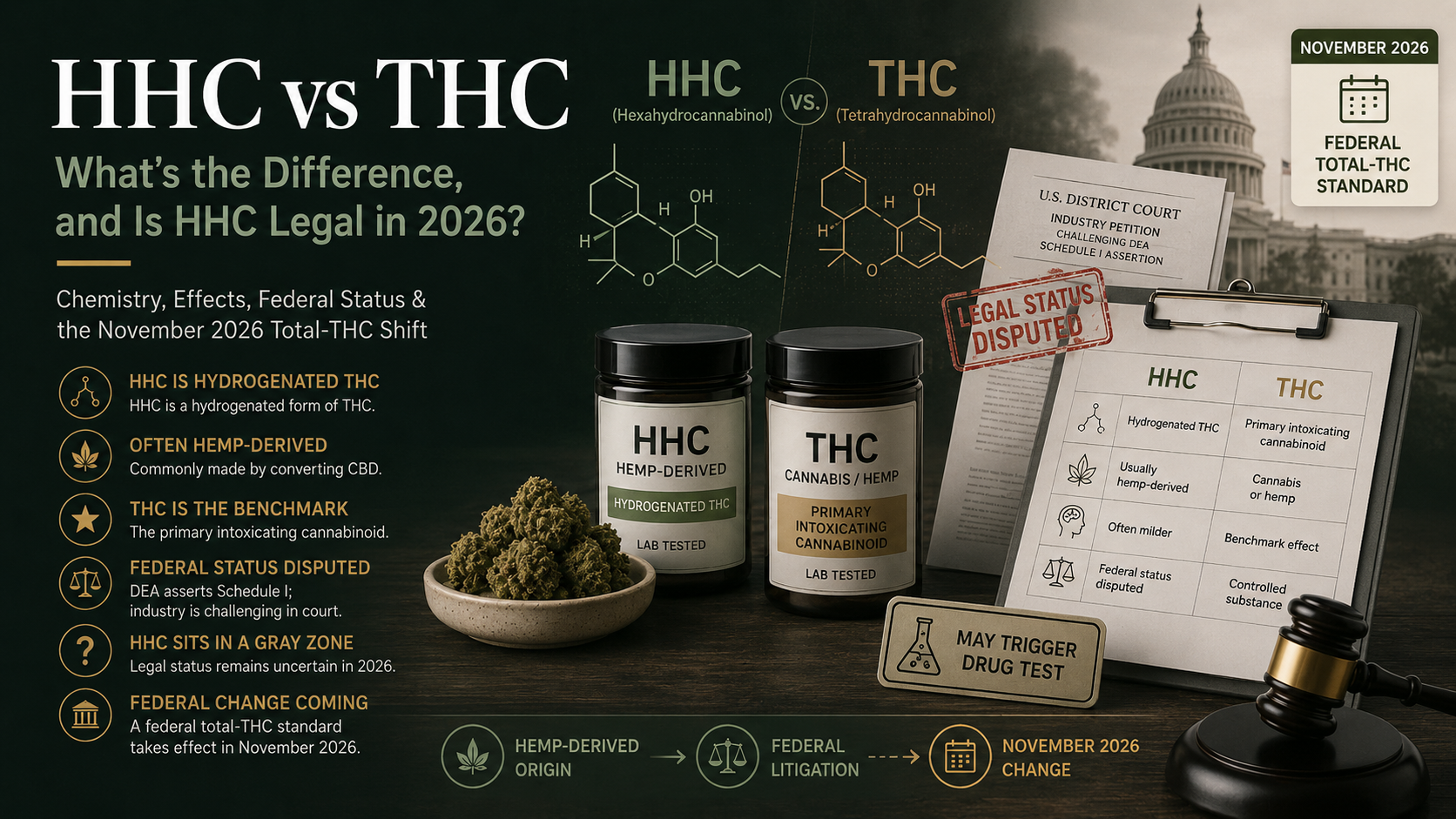
A regulatory guide to HHC vs THC: what HHC is, how it compares with delta-9 THC, and where its contested legal status stands in 2026.
State-by-state THCA status as of August 2026 with deep dives for Alabama, Georgia, North Carolina, South Carolina, and Texas — plus what changes when federal H.R. 5371 §781 takes effect November 12, 2026.
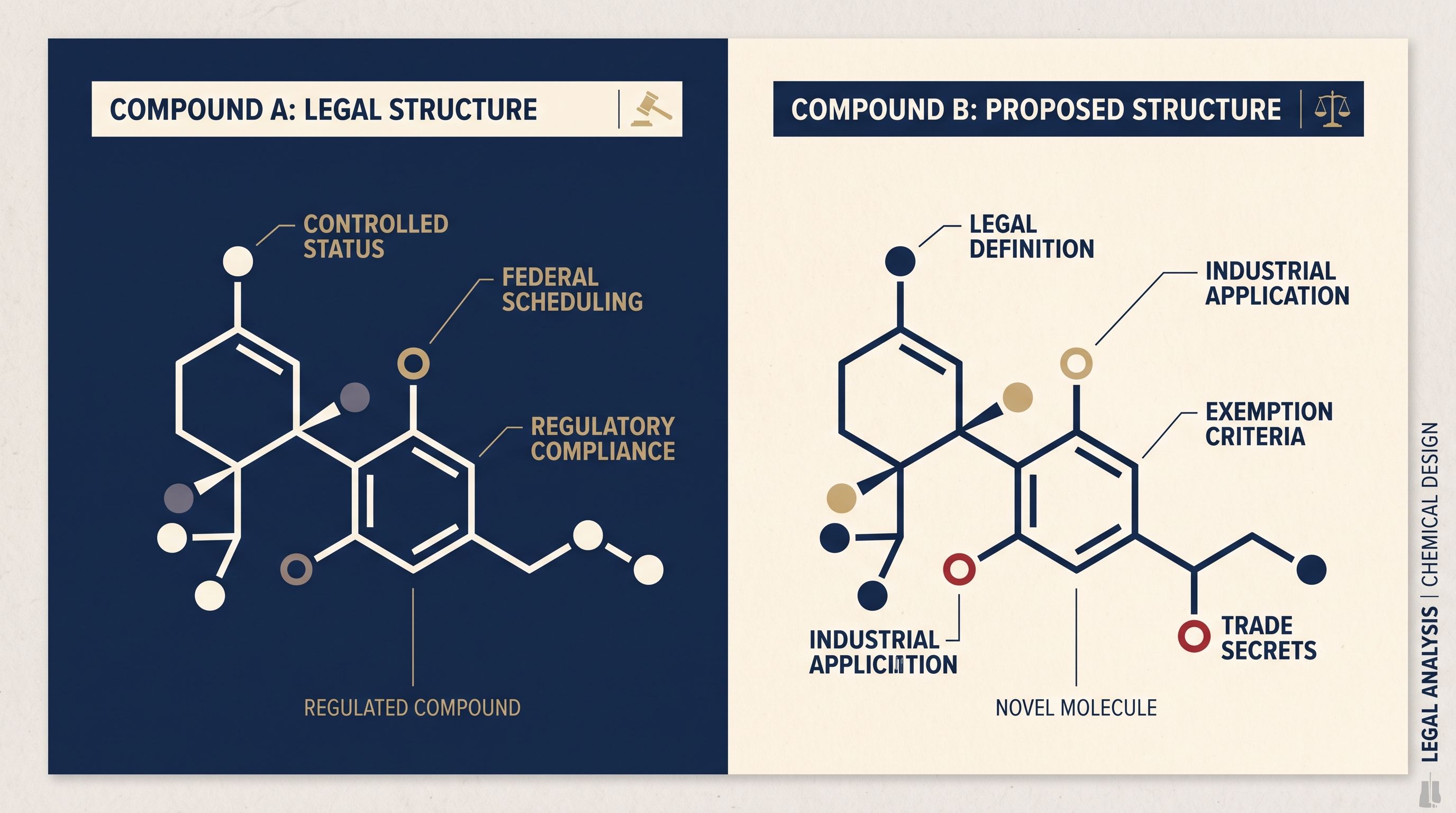
The federal hemp definition changes on November 12, 2026: total-THC measurement replaces delta-9-only, and a 0.4 mg per-container cap applies. Most THCA flower, delta-8, and intoxicating hemp products will not meet the new definition. Operator compliance guide.
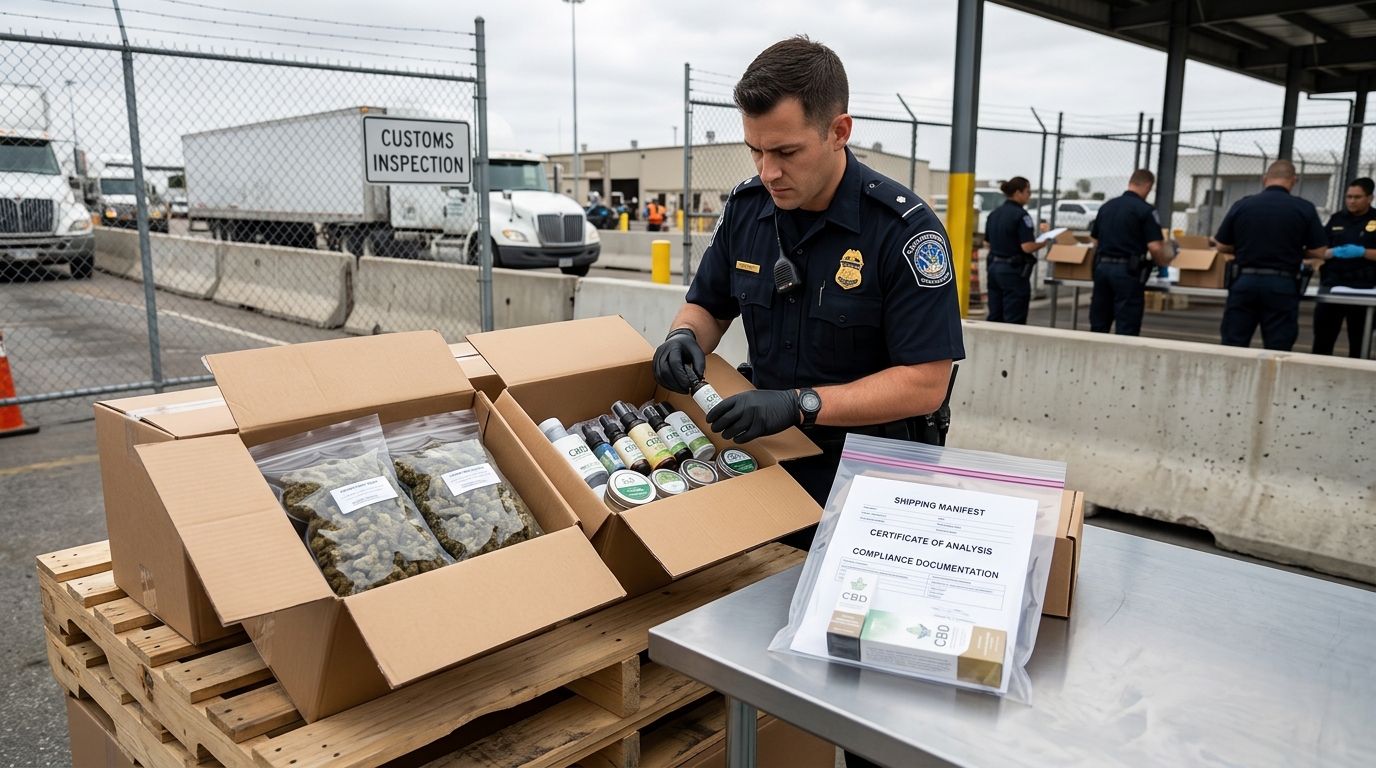
Consumer-facing hemp shipping in 2026: what's mailable through USPS, UPS, and FedEx, which destination states refuse delivery, what the November 12 federal hemp redefinition removes from the mailable category, and what happens if a package is seized.
TSA's April 27, 2026 page update changed the federal picture for state-licensed medical patients. The practical picture changed less than the headlines suggest. A patient travel guide for 2026, by documentation, by airport, by scenario.
How the April 2026 rescheduling changes 280E for medical operators — the Treasury transition rule, the retroactive refund question, and a CFO playbook for FY2026.
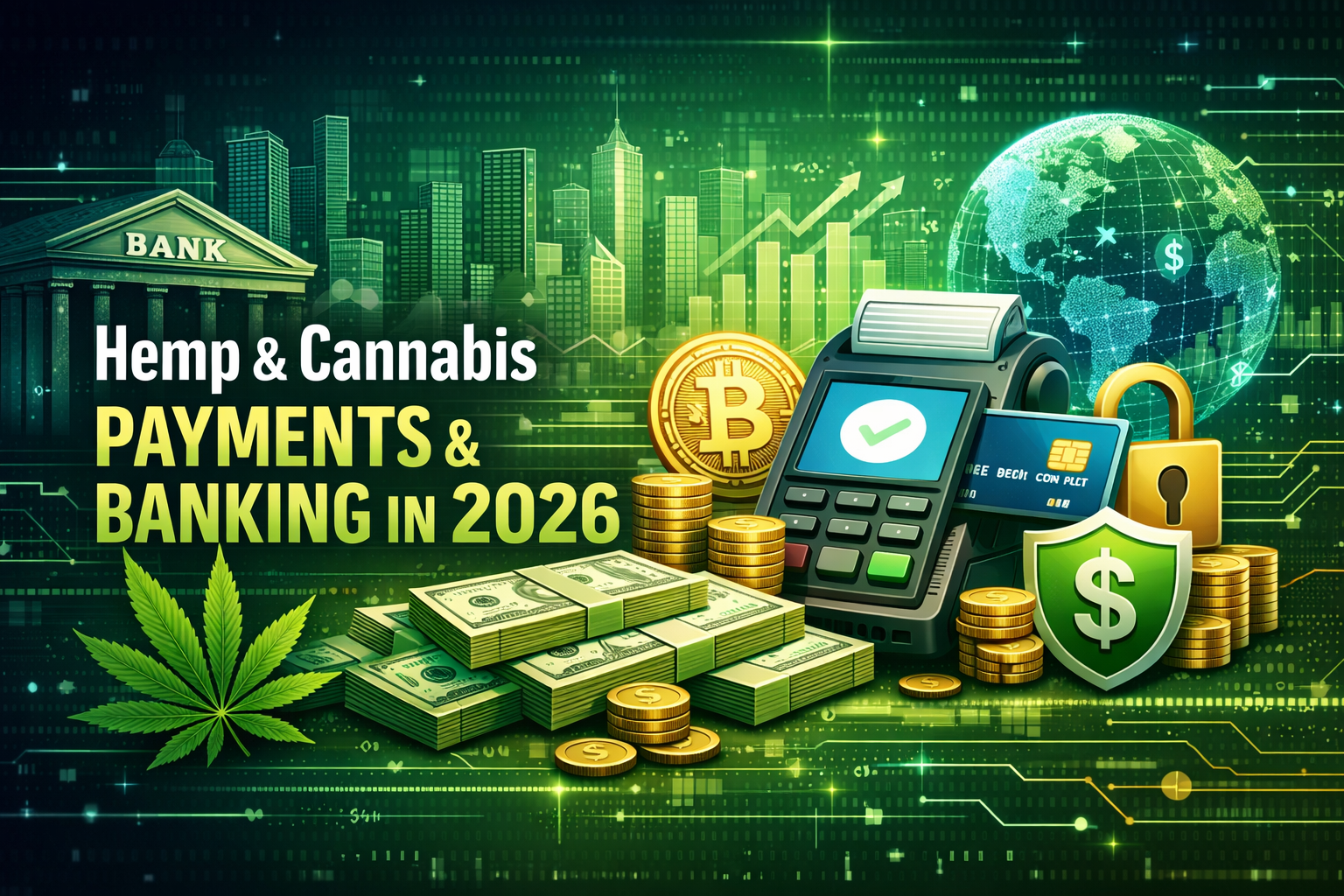
How cannabis and hemp operators handle credit cards, ACH, banking, and payment workarounds in 2026 amid persistent federal restrictions on financial services.
CBD is illegal in Saudi Arabia and the United Arab Emirates as of 2026, with severe penalties for travelers and brands across the broader Middle East region.
Google, Meta, and TikTok each set distinct 2026 rules for hemp and CBD ads, with LegitScript certification governing what runs and what bans accounts.
The World Anti-Doping Agency's in-competition THC threshold remains 150 ng/mL urinary in 2026, shaping rules for athletes, CBD brands, and sports organizations.
CBD legal status in 2026 differs sharply across Asia-Pacific, with distinct rules in China, Hong Kong, Japan, South Korea, and India for travelers and brands.
Delta-8 is legal in Arkansas in 2026 following the Eighth Circuit ruling, with distinct treatment for delta-9, CBD, and THCA under state hemp law.
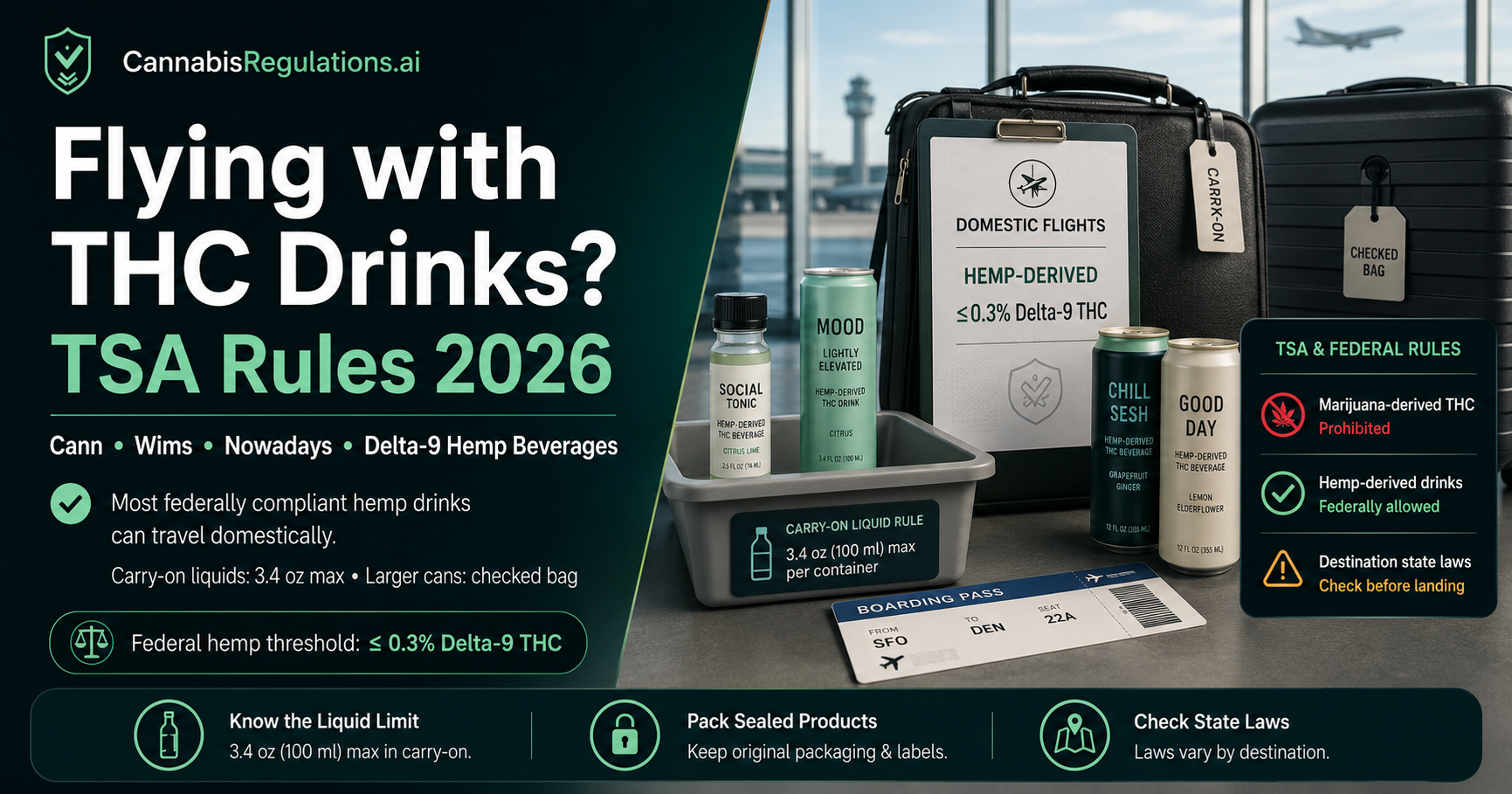
Most hemp-derived delta 9 beverages like Cann, Wims, and Nowadays comply with federal TSA rules, though state laws and airline policies vary at the gate.
Michigan treats hemp-derived THCA differently than most states, with specific rules on retail sale, cannabis-licensed channels, and consumer access in 2026.
USPS Pub 52 § 453.37 requires mailers retain hemp compliance records for two years and produce them on USPS request. UPS requires Adult Signature. FedEx bans hemp THC.
France caps CBD products at 0.30% total THC under 2022 rules, with neo-cannabinoid bans and import certificates driving the 2025 brand compliance checklist.
What hemp compliance software should track in 2025: state-law changes, COA validation, label rules, multi-state ops, and where AI replaces manual work.
NFPA 420 sets fire safety requirements for cannabis extraction, storage, and retail facilities; how it pairs with UL 8139, local fire codes, and operators.
Cannabis receivership diligence must start with license transferability, lease continuity, and track-and-trace integrity before any valuation work begins.
Assignment restrictions, change-of-control defaults, and discretionary landlord-consent clauses are the lease terms most likely to kill cannabis deals in 2026.
Cannabis brands using pain, sleep, anxiety, or naturally derived claims need a substantiation matrix tied to evidence thresholds and pre-publication signoff.
Cannabis license renewals fail when public health permits, local clearances, and open inspection items remain unresolved months before the filing window opens.
Cannabis site selection in 2026 requires zoning, buffer, and municipal notice review as a connected workflow before any lease commitment is executed.
Cannabis license change-of-control rules in 2026 reach SAFEs, convertible notes, voting agreements, and management contracts, not just headline equity moves.
Executive Order 14370, signed December 18, 2025, requires cannabis operators to build a Schedule III operational readiness checklist before DEA rules finalize.
Hemp-THC operators in 2026 need AML programs documenting licensing posture, product profile, lab controls, ownership, and geography to retain banking access.
Vape hardware sourcing now requires conflict minerals diligence on smelters, refiners, battery components, and contract manufacturers across global electronics.
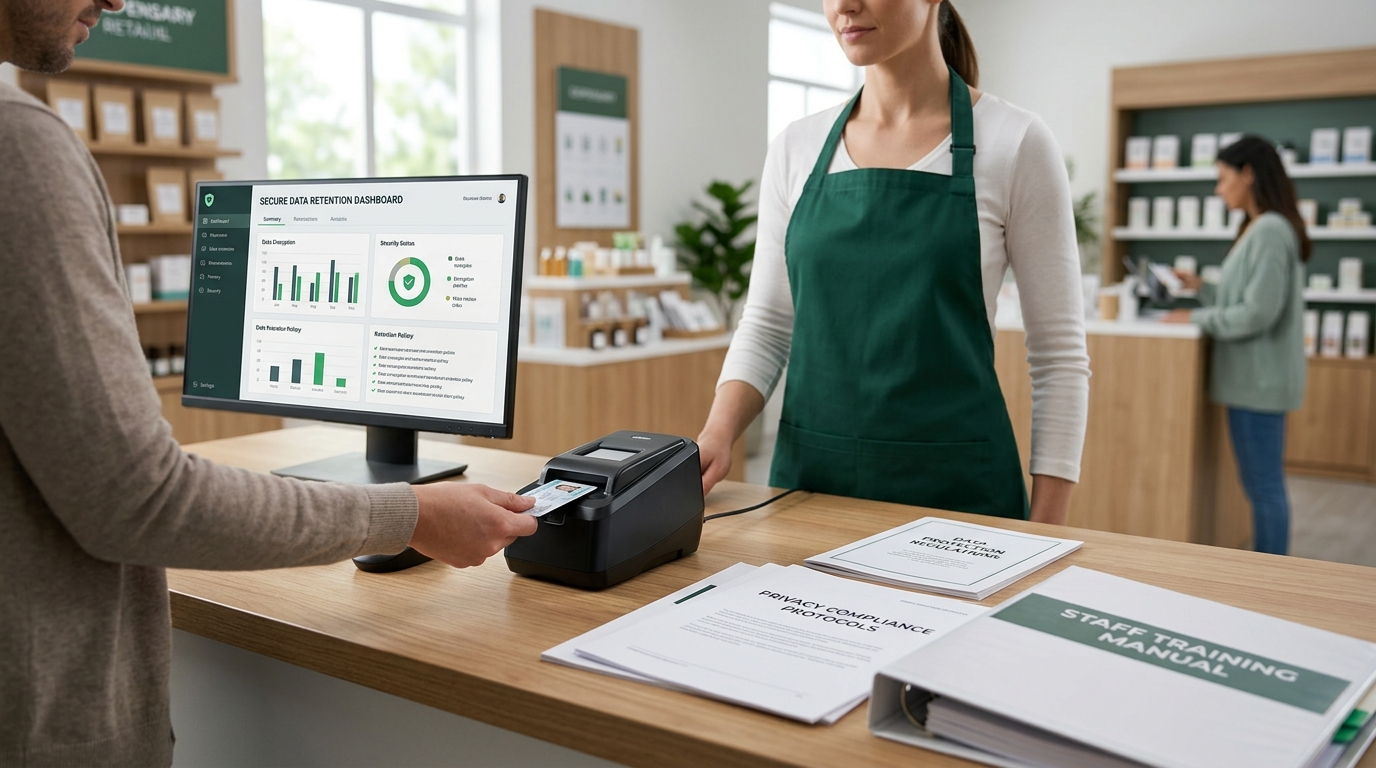
Dispensaries in 2026 must align ID scan and loyalty data retention with state privacy laws covering data minimization, purpose limits, and deletion triggers.
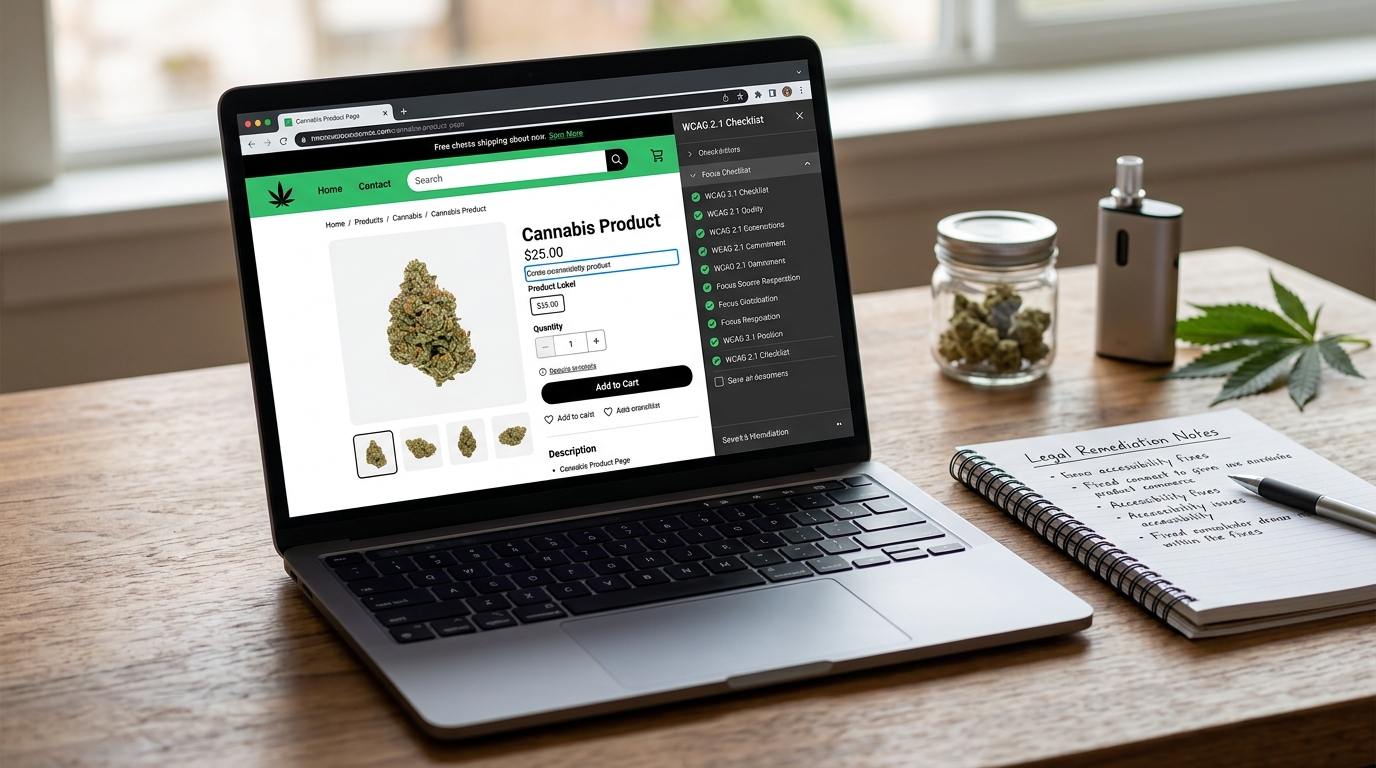
Cannabis ecommerce sites face WCAG litigation risk across age gates, menus, and checkout flows, with remediation tied to ADA and DOJ accessibility guidance.
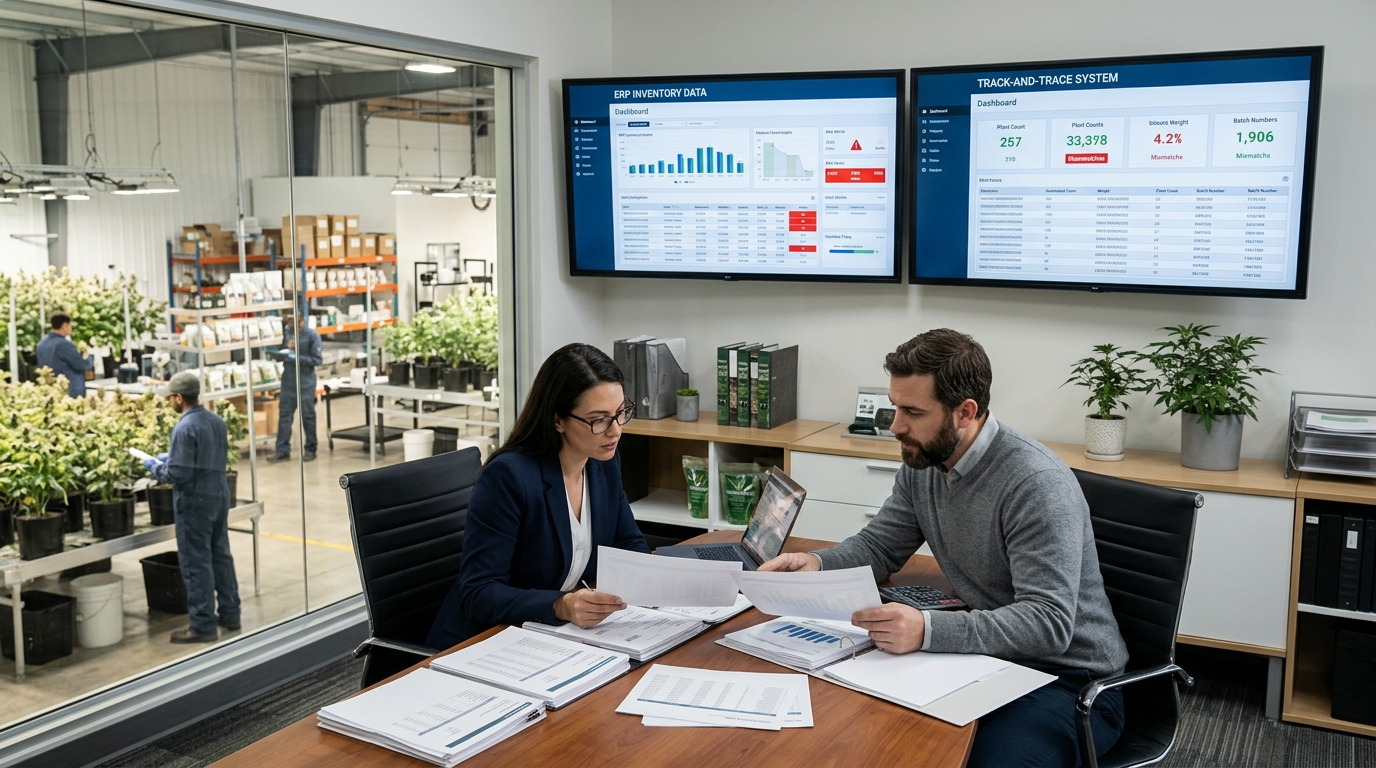
ERP and Metrc inventory drift comes from unit mismatches, timing lag, returns, destructions, and split-merge events that month-end controls can detect early.
Cannabis board compliance dashboards in 2026 should track leading indicators of control drift, not just lagging incident counts, audits, and policy logs.
Cannabis wholesale SAR escalation rules should translate FinCEN red flags into observable scenarios like cash-to-wire mismatches for frontline review teams.
Medical cannabis clinics collecting real-world data must distinguish care improvement, observational evidence, and human-subject research to avoid IRB missteps.
Cannabis recall insurance underwriters in 2026 require documented product risk profiles, supplier controls, traceability evidence, and response readiness.
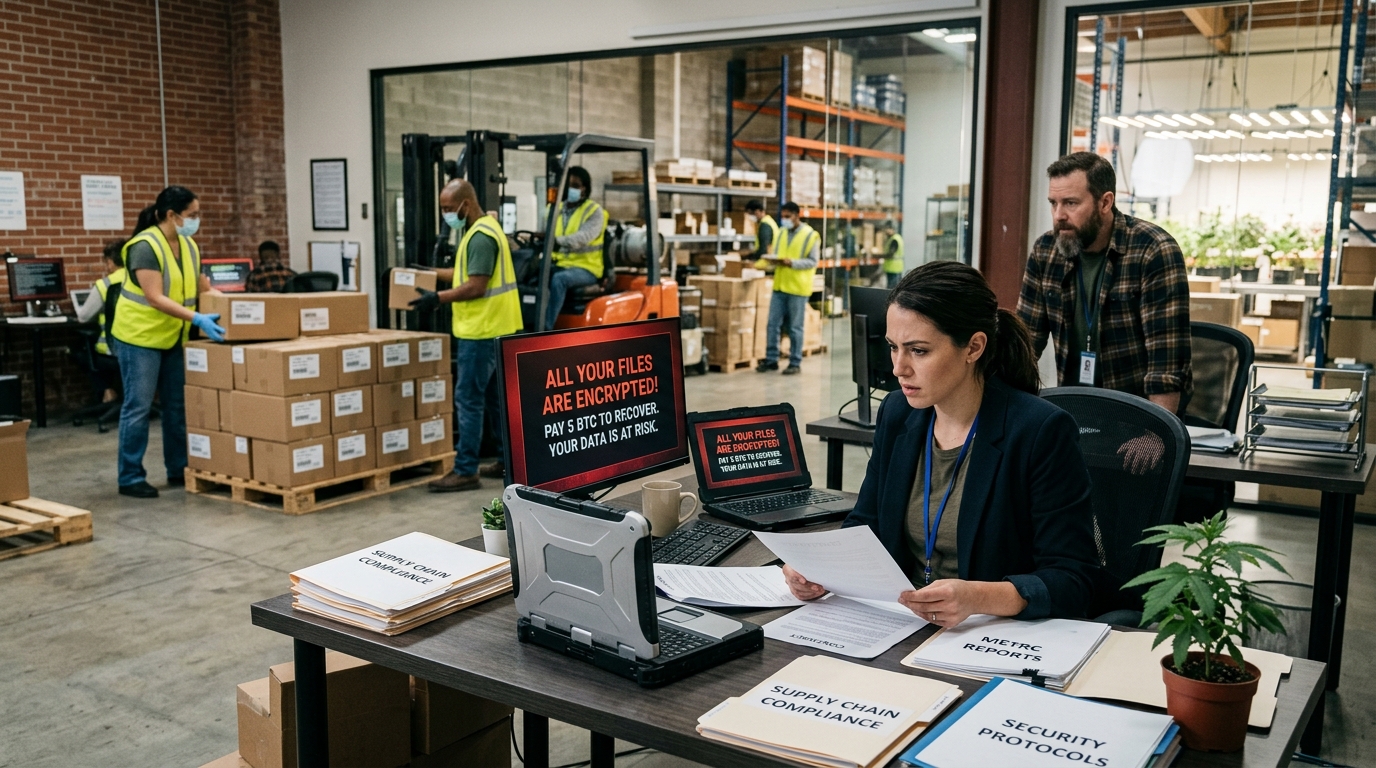
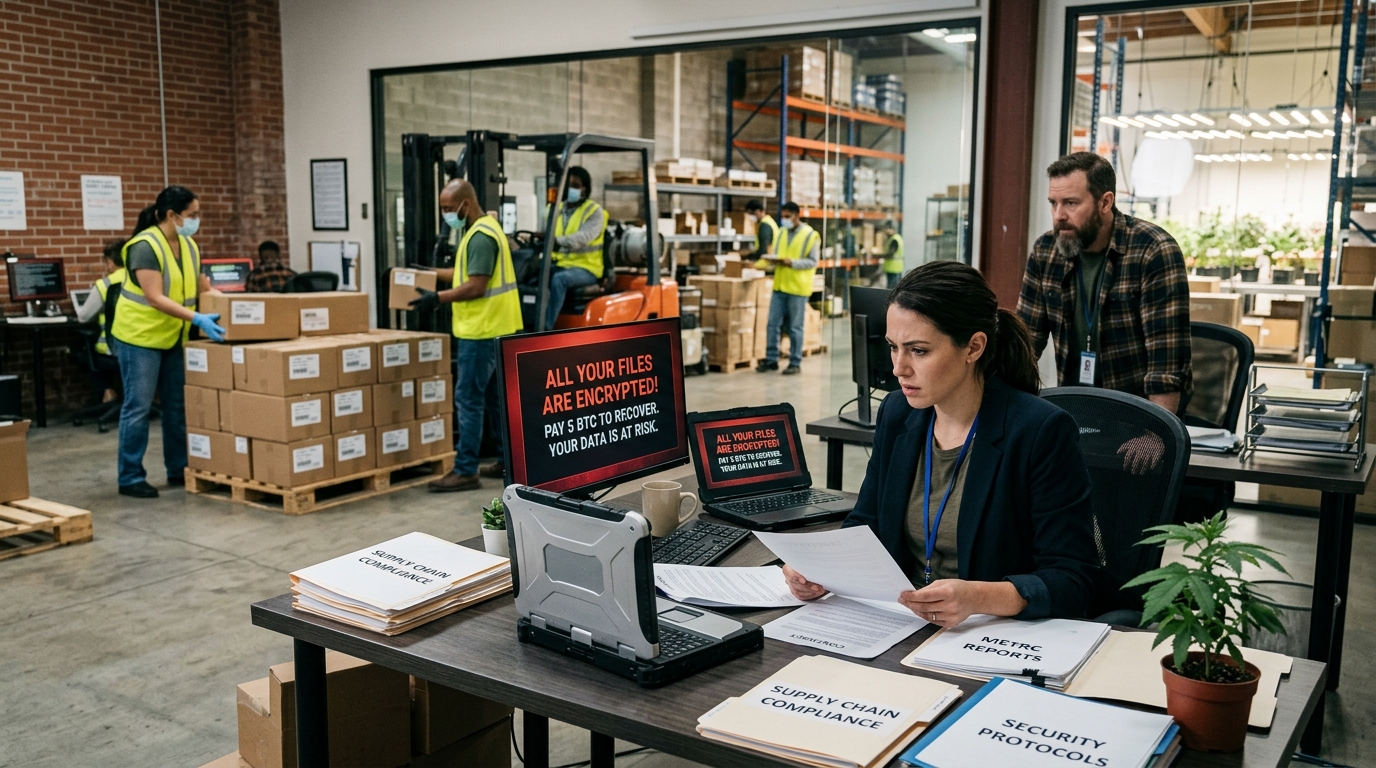
Cannabis supply chain contracts need defined incident response duties, record reconstruction obligations, and notice mechanics to prevent ransomware disputes.
Multi-state dispensary wage-and-hour risk concentrates in scheduling, overtime calculation, off-the-clock work, and inconsistent meal and rest documentation.
Cannabis delivery contractor classification risk depends on operational control, state legal tests, and regulated procedure requirements that vary by state.
Hemp brands using licensing, private label, and partner-operated models risk inadvertent franchise classification when manuals, IP, and oversight diverge.
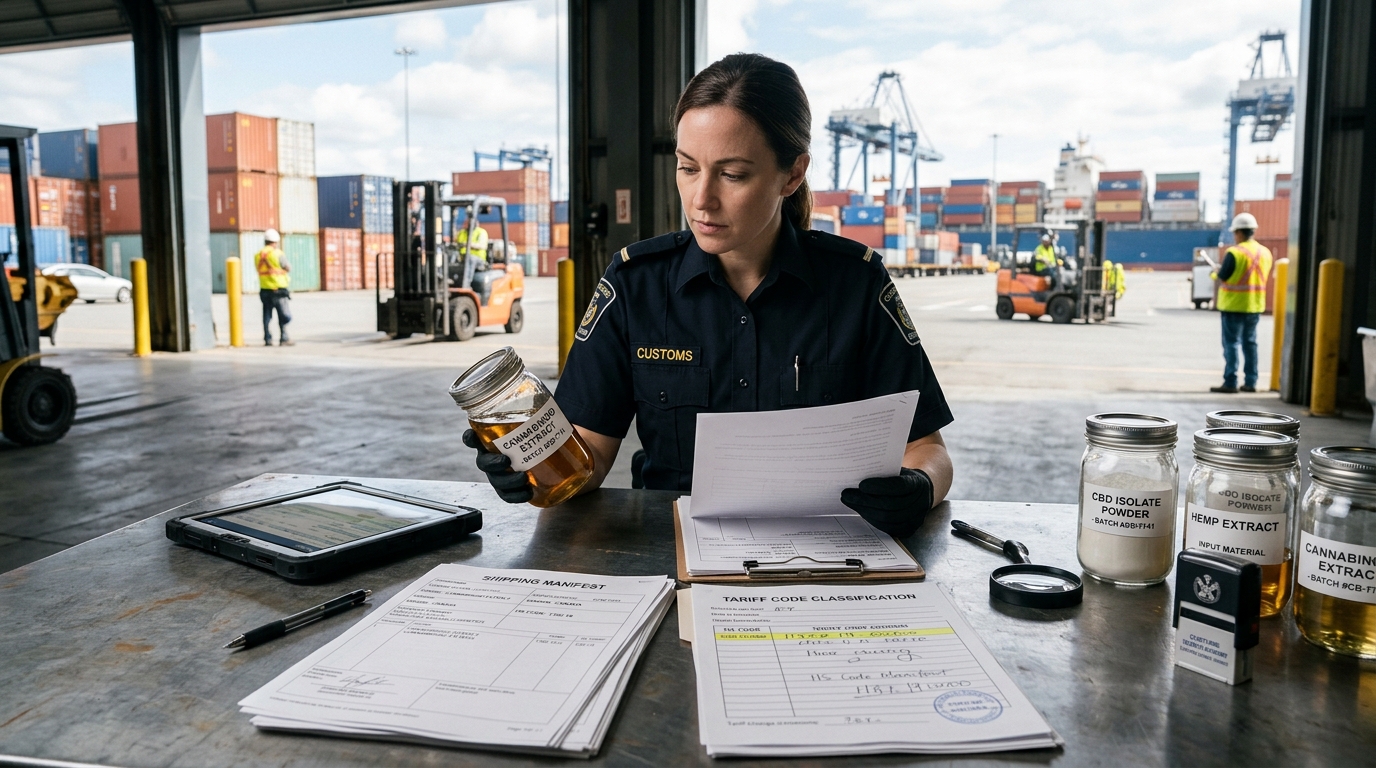
Cannabinoid input HTS classification errors trigger customs detentions and seizures when product taxonomy, broker data, and CBP documentation are inconsistent.
Hemp and CBD importers facing US Customs detentions can resolve holds faster with a coherent evidence packet covering classification and lab data.
Hemp DTC brands can stabilize processing relationships by treating chargebacks, friendly fraud, and high-risk MCC controls as a payments compliance system.
Cannabis CFOs can defend IRC 280E positions at year-end by hardening chart of accounts, inventory costing, intercompany flows, and document retention.
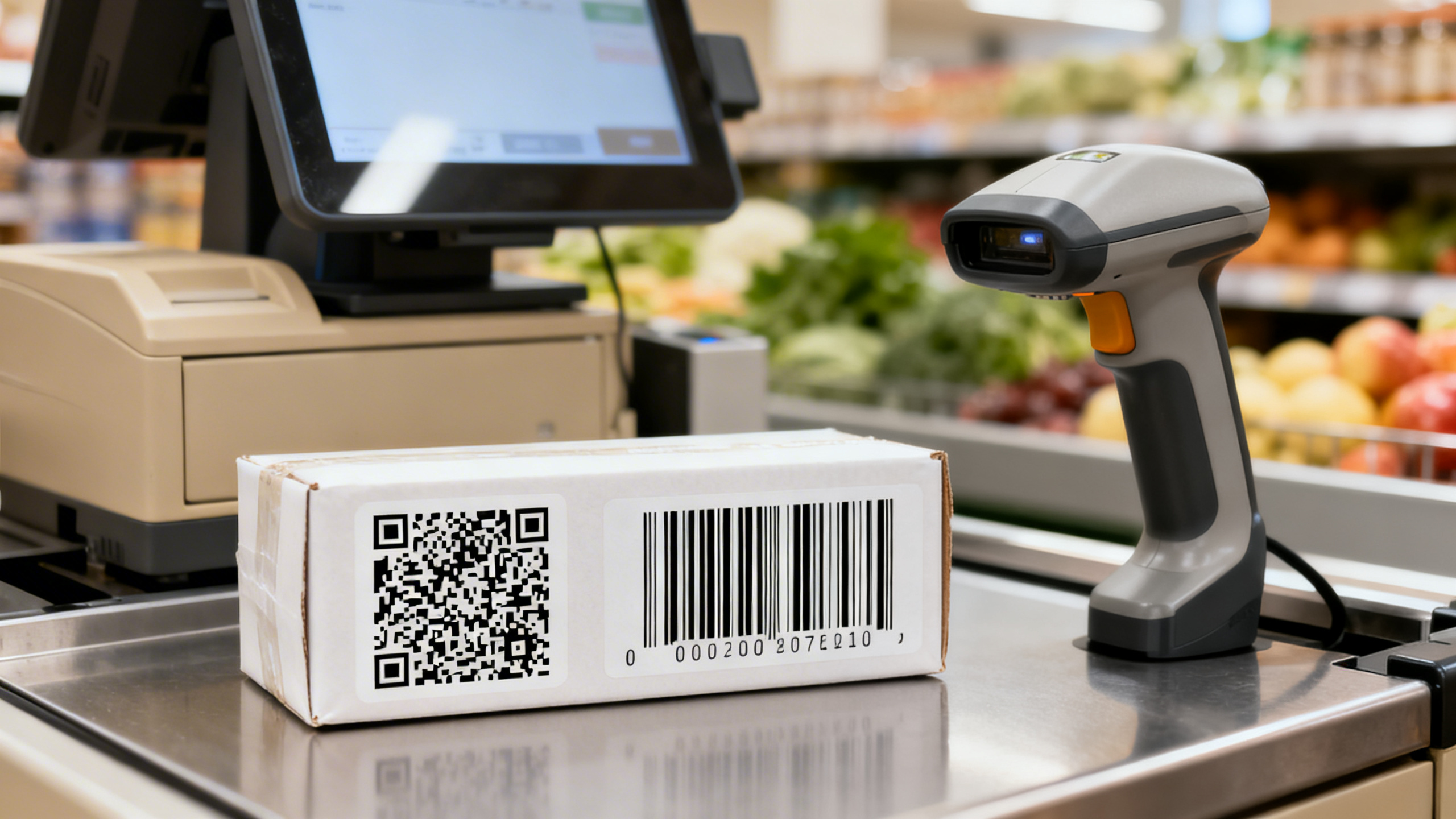
GS1 US Sunrise 2027 pushes cannabinoid and hemp brands to adopt 2D barcodes and Digital Link QR codes for POS scanning, COA delivery, and recall readiness.
How hemp operators build a 2026 ship-block-by-law engine as federal definitions tighten, states get aggressive, and carriers enforce prohibited-goods policies.
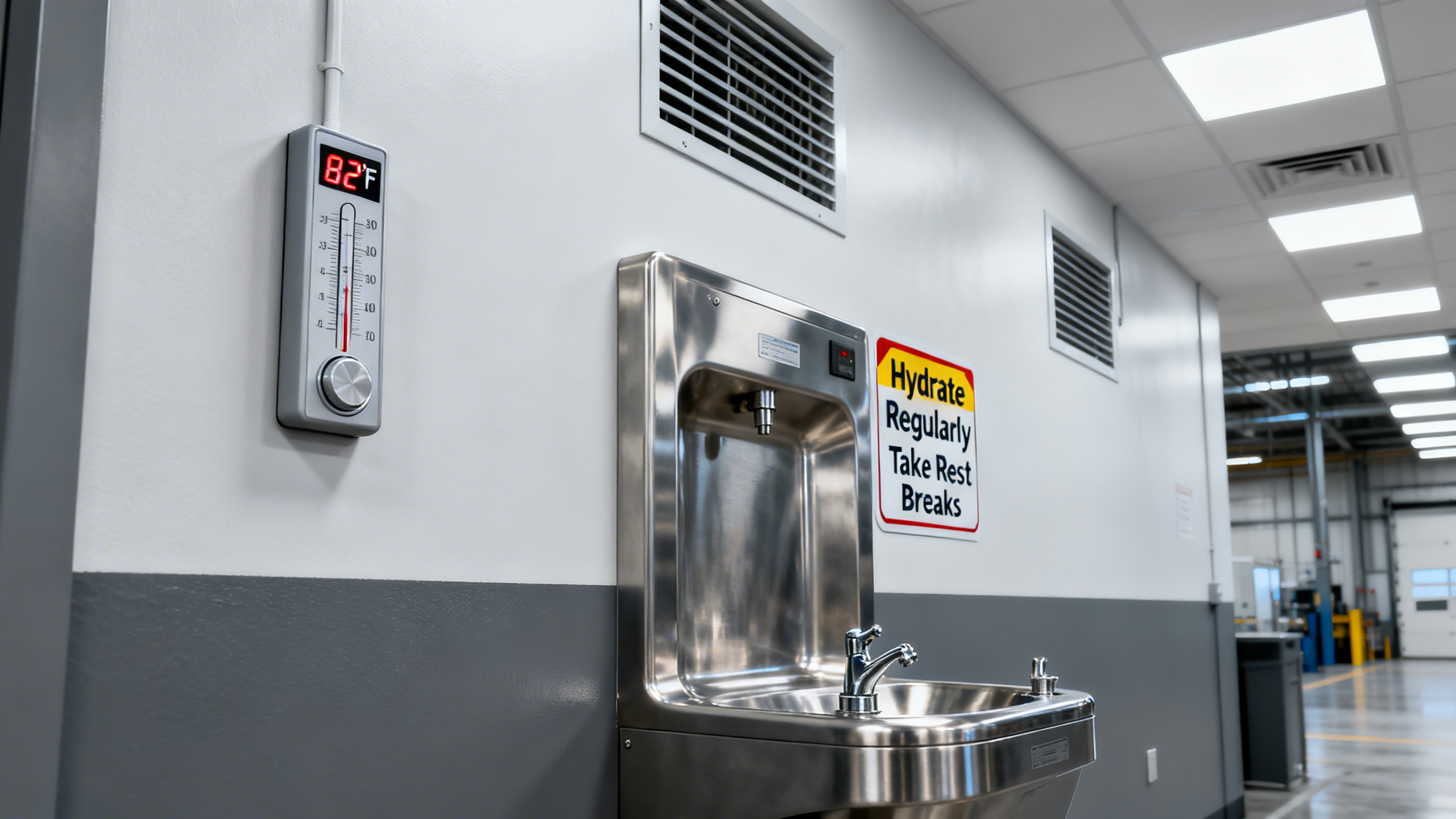
California's OSHA indoor heat illness rule applies year-round to cannabis cultivation and extraction — engineering controls and records inspectors want.
Canada 2025 Extended Producer Responsibility rules pull battery-powered cannabis vape devices into PRO enrollment, take-back, and SKU-level battery reporting.
Quebec Bill 96 became fully operational on 1 June 2025, requiring French-predominant labels and trademark translation review for THC drinks and vape products.
Ohio Division of Cannabis Control single-serving unit packaging and label attestations under August 1, 2025 SSU guidance require written DCC authorization.
Health Canada March 12, 2025 amendments permit QR codes on cannabis labels, transparent packaging windows for defined formats, and co-packs under conditions.
THCV faces 2025 exposure under state THC-analog and intoxicating cannabinoid bans, with added anti-doping and supplement contamination risk for tested athletes.
California Proposition 65 exposure on vape hardware in 2025 demands a procurement-led lead-free program with wetted-part controls and lot-level verification.
California indoor cultivation battery rooms in late 2025 face fire-permit scrutiny under NFPA 855, UL 9540, UL 9540A, and the International Fire Code framework.
Oregon outdoor cannabis and hemp operators face 2025 wildfire smoke taint risks; practical guide to testing, labeling, and recall triage before packaging.
UFLPA creates a 2025 import-compliance trap for hemp packaging and textiles tied to Xinjiang; how brands prove supply chains are not from XUAR.
EU General Product Safety Regulation 2023/988 has applied since 13 December 2024, imposing product-page disclosures and EU economic operator coverage.
UK Plastic Packaging Tax rose to 223.69 GBP per tonne on 1 April 2025 and indexes to 228.82 GBP per tonne on 1 April 2026 for under-30-percent recycled plastic.
EU SUPD requires tethered caps on plastic beverage bottles since July 2024 and 25% recycled PET content by 2025. Compliance guide for THC/CBD drink exporters.
EU Regulation 2023/1115 (EUDR) requires 2025 due diligence on paper and paperboard cartons used for CBD and THC products shipped into the European Union.
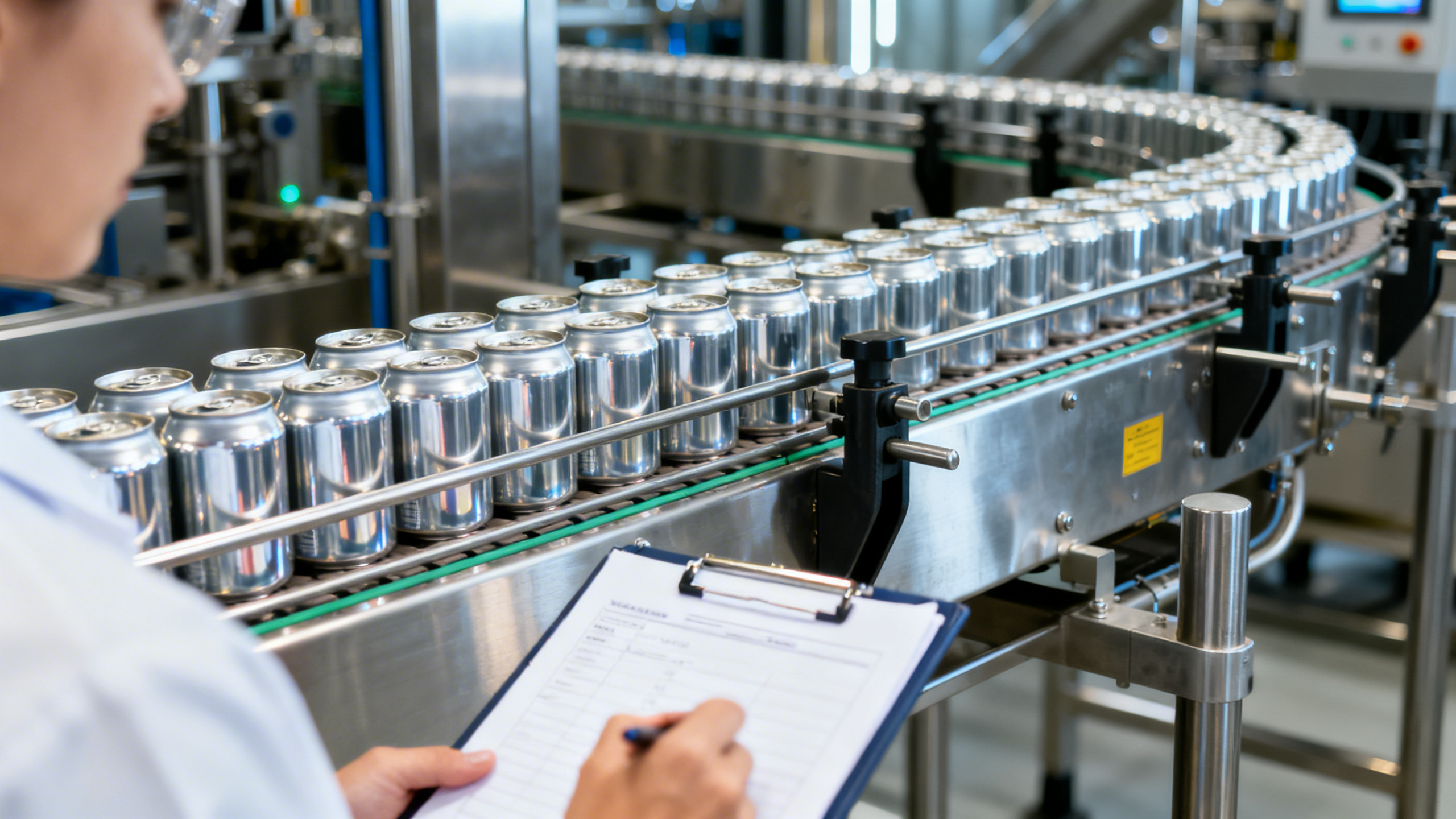
EU CBAM enters its definitive phase January 1, 2026, creating aluminum can supply-chain reporting obligations for U.S. THC beverage brands selling in Europe.
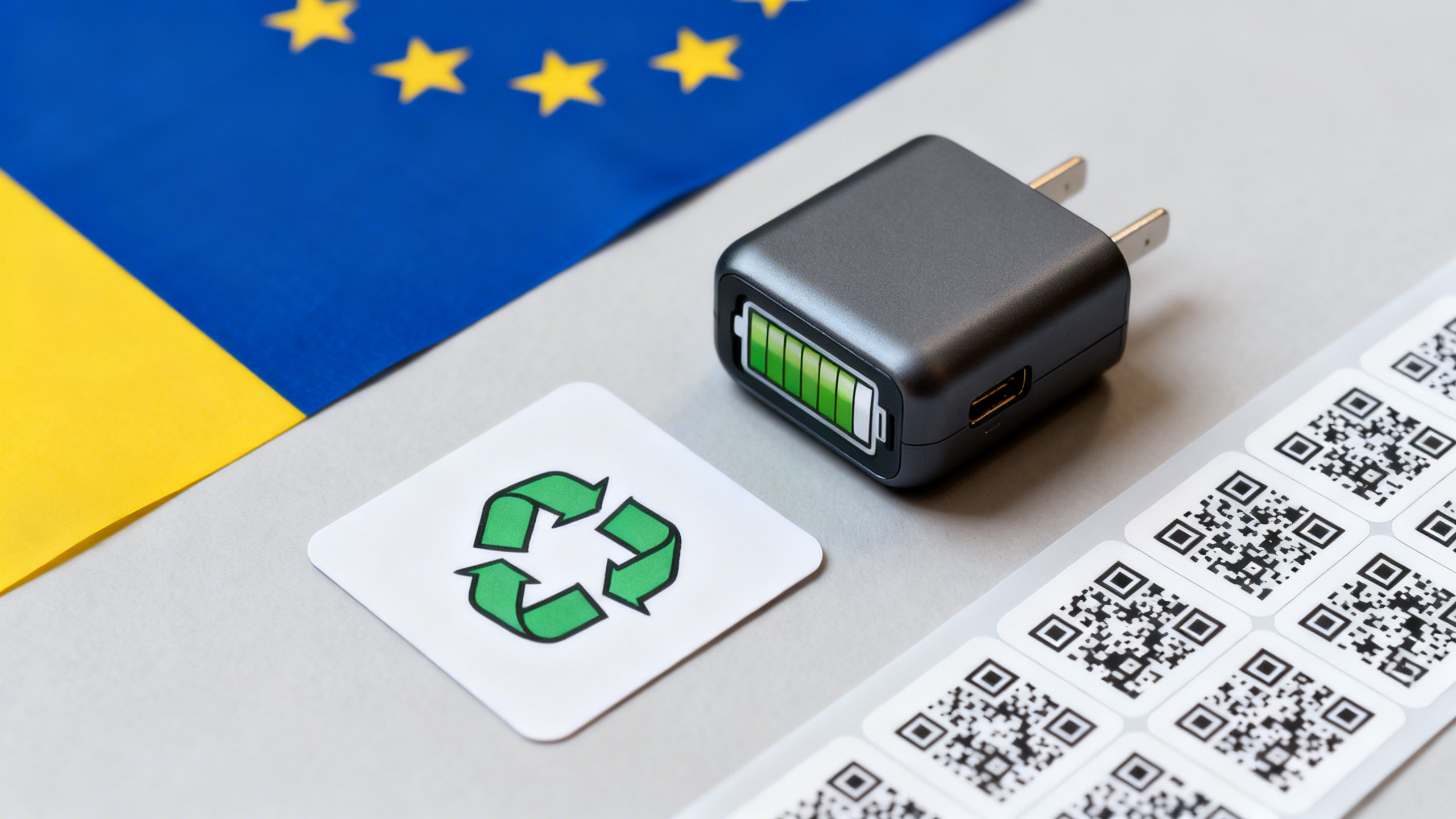
EU Regulation 2023/1542 brings producer responsibility, labeling, and forthcoming battery passport duties to vape device brands selling into Member States.
Cal/OSHA 8 CCR 3396 Indoor Heat Illness Prevention rule has applied since July 23, 2024, covering cannabis cultivation, extraction, and beverage facilities.
After the FTC announced September 5, 2025 it would accept vacatur of its 2024 Non-Compete Rule, cannabis employers should reset NDAs and trade secret programs.
Massachusetts, New Hampshire, and Maine handle intoxicating hemp and low-dose THC drinks under different 2025-2026 frameworks, forcing ship-block routing rules.
California's 2025 Title 24 energy code and 2025 Fire Code based on IFC 2024 are colliding for extraction labs, CO2 grow rooms, and indoor permits.
Battery storage and microgrids at indoor cultivation sites now hinge on NFPA 855 and UL 9540A, with AHJ procurement and commissioning gates in 2025.
Hong Kong classifies CBD as a dangerous drug under Cap. 134, with active 2025 airport and parcel seizures hitting shippers, employees, and travelers.
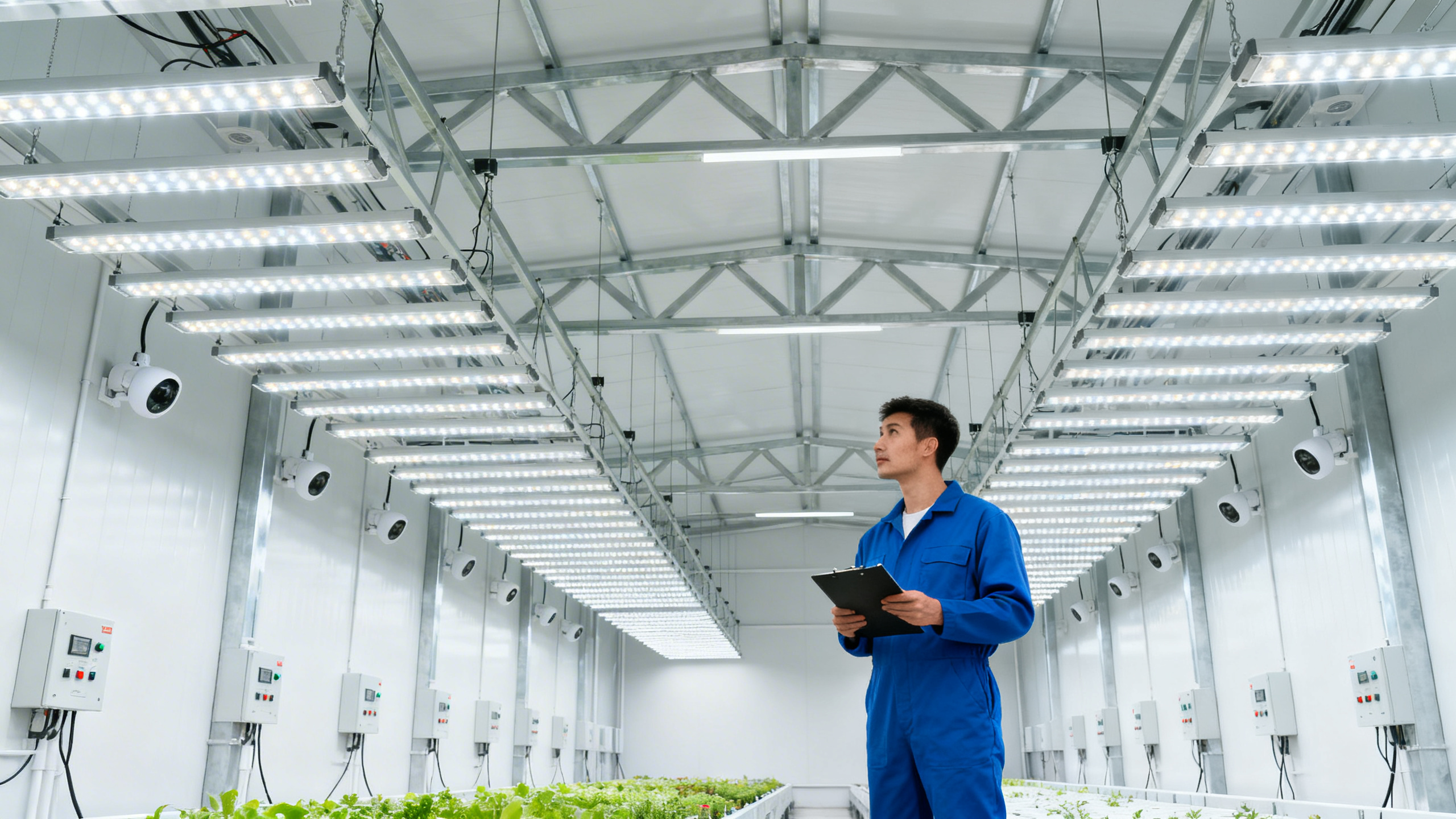
California's 2025 Title 24 Part 6 hits January 1, 2026, tightening lighting efficacy, power allowances, and acceptance testing for cultivation builds.
Massachusetts CCC final social consumption rules took effect January 2, 2026, opening lounge, host, and event pathways with strict age and venting gates.
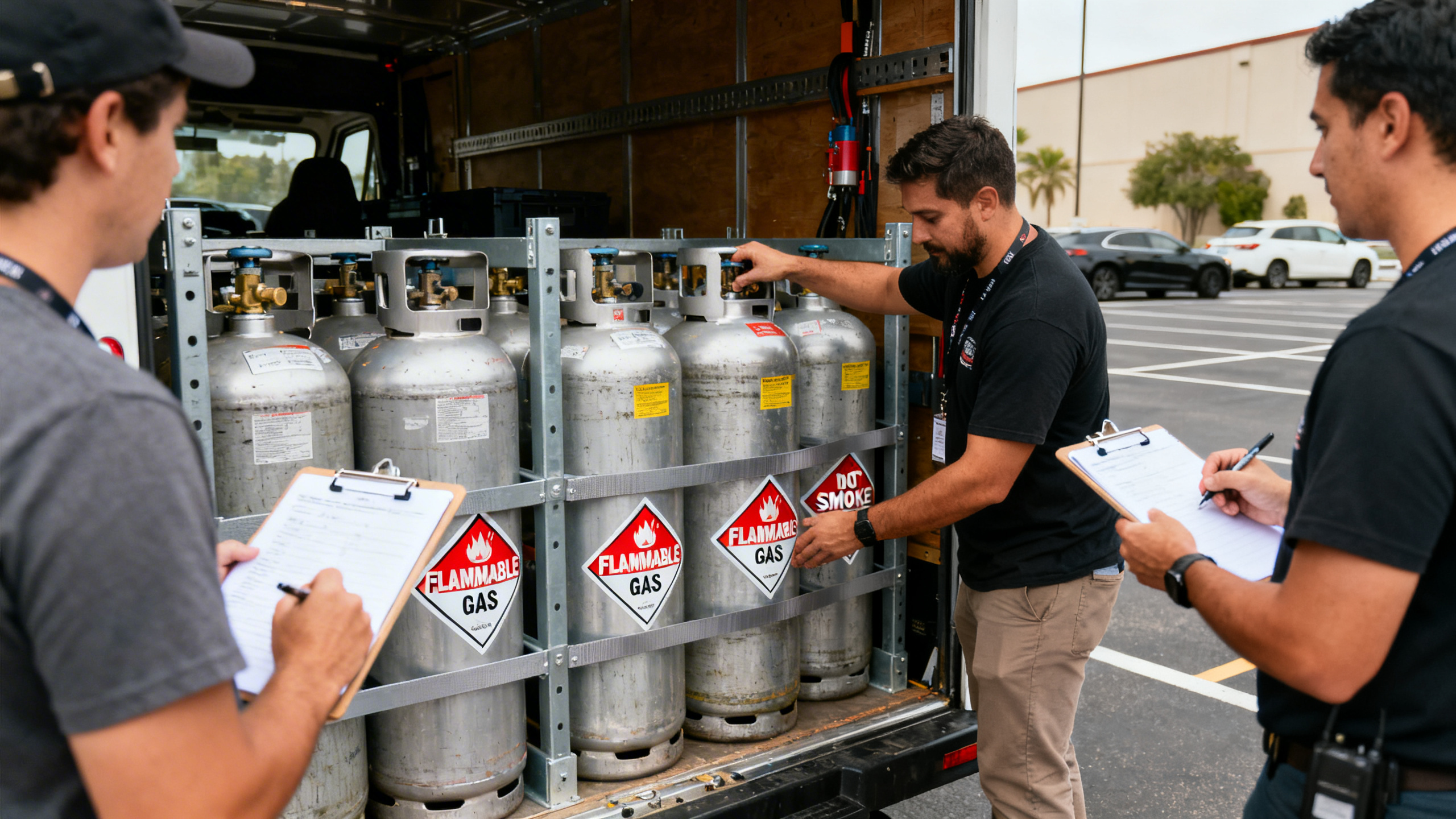
U.S. DOT hazmat rules in 49 CFR 171-180 reach CO2 cylinders used at THC-drink pop-ups, requiring training, shipping papers, and qualified cylinders.
In 2025, retailers and marketplaces require GFSI-benchmarked SQF or BRCGS certification before stocking hemp-derived THC beverages from co-packers.
EU Regulation 2023/1542 brings producer EPR registration, QR labeling, and take-back duties to rechargeable vape devices on EU markets in 2025 and 2026.
ADA Title III treats cannabis and hemp stores as public accommodations, making counters, queues, ID scanners, and turning space immediate litigation risks.
Utility and ISO demand response programs now treat indoor cultivation like industrial loads, requiring control sequences, M&V plans, and audit trails.
NYC Local Law 97 emissions caps now apply to indoor cultivation tenants in covered buildings, with stricter 2030 limits driving retrofit planning today.
NIST SP 800-63-4 final, released July 2025, sets the benchmark for cannabis and hemp e-commerce age gates, ID proofing, and delivery checks at checkout.
DLC Horticultural V4.0 opened April 18, 2025, and utility rebate programs now require V4.0 listing, putting legacy LED fixtures at risk of incentives.
New Jersey's 2025 consumption area endorsement is dispensary-tied, with municipal gatekeeping, ventilation rules, and serving limits delaying launches.
EPA's September 2025 Aquatic Life Benchmarks update indirectly raises wastewater, pretreatment, and pesticide risk for cannabis and hemp processing.
Nevada's September 2025 enforcement sharpened on youth-appeal cannabis packaging and candy mimicry, triggering stop-sales on otherwise compliant SKUs.
New Zealand's July 2025 Medsafe guidance treats clinic product mentions, pricing, condition targeting, and testimonials as prohibited cannabis advertising.
Aluminum can liner migration and emulsion drift are emerging recall drivers for THC beverages in 2025, with California posting packaging-tied recalls.
Cannabis and hemp vape retailers in 2025 face tighter due diligence demanding UL 8139 device certification, IEC 62133-2 cells, and UN 38.3 transport.
Co-manufacturing hemp and state-regulated cannabis under one roof in 2025 demands documented segregation, GMP controls, and verifiable diversion safeguards.
Answer your real world compliance questions (limited time) and save thousands in legal fees and avoided fines.