


Sign Up
Ready to replace complexity with clarity?
Answer your real world compliance questions (limited time) and save thousands in legal fees and avoided fines.
Automate Compliance Today

Hong Kong’s prohibition on cannabidiol (CBD) is no longer “new”—it’s operational. As of early 2026, the market has entered year two of full-scale, zero‑tolerance enforcement following CBD’s placement in the First Schedule of Hong Kong’s Dangerous Drugs Ordinance (Cap. 134) effective February 1, 2023.
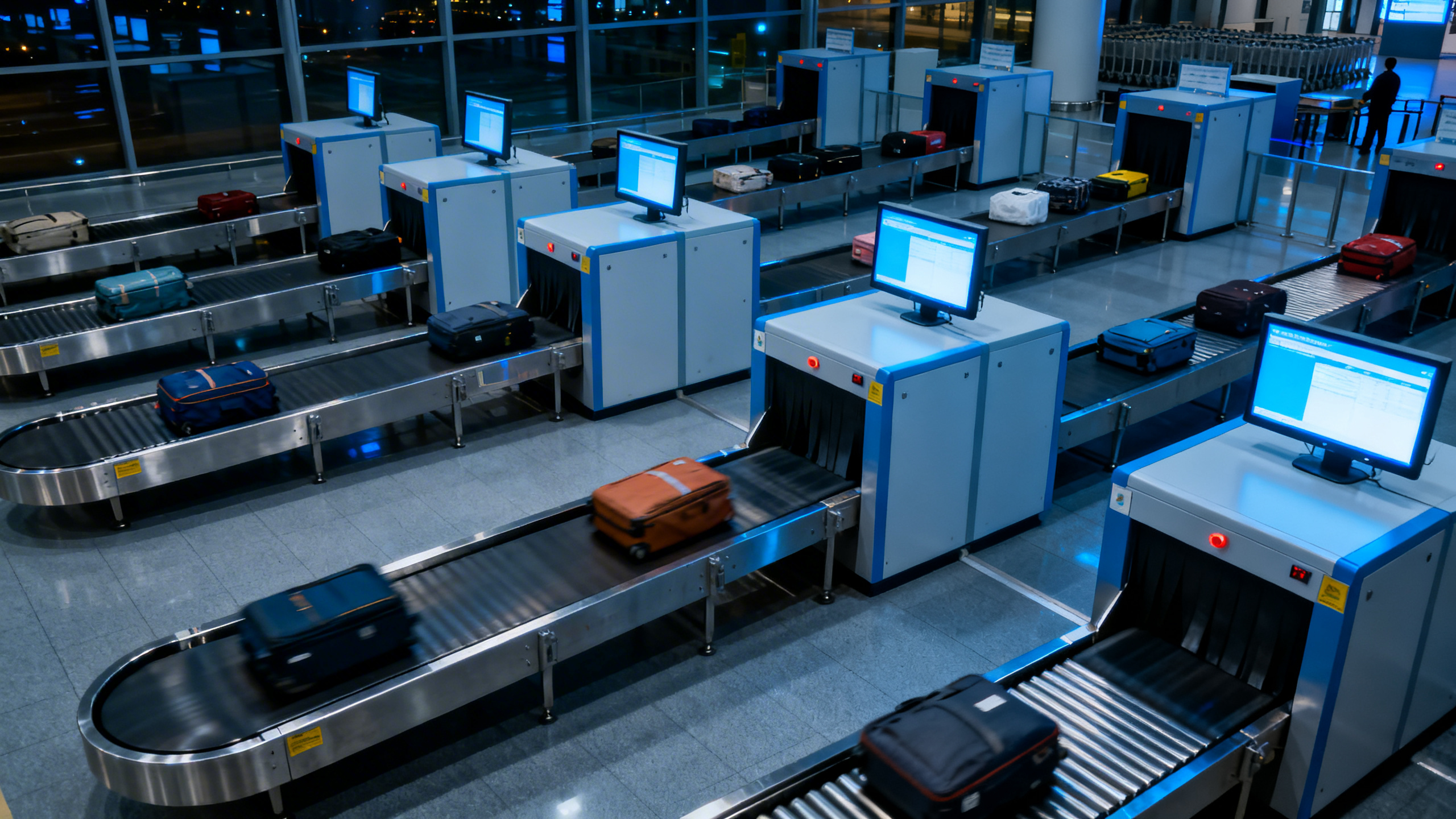
For compliance teams, the story of 2025–2026 is less about theory and more about border outcomes: Customs screening, airport interdictions, and the practical reality that even unopened consumer goods—including cosmetics and supplements—can create criminal exposure if they contain CBD.
This article is informational only and not legal advice. If you operate in APAC, treat Hong Kong as a restricted destination for any CBD-adjacent product category unless you have jurisdiction-specific counsel and a validated, CBD‑free supply chain.
Hong Kong regulates controlled substances primarily through the Dangerous Drugs Ordinance (Cap. 134). The Hong Kong SAR Government announced the legislative update in 2022 and implemented it in 2023, making CBD a controlled substance under the DDO’s First Schedule.
Official government notices and ongoing public guidance continue to emphasize a simple message: do not bring CBD products into Hong Kong. The Hong Kong government’s public-facing warnings note that CBD has been listed as a dangerous drug since 1 February 2023 and explicitly caution visitors not to bring any CBD products into the city. (See: Hong Kong government information portal coverage via the Hong Kong Economic and Trade Office: https://www.hketobrussels.gov.hk/news/2023/02/01/cannabidiol-cbd-listed-as-a-dangerous-drug-visitors-warned-not-to-bring-any-cbd-products-to-hong-kong)
In Hong Kong’s framework, the practical risk categories are:
For companies shipping into Hong Kong, “import” risk is not limited to bulk freight. DTC parcels, customer returns, replacement shipments, subscription boxes, and third‑party marketplace fulfillment can all trigger border scrutiny.
Hong Kong’s public materials highlight significant penalties for CBD-related offenses under the DDO. Government communications have repeatedly stated that possession and consumption can carry up to seven years’ imprisonment and a HK$1 million fine, while more serious conduct such as trafficking/import/export/manufacture can carry far higher penalties under the DDO framework.
The compliance takeaway is not to debate thresholds; it is to recognize that Hong Kong is operating a zero‑tolerance posture in which the presence of CBD in a product is the key compliance fact.
For primary legal text, use Hong Kong’s official e‑Legislation portal for Cap. 134: https://www.elegislation.gov.hk/hk/cap134
In 2025, Hong Kong authorities continued to publicize interdictions at Hong Kong International Airport and other channels. While many press releases focus on broader drug enforcement, the CBD ban’s relevance for travelers and exporters lies in the operational message: border screening is active, and Customs uses intelligence-led selection and risk assessment.
Hong Kong Customs has previously issued press releases documenting CBD seizures at the airport and other locations, including cases involving small quantities. For example:
Even when the seized quantities are small, the enforcement signal is large: consumer-format CBD oils and related items are within scope, and enforcement is not limited to commercial consignments.
Government news releases in September 2025 again documented airport seizures tied to passenger baggage concealment and inbound traffic. While not every release is CBD-specific, these announcements reinforce the risk environment at HKIA—especially for transiting passengers who assume “I’m just connecting” means “I’m not importing.” Examples of September 2025 airport seizure reporting via the government’s news portal include:
From a compliance perspective, the important point is that HKIA is a high-enforcement environment, and Customs communications describe risk-based passenger selection and sustained efforts to intercept prohibited items.
A common risk pattern in 2025–2026 is the APAC traveler carrying a product purchased legally elsewhere (US/EU/UK/Thailand/Canada), then passing through a strict hub.
Hong Kong’s government messaging has repeatedly warned travelers to avoid bringing controlled products back to Hong Kong, with specific reference to CBD’s controlled status starting February 1, 2023. (Example government reminder content: https://www.info.gov.hk/gia/general/202212/19/P2022121600631.htm)
If your staff, executives, influencers, or customers travel through Hong Kong:
For brands exporting from the US/EU, the most expensive Hong Kong mistakes are rarely intentional. They usually arise from:
Many product categories can contain CBD unexpectedly:
Even if a SKU is marketed as “broad spectrum” or “0% THC,” it may still contain CBD as an intentional ingredient. Additionally, cross-contamination and supplier substitution are recurring root causes in enforcement cases globally.
Hong Kong’s policy rationale for controlling CBD has emphasized that CBD products may contain THC remnants from extraction or decomposition and that reliance on THC detection alone is not an effective safeguard. Legislative discussion materials reflect that enforcement should not depend solely on detecting THC in CBD products. (See LegCo paper reference surfaced via ND materials: https://www.nd.gov.hk/pdf/legco_paper_e.pdf)
The compliance implication: do not ship anything that contains CBD, and do not rely on “non-detect THC” as a proxy for Hong Kong legality.
If you sell or distribute products that could contain CBD—especially personal care, wellness, ingestibles, or pet SKUs—treat Hong Kong as a hard block unless your product is verified CBD-free and your counsel confirms a viable pathway.
If you use third-party logistics providers, confirm that their “restricted items” controls align with your policy and that they will not “auto-reroute” via Hong Kong.
If you sell on marketplaces, you need a second layer of controls:
Many compliance failures start with inconsistent ingredient naming.
Add automated checks for:
Also check your cosmetics INCI naming consistency and translations used on localized websites.
Your traveler guidance should be region-specific, not generic.
Hong Kong: CBD is controlled as a dangerous drug (effective Feb 1, 2023). Travelers should not bring CBD items, including cosmetics and supplements. Start with the Hong Kong government warning page: https://www.hketobrussels.gov.hk/news/2023/02/01/cannabidiol-cbd-listed-as-a-dangerous-drug-visitors-warned-not-to-bring-any-cbd-products-to-hong-kong
Singapore: Maintain a conservative posture. Singapore’s Central Narcotics Bureau publishes FAQs stating hemp/CBD products are controlled under the Misuse of Drugs Act; this is essential reading for travel policies: https://www.cnb.gov.sg/singapore-drug-situation/myths-and-facts-about-drugs/cannabis/faqs-about-hemp-and-cbd-oil-products/
Japan: Japan’s rules have been evolving, with strict residue thresholds and product-specific requirements. Even where CBD may be permitted, ultra-low THC residue expectations and documentation burdens can create traveler and shipper risk. Brands should monitor official Japanese guidance and avoid assuming US/EU “compliant” equals Japan-compliant.
The operational best practice: if an APAC trip includes a Hong Kong or Singapore connection, instruct travelers to pack zero CBD items—do not count on duty-free receipts, “doctor notes,” or “sealed packaging.”
Brands often ask whether a product can be “safe” if CBD is below a certain threshold. For Hong Kong, this is the wrong question: CBD itself is controlled.
Still, lab controls matter because they affect whether a product may unintentionally contain CBD:
Hong Kong’s forensic and laboratory ecosystem supports controlled-substance identification for enforcement agencies (see the Government Laboratory’s Forensic Science Division overview of controlled drugs services: https://www.govtlab.gov.hk/en/about_us/fsd/cds.html). The compliance takeaway is that enforcement agencies can and do pursue analytical confirmation.
Customs agencies globally use a mix of:
For brands, the best practice is not to “describe around” the product. It is to avoid shipping prohibited items and implement destination blocks so that restricted orders never enter the carrier network.
If you identify that your business may have shipped CBD-containing products into Hong Kong (intentionally or accidentally), take a structured compliance response:
Hong Kong’s enforcement posture makes CBD a high-liability category for cross-border commerce and travel in 2025–2026. If you operate internationally, your compliance program should treat destination controls and traveler guidance as part of core cannabis compliance and cross-border regulations hygiene—especially during APAC expansions and “dispensary rollout” adjacent brand launches that often include wellness and personal care lines.
For more jurisdiction-specific monitoring, enforcement updates, and practical compliance playbooks, use https://www.cannabisregulations.ai/ to operationalize policies, audit shipping pathways, and keep your team aligned as regulations evolve.