

Sign Up
Ready to replace complexity with clarity?
Answer your real world compliance questions (limited time) and save thousands in legal fees and avoided fines.
Automate Compliance Today

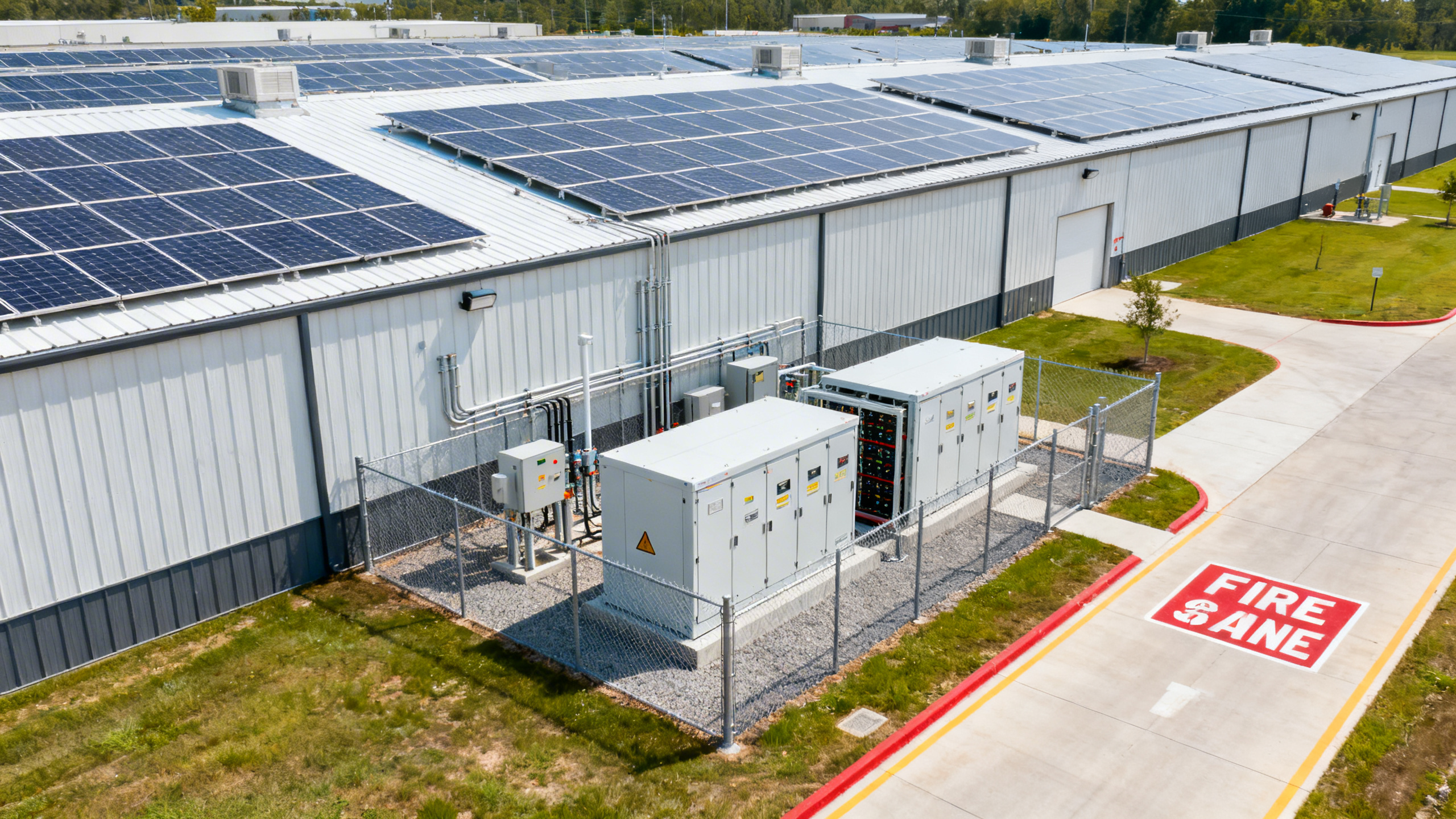
Indoor cultivation is an energy-intense business. Between high-power lighting, dehumidification, HVAC, CO2 enrichment systems, and 24/7 environmental controls, many operators face punishing demand charges and volatile utility rates. That financial pressure is driving a new wave of projects: solar-plus-storage microgrids and behind-the-meter battery energy storage systems (BESS) designed to shave peaks, ride through outages, and stabilize power quality.
In 2025, however, energy storage deployments in cultivation environments are not “just an electrical upgrade.” Fire authorities across the U.S. increasingly expect projects to be designed, permitted, installed, and commissioned under a consistent safety framework that centers on NFPA 855 (installation standard) and UL 9540A (thermal runaway fire propagation test method), along with applicable building/fire/electrical codes and local amendments.
This article explains what’s changing, what authorities having jurisdiction (AHJs) are asking for, and how to set up your procurement and commissioning so you don’t stall at plan check.
Focus keyword: NFPA 855 battery energy storage cannabis grow 2025
Informational only; not legal advice. Always confirm requirements with your local building department, fire marshal, and utility.
Battery storage for cultivation sites generally falls into three common use cases:
A properly sized BESS can discharge during predictable peaks (lights-on, HVAC ramp, dehumidification spikes), reducing monthly demand charges and smoothing load profiles.
Voltage sags, momentary outages, and grid events can knock out sensitive controls and automation. A microgrid controller paired with storage can provide ride-through and controlled load shedding.
Even short interruptions can create crop loss risk. Facilities increasingly designate “must-run” loads (life-safety systems, minimal HVAC, irrigation controls, security, network) and “shed-first” loads (nonessential lighting blocks) during outages.
In all three cases, the safety question from the fire department is the same: What happens if the BESS experiences thermal runaway, off-gassing, or fire, and how does the design protect occupants and first responders?
Across the U.S., local permitting pathways often reference model codes (International Fire Code and International Building Code) and industry standards. In 2025, most AHJs that see any meaningful BESS capacity will be looking for a coherent story connecting:
NFPA 855 is a dedicated installation standard for stationary ESS. NFPA explains that the standard addresses how and where ESS are installed, considering technology type, location, system size, separation, and fire protection approach. NFPA also highlights that NFPA 855 often expects documentation submitted to the AHJ such as a hazard mitigation analysis (HMA), emergency operations plan, emergency response plan, and fire/explosion testing information, including UL 9540A results when applicable.
Reference: NFPA energy storage safety resources at https://www.nfpa.org/education-and-research/electrical/energy-storage-systems and NFPA 855 product page at https://www.nfpa.org/product/nfpa-855-standard/p0855code
UL’s official overview of UL 9540A is here: https://www.ul.com/services/ul-9540a-test-method
In 2025, many AHJs want both: a UL 9540 listed system and access to UL 9540A test reports or summaries that match the equipment being installed.
Even though this post is U.S.-wide, permitting is always local. Most jurisdictions base fire plan review on some version of the International Fire Code (IFC) and the National Electrical Code (NEC), plus state amendments.
The 2024 International Fire Code consolidates “Energy Systems” in Chapter 12. Jurisdictions that adopt IFC language (or write amendments that mirror it) often use these sections as the basis for:
IFC Chapter 12 reference: https://codes.iccsafe.org/content/IFC2024V1.0/chapter-12-energy-systems
Electrical inspectors and fire reviewers frequently look for:
While the full NEC text is not freely publishable, practical summaries of the 2023 changes and 706.15 emergency shutdown are widely discussed in industry education.
Example educational reference (not an official code publication): https://www.mikeholt.com/newsletters.php?action=display&letterID=2756
Projects that span code cycles may face different requirements depending on the permit submittal date.
California guidance documents note that projects submitting through December 31, 2025 are subject to the 2022 building code set, while projects submitting as of January 1, 2026 move to the 2025 building code set.
Reference (California energy storage permitting guidebook excerpt): https://efiling.energy.ca.gov/GetDocument.aspx?tn=268282&DocumentContentId=105452
Takeaway: if you are late in design and expecting to submit near a code transition, confirm which code set your building department will apply and whether any fire department bulletins or amendments overlay the state code.
While utility-scale outdoor container BESS gets much of the media attention, behind-the-meter systems in commercial buildings still get rigorous review—especially where there are high electrical loads, continuous operations, and staff presence.
Common plan review themes in 2025 include:
AHJs increasingly ask what chemistry you are deploying (for example, LFP vs NMC) and whether the UL 9540A test data corresponds to that exact design (cells, modules, enclosure, suppression strategy, and state-of-charge parameters used in testing).
For indoor installs, reviewers often focus on:
UL 9540A testing can quantify gas generation and flammability characteristics, and NFPA 855 concepts drive ventilation and detection expectations.
In practice, fire plan reviewers may ask:
A useful technical resource on UL 9540A data elements (gas generation, LFL, deflagration considerations) is Sandia’s UL 9540A overview presentation: https://www.sandia.gov/app/uploads/sites/163/2022/02/3c_Barowy_UL9540A_Sandia_Mar2019.pdf
AHJs routinely expect clear hazard communication:
Even when signage specifics differ locally, planning for clear, durable hazard communication early prevents last-minute rework.
Fire departments may ask how suppression will affect:
If your design relies on alternative suppression, you should be prepared to tie it to manufacturer data and UL 9540A results.
A practical way to de-risk your project is to study jurisdictions that have already published BESS permit guidance. Even if you’re not in those cities, their submittal lists are a strong proxy for what your AHJ may request.
Austin Fire Department publishes a Stationary Lithium Ion Battery Energy Storage Systems Plan Review submittal document (dated 10/17/2023) that continues to be used as a reference point by designers.
What you can take from it in 2025: many AHJs expect a dedicated fire prevention plan review packet separate from the electrical permit set, including system description, safety features, ventilation/detection concepts, and shutdown procedures.
Seattle Fire provides an Energy Storage Systems info sheet describing which systems need a permit and emphasizing that many installations require both a fire permit and an electrical permit.
External link: https://www.seattle.gov/documents/departments/fire/business/energystoragesystemsinfosheet.pdf
New York City is one of the most prescriptive environments in the U.S. and offers a window into where more urban jurisdictions are heading.
FDNY’s Energy Storage System (ESS) Equipment Approval and Installation Guide notes that a permit must be obtained for systems exceeding 20 kWh aggregate capacity on premises and references a final emergency shutdown test and permit inspection.
External link: https://www.nyc.gov/assets/fdny/downloads/pdf/business/ess-equipment-approval-installation-guide.pdf
The CUNY Smart DG Hub / NYSolarMap also provides a 2025 update guide focused on NYC outdoor systems, but it is useful for understanding the cross-agency structure and terminology.
External link: https://nysolarmap.com/media/2307/ess-permitting-guide_2025-update_final_040325.pdf
Takeaway for cultivation operators: even outside NYC, many AHJs are adopting similar expectations—especially around emergency shutdown demonstration, equipment approvals, and clearly documented commissioning plans.
Kern County Fire has published a BESS application guide that includes extracted code language and a documentation-heavy approach (operations/maintenance, safety systems, response considerations).
External link: https://kerncountyfire.org/wp-content/uploads/BESS-Application-Guide.pdf
San Francisco Fire’s published materials for specific occupancies show how local bulletins can add requirements (for example, detection and permit triggers). While that specific bulletin focuses on R-3 occupancies, it’s a clear reminder: your city may have local documents that override “typical” expectations.
External link landing page: https://sf-fire.org/512-energy-storage-systems-r-3-occupancies
Thresholds vary by code edition, technology, and jurisdiction. That said, 2025 plan checks often revolve around a small set of “trigger questions.”
Some cities use explicit kWh triggers for permits (NYC’s 20 kWh aggregate threshold is one example). Your AHJ may also trigger on:
If your installation stays within prescriptive limits (spacing, unit sizes, room construction), approval can be straightforward.
If your design deviates (higher densities, unusual room geometry, mixed chemistries, or constrained separations), expect:
Where UL 9540A shows flammable gas generation potential, AHJs may ask for:
Many code frameworks treat maximum quantities differently depending on whether the ESS is in a dedicated-use building, a remote location, or an occupied building with other uses.
The practical implication: an indoor cultivation building where staff are present and multiple building systems are operating can get stricter scrutiny than a remote standalone enclosure.
If you want to keep the project schedule predictable, incorporate the following early.
For projects above “small commercial” size, schedule a pre-application meeting with:
Bring a concise package:
In addition to fire code concerns, inspectors routinely enforce practical access and clearances. Avoid layouts that require moving other equipment to reach ESS disconnects, suppression controls, or ventilation shutoffs.
Microgrid controls should never create a scenario where the system’s economic dispatch priorities override:
This is less about any one standard and more about demonstrating to the AHJ that the system will fail safe.
Many permitting failures happen because the owner buys “a battery” before confirming it’s a permittable system in their jurisdiction. In 2025, your procurement team should ask integrators and OEMs the following, in writing.
If you want a government-authored starting point for procurement diligence, the U.S. Department of Energy has published a BESS procurement checklist (originally released in 2023 but still broadly referenced).
External link: https://www.energy.gov/sites/default/files/2025-02/battery-energy-storage-system-procurement-checklist-feb-2023.docx
Commissioning is where microgrid economics meets code reality. A repeatable 2025 commissioning approach often looks like this:
Before functional testing, confirm:
Some jurisdictions explicitly require a final emergency shutdown test (NYC is an example). Even where not mandated, demonstrating emergency shutdown behavior is a strong closeout step.
Test that:
For cultivation operations, define three modes:
Make sure emergency mode logic preserves code-required systems and does not create unsafe temperature/humidity excursions that drive staff to take risky manual actions.
Finalize:
The trend line is clear: more jurisdictions are issuing ESS-specific bulletins, checklists, and permit triggers, and fire officials are increasingly comfortable asking for UL 9540A evidence and hazard analyses.
For cultivation operators, the business risk of under-compliance is not limited to “failing inspection.” It can include:
The best mitigation is to treat BESS and microgrid work as a cross-disciplinary compliance project spanning electrical, mechanical ventilation, fire protection, and operations.
If you’re evaluating a microgrid or BESS to manage demand charges and improve resilience, the fastest route to deployment is a compliance-first plan set that anticipates NFPA 855 documentation expectations, UL 9540A evidence requests, and local fire permit triggers.
Use https://cannabisregulations.ai/ to track U.S. compliance requirements, organize permit submittals, and build an audit-ready record for cannabis compliance, licensing, and facility safety programs—so your energy project supports your operations without creating new regulatory risk.