


Sign Up
Ready to replace complexity with clarity?
Answer your real world compliance questions (limited time) and save thousands in legal fees and avoided fines.
Automate Compliance Today

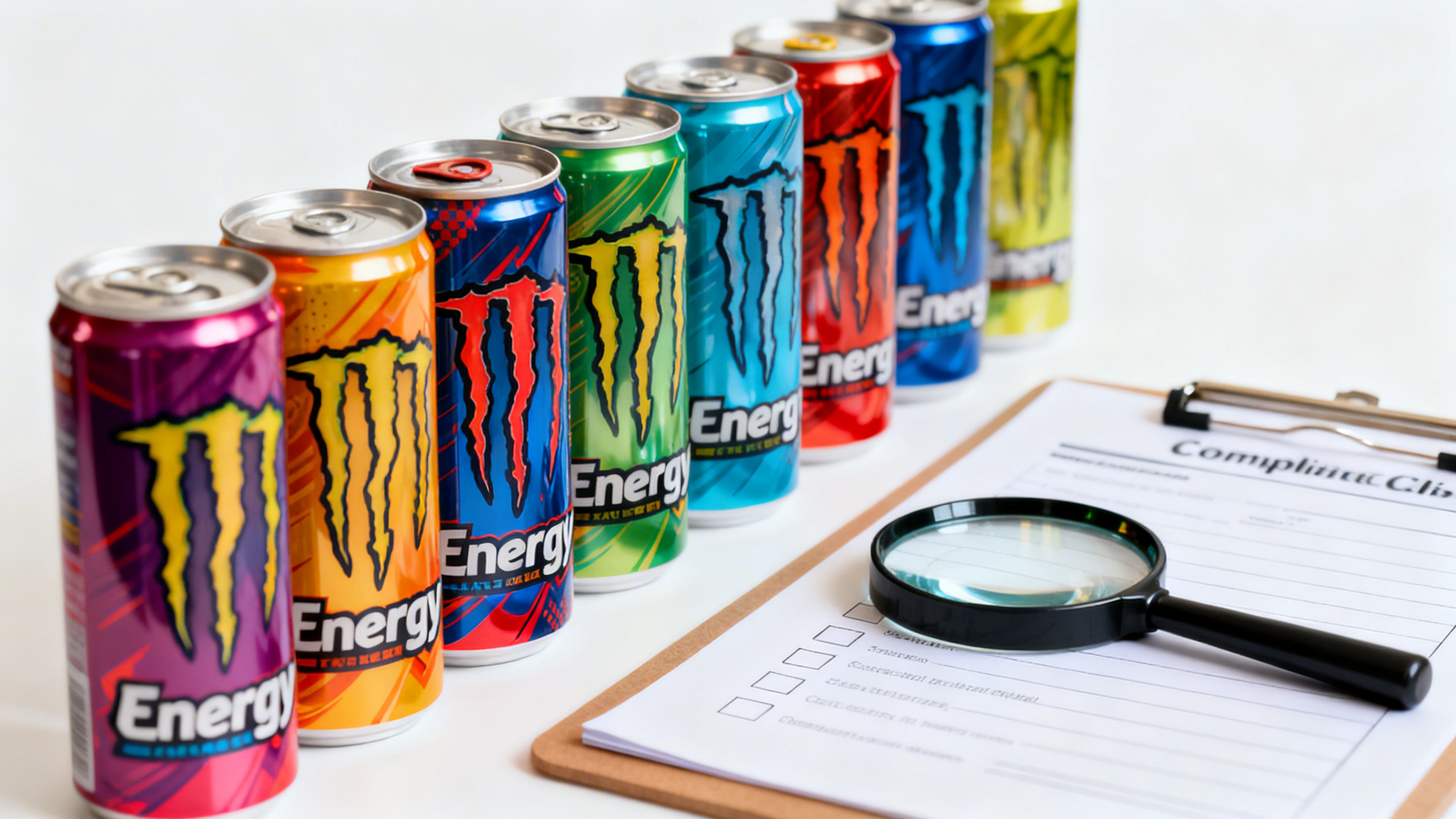
Regulators and consumer-protection watchdogs are signaling a clear direction for THC energy drink regulations 2025: products that combine intoxicating cannabinoids with added caffeine or other stimulant-leaning ingredients are increasingly treated as a higher-risk category—both for public health (overconsumption, masking impairment) and for youth appeal (energy branding, bright flavors, influencer marketing).
This article is informational only, not legal advice. Rules vary by state, and enforcement can change quickly.
Across the U.S., beverage-form intoxicants are expanding beyond dispensaries into broader retail experiments (including grocery and convenience pilots in certain hemp-derived markets). At the same time, policymakers are reacting to three converging concerns:
Federal enforcement against caffeinated alcoholic beverages is frequently cited as a cautionary tale for today’s intoxicating beverage innovators. In 2010, the FDA warned manufacturers that adding caffeine to alcoholic malt beverages could render the product adulterated because caffeine was an “unsafe food additive” in that context, while the FTC scrutinized marketing for potentially deceptive “alertness” and risk-mitigation messaging.
For cannabis compliance teams, the practical takeaway is not that the same legal framework automatically applies, but that regulators are comfortable using the “masked impairment” narrative when stimulant cues accompany intoxicants.
No single federal rule governs all THC beverages nationwide, because intoxicating cannabis remains federally illegal, and hemp-derived intoxicant pathways are still evolving. In practice, brands face state-by-state rules in two distinct channels:
New York’s Office of Cannabis Management (OCM) rules for marketing and advertising prohibit content designed to be attractive to individuals under 21, restrict health claims, and limit messaging that promotes overconsumption.
Even without a caffeine-specific prohibition in the marketing text, “energy drink” creative can create compliance exposure if it uses youth-coded visuals, audio, or influencer formats.
Compliance implication: If your seltzer is positioned as “energy,” treat the creative brief as regulated material—not just a brand decision. Build a youth-appeal review step into your ad approval workflow.
Massachusetts agencies have repeatedly emphasized that adding CBD/THC to food and beverages is unlawful outside the state’s regulated framework, reflecting a broader pattern: some states treat intoxicating (or cannabinoid-containing) beverages as a food law and consumer safety issue first, not merely a cannabis issue.
Compliance implication: If you plan a convenience-store rollout in any state with food-law constraints, your “energy” concept may be irrelevant if the underlying product form is restricted.
California has moved to restrict intoxicating hemp-derived ingestibles outside the licensed cannabis market, underscoring the trend that states are pulling THC-like beverage products into more controlled channels.
Compliance implication: Even if your product is federally “hemp-derived,” states may still force it into the licensed channel—or off shelves—quickly. That affects retailer pilots and insurer willingness.
Minnesota’s adult-use transition has included defined timelines and changing rules for hemp-derived products. The Minnesota Office of Cannabis Management has published a product transition period through December 31, 2025, illustrating how quickly availability and requirements can shift.
Compliance implication: If your national product roadmap includes “energy seltzers,” your commercialization plan needs policy-change contingencies—especially around ingredients like caffeine and stimulant botanicals.
Even when caffeine itself isn’t expressly banned in a given cannabis rulebook, “energy” formulations create multi-layer exposure:
Some brands attempt to avoid calling a product “caffeinated” while using ingredients that are commonly understood as stimulants (e.g., guarana, green tea extract, yerba mate, kola nut). From a consumer protection lens, this can look like evasion.
Action item: Audit formulations for:
Then document: per-serving caffeine mg, per-container caffeine mg, and variability range.
Your research note anticipates serving caps and age-21 placement rules in fall sessions. This fits how states tend to regulate higher-risk ingestibles:
Even if your state doesn’t yet cap caffeine in THC beverages, insurers, distributors, and larger retailers may impose private standards.
Action item: Model at least three SKUs internally:
This makes reformulation faster if state proposals turn into law.
A practical way to de-risk launches is to prebuild a label-warning library and a claims substantiation file so you can respond quickly to new rules, retailer standards, or enforcement letters.
Exact wording varies by state, but the concepts that show up repeatedly in policy discussions include:
Action item: Build two label versions in your artwork system:
1) “No caffeine / no stimulant botanicals” version (simpler, more portable across states)2) “Caffeinated” version with prominent caffeine mg disclosure and conservative “do not combine” warnings
Ensure your packaging/label workflow can swap these components without redoing the whole dieline.
Many enforcement actions in this space won’t hinge on chemistry—they’ll hinge on presentation. State rules commonly restrict marketing “attractive to individuals under 21,” and “energy drink” branding often overlaps with youth culture.
Create an internal teen-appeal risk model that compliance can sign off on. Score and document decisions on:
New York’s marketing rule text is a useful benchmark for what many states consider prohibited youth-appeal elements (images/audio attractive to under-21, promotion of overconsumption). See: https://cannabis.ny.gov/system/files/documents/2023/03/part-128-and-129-plma-regulations.pdf
Action item: Require a documented youth-appeal review for:
Even when cannabis regulators focus on licensing and safety, consumer protection law still applies. “Energy” is often interpreted as a performance claim. If you say a beverage “increases energy,” “improves focus,” or “prevents a crash,” you may need reliable evidence—especially if you’re combining caffeine with cannabinoids and implying a unique effect.
The National Advertising Division (NAD) and FTC both emphasize substantiation and appropriate disclosures, including for influencer marketing and third-party marketing.
Action item: Build a claim substantiation checklist file for every “energy” SKU:
When brands explore grocery or c-store pilots, retailer category managers tend to focus on risk transfer. They don’t want a compliance surprise that forces a recall, creates negative press, or triggers state enforcement.
Based on common buyer diligence patterns in regulated consumables, expect questions like:
Action item: Conduct 8–12 structured retailer interviews (grocery, c-store, liquor, specialty) and turn them into:
Your research note anticipates a wave of proposals in fall sessions and insurer pressure. Here’s a practical de-risk sequence for 2026 product teams.
To stay ahead of THC energy drink regulations 2025 and beyond, compliance teams should track:
If you’re developing or distributing caffeine-forward THC seltzers (or considering a “no-stimulant” pivot), the fastest way to de-risk is to operationalize monitoring and documentation.
Use https://cannabisregulations.ai/ to track regulatory updates, build internal compliance checklists for labeling and marketing, and stay current on state enforcement trends that can impact your dispensary rollout and mainstream retail pilots.