


Sign Up
Ready to replace complexity with clarity?
Answer your real world compliance questions (limited time) and save thousands in legal fees and avoided fines.
Automate Compliance Today

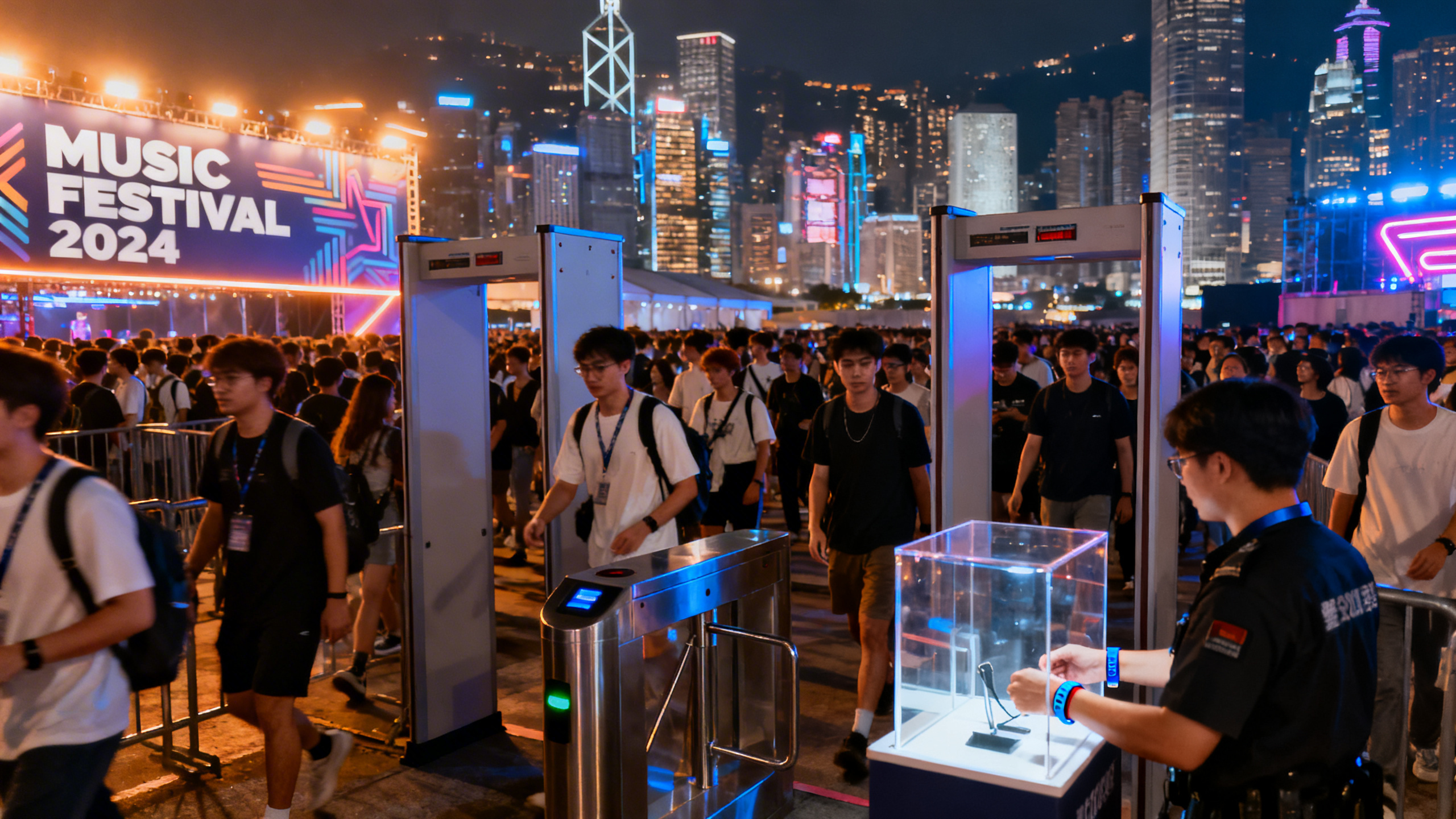
California venues entered 2025 with a new reality: products marketed as “hemp THC,” “delta‑8,” “delta‑9,” “delta‑10,” or similar intoxicating cannabinoids are no longer a gray-area add‑on at bars, concession stands, suites, and pop‑up beverage activations. Following the California Department of Public Health’s (CDPH) emergency industrial hemp regulations and the California Department of Alcoholic Beverage Control’s (ABC) coordinated enforcement posture, ABC-licensed premises—including temporary bars at festivals and stadiums—are a high‑risk location for inspections, complaints, and administrative action.
This article focuses on the practical, venue‑operator and brand playbook for staying compliant during event season—especially in Q4 when festivals, holiday programming, bowl games, and touring schedules create the most “temporary bar + third‑party vendor” complexity.
Informational only—not legal advice. For venue‑specific guidance, consult California counsel experienced in alcohol and hemp compliance.
CDPH’s emergency package targeting intoxicating hemp products is the backbone of ABC’s on‑premise checks.
CDPH’s emergency regulation text states that an industrial hemp final form food product (including beverages and dietary supplements) must have no detectable amount of total THC per serving and that each package must contain no more than five servings.
CDPH also announced publicly that the regulations:
Sources:
ABC has repeatedly emphasized that it is enforcing CDPH’s rules at ABC‑licensed locations and that licensees may not carry, market, offer for sale, or sell noncompliant industrial hemp food or beverage products.
Key ABC references:
Large venues and multi‑day events concentrate the exact ingredients that create compliance failures:
ABC’s enforcement posture is also complaint-driven: if a guest, competitor, employee, or local authority sees “THC” on a drink board at an ABC‑licensed location, it can prompt a visit.
The central strategy is simple: treat intoxicating hemp beverages as prohibited inventory on ABC‑licensed premises, and build systems that prevent them from being ordered, delivered, displayed, comped, or sampled.
Start with a written map of:
If you operate with a caterer authorization or special event structure, align the footprint with the authorization documents. When in doubt, confirm with your ABC district office and event counsel.
Your contracts are your first enforcement tool—because they govern what can be ordered, stocked, marketed, and displayed.
Include a clause in all:
Suggested template language (customize to your facts):
Prohibited Intoxicating Hemp Products. Vendor shall not bring onto, store within, sell, serve, furnish, sample, advertise, market, display, or list (including via QR menu, digital board, social media geotargeted to the Venue, or printed collateral) any industrial hemp food, beverage, or dietary supplement intended for human consumption that contains any detectable amount of total THC or other intoxicating cannabinoids (including but not limited to delta‑8 THC, delta‑9 THC, delta‑10 THC, THCA, or similar), or that otherwise fails to comply with applicable California Department of Public Health industrial hemp regulations, at any time on the licensed premises or within any area controlled by Venue where alcoholic beverage privileges are exercised.
Even if a beverage is intended to be 0‑THC, sloppy marketing can create risk.
Add a clause that prohibits:
Template:
Restricted Claims. Vendor shall not use the terms “THC,” “delta‑8,” “delta‑9,” “delta‑10,” “THCA,” “intoxicating,” “psychoactive,” or any similar cannabinoid or impairment claim in product names, menu descriptors, signage, or promotions at or in connection with the Venue, regardless of product content, without Venue’s prior written approval.
Tie the clause to:
Template add-on:
Inspection and Removal. Venue may inspect Vendor inventory, storage, and point-of-sale listings at any time. Any prohibited product or listing must be removed immediately upon notice (or upon discovery by Venue), and Vendor shall reimburse Venue for all related costs, including staff time and reprinting/reprogramming.
If sponsors want a “functional beverage” presence, build a program that is compatible with the CDPH standard.
Practical guardrails for a safer sampling program:
Important: CDPH’s emergency rule also includes an age 21+ sales restriction for lawful industrial hemp products. If your program includes any hemp-derived ingestible that is lawful, design it as 21+ only unless counsel confirms an exception.
Even when your venue is already 21+ for alcohol service, festivals often have mixed-age admissions. Implement controls that demonstrate intent and consistency.
Recommended controls:
ABC’s ID education resource is a useful baseline for training: https://www.abc.ca.gov/education/licensee-education/checking-identification/
Your frontline team needs language that is firm, calm, and repeatable. The goal is to prevent “helpful improvisation” (the source of many violations).
Guest: “Do you have THC seltzers or hemp cocktails?”
Staff: “We can’t sell or serve THC or intoxicating hemp drinks here. If you’d like a non-alcoholic option, I can recommend one of our zero‑proof beverages.”
If pressed:
Staff: “Our venue follows California public health rules and ABC requirements. We’re not able to offer those products on this premises.”
Staff: “We can’t accept this product. Our contract and venue policy prohibit ingestible hemp products with any THC or intoxicating cannabinoids. Please take it back to the distributor and send the updated invoice showing the approved SKUs.”
Ambassador: “We’re sampling our zero‑proof beverage today. It does not contain THC, and we’re only sampling within this approved area for guests 21 and over.”
Manager: “This is not negotiable on event day. We’re protecting the venue’s ABC license. Remove the product and any menu references now, and we can discuss next steps after the event.”
Use these as starting points; have counsel review for your specific facts.
NOTICE: This venue does not sell or serve THC or intoxicating hemp beverages. Please ask staff about available non‑alcoholic options.
21+ AREAValid ID required. No entry without wristband/ID verification.
DELIVERIES: No products labeled or marketed as THC, delta‑8, delta‑9, delta‑10, THCA, or “intoxicating hemp” may be delivered, stored, or sold on this premises.
VENDOR COMPLIANCE REMINDER: All menus, QR codes, chalkboards, and digital listings must match the Venue’s approved beverage list. Unapproved items will be removed immediately.
Use this audit twice: once at build/load-in and again right before doors.
Suites are common failure points because “hospitality” orders may bypass standard concession controls.
Red flag: “Try our THC mocktail at Section 112” is the kind of language that triggers complaints and enforcement attention.
California events can involve special daily licenses, caterer authorizations, or existing on-sale privileges depending on the operator and premises. ABC’s caterer permit page is a starting point for understanding authorizations used for catered events:
The compliance takeaway is consistent regardless of structure: if the area is an ABC-licensed premises (or operating under an ABC authorization), do not treat intoxicating hemp drinks as allowable inventory.
ABC has publicly stated it will continue visiting licensed locations to enforce CDPH’s regulations and ensure illegal products are not being sold.
ABC also provides a pathway for complaints about illegal hemp products at licensed locations, increasing the importance of proactive compliance at high-visibility venues:
The best operators treat this like food safety: a repeatable kit, a checklist, documented training, and a clean chain of approvals.
For more California-specific compliance updates, enforcement tracking, and practical tools for event and venue teams, use https://www.cannabisregulations.ai/ to build a faster, audit-ready compliance workflow for licensing, regulations, and vendor controls.