


Sign Up
Ready to replace complexity with clarity?
Answer your real world compliance questions (limited time) and save thousands in legal fees and avoided fines.
Automate Compliance Today

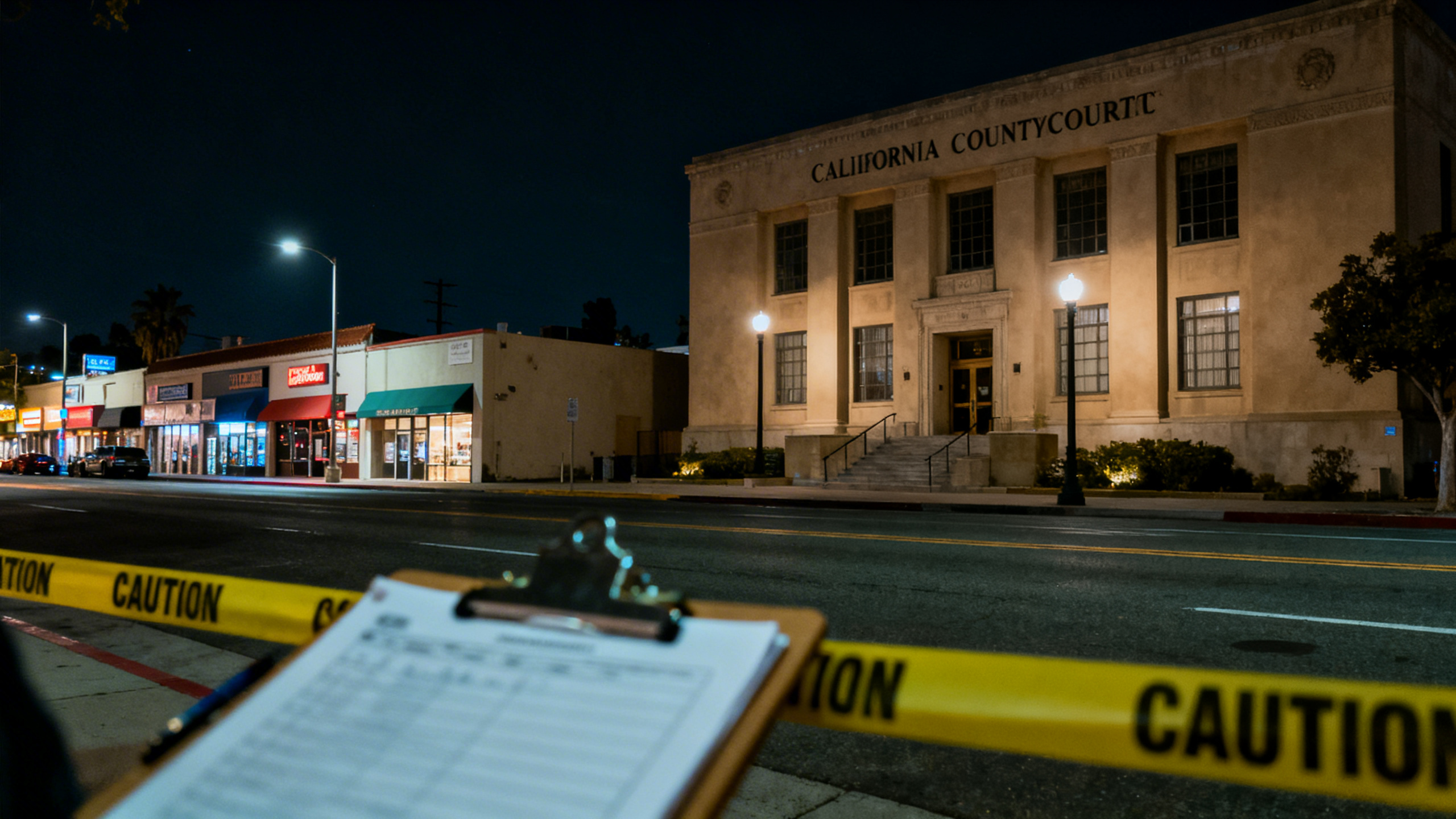
In late 2025, California local hemp enforcement 2025 became less about one statewide policy choice and more about a rapidly evolving county-by-county patchwork—with different agencies using different legal tools to reach the same goal: pushing intoxicating hemp products out of general retail and online channels, and keeping them away from youth.
State regulators set the baseline. But counties and cities increasingly add their own layers—using nuisance abatement, padlock closures, business-license conditions, youth-access ordinances, and online “mystery shopper” style investigations. For multi-location retailers and brands, the result is a compliance landscape where being “state compliant” is necessary but not sufficient.
This post maps what changed at the state level, how local enforcement strategies emerged across California in late 2025, where local rules align (or conflict) with state action, and what a practical local-readiness program looks like—down to signage, planograms, scanner blocks, age-verification logs, and SKU rationalization.
Informational only—not legal advice.
California’s posture toward intoxicating hemp tightened materially beginning in late 2024 and carried through 2025.
The California Department of Public Health (CDPH) adopted emergency regulations that made it unlawful to manufacture, distribute, or sell certain ingestible industrial hemp products if they contain any detectable amount of total THC per serving.
Key statewide requirements in the emergency package include:
Those elements appear directly in CDPH’s emergency regulatory text. For example, the regulation text states that each serving “shall have no detectable amount of total THC” and each package “shall have no more than five servings.”
External links (official):
Why this creates operational risk: “No detectable THC” is not the same as “below 0.3% delta-9 THC.” It functions as a zero-tolerance standard at the laboratory limit of detection. That means two labs may not always treat the same product the same way if methods, matrices, or detection thresholds differ.
For compliance programs, this pushes businesses toward SKU rationalization and conservative sourcing: products that are “close to the line” become high-liability.
In 2025, the Department of Alcoholic Beverage Control (ABC) publicly emphasized widespread compliance in alcohol-licensed settings while also committing to continued visits and enforcement.
Official link:
Even if your business is not alcohol-licensed, this matters because ABC’s messaging reflects the state’s broader interagency model: field inspections, follow-up visits, and coordinated enforcement across agencies.
In October 2024, the Governor’s office announced that a court rejected an attempt to stop enforcement of the emergency regulations, leaving the restrictions in effect.
Official link:
From a risk perspective, the practical takeaway is that “pending litigation” is not a safe harbor. Local governments in late 2025 largely treated the statewide ban as enforceable now.
On October 2, 2025, California announced the signing of Assembly Bill 8, described as moving the state toward regulating intoxicating cannabinoid products under a single framework—regardless of source—and strengthening tools to stop illegal sales.
Official link:
AB 8 is especially relevant to local enforcement because it reinforces the political and regulatory direction: intoxicating hemp is being pushed out of general retail channels, and enforcement authority is being clarified/expanded.
If the state set the baseline, why did counties and cities feel the need to add more?
Three drivers showed up repeatedly in local actions and public narratives:
Localities also responded to the reality that many intoxicating hemp products were sold in the same storefront ecosystem as other “age-restricted” goods. That allowed regulators to use existing inspection routines (e.g., tobacco/alcohol compliance patterns) and apply them to hemp.
California did not move as one. Instead, local enforcement tended to cluster into a handful of recognizable models.
Some jurisdictions leaned on nuisance abatement frameworks—traditionally used for problem properties—to create rapid leverage: cure notices, re-inspections, and ultimately closure/padlocking when noncompliance persists.
This model matters even for otherwise lawful businesses because nuisance tools can be triggered by:
A concrete example of local nuisance enforcement infrastructure can be seen in Los Angeles County’s ordinance activity addressing nuisances related to unpermitted commercial activity (PDF): https://file.lacounty.gov/SDSInter/bos/supdocs/195688.pdf
Practical impact: padlock-style outcomes tend to escalate quickly once the case is built—especially when local prosecutors or city attorneys are involved.
Another common approach is to use business licensing as the enforcement fulcrum:
Even if local ordinances do not “ban hemp,” they may effectively restrict sales by making the operational burden high and the penalties immediate.
Where this can conflict with state posture: local rules sometimes focus on “21+ only” and placement rules, while CDPH’s statewide approach for ingestible hemp is stricter for intoxicating items—no detectable THC per serving. If a retailer treats “age-gated” as “allowed,” they can still be in violation of the CDPH standard.
Some enforcement programs focus less on closing the store and more on removing product from commerce:
CDPH’s rulemaking documents outline a range of enforcement responses that can include seizure and embargo and condemnation of embargoed products.
Official supporting source (CDPH ISOR PDF): https://www.cdph.ca.gov/Programs/OLS/CDPH%20Document%20Library/DPH-24-005B-ISOR_DPH-24-005B_IH_Cannabinoids.pdf
Operational lesson: seizure-first enforcement can devastate margins even if a business avoids closure. The compliance program must therefore treat inventory as a controlled risk asset.
Late 2025 saw increased emphasis on online monitoring and youth-access prevention. Even when not branded publicly as “mystery shopper” operations, the underlying mechanics often mirror alcohol/tobacco compliance work:
A forward-looking signpost: California enacted SB 378 (signed Oct. 6, 2025), setting requirements for online marketplaces beginning July 1, 2026 (industry analysis summary): https://cannabislaw.report/california-ramps-up-enforcement-against-online-hemp-sales/
Even before SB 378’s effective date, the enforcement direction in 2025 was clear: online channels would not be treated as “out of sight, out of jurisdiction.”
Understanding alignment vs. conflict helps businesses design a compliance system that survives both inspections and local politics.
Localities and the state generally align on:
Notably, CDPH’s emergency framework explicitly limits servings per package and sets a 21+ minimum age. Local ordinances often replicate or reinforce these themes.
Many businesses made an early operational assumption: if a product is sold only to adults, it is likely acceptable.
In California, for ingestible industrial hemp, that assumption is unsafe.
CDPH’s rule is not a potency cap. It is a detectability ban for total THC per serving in covered ingestible categories.
So a locally compliant age-gated shelf can still be statewide noncompliant.
Local inspectors may ask for COAs (certificates of analysis), and businesses often treat COAs as a defense.
But if a COA is:
…then it may not reduce enforcement risk.
The more conservative approach is to treat COAs as a starting point and implement internal acceptance criteria that reflect CDPH’s standard.
Local enforcement frequently keys off public-facing marketing:
A product can become an enforcement magnet even before lab testing occurs, simply because marketing suggests it is intended to intoxicate.
If your company sells compliant hemp ingestibles (or adjacent wellness products) in California, you need controls that can withstand both state and local scrutiny.
Start with a hard question: which SKUs create unavoidable conflict with CDPH’s “no detectable THC per serving” rule?
Priority categories to review:
Action steps:
Local inspections often start with what is visible.
Operational controls:
Do not rely on training alone.
Implement:
These controls become critical if a locality alleges repeat violations.
Because CDPH’s framework includes a 21+ rule, and locals often emphasize youth protection, robust age controls help both.
In-store controls:
Online controls:
Signage should support compliance without making claims that trigger scrutiny.
Examples of useful signage concepts:
Avoid:
Build a supplier file that you can produce quickly during an inspection.
Minimum components:
Train staff for what inspectors actually do:
Keep training records and refresh them on a cadence.
California consumers in late 2025 encountered real local variability in availability and enforcement intensity.
Key points:
Consumers should verify the retailer’s legitimacy, avoid products with confusing potency claims, and understand that “hemp-derived” does not mean “unregulated.”
If you operate across multiple California jurisdictions, treat local compliance like a deployment problem:
For ongoing updates on cannabis compliance, hemp rules, licensing, and enforcement trends in California—and tools to operationalize them—use https://www.cannabisregulations.ai/ as your compliance co-pilot.