


Sign Up
Ready to replace complexity with clarity?
Answer your real world compliance questions (limited time) and save thousands in legal fees and avoided fines.
Automate Compliance Today

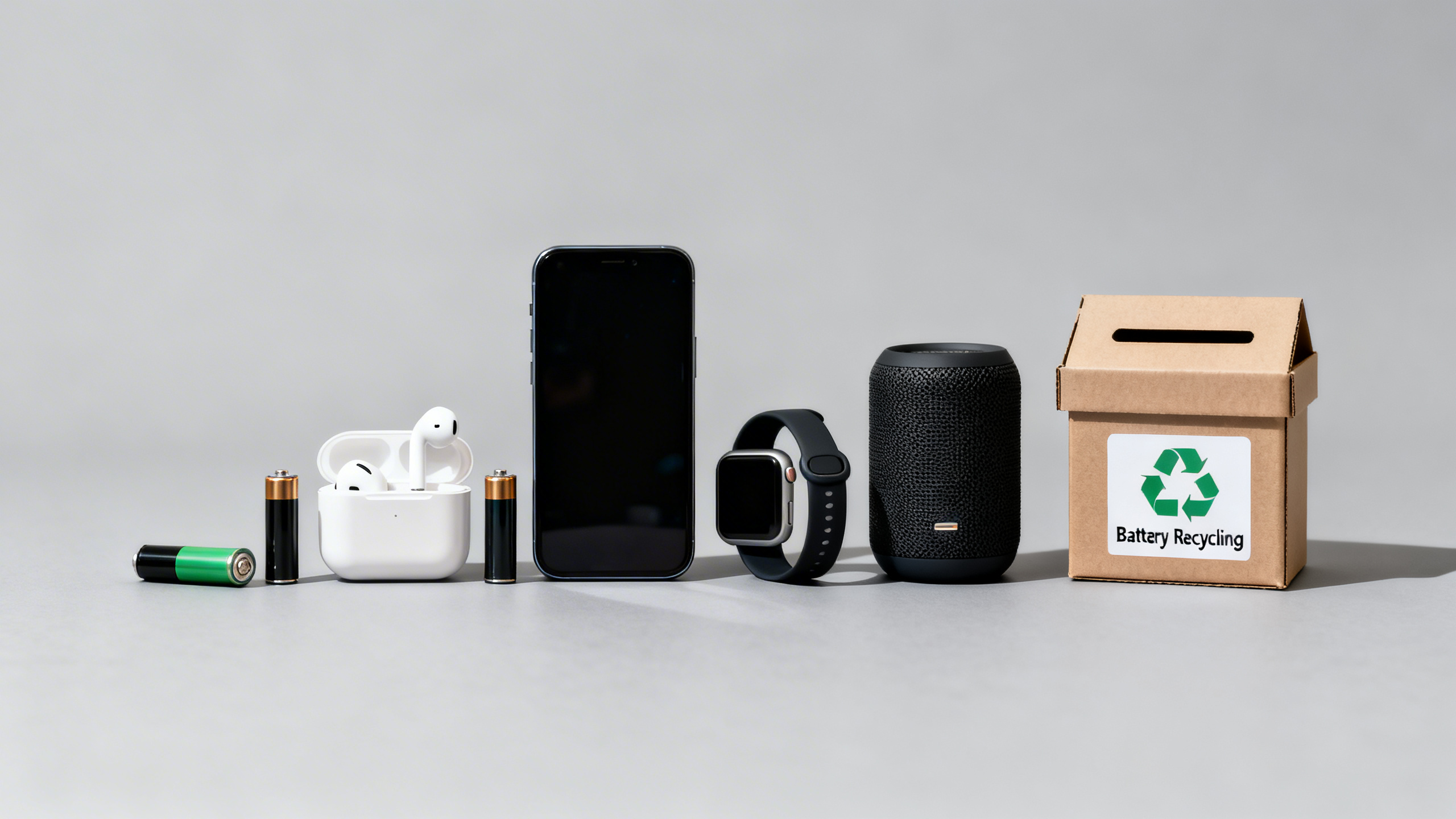
Extended Producer Responsibility (EPR) isn’t new in Canada—but 2025 is the year many brands finally feel it in day-to-day operations. Provincial regulators and stewardship agencies are tightening expectations around batteries, expanding the scope of what’s considered a regulated battery or battery-containing product, and demanding higher-quality data.
For brands selling battery-powered vape devices (disposables, rechargeable devices, and cartridges paired with rechargeable batteries), the compliance message is straightforward: if you place battery-powered vape products on the market, you should assume your products are in scope in multiple provinces and that you need a defensible position on:
This article is informational only and not legal advice.
Battery-powered vape devices create a “perfect storm” for EPR compliance:
This is why provincial EPR frameworks increasingly expect producers to fund and operate robust collection and recycling systems—and to prove they are working.
Canada does not have one single national EPR regime for consumer batteries. Instead, EPR is largely provincial/territorial. A multi-province seller must treat EPR like a matrix of overlapping obligations.
The key operational takeaway for the focus keyword—Canada EPR cannabis vapes batteries producer responsibility—is that your compliance program must be designed to handle:
A strong starting point for businesses is Environment and Climate Change Canada’s inventory of recycling programs, which provides a helpful orientation to what programs exist across jurisdictions: https://www.canada.ca/en/environment-climate-change/services/managing-reducing-waste/overview-extended-producer-responsibility/inventory-recycling-programs.html
Ontario is often the compliance “pace-setter” because it uses an individual producer responsibility model with a strong registry and data/reporting requirements.
Ontario’s Batteries Regulation (O. Reg. 30/20) is available here: https://www.ontario.ca/laws/regulation/r20030
A consolidated version is also available via CanLII: https://www.canlii.org/en/on/laws/regu/o-reg-30-20/latest/o-reg-30-20.html
Ontario assigns obligations to battery “producers” to register and to meet collection and management requirements. The regulator overseeing the framework is the Resource Productivity and Recovery Authority (RPRA):
Ontario reporting is strongly deadline-driven. RPRA’s 2025 reporting communications emphasized that supply and performance reporting for batteries had an April 30, 2025 deadline.
If your organization sells vape products in Ontario (or sells batteries separately), treat Ontario’s April reporting calendar as a compliance anchor and build your internal close process around it.
RPRA announced changes affecting 2025 management requirements for several materials, including batteries.
Operationally, the lesson is that your management requirement (the amount you must ensure is managed through reuse/refurbishment/recycling) may change based on regulatory updates. Your internal reporting team should subscribe to RPRA updates and maintain a change log.
Even if Ontario’s batteries regulation focuses on batteries sold separately (not embedded), Ontario’s data discipline is instructive. Brands that build Ontario-grade systems—SKU-level weights, supply reporting governance, documented assumptions—tend to scale across provinces more smoothly.
British Columbia’s EPR system is administered under the Recycling Regulation. In late 2025, BC approved amendments (OIC 476, Oct 27, 2025) that provide explanatory notes and structure for electronic/electrical and battery-containing product categories.
BC also provides producer-focused guidance on responsibilities for electronic and electrical products:
BC’s approach signals an ongoing trend: regulators increasingly distinguish between stand-alone batteries and battery-containing products, while broadening definitions to capture more devices that contain small batteries.
For brands, that means your compliance scope assessment should not stop at “Do we sell batteries separately?” You need a product taxonomy that can answer:
If you sell nationally, BC changes can foreshadow expansions elsewhere.
Quebec’s EPR framework for various designated products is grounded in the Regulation respecting the recovery and reclamation of products by enterprises.
Quebec is also notable because stewardship organizations have created public-facing programs that make battery-powered vapes a visible category.
Call2Recycle’s fee and program materials indicate that vapes are a listed category in Québec as of January 1, 2025.
Even if you are not active in Quebec, this is a compliance trendline: provinces increasingly treat vape devices as a battery-containing product requiring take-back and funding.
A Producer Responsibility Organization (PRO) typically provides operational services such as collection network management, transportation to processors, public education materials, and reporting support.
In Canada’s battery space, Call2Recycle is a dominant PRO/stewardship operator in many provinces and offers “programs by province or territory” information here:
Brands sometimes treat PRO enrollment as “we pay a fee and we’re done.” That assumption creates risk.
To stay compliant, treat PRO enrollment as a structured implementation project:
Across provinces, the cost of compliance is increasingly visible through eco-fees or Environmental Handling Fees (EHFs) collected/remitted through programs.
Call2Recycle publishes product guides and fee schedules that show how battery-related fees can vary by province and by product category.
The pricing takeaway: expect ongoing adjustments, and ensure your finance team has a defined method to:
EPR take-back is not just a reporting exercise. Once you accept returned battery-powered devices, you must manage them safely.
Transport Canada provides guidance on transporting and importing devices containing lithium batteries and on transporting batteries generally.
The Transportation of Dangerous Goods Regulations include provisions applicable to lithium cells and batteries (including those contained in equipment):
If you coordinate returns from retailers or consumers, you should have written SOPs covering:
This is where compliance, operations, and retail training intersect.
In many Canadian EPR programs, responsibility follows a hierarchy similar to:
Ontario’s batteries framework and industry guidance emphasize clarifying the responsible party, and PRO materials often provide producer-definition scenarios.
For each province where you sell:
When multiple parties could be responsible, align contract language (distribution agreements, white-label deals, licensing) with the EPR producer hierarchy.
EPR reporting is trending toward higher verification expectations. Even when third-party verification is delayed or phased, regulators increasingly expect traceability.
In Ontario, RPRA has published updated reporting guidance for supply reporting (including 2025 updates).
Maintain a master dataset that includes, per SKU and per province:
This data will also help you forecast fee exposure and make design decisions.
Retail is where EPR becomes visible to consumers and enforcement. If your program relies on in-store take-back:
Where programs accept “any brand,” retailers may still require clear instructions to avoid contamination (e.g., damaged devices or liquid leaks).
Across provinces, the easiest way to trigger compliance exposure is not a complex technical mistake—it’s missing a reporting deadline or failing to register when obligated.
Ontario is explicit that reporting deadlines matter, and RPRA publishes compliance reminders in connection with annual reporting windows.
If you operate nationally, create a single compliance calendar that includes:
For federal packaging and labelling requirements for regulated products in Canada, Health Canada’s guide is a key reference:
If your team is managing multi-province expansion, new SKU launches, or distributor/importer structure changes, build your EPR compliance process before reporting season arrives.
Use https://cannabisregulations.ai/ to track cannabis compliance obligations across jurisdictions, organize licensing and regulatory requirements, and operationalize evidence-ready SOPs for take-back, reporting, and vendor management.