


Sign Up
Ready to replace complexity with clarity?
Answer your real world compliance questions (limited time) and save thousands in legal fees and avoided fines.
Automate Compliance Today

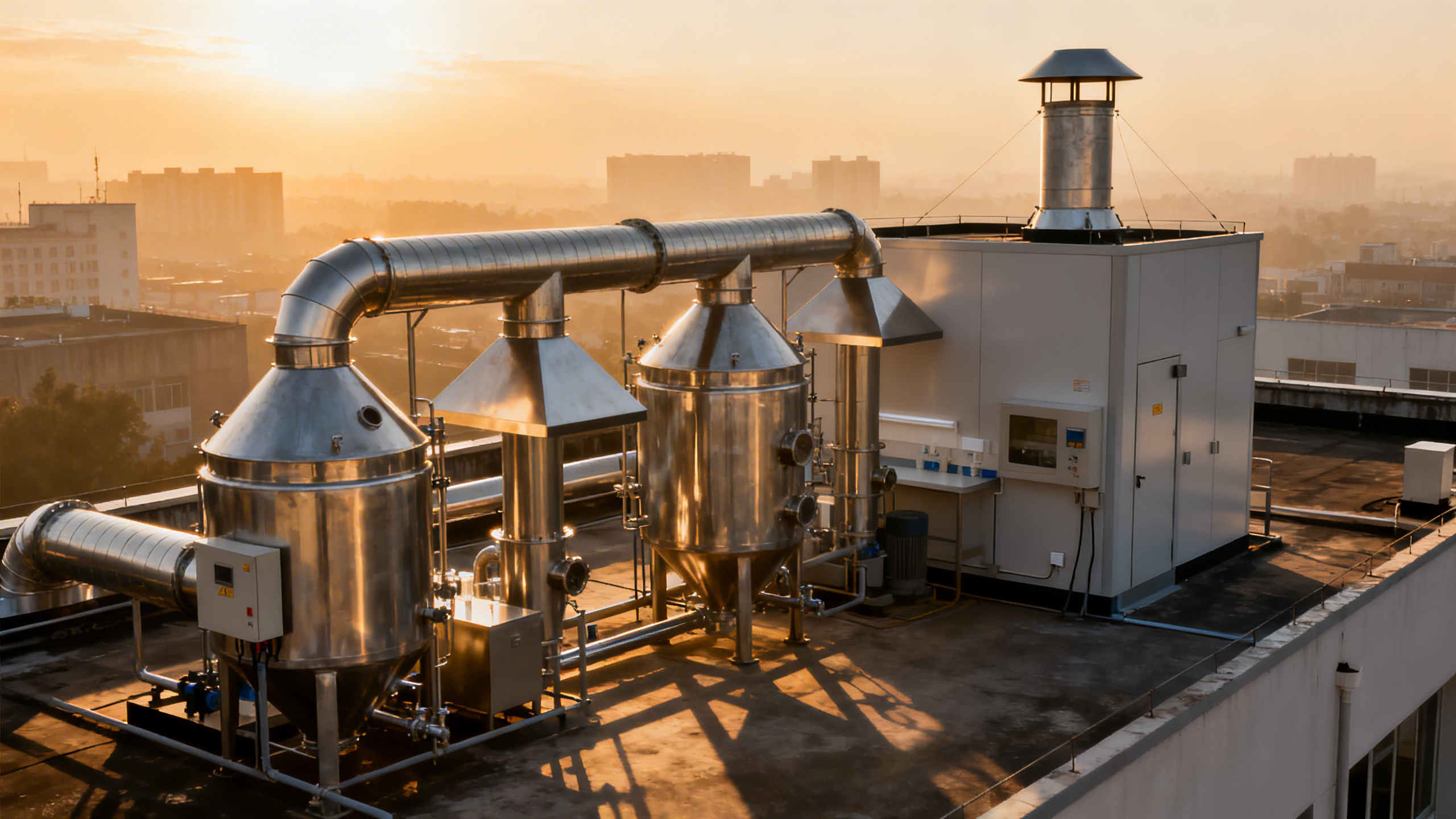
In 2025–2026, U.S. air agencies are paying closer attention to solvent emissions from extraction operations—especially in ozone nonattainment areas where the Clean Air Act tightens preconstruction and operating permit requirements. The compliance challenge is straightforward but easy to underestimate: high-throughput ethanol and hydrocarbon processes can generate enough volatile organic compounds (VOCs) and sometimes hazardous air pollutants (HAP) to trigger minor NSR (minor New Source Review) or even major source permitting and Title V operating permits.
This article focuses on federal air permitting concepts that apply nationwide (implemented through state/local/tribal programs): how to assess potential-to-emit (PTE), where Title V triggers come from, what “MACT” does (and does not) mean for this industry, and why regulators often expect RACT-style controls and monitoring even when no cannabis-specific rule exists.
Disclaimer: This content is for general informational purposes and is not legal advice. Air permitting is site-specific and depends on your jurisdiction, equipment, solvents, and enforceable limits.
Ozone is formed when VOCs and NOx react in sunlight. When EPA designates a county/area as nonattainment for ozone, new and modified stationary sources face stricter requirements.
If you don’t know your area’s status, start with EPA’s Green Book (Nonattainment Areas for Criteria Pollutants), which EPA notes is current as of January 31, 2026 on its site.
Outside nonattainment, the “default” major source threshold used in several programs is often discussed as 100 tons per year (tpy) for a regulated pollutant. But in ozone nonattainment areas, the “major stationary source” threshold for VOC and NOx can drop significantly.
EPA summarizes the ozone classification thresholds in its “Required SIP Elements by Nonattainment Classification” page:
Source: US EPA, Required SIP Elements by Nonattainment Classification.
For solvent-heavy facilities, those lower cutoffs are often the difference between:
EPA’s Title V program consolidates all “applicable requirements” into an operating permit. It does not usually create new emission limits by itself; it makes requirements federally enforceable and adds monitoring, recordkeeping, reporting, and public notice elements.
EPA’s “Who Has to Obtain a Title V Permit?” page highlights that a Title V permit is required for any major source and references that major source thresholds can be lower in nonattainment areas.
Source: US EPA, Who Has to Obtain a Title V Permit?.
The key is potential to emit (PTE), which is not the same as “what we emitted last month.” Under 40 CFR 70.2, PTE means the maximum capacity of the stationary source to emit an air pollutant under its physical and operational design.
Source: eCFR, 40 CFR 70.2 (Definitions: Potential to emit).
In practical terms, permitting agencies frequently evaluate PTE using worst-case throughput unless you accept federally enforceable limits (often called synthetic minor limits) that cap hours, solvent usage, batches, or production.
EPA maintains a dedicated page collecting guidance on limiting PTE and synthetic minors.
Source: US EPA, Limiting Potential to Emit (PTE) & Synthetic Minor Sources.
Even if VOC is the headline concern for ozone, HAP status matters because:
Under Clean Air Act section 112 and 40 CFR 63 programs, the common major source threshold is 10 tpy of any single HAP or 25 tpy of combined HAP. EPA reiterates this threshold across multiple materials; for a plain-language and authoritative reference, see EPA’s Title V applicability page and EPA’s section 112 materials.
One example reference: a Federal Register notice reiterating the 10/25 tpy major source definition (useful for citing the standard definition).
Source: Federal Register, NESHAP notice (definition of major source).
In solvent-based extraction, whether HAP applies depends on the solvent and impurities, denaturants, or co-solvents used. Businesses should verify HAP status using SDSs, purchasing specs, and the facility’s chemical inventory.
Operators often hear, correctly, that there is no nationwide MACT specifically written for cannabis extraction. But regulators still evaluate:
MACT is delivered through NESHAP rules in 40 CFR Part 63. Different subparts cover different categories (pharmaceutical production, chemical manufacturing, surface coating, combustion sources, etc.). Even if no subpart fits perfectly, agencies may look to MACT concepts when evaluating what level of controls and monitoring is “credible” for solvent service.
A practical compliance mindset for 2025–2026 is:
For ozone nonattainment areas classified Moderate or above, Clean Air Act planning requirements often include implementing Reasonably Available Control Technology (RACT) for covered VOC and NOx sources.
EPA’s Control Techniques Guidelines (CTGs) and Alternative Control Techniques (ACT) documents are core references states use to determine RACT for VOC categories.
Source: US EPA, Control Techniques Guidelines and Alternative Control Techniques.
Even where CTGs do not directly name extraction operations, agencies often use CTG/ACT principles to evaluate:
A well-known ACT-style reference point is EPA’s guidance on VOC control for batch processes, which discusses common control approaches (including condensers and carbon adsorption) and performance expectations.
Source example (ACT PDF): EPA-450/4-91-031 (SOCMI reactor/distillation control techniques; discusses condenser efficiencies and recovery).
Extraction rooms are often designed around building/fire requirements (ventilation, classified electrical, gas detection, emergency controls). Those safety systems are essential, but they typically do not answer the air regulator’s core questions:
Fire codes (like NFPA 1) may require specific room exhaust approaches, but air agencies will still require a defensible emissions basis and enforceable operational limits.
Reference for Chapter availability: NFPA 1 (2024) Chapter 38 is viewable through NFPA LiNK/UpCodes (access policies vary): NFPA 1 (2024) Chapter 38 viewer.
Reference on model fire code ventilation provisions: 2024 IFC Section 5005.2.1.1 Ventilation.
Compliance takeaway: If you use engineering controls for safety (ventilation rate, exhaust fans, room purge), build an “air” layer on top: capture/ducting diagrams, control device specs, monitoring points, and emissions calculations that align with the ventilation design.
Because there is no single federal “extraction PTE calculator,” businesses should apply a consistent engineering method and document each assumption.
Most solvent-driven VOC emissions show up in:
Agencies increasingly expect that “closed-loop” does not mean “zero emissions.” It means emissions are controlled and accounted for.
Under the federal PTE definition, agencies typically consider maximum capacity under design. That often means:
If you are pursuing synthetic minor status to avoid Title V, your permit must include enforceable limits that bring PTE below thresholds, plus monitoring/recordkeeping that proves the limits are met.
EPA’s PTE/synthetic minor guidance library is the best starting point for how enforceable limits must be structured.
Source: US EPA, Limiting Potential to Emit (PTE) & Synthetic Minor Sources.
For many extraction setups, the most defensible initial approach is a solvent mass balance:
Then determine what fraction of that loss becomes VOC emissions. For ethanol and many hydrocarbons, solvent loss is usually a reasonable surrogate for VOC emissions (subject to the agency’s definitions and any exempt VOC rules).
To strengthen the method:
Permitting agencies will not accept “95% recovery” as a compliance conclusion unless you can show:
If you rely on an enclosure/capture hood approach, EPA provides formal capture efficiency methods. EPA’s Method 204 addresses criteria for verifying a Permanent Total Enclosure (PTE) or Temporary Total Enclosure (TTE) to determine capture efficiency.
Source: US EPA, Method 204 (Capture Efficiency).
For VOC control device performance testing, Method selection varies by device and pollutant, but Method 25/25A is commonly referenced for measuring VOC concentrations in vent streams (e.g., for destruction efficiency determinations in certain contexts). EPA maintains guideline documents for these methods.
Source: US EPA EMC guideline documents list (includes Method 25/25A guidance), EMC Guideline Documents.
Compliance takeaway: Treat vendor efficiency claims as inputs, not evidence. If the permit hinges on a control efficiency assumption, plan for performance testing or other verification required by your permitting authority.
In 2025–2026, a common expectation—especially for synthetic minor limits—is monthly tracking with 12-month rolling totals for VOC and sometimes HAP.
That structure helps you:
For Title V sources, monitoring/recordkeeping/reporting is foundational. EPA provides Title V program guidance emphasizing that operating permits document how sources will demonstrate compliance through monitoring and recordkeeping.
Source: US EPA, Operating Permits Issued under Title V of the Clean Air Act (last updated Dec. 15, 2025).
If you are a major source and you use control devices to meet emission limits, the CAM rule (40 CFR Part 64) may apply to certain pollutant-specific emission units.
EPA explains CAM applicability at a high level and notes it applies to major sources required to have Title V permits and that rely on add-on controls.
Source: US EPA, Air Emissions Monitoring for Permits.
This is one more reason many facilities try to stay synthetic minor—provided they can do it with realistic enforceable limits and robust tracking.
Even when no explicit LDAR rule applies, agencies frequently expect practices that look like LDAR because fugitive leaks can be a material share of VOC loss.
A practical “RACT-style” LDAR approach for solvent extraction environments includes:
If your operations are captured/ducted and controlled, LDAR also protects your control device from being used as a “catch-all” for preventable leaks.
Air agencies rarely prescribe one exact solution, but in ozone nonattainment areas they often expect you to evaluate and justify controls consistent with RACT/BACT reasoning.
Common elements include:
Closed-loop systems reduce routine venting, but your permit application should still describe:
Condensers can be highly effective in the right service. EPA CTG/ACT materials discuss condenser performance concepts and note high efficiencies in some conditions.
Source example: EPA-450/4-91-031.
To be credible, document:
Carbon can work well for certain VOC streams, but it requires disciplined operations:
Thermal oxidizers or enclosed combustion devices can deliver high destruction, but they bring:
If you control room air, the big questions become:
Source: US EPA, Method 204.
A recurring theme in enforcement and permitting disputes is that facilities build first and permit later—or submit an application that assumes a control efficiency without a verification plan.
In ozone nonattainment areas, do this early—before equipment is locked in. Use the meeting to confirm:
Show your work:
Inspectors respond better to a coherent program than siloed binders. A strong approach is to align:
When these artifacts tell the same story, it reduces the risk that an inspector views emissions as “unmanaged” even if the site is safe.
While enforcement varies by jurisdiction, the most common triggers for scrutiny in solvent-heavy operations are:
Also, pay attention to nonattainment-related programs in your area, including fees or reporting programs tied to major source status in some jurisdictions.
Use this as a practical, audit-ready set of next steps:
In ozone nonattainment areas, solvent emissions from extraction can move from a “manageable minor source” issue to a major source and Title V issue faster than many operators expect—primarily because PTE is based on maximum capacity and because ozone classification can drop VOC major thresholds as low as 10 tpy in extreme areas.
The most defensible path in 2025–2026 is to (1) calculate PTE conservatively, (2) treat control claims as hypotheses until verified, and (3) build a monitoring and recordkeeping system that makes your compliance story easy to audit.
For more federal and state-by-state guidance on cannabis compliance, air permitting, licensing, and inspection readiness, visit https://www.cannabisregulations.ai/ and use our tools to keep your permitting, SOPs, and emissions tracking aligned as regulations evolve.