


Sign Up
Ready to replace complexity with clarity?
Answer your real world compliance questions (limited time) and save thousands in legal fees and avoided fines.
Automate Compliance Today

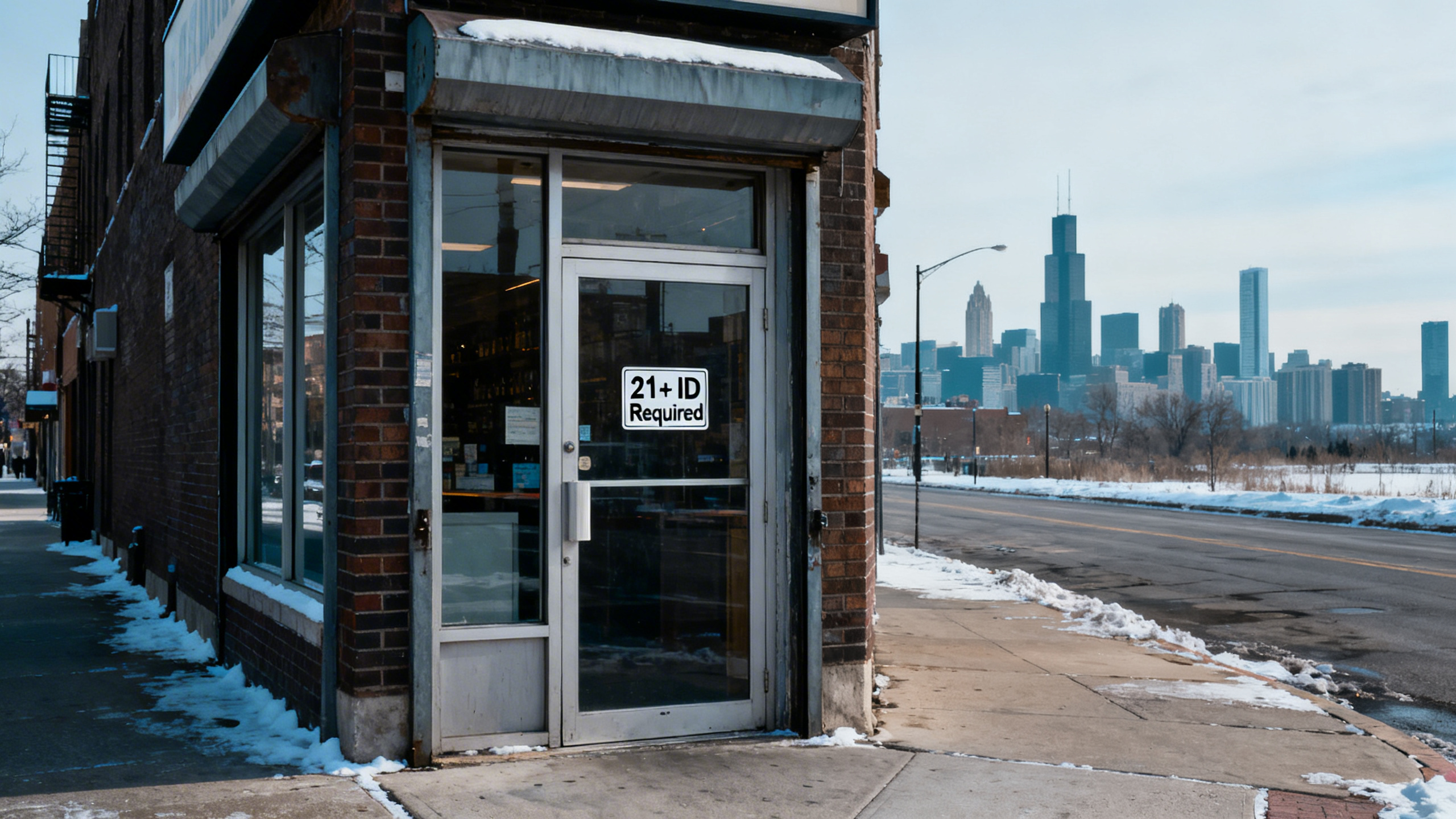
If you operate a convenience store, smoke/vape shop, bar, restaurant, wellness retailer, or delivery business inside city limits, Chicago’s push to create a new municipal compliance layer for cannabinoid hemp products and kratom deserves immediate attention.
In mid‑2025, Chicago City Council introduced Ordinance O2025‑0018771, a proposal to amend Municipal Code Title 4 by adding a new chapter (described in the Council docket as Chapter 4‑65) to regulate, enforce, and potentially tax cannabinoid hemp and kratom at the city level. Council materials indicate the ordinance would define product categories, establish retailer duties, set age‑21 sales rules, require retailer permitting, and formalize packaging/labeling and enforcement tools—including recordkeeping and seizure authority.
At the same time, Chicago has separately explored a hemp beverage tax concept, reflecting a growing local trend: treating intoxicating hemp drinks more like regulated adult products, even when state frameworks are still evolving.
This article summarizes what businesses should watch, what compliance controls to build now, and how Chicago’s approach could interact (and sometimes conflict) with Illinois law.
Informational only—not legal advice.
Chicago’s legislative docket describes O2025‑0018771 as an amendment to Municipal Code Title 4 to add a new chapter regulating Cannabinoid Hemp and Kratom, including regulation, enforcement, and taxation.
Key docket sources to monitor:
Illinois has statewide rules for hemp cultivation (via the Illinois Department of Agriculture) and a separate statewide structure for regulated adult-use products. But intoxicating hemp-derived cannabinoids (often sold in convenience and smoke-shop channels) have historically sat in a gray zone nationally.
Chicago’s ordinance concept is significant because it attempts to:
For multi-location operators, this is the kind of ordinance that can force a Chicago-specific SKU strategy and SOPs that differ from nearby suburbs.
The Councilmatic summary for O2025‑0018771 describes an ordinance that would:
Source: https://chicago.councilmatic.org/legislation/o2025-0018771/
Because ordinance language can change through committee substitution, amendments, and compromise drafts, businesses should treat early summaries as directionally useful—but not final. Still, the themes are clear: permits + age gating + labeling + enforcement + taxation.
One of the most consistent features across municipal proposals nationwide is moving intoxicating hemp products into an age‑21 retail posture.
Even when state law is not explicit (or enforcement is uneven), local governments tend to prefer bright-line rules, particularly where products look like candy or are marketed with youth appeal.
If your business sells cannabinoid hemp products (including beverages) or kratom in Chicago, consider implementing “21+ retail discipline” now, even before a final ordinance effective date:
Chicago’s Business Affairs and Consumer Protection (BACP) already uses compliance checks and enforcement tools in age-restricted product categories (e.g., tobacco). This provides a clue for how a hemp/kratom permitting regime could be enforced in practice.
BACP reference (tobacco retailer operating requirements and investigations): https://www.chicago.gov/city/en/depts/bacp/supp_info/tobaccoretailers.html
Chicago ordinances that create a new regulated category typically rely on a permit or license mechanism to:
The O2025‑0018771 docket summary explicitly flags retailer duties and recordkeeping, which aligns with a permit-like approach.
Even without final application forms, retailers can prepare by building a compliance folder (digital + on-site) that includes:
If the ordinance requires books and records, assume a retention period and auditability expectation. In many local tax and licensing programs, “books and records” means you must be able to recreate: what you bought, when you bought it, how much you sold, and what inventory remains.
Chicago legislative debate around intoxicating hemp has repeatedly focused on products that look like familiar candy brands or use bright cartoon-style packaging.
Even when the exact standards vary, cities often converge around these principles:
A widely circulated compromise substitute draft (from local news coverage) emphasized public warnings and seizure authority for violations, including the warning: “It is a violation of the law for any cannabinoid hemp product to be sold to any person under the age of 21.”
Reference PDF (media-hosted draft): https://news.wttw.com/sites/default/files/article/file-attachments/011526%20Hemp%20Compromise%20Substitute.pdf
If you distribute into Chicago retailers, consider a Chicago-ready packaging and labeling checklist:
This is also where e-commerce brands can get caught: if you deliver into Chicago, the city may treat you like an in-city retailer for compliance purposes.
Local ordinances in this category often grant authority to:
The WTTW-hosted substitute draft referenced authority for the Chicago Police Department and BACP to issue notices and to seize and store products offered for sale in violation.
Reference PDF: https://news.wttw.com/sites/default/files/article/file-attachments/011526%20Hemp%20Compromise%20Substitute.pdf
Even if you believe a product is federally lawful hemp, a city ordinance can still create local consequences:
Your research note highlights a key business risk: if Chicago imposes a local excise or transaction tax, retailers may face not just product rules but also tax registration, returns, and inventory reporting.
Chicago has separately introduced a Hemp Beverage Tax proposal in 2025. One docket entry describes an ordinance adding a new chapter to Municipal Code Title 3 establishing a Hemp Beverage Tax on beverages sold at retail that contain up to a defined milligram amount of THC, with retailer reporting obligations, an inventory component, and a penalty structure for non-compliance.
Reference: https://chicago.councilmatic.org/legislation/o2025-0015569/
Municipalities sometimes treat beverages differently because:
Recent reporting has also highlighted a policy path where Chicago restricts many intoxicating hemp categories while carving out beverages under tighter rules (including age 21 and licensing conditions).
For context (local reporting):
O2025‑0018771 is notable because it pairs kratom with cannabinoid hemp in one municipal framework.
At the state level, Illinois has considered kratom consumer protection-style bills that focus on age restrictions and product standards. For example, Illinois General Assembly bill text (example: HB2868, 103rd GA) includes an under-18 restriction and processor obligations.
Reference (ILGA): https://www.ilga.gov/ftp/legislation/103/HB/10300HB2868.htm
Chicago’s approach could go beyond state proposals by:
If your store sells kratom today with minimal structure, assume you may soon need:
These retailers are most exposed because:
Immediate action items:
These shops may have the highest SKU complexity (vapes, edibles-like items, concentrates, novelty packaging) and often rely heavily on these categories.
Action items:
If Chicago channels hemp beverages into liquor-licensed venues (as some policy concepts suggest), hospitality operators may gain a new revenue stream—but with adult-product controls.
Action items:
Cities increasingly treat delivery as “retail activity in the city” when the transaction is completed or fulfilled inside city limits.
Action items:
Based on the docket, O2025‑0018771 was introduced and referred in July 2025 and appears listed as “stale” on Councilmatic—often indicating no recent movement or that it has been superseded by other legislative activity.
Reference: https://chicago.councilmatic.org/legislation/o2025-0018771/
Still, businesses should not assume the issue is over. Chicago’s broader regulatory debate continued into late 2025 and early 2026, including votes and substitute drafts in related measures, and the city has signaled ongoing interest in enforcement and youth-protection frameworks.
Practical tracking steps:
If you want to be ready for a Chicago cannabinoid hemp ordinance 2025 compliance regime—especially one like O2025‑0018771—prioritize these moves:
Chicago’s local rules can change quickly through substitute ordinances, committee action, and enforcement guidance. To keep your policies, labeling review, and retail SOPs aligned as the city’s approach evolves, use https://www.cannabisregulations.ai/ for practical compliance support, regulatory monitoring, and licensing-readiness workflows tailored to Illinois and Chicago.