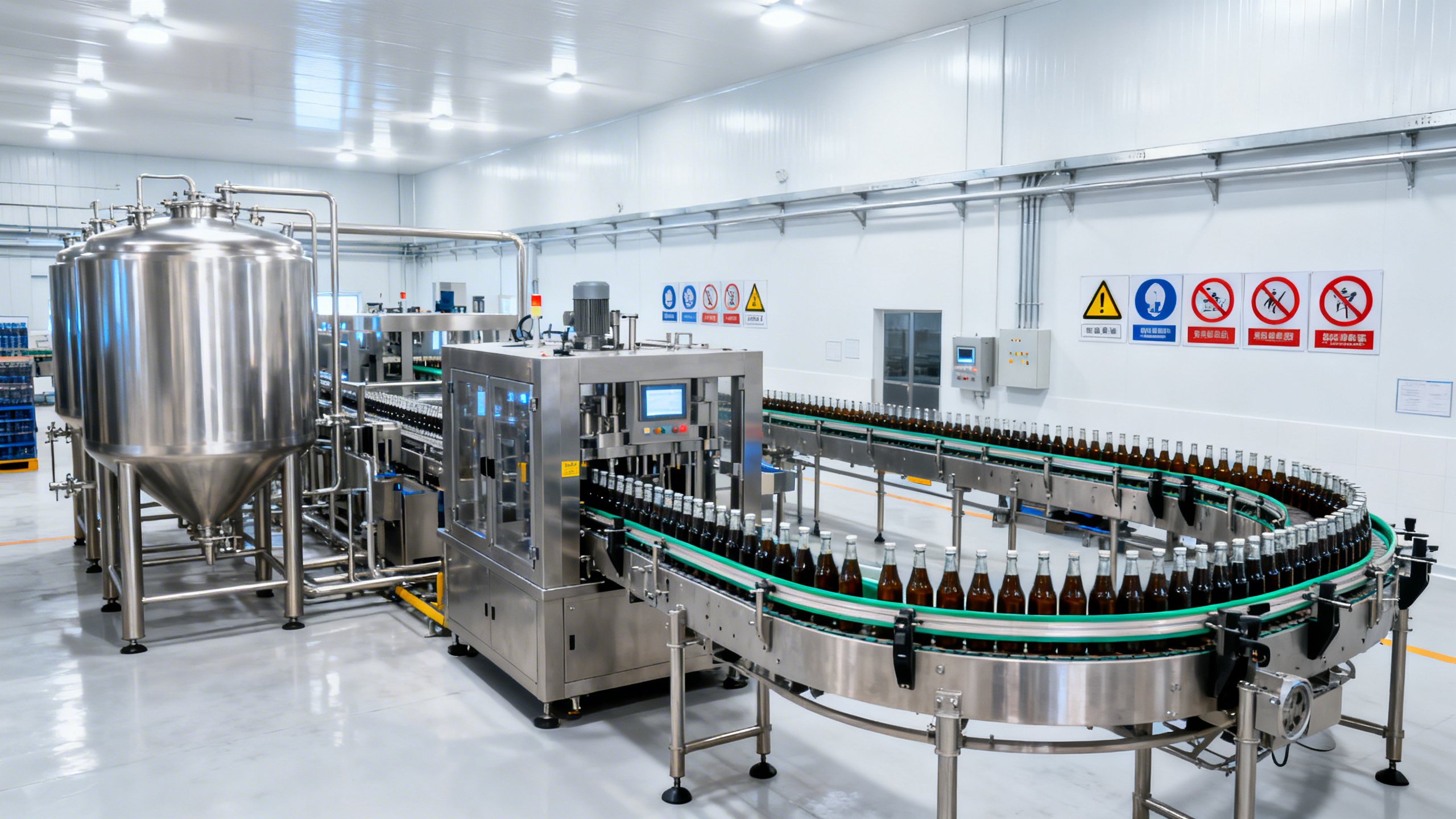
Bulk carbon dioxide (CO2) is a workhorse utility in modern beverage operations—used for carbonation, blanketing, purging, and packaging. In facilities producing hemp-derived intoxicating beverages and other regulated products, CO2 systems are often scaled up quickly to meet demand, with co-packing and rapid line changeovers adding complexity.
The risk profile is not unique to this segment. What’s changing in 2025–2026 is the intensity of oversight and the expectation that beverage plants manage CO2 hazards with the same maturity seen in larger breweries: fixed leak detection, engineered ventilation, disciplined written SOPs, controlled hot work, and drilled emergency response.
This article is informational only and is not legal advice. Always confirm requirements with your Authority Having Jurisdiction (AHJ) (local fire marshal/building department) and your safety professionals.
Why CO2 is a “silent” hazard in beverage plants
CO2 is colorless and generally odorless. It is also heavier than air, so it can pool near floors, in pits, trenches, sumps, low points, and confined or poorly ventilated rooms. A leak from a bulk tank, cylinder manifold, carbonation skid, or distribution piping can displace oxygen.
Key operational realities that drive risk:
- Bulk storage (cryogenic liquid tanks outside; cylinders inside) and distribution piping run through production and utility spaces.
- High-turnover environments (seasonal staff, co-pack crews) increase the odds of training gaps.
- Night shifts and low staffing can delay recognition and response.
- Confined spaces (tank farms, trenches, wastewater rooms, cold rooms, dock pits) are common in beverage facilities.
The compliance “stack” for 2025–2026: OSHA + NFPA 55 + local fire code
CO2 safety obligations typically come from three layers that must be harmonized:
OSHA: worker protection and exposure limits
OSHA’s expectations usually land through a combination of:
- Exposure limits for CO2 and industrial hygiene controls
- Permit-required confined space requirements (if applicable)
- Hazard communication (SDS access, labeling, training)
- Respiratory protection if respirators are used
- General Duty Clause when a recognized hazard is present and feasible controls exist
OSHA’s reference values commonly used in facility programs include:
- PEL (TWA): 5,000 ppm (0.5%) over an 8-hour work shift
- STEL: 30,000 ppm (3%) for a short duration (often 15 minutes in occupational guidance)
OSHA provides an older but still-cited bulletin on the asphyxiation hazard during filling of stationary low-pressure CO2 systems and recommends warnings, ventilation, and safe fill practices: https://www.osha.gov/publications/hib19960605
For confined space programs, the controlling federal standard is 29 CFR 1910.146: https://www.osha.gov/laws-regs/regulations/standardnumber/1910/1910.146
NFPA 55: compressed gases and cryogenic fluids (system design + operational safeguards)
NFPA 55 is the key standard referenced by many fire codes for compressed gas and cryogenic fluid storage/use. For beverage-style CO2 systems, NFPA 55 concepts typically show up in:
- system design (bulk source, emergency isolation, PRDs)
- ventilation vs. detection requirements where CO2 can accumulate
- signage, access control, and protection from damage
Because NFPA text is copyrighted, many jurisdictions implement it through adopted fire codes or local guidance documents. Where you can, confirm what edition (and amendments) your jurisdiction is enforcing.
Local fire code (often IFC-based): permits + installation + detection/ventilation
In many U.S. jurisdictions, the International Fire Code (IFC) (with local amendments) governs CO2 systems used in beverage dispensing and bulk storage/use. The 2024 IFC includes CO2-specific provisions in Chapter 53, including operational permit triggers and requirements for protection, ventilation, and/or gas detection.
ICC’s public code library page for the 2024 IFC CO2 section is here (check your AHJ’s adopted edition): https://codes.iccsafe.org/content/IFC2024V2.0/chapter-53-compressed-gases/IFC2024V2.0-Pt05-Ch53-Sec5307.4
Many fire marshal offices publish practical checklists mirroring IFC requirements (alarm locations, sensor height, etc.). Example (Texas): https://ci.lubbock.tx.us/storage/images/jB256aGYm9qc6cbzltqV793ZSDnBFxV5VaKPFxYY.pdf
And example requirements guidance (Colorado municipality): https://www.thorntonco.gov/media/file/co2-system-requirements
2025–2026 enforcement trends: what inspectors are focusing on
Across beverage operations (including co-pack sites), the recurring enforcement themes mirror craft beverage safety lessons:
1) Gas detection that is actually fit-for-purpose
Inspectors increasingly differentiate between “we have a monitor” and “we have a code-aligned detection and alarm system.” Common gaps:
- sensors placed too high (CO2 settles low)
- no horn/strobe outside the room
- alarms that are muted, bypassed, or not supervised
- no calibration records
- no written response actions for alarm levels
2) Ventilation that produces measurable outcomes
If your program relies on ventilation instead of detection (where allowed), expect scrutiny on:
- ventilation rates and negative pressure assumptions
- interlocks and control logic
- make-up air (to avoid backdrafting or pressure reversal)
- verification that ventilation remains operational during occupied periods
3) Hot work and contractor controls near tanks and piping
Even though CO2 is non-flammable, hot work (welding, grinding, torch cutting) near cryogenic tanks, cylinder manifolds, and piping is a major risk because it can:
- damage insulation, gaskets, or flexible connectors
- compromise PRDs/PRVs or cause heat input into equipment
- create distractions and “line-of-fire” incidents during deliveries
Most AHJs and insurers expect a formal hot-work permit process and clear exclusion zones.
4) Delivery vendor oversight and fill-day controls
The most hazardous moments often occur during bulk deliveries or cylinder swaps:
- transfer hoses connected/disconnected
- inadvertent release from fittings
- vehicle impact at tank pads
- staff inside near low points without awareness
Facilities are increasingly expected to have “fill-day” SOPs, barricades, and a trained escort.
Designing a CO2 safety program that holds up under OSHA and fire code review
A strong CO2 program links engineering controls (hardware) to administrative controls (procedures) and competence (training/drills).
CO2 leak detection: sensor placement, calibration, alarm setpoints, and BMS integration
This is where many beverage plants either excel—or fail audits.
Sensor placement: think “low and where it can pool”
Local fire guidance frequently specifies sensor placement near the floor (often within about 12 inches) in areas where CO2 is expected to accumulate, and additional sensors near sources of release.
Practical placement principles:
- Put sensors in CO2 storage rooms (cylinder rooms, bulk distribution rooms).
- Add sensors in enclosed carbonation skid areas and filler/capper enclosures if CO2 is present.
- Evaluate low points (pits, sumps, trench drains, dock wells, below-grade outdoor locations).
- Use remote horn/strobe at the entrance to hazard rooms so a worker is warned before entry.
Always confirm exact locations with the AHJ and your detection system manufacturer.
Alarm setpoints: align to occupational thresholds and AHJ expectations
In practice, many systems use staged alarms tied to widely recognized occupational reference points:
- Low alarm near the OSHA PEL/TWA (commonly 5,000 ppm)
- High alarm near short-term exposure limits (commonly 30,000 ppm)
Some jurisdictions or site standards add a third level (e.g., higher concentration for immediate evacuation), but the right scheme depends on your code path, system design, and risk assessment.
Important: an alarm strategy must be paired with written required actions (who evacuates, who investigates, who calls 911, who shuts off supply).
Calibration and bump testing: make it auditable
Detection is only defensible if it’s maintained.
Minimum elements to include in your written program:
- commissioning test after installation (documented)
- calibration interval per manufacturer and risk (often 6–12 months, sometimes more frequent)
- bump test schedule for critical areas (often monthly or quarterly depending on policy)
- calibration gas traceability, expiration dates, and storage controls
- work orders showing sensor replacement/repair
Integration with building systems: make alarms actionable
If you have a building management system (BMS) or SCADA:
- tie high alarm to ventilation boost and (where permitted) emergency isolation
- send alarms to a constantly attended location when required by code or when staffing is limited
- prevent “alarm fatigue” by ensuring signals are supervised and events are logged
NFPA 55 public inputs have emphasized emergency isolation methods for pressurized piping and the importance of reliable monitoring where personnel-based response is used, reflecting where standards discussions are headed.
Ventilation: when it’s required, when it’s not enough, and how to document it
Many fire code approaches allow either mechanical ventilation or a gas detection/alarm system in certain CO2 applications—while some conditions require both.
From a practical compliance standpoint:
- Treat ventilation as a primary control for routine low-level leakage and operational releases.
- Treat detection/alarm as a secondary control that validates ventilation and drives emergency response.
Documentation that helps in inspections:
- design basis (air changes, negative pressure target)
- fan specifications and controls
- proof of performance testing
- preventative maintenance schedule
- interlock logic narrative (what happens on alarm, power loss, fire alarm)
Written SOPs: what to include (and what auditors ask for)
Your written SOP suite should cover the lifecycle: normal operations, maintenance, and emergency.
Core SOPs for beverage CO2 systems
At minimum, consider:
- Bulk tank receiving/fill SOP (pre-fill inspection, isolation, communication, post-fill leak check)
- Cylinder receiving and change-out SOP
- Startup/shutdown SOP for carbonation skids and packaging lines
- Leak response SOP (roles, evacuation, shutoff, ventilation, re-entry criteria)
- Maintenance SOP (LOTO, depressurization, PRD awareness)
- Calibration/verification SOP for detection systems
Confined space entry (if applicable)
If any area meets the definition of a permit-required confined space under OSHA 29 CFR 1910.146 (limited entry/exit + not designed for occupancy + potential hazardous atmosphere), you need a written program covering:
- evaluation and classification of spaces
- permits, entrants/attendants/supervisors
- atmospheric testing and continuous monitoring
- rescue planning and equipment
- contractor coordination
Even if you determine “no permit spaces,” document the evaluation—inspectors often ask for it after an incident.
Training and competency: building a workforce that can respond in minutes
Training programs should be role-based and refreshed.
Topics to cover
- CO2 hazard recognition: symptoms, heavier-than-air behavior, where it can accumulate
- What alarms mean: alarm levels and required actions
- Evacuation routes and muster points
- Shutoff locations (bulk tank isolation, local valves, emergency stops)
- Delivery-day controls
- Contractor rules for work near CO2 systems
Emergency response drills
At least annually (often more often for larger sites), run drills that include:
- alarm activation scenario
- evacuation timing
- accountability (headcount)
- who contacts emergency services and what information is provided
- how re-entry is authorized (and by whom)
Keep drill records. They matter in both OSHA inquiries and insurer reviews.
Hot-work permitting near tanks, piping, and skids
Even with non-flammable gases, a hot-work program is a standard expectation in industrial facilities.
Your hot-work process should:
- require a written permit and pre-job hazard review
- establish exclusion zones around tanks/piping
- require verification that ventilation and gas detection are operational
- coordinate with the landlord/host facility and the AHJ when needed
- document fire watch requirements if applicable to your site policy
Where co-pack operations happen, hot-work rules should be part of contractor onboarding.
Landlord vs. tenant responsibilities in co-packing and beverage leases
CO2 compliance often fails at the boundary between “building” and “process.” In co-packing leases, responsibility can be split and ambiguous.
Typical landlord responsibilities (varies by lease)
- base building HVAC and electrical service
- roof penetrations and structural supports
- core fire/life safety systems (fire alarm, sprinklers)
- permitting for base building modifications
Typical tenant responsibilities
- process equipment (bulk tank, vaporizers, piping, carbonation skids)
- code compliance for hazardous materials/CO2 permits
- gas detection system for process rooms
- maintenance, calibration, and training programs
Where disputes commonly arise
- Who pays for mechanical ventilation upgrades needed to satisfy fire code for a cylinder room?
- Who owns alarm signaling integration to the building fire alarm panel?
- Who is responsible for outdoor tank pad barriers, bollards, and vehicle impact protection?
- Who schedules and funds recurring inspection/testing of PRDs, regulators, and detection?
Practical approach: before installation, create a one-page CO2 Responsibility Matrix (landlord/tenant/vendor) and attach it to the lease or a safety addendum.
Equipment and installation controls: storage, piping, PRVs/PRDs, and protection from damage
To pass both operational reality and inspection:
Storage and physical protection
- secure cylinders against tipping; protect from impact
- control access to storage rooms (locks/signage)
- keep egress paths clear; avoid creating “trap” corridors
- protect tanks and piping from forklifts and delivery trucks with barriers/bollards
Piping and distribution
- label piping and flow direction where appropriate
- protect exposed lines and flexible connectors from snagging and crushing
- avoid routing through unventilated pits/voids unless engineered controls exist
- document materials, maximum pressures, and change management for modifications
Pressure relief devices (PRDs/PRVs)
- verify PRDs are installed where required and vented to safe locations
- keep manufacturer documentation and inspection intervals
- ensure discharge paths do not vent into occupied or enclosed low areas
If you have cryogenic equipment, also evaluate trapped-liquid scenarios and relief protection for any section that could be isolated.
Delivery vendor controls: don’t outsource your risk
Your CO2 supplier and delivery contractor can help, but you remain accountable for site safety.
Controls to implement:
- require vendor to provide delivery SOP and driver training evidence
- define communication protocol (who escorts, where cones/barricades go)
- require pre-fill leak check and post-fill verification
- ensure emergency contact numbers are available at the tank and inside the plant
Quick audit checklist (field-ready)
Use this as a fast internal audit tool before an AHJ inspection, insurer visit, or OSHA walkthrough.
Storage and rooms
- CO2 cylinders/tanks are secured and protected from physical damage
- hazard rooms have restricted access and clear warning signage
- no storage blocking exits, electrical panels, or ventilation inlets/outlets
Detection and alarms
- fixed sensors installed in all areas where CO2 can accumulate (including low points)
- sensors placed at appropriate height (often near the floor) per AHJ guidance
- audible/visual alarm inside the room and pre-entry alarm outside the doorway
- alarm setpoints documented and aligned to your safety plan
- calibration/bump test records current; failed sensors are tracked to closure
- alarms are logged and (where required) transmitted to an attended location/BMS
Ventilation
- mechanical ventilation operational and verified
- negative pressure (if required by local guidance) is documented/maintained
- interlocks between alarms and ventilation are tested and recorded
Piping, PRDs/PRVs, and equipment integrity
- piping protected from forklifts and routine operations
- PRDs/PRVs in place; discharge routes verified safe
- regulators, hoses, and flexible connectors inspected on schedule
- changes to the CO2 system follow a documented management of change process
Procedures, training, and permits
- written SOPs exist for fill day, cylinder swaps, maintenance, and leak response
- confined space evaluation complete; permits and rescue plans where applicable
- hot-work permits required and used near CO2 equipment
- emergency drills completed; after-action items closed
Vendor and contractor controls
- delivery vendor requirements documented; fill-day coordination defined
- contractors trained on alarms, evacuation routes, and hot-work rules
Key takeaways for 2025–2026
- CO2 safety is increasingly treated as a system: detection + ventilation + procedures + training + drills.
- Fire code compliance is local. Always confirm your AHJ’s adopted IFC/NFPA edition and amendments.
- A “monitor on the wall” is not enough—auditable calibration, alarm placement, and response procedures are what stand up in inspections.
- In co-packing and leased facilities, write down landlord vs. tenant responsibilities before installing bulk CO2.
Stay inspection-ready with CannabisRegulations.ai
If you’re scaling a beverage line or onboarding a co-packer, CO2 hazards can become a fast-moving compliance risk—especially when fire permits, OSHA programs, and landlord obligations overlap.
Use https://cannabisregulations.ai/ to track compliance requirements, organize your SOP and training documentation, and build an inspection-ready safety program across facilities and jurisdictions.