


Sign Up
Ready to replace complexity with clarity?
Answer your real world compliance questions (limited time) and save thousands in legal fees and avoided fines.
Automate Compliance Today

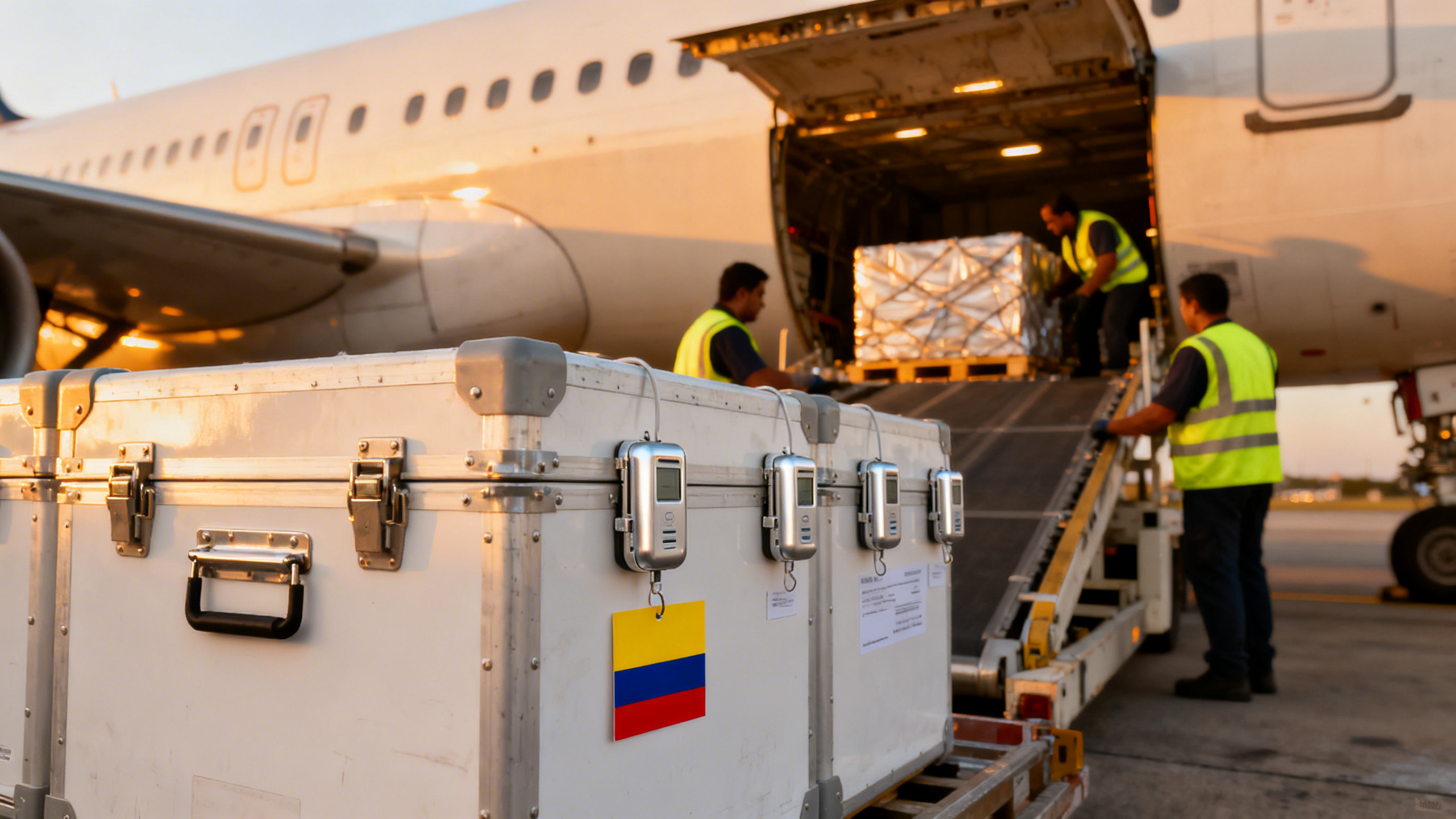
Colombia’s regulated medical market entered a more “pharma-shaped” phase in late 2025 and into 2026. Two developments matter for export-minded operators tracking Colombia cannabis export regulations 2025:
1) Colombia updated/clarified foreign trade workflows for moving seeds, plant material, derivatives, and finished products across borders—especially through the VUCE (Ventanilla Única de Comercio Exterior) “visto bueno” process and competent-authority sign-offs.
2) Decree 1138 of 2025 (Ministry of Health) modified the national framework to allow medical flower to be treated as a legitimate finished medical product for access through pharmacies/drugstores under prescription, bringing the domestic channel closer to the controls seen in EU medical markets.
For businesses, the takeaway is straightforward: Colombia is building clearer rails for both domestic dispensing and pharmaceutical-grade exporting. The operators who win will be the ones who map Colombian license scopes to destination-market requirements (Germany/Portugal/Netherlands), and who can prove GACP-to-EU‑GMP traceability batch-by-batch.
This article is informational only and not legal advice.
Colombia’s regulatory structure already separated (a) agricultural control and quotas, (b) manufacturing oversight, and (c) foreign trade approvals. What 2025–early 2026 brought was sharper operational definition—especially on the documents and approvals required per product type and which authority issues which “green light.”
From a compliance perspective, the direction of travel is consistent: more explicit documentation standards, more competent-authority workflow discipline, and fewer gray zones between “raw material,” “API,” and “finished dosage form.” That is exactly what EU importers and EU regulators expect.
Colombia’s medical framework traces back to Ley 1787 de 2016 and implementing regulations consolidated in the health-sector single regulatory decree (Decreto 780), with major structuring rules reflected in Decreto 613 de 2017 and later updates.
Official reference: Ministry of Health PDF for Decreto 613 de 2017 (historical cornerstone for controlled activities) is available here: https://www.minsalud.gov.co/Normatividad_Nuevo/Decreto%20613%20de%202017.pdf
In October 2025, Colombia issued Decreto 1138 del 27 de octubre de 2025, which partially modifies the cannabis title within Decreto 780. The decree is widely discussed as opening access to medical flower through formal healthcare distribution—particularly pharmacies/drugstores—under a prescription-based model.
Official decree text (PDF): https://www.minsalud.gov.co/Normatividad_Nuevo/DECRETO%201138%20DEL%2027%20DE%20OCTUBRE%20DE%202025.pdf
Government announcement (Presidency): https://www.presidencia.gov.co/prensa/Paginas/Gobierno-autoriza-uso-medico-de-la-flor-de-cannabis-oportunidades-para-desa-251031.aspx
Even if your core strategy is export, Decree 1138 matters because it reinforces that Colombia is treating flower and other plant-derived materials with tighter pharmaceutical-grade controls (quality, labeling discipline, controlled distribution). That tends to “lift” expectations across the entire industry.
Key operational implications for businesses include:
Public reporting on Decree 1138 indicates a policy intent to prioritize small/medium cultivators for domestic supply for a defined initial period. If you are a larger exporter, treat this as a planning variable: domestic channel participation may require structuring supply partnerships and demonstrating inclusive sourcing.
For cross-border movement, Colombia relies heavily on the VUCE as the electronic “single window” for permits/approvals, paired with sector regulators.
In practical terms, businesses should build an internal matrix that answers:
MinJusticia (via its specialized cannabis office) has published practical guidance describing which entities issue vistos buenos for import/export of seeds, grain, plant components, and related items, and how applicants should approach the workflow.
Official MinJusticia guidance (PDF): https://www.minjusticia.gov.co/programas-co/Cannabis-con-fines-medicinales-cientificos-industriales/Documents/Guia%20VB%20y%20PA%20MJD%20comercio%CC%81n%20exterior.pdf
VUCE user guidance (PDF) referencing the regulatory basis for requests through VUCE and the information required: https://www.vuce.gov.co/vuce/media/docs/2025/Docs/Guia-Diligenciamiento-Solicitud-Vistos-Bueno-MinJusticia-MICC25_1.pdf
Also relevant for agriculture-side controls and sanitary measures, ICA maintains an import/export page for medical program materials: https://www.ica.gov.co/areas/proteccion-fronteriza/cannabis-medicinal-importacion-y-exportacion
Export compliance risk in Colombia often shows up as “death by paperwork mismatch,” not bad intent:
Colombia’s tightened workflows push companies to standardize their “regulatory story” for each SKU/batch: what it is, who authorized it, and under what quality system it was produced.
Exporting to the EU (directly or via an EU-based processor/importer) is less about “having a license” and more about proving a supply chain that can withstand inspection and dossier review.
If you want repeatable EU shipments, structure your roadmap around these stages:
1) GACP foundation (agronomy, pest control, harvest/handling discipline)2) GMP boundary definition (where GMP starts—often drying/processing steps)3) EU‑GMP manufacturing system (validated processes, controlled premises, QC)4) EU importer and QP release (Annex 16/Annex 21 expectations)
EU partners will ask for cultivation evidence that looks “audit-ready,” including:
This is where many export projects quietly fail: the cultivation records exist, but they are not structured to support a pharmaceutical release decision later.
In EU thinking, “manufacturing” can begin earlier than companies expect. Germany, in particular, has shown increasing scrutiny around whether key steps (like drying) fall under GMP expectations for patient supply.
Your compliance planning should treat “GMP boundary” as a written, approved decision—aligned with your EU importer’s interpretation—so that you don’t need to rework entire campaigns because a step is later deemed non-compliant.
EU‑GMP readiness is won on paper and process control:
If your market strategy includes flower for EU pharmacies, plan early for alignment with pharmacopoeial expectations (monograph/spec mindset) and the reality of batch-to-batch variability.
Even with excellent Colombian operations, EU supply typically requires:
A useful general reference on EU import GMP obligations is the overview of EU GMP Annex 21 and related responsibilities (industry summary): https://www.qbdgroup.com/en/blog/importing-medicinal-products-into-eu-brief-guide-to-eu-gmp-compliance/
Your commercial timeline should assume that QP review adds real calendar time, especially if your data package is inconsistent.
Colombian exporters often ask, “Which EU country is easiest?” The better question is: “Which market’s classification and supply chain model fits our product and our quality system?”
Germany is Europe’s volume driver, but it is also one of the most compliance-sensitive markets.
Operational considerations:
A high-level legal/regulatory overview of Germany’s medical regime (including licensing concepts and risks for non-compliance) is summarized here: https://practiceguides.chambers.com/practice-guides/medical-cannabis-cannabinoid-regulation-2025/germany
Portugal has been a major EU production and re-export hub. For non-EU producers, it can function as an entry point when paired with EU‑GMP processing and an EU importer/QP.
But operators should not assume “Portugal is a shortcut.” EU regulators and law enforcement have shown that they will scrutinize documentation integrity and chain-of-custody.
The Netherlands is not just a commercial market—it’s a compliance culture. Dutch pathways tend to reward suppliers who can produce a clean, consistent dossier and provide rapid, professional responses during audits.
Your export readiness will be judged heavily on the quality of your analytical and stability strategy. Plan for enhanced scrutiny in these areas:
EU buyers typically want to see:
Your COAs should be consistent, legible, and tied to version-controlled methods.
If you label 12 months shelf life, you need to defend it. EU partners will ask:
While serialization requirements depend on product classification and route to market, traceability expectations are universal:
Even where “serialization” is not legally required, implementing a strong traceability model reduces commercial friction with EU importers.
Export is not complete until the product arrives in-spec. For sensitive products, temperature excursions can destroy value and trigger rejection.
Practical controls include:
If your EU importer/QP will require sample retains and import testing, build that into your throughput model from the start.
With Decree 1138 enabling a clearer domestic path for medical flower through pharmacies, operators should prepare for “pharmacy-grade” expectations.
Key pitfalls:
If your strategy is EU‑GMP-aligned export (and/or you want optionality between EU and the emerging domestic pharmacy channel), these are high-impact steps you can take now.
For each product/batch type, document:
Treat this like a real audit project:
Before your first commercial shipment:
Your template should include:
As Colombia professionalizes both foreign trade and domestic pharmacy channels, expect compliance focus in these areas:
Operators should assume that “paper compliance” will increasingly be tested against physical and digital trace evidence.
If you’re building an export program from Colombia—or aligning domestic pharmacy flower operations with pharmaceutical-grade controls—use https://cannabisregulations.ai/ to track evolving rules, map licensing to trade workflows, and operationalize cannabis compliance with practical checklists and jurisdiction-specific guidance.