


Sign Up
Ready to replace complexity with clarity?
Answer your real world compliance questions (limited time) and save thousands in legal fees and avoided fines.
Automate Compliance Today

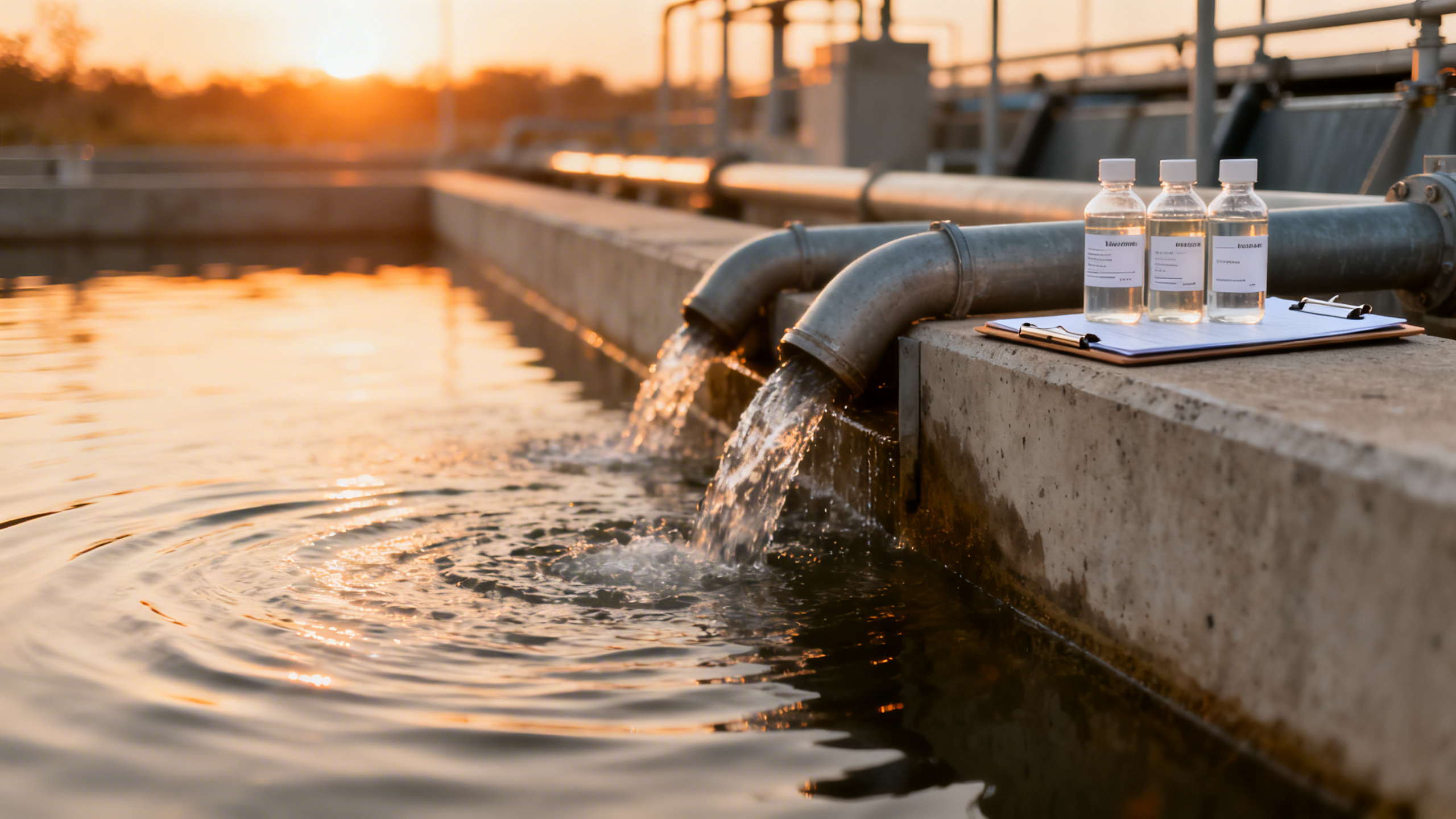
In September 2025, the U.S. Environmental Protection Agency (EPA) released an updated version of its Aquatic Life Benchmarks for pesticides—values used in ecological risk screening and increasingly referenced by states, municipalities, and consultants when discussing what is “protective” of freshwater life.
For regulated businesses, these benchmarks are not permit limits by themselves. But in 2026 they matter more than many operators realize—especially for facilities that:
This guide explains what EPA’s September 2025 benchmark update is, why it can indirectly affect cannabis and hemp operations, and how to reduce cannabis compliance exposure tied to wastewater permits, pretreatment inspections, and failed product compliance testing.
Focus keyword: EPA 2025 aquatic life benchmarks cannabis wastewater
Important: This article is informational only and not legal advice. Always confirm requirements with your local sewer authority, state environmental agency, and qualified counsel.
EPA’s Aquatic Life Benchmarks for Pesticides are screening values for freshwater species based on toxicity endpoints evaluated by EPA’s Office of Pesticide Programs. In plain terms: they help risk assessors judge whether measured pesticide concentrations in water may pose acute or chronic risks to aquatic life.
On September 4, 2025, EPA announced it had released an updated aquatic life benchmarks table covering hundreds of chemicals (parent compounds and degradates), including newly registered pesticides and updates to existing benchmarks.
External link (EPA announcement): https://www.epa.gov/pesticides/epa-updates-aquatic-life-benchmarks-registered-conventional-and-antimicrobial-0
External link (EPA benchmark table landing page and documentation links): https://www.epa.gov/pesticide-science-and-assessing-pesticide-risks/aquatic-life-benchmarks-and-ecological-risk
External link (EPA summary of the September 2025 updates): https://www.epa.gov/pesticide-science-and-assessing-pesticide-risks/summary-september-2025-updates-aquatic-life
Even when not directly incorporated into a permit, benchmarks can influence:
If an inspector or consultant sees a chemical class in your Safety Data Sheets (SDS) that is known to be acutely toxic to aquatic organisms, the next step is often: “Show us your controls, your disposal practices, and your monitoring.”
Cannabis and hemp businesses often focus on state licensing and product compliance testing. But wastewater risk sits at the intersection of:
Under EPA pretreatment regulations, POTWs must prevent pass through and interference.
External link (EPA pretreatment prohibitions and definitions): https://www.epa.gov/npdes/pretreatment-standards-and-requirements-general-and-specific-prohibitions
External link (EPA local limits overview): https://www.epa.gov/npdes/pretreatment-standards-and-requirements-local-limits
External link (pretreatment applicability and “significant industrial user” concepts): https://www.epa.gov/npdes/pretreatment-standards-and-requirements-applicability
Key takeaway for operators: your local sewer authority does not need a specific pesticide numeric limit to take action. If your discharge contributes to toxicity in the plant effluent, disrupts biological treatment, creates flammability hazards, or causes sludge disposal problems, the authority may assert that you violated prohibitions—even if you “met the numbers” they happened to sample.
EPA has long required label language for some products that may be discharged to sewers.
External link (EPA PR Notice 95-1 effluent discharge labeling statements): https://www.epa.gov/pesticide-registration/prn-95-1-effluent-discharge-labeling-statements
That label language often requires notification to the POTW (and sometimes the state) before discharging effluent containing the product. If your operation uses a pesticide, antimicrobial, or sanitizer with effluent discharge labeling statements, your wastewater program should treat the label as a compliance document—because it is.
The trend toward beverages and water-dispersible formulations means more facilities use:
These inputs can:
Even if your finished product is compliant, wastewater is a different regulatory universe. A beverage plant may pass product microbial tests and still struggle with sewer authority scrutiny if it discharges high-COD cleaning rinses, emulsified oils, or surfactant-rich wash water.
Many sewer programs historically used MBAS-type methods (methylene blue active substances) as a proxy for anionic surfactants. But modern emulsifier packages may be nonionic or mixed chemistry and may not show up well under a single proxy.
A more defensible approach is to:
For cultivation, the compliance trap is often not wastewater first—it’s the certificate of analysis (COA) and residue failure risk. But the two can converge:
Even when a state cannabis program publishes an “allowed pesticide list,” operators must still follow the federal label directions for that registered product. “Allowed” at the state level does not mean you can change:
Pesticide container rinsate and spray equipment wash water should be handled according to label directions and local requirements. Many facilities can reduce risk by:
External link (EPA overview of pesticide containers, containment, storage, disposal): https://www.epa.gov/pesticide-worker-safety/containers-containment-storage-and-disposal-pesticides
If you discharge to a POTW, your baseline objective is to show you are controlling pollutants so they won’t cause pass through, interference, corrosion, blockage, flammability, or worker safety hazards.
Below is a practical, audit-ready approach that maps closely to what inspectors look for.
Store current SDS and technical data sheets for:
Why it matters: when a POTW asks, “What is in your discharge?” the fastest way to lose credibility is scrambling for documents—or providing SDS that don’t match what is on site.
Write a simple narrative and keep it updated:
Add photos. Inspectors love photos.
The right testing plan depends on your site and local limits, but consider:
If you are developing beverages with nanoemulsion-like systems, include a specific internal review of:
Cities are tightening pretreatment oversight, often via:
A proactive facility asks the POTW:
Then, use SDS Section 9/10/11/12 (where available) plus supplier confirmation to screen candidate cleaners before purchasing.
Even though most facilities have policies against pouring solvents down drains, regulators still worry about:
POTWs with approved pretreatment programs often require evaluation of slug discharge control risks for significant industrial users.
External link (EPA guidance manual on slug loading control): https://www.epa.gov/system/files/documents/2021-07/owm021.pdf
Practical steps that reduce risk quickly:
EPA pretreatment rules include reporting requirements if you discharge a substance to a POTW that, if otherwise disposed, would be considered a RCRA hazardous waste.
External link (EPA overview of hazardous waste discharge reporting under 40 CFR 403.12(p)): https://www.epa.gov/hwgenerators/clean-water-act-reporting-requirements-rcra-hazardous-waste-discharges
This does not mean a discharge is automatically “allowed.” It means there are reporting obligations that some industrial users overlook—particularly when they think of themselves as “food-like manufacturing” rather than chemical handling.
Municipalities typically do not rewrite local limits every time EPA updates a benchmark table. The mechanism is subtler:
Because EPA’s aquatic benchmarks are designed to be protective of freshwater life, they can be cited as “best available science” during:
Use this as an internal action list for the next 30–90 days.
In practice, scrutiny increases after:
When that happens, the facilities that fare best are the ones that can immediately produce:
If you’re updating SOPs, preparing for a pretreatment inspection, expanding beverage production, or changing emulsifier/cleaner suppliers, use CannabisRegulations.ai to stay ahead of shifting cannabis compliance expectations—especially where federal environmental frameworks indirectly drive state and local enforcement.
Internal link: https://www.cannabisregulations.ai/
For more regulatory monitoring, permit readiness checklists, and practical compliance workflows, visit https://www.cannabisregulations.ai/ and explore our tools designed for operators, compliance teams, and investors.