


Sign Up
Ready to replace complexity with clarity?
Answer your real world compliance questions (limited time) and save thousands in legal fees and avoided fines.
Automate Compliance Today

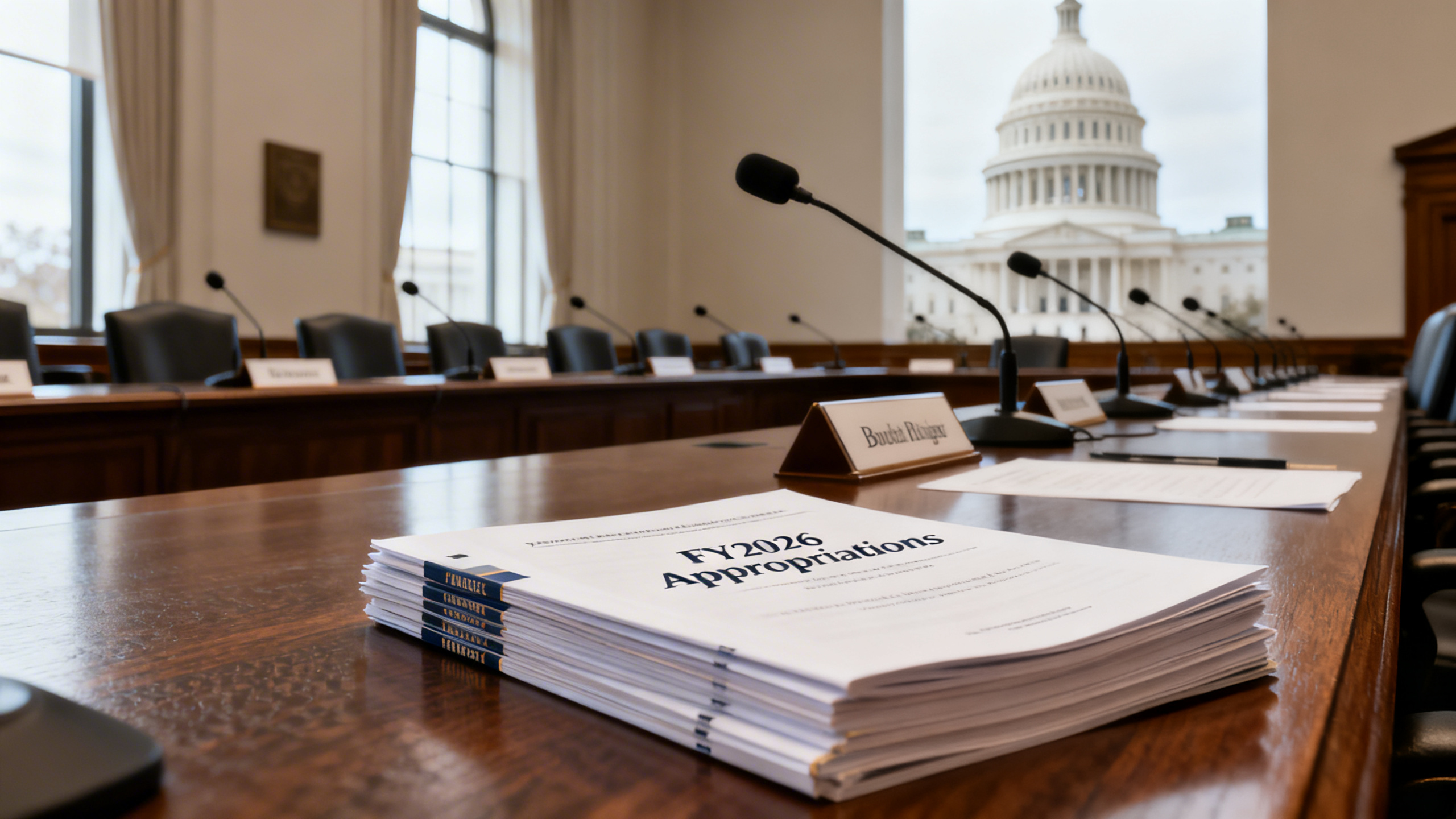
Appropriations bills are often treated as “must-pass” spending vehicles, but for regulated industries they can also function like fast-moving policy levers. That dynamic is playing out again in the FY2026 Agriculture–FDA (Ag‑FDA) appropriations cycle, where Capitol Hill has been debating how to address the rapidly expanding market for intoxicating hemp-derived finished products.
Your key takeaway: even a “narrow” appropriations directive to FDA/HHS could quickly become the first durable federal framework for finished-product potency limits, with ripple effects across cannabis compliance programs, retailer policies, contract manufacturing, and interstate logistics.
This post is informational only, not legal advice.
In summer 2025, drafts and committee activity around FY2026 Ag‑FDA appropriations floated sharply different ways to rein in intoxicating hemp products. Independent summaries (including Congressional Research Service analysis) captured the core issue: some proposals attempted to redefine “hemp” in a way that would exclude broad categories of hemp-derived cannabinoid products from the legal hemp definition, while other approaches aimed more at targeted limits and oversight rather than an outright ban.
A Congressional Research Service product discussing FY2026 agriculture appropriations described how House and Senate bills included provisions seeking to modify the statutory hemp definition and address perceived “loopholes,” including approaches tied to total THC (including THCA) and restrictions on certain finished products. See CRS discussion here: https://www.everycrsreport.com/reports/IN12565.html and the related CRS PDF: https://www.congress.gov/crs_external_products/IN/PDF/IN12565/IN12565.2.pdf.
Meanwhile, public reporting and stakeholder commentary suggested that the Senate side at various moments leaned toward stricter prohibition language, while negotiations later reflected efforts to narrow or adjust provisions. (As always with appropriations: text moves, manager’s packages evolve, and the “real bill” is often what survives conference.)
Your research note is directionally consistent with how appropriations conferences often resolve politically sensitive issues: broad bans can be difficult to sustain, but a more limited, “process-based” directive—such as telling FDA/HHS to set quantifiable thresholds—can be framed as a consumer-safety baseline rather than a market wipeout.
If conferees settle on language that instructs FDA/HHS (often “in consultation with USDA”) to develop product potency thresholds for finished goods, that would shift the center of gravity from definition fights under agricultural statutes toward FDA-style product regulation.
USDA’s Domestic Hemp Production Program, implemented under the 2018 Farm Bill, is focused on hemp cultivation oversight (state/tribal plans, licensing, sampling/testing of crops, disposal for noncompliant plants). USDA’s program materials and entry points are here: https://www.ams.usda.gov/rules-regulations/hemp.
This is important because many businesses mistakenly assume that if raw material qualifies as hemp under agricultural rules, finished products automatically have a clear federal pathway. They don’t.
FDA’s position for several years has been that many ingestible products containing certain cannabinoids are problematic under the Federal Food, Drug, and Cosmetic Act (FDCA)—particularly for foods and dietary supplements—absent an appropriate regulatory pathway.
FDA has backed that posture with enforcement, including warning letters asserting that certain delta‑8 THC-containing foods are adulterated because they contain an unsafe food additive. Example warning letter: https://www.fda.gov/inspections-compliance-enforcement-and-criminal-investigations/warning-letters/earthly-hemps-674916-07152024.
The practical point for operators: an appropriations directive could become the “missing instruction” FDA has said it needs from Congress—turning today’s enforcement-heavy ambiguity into tomorrow’s rule-defined potency caps.
If Congress directs FDA/HHS to set potency thresholds, expect a rulemaking process that borrows heavily from existing FDCA structures: food additive safety, dietary supplement requirements, labeling, and current good manufacturing practice (cGMP).
Below is a realistic blueprint for what could emerge.
A single national “X mg per package” cap across all product types is politically simple but scientifically and operationally messy. FDA and HHS are more likely to create product-category-specific limits.
For conventional foods, a credible federal approach would likely:
FDA has already taken the position in warning letters that certain cannabinoids in foods are “unsafe food additives” without premarket authorization. A potency-cap framework would let FDA say: below the cap (and subject to other conditions), the product can be marketed; above it, the product is adulterated.
For supplements, an FDA pathway would likely be more demanding than for conventional foods. Expect:
FDA’s centralized resource page for dietary supplement guidance and compliance topics (including adverse event reporting and labeling) is here: https://www.fda.gov/food/guidance-documents-regulatory-information-topic-food-and-dietary-supplements/dietary-supplements-guidance-documents-regulatory-information.
Inhalable finished products raise additional concerns (rapid onset, dosing variability, youth access). Even if Congress directs FDA/HHS to create “potency thresholds,” FDA may:
Topicals may face a different structure:
Any potency-cap regime lives or dies by definitions. Watch for FDA/HHS to define:
This definitional work may be informed by congressional directives, but FDA/HHS will also need administrable standards—definitions that labs can test and that companies can label.
A potency limit without standardized testing and labeling is unenforceable. If FDA/HHS is tasked with setting thresholds, it will likely also create cross-references (or direct requirements) for:
Even if FDA does not create a fully new lab accreditation system, it may expect adherence to recognized analytical standards and require documentation during inspections.
Expect requirements that resemble (and in some cases directly reference) existing FDA labeling frameworks:
Critically, FDA will likely treat misleading potency labels as both a safety issue and a misbranding issue.
Even before any federal potency caps, FDA and FTC have coordinated on enforcement in this category—especially where edible products are packaged like children’s snacks.
FTC press release (July 2024) on joint cease-and-desist letters related to delta‑8 THC product packaging that imitates children’s foods: https://www.ftc.gov/news-events/news/press-releases/2024/07/ftc-fda-send-second-set-cease-desist-letters-companies-selling-products-containing-delta-8-thc.
If federal potency thresholds become real, expect:
A common misconception is that “FDA rules override state rules.” Under the FDCA, preemption is complex and depends on product category and the specific statutory section.
If Congress directs FDA/HHS to set potency thresholds via appropriations language, it is more likely to result in:
So even if FDA creates a national potency cap, businesses should plan for continued patchwork reality:
If a directive is included in final FY2026 appropriations, timing depends on how Congress phrases deadlines.
A plausible federal sequence:
Even without a final rule, FDA could use the directive to justify interim enforcement priorities, especially against high-dose products or child-appealing packaging.
A federal floor can reshape:
Once FDA caps exist, expect large retailers and e-commerce platforms to:
Many existing products were designed around state-by-state rules or no rule at all. A federal potency standard could force:
These steps align with the “simulate scenarios” approach in your notes and are useful regardless of what Congress ultimately does.
For every finished product SKU, capture:
This becomes your internal “readiness dataset” for responding to any federal cap.
Run simulations for at least three outcomes:
For each scenario, identify:
Document:
Even without new rules, FDA has cited adverse event signals in enforcement communications. If federal potency caps are created, expect greater pressure for:
Given active FTC/FDA coordination, implement a pre-release review that flags:
In addition to headline bill text, watch for:
For ongoing federal primary sources, monitor:
Even if Congress does not pass a standalone bill creating a comprehensive national framework for hemp-derived intoxicating products, FY2026 appropriations could still deliver a meaningful shift: a directive that pulls FDA/HHS into setting quantifiable potency thresholds and building the compliance scaffolding around them.
Businesses that treat this as a “watch and wait” moment risk getting trapped by lead times—reformulation, packaging redesign, lab method validation, and retailer re-approval can take months.
If you want help stress-testing your product catalog against possible federal potency caps, building a documentation-ready compliance program, or tracking conference outcomes as they evolve, use https://www.cannabisregulations.ai/ to stay ahead of fast-changing licensing, regulations, and cannabis compliance requirements.