


Sign Up
Ready to replace complexity with clarity?
Answer your real world compliance questions (limited time) and save thousands in legal fees and avoided fines.
Automate Compliance Today

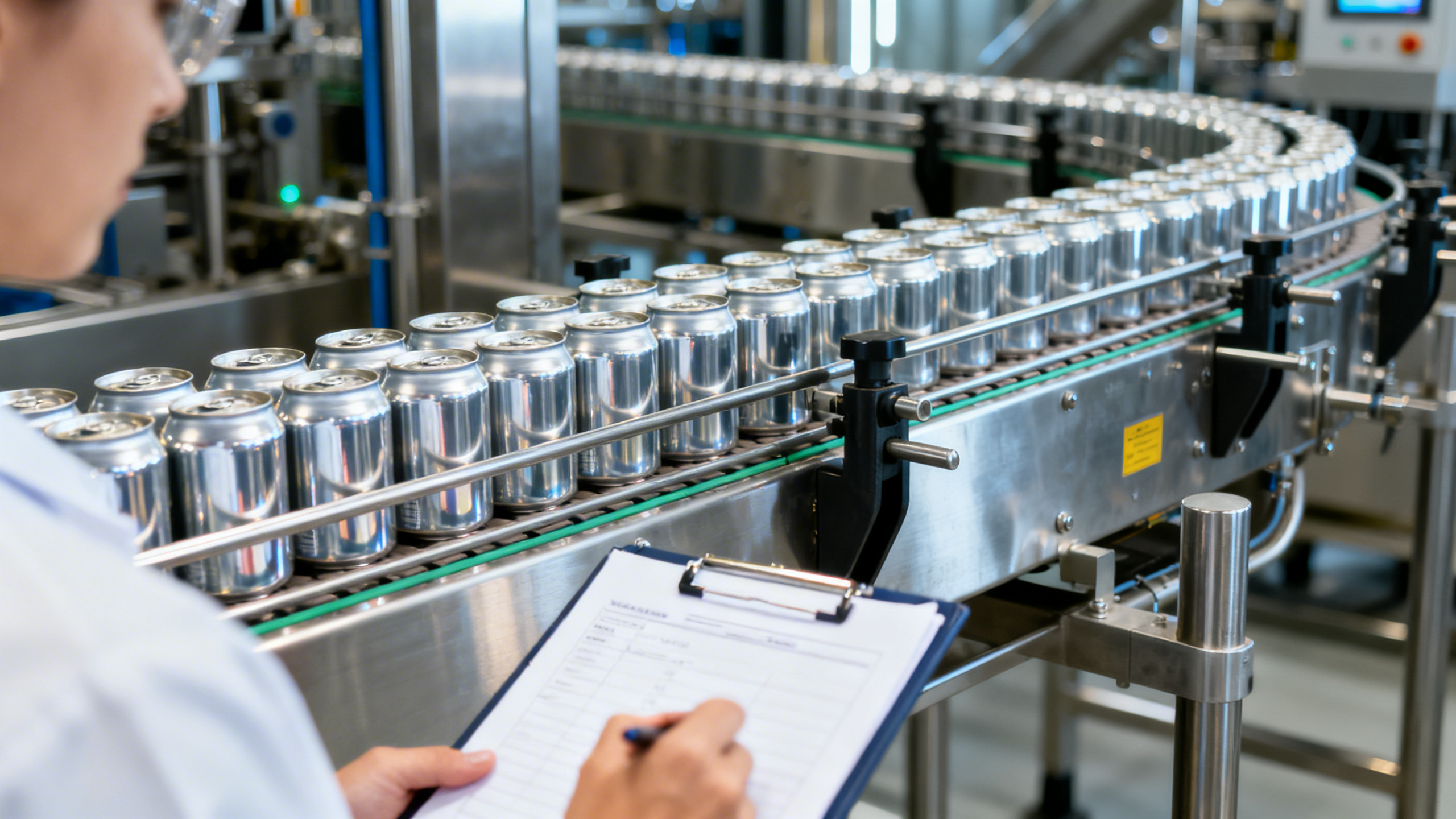
In 2025, the fastest way for a THC‑beverage brand to lose a co‑packing opportunity isn’t poor flavor, a weak sales deck, or even a high minimum order quantity—it’s a missing GFSI certificate.
Across the U.S., large grocers, national convenience chains, and e‑commerce marketplaces continue to tighten supplier approval programs. Even when a THC beverage is sold under a hemp program in a state where those SKUs are permitted, buyers frequently evaluate the product like any other ready‑to‑drink beverage: they want a facility certified to a GFSI‑benchmarked scheme such as SQF or BRCGS. Brands that can’t show recognized certification often get stuck in “pilot purgatory,” forced into smaller channels, or asked to pay for repeated customer audits.
This isn’t just procurement preference—it’s risk management. Retailers and marketplaces want proof that:
Layer on intensifying federal traceability expectations under FSMA Section 204 (the Food Traceability Rule), and the “GFSI or bust” idea becomes a practical business truth for beverage co‑packers.
Informational only—not legal advice.
GFSI (Global Food Safety Initiative) is not a certification you “get” directly. It’s a benchmarking framework used to recognize food safety certification programs (schemes). When a scheme is GFSI‑recognized, it signals that its standard meets globally accepted requirements for food safety management and audit integrity.
For U.S. beverage co‑packers, the most common buyer‑accepted schemes include:
Retailers often write “GFSI required” in vendor manuals because it reduces audit duplication: instead of performing (and defending) their own bespoke audit, they can rely on a consistent third‑party framework.
External references:
While each buyer’s language differs, the direction is consistent: more national accounts expect suppliers to be certified to a GFSI‑benchmarked scheme.
Examples of public signals and expectations include:
Even when a specific THC‑beverage SKU isn’t sold through those channels, these buyers shape expectations across the whole beverage ecosystem. If your co‑packer wants to win mainstream beverage work—private label, functional drinks, “better‑for‑you” RTDs—the same facility is often expected to meet the same GFSI bar.
Many co‑packers still treat traceability as “we can find the lot code if we have to.” That is not where the market is headed.
The FDA’s Food Traceability Rule (FSMA Section 204) requires additional recordkeeping for foods on the Food Traceability List (FTL), using defined Critical Tracking Events (CTEs) and Key Data Elements (KDEs), including use and documentation of a Traceability Lot Code (TLC).
Key FDA resources:
Important 2025–2026 update: FDA announced its intention to extend the compliance date for the Food Traceability Rule by 30 months (without changing the underlying requirements). That signal matters for planning: the industry is still expected to build systems; the runway may be longer, but the direction doesn’t change.
Why this affects THC‑beverage co‑packers:
SQF is widely used across North American food and beverage manufacturing. It’s HACCP‑based and designed for practical implementation in plants that co‑manufacture multiple brands.
Primary reference:
SQF is particularly familiar to U.S. buyers, and many co‑packers like its structure (system elements + GMP modules).
BRCGS Food Safety is deeply embedded in retailer supply chains and is often considered “buyer friendly” because of its prescriptive expectations, audit grading, and strong focus on site standards and management commitment.
BRCGS has also publicized that Issue 9 achieved recognition against GFSI Benchmarking Requirements v2020.
References:
If you’re a small co‑packer trying to land national accounts, ask buyers whether they recognize stepping‑stone programs like BRCGS START! as an interim approach.
Reference:
Be careful: some retailers will treat START! as a development program, not an acceptable substitute for full GFSI certification.
GFSI certification doesn’t just check whether your floors are clean. For THC beverages—especially those using nanoemulsions, distillates, or water‑soluble ingredients—certification forces maturity in areas that retailer auditors probe aggressively.
Under FDA’s preventive controls framework (21 CFR Part 117), many beverage facilities already maintain a hazard analysis and risk‑based preventive controls food safety plan. GFSI schemes typically push further on documentation and verification.
Reference:
For THC beverage processes, hazard analysis often needs to explicitly address:
Even if potency isn’t a classic “food safety hazard,” auditors will still expect you to manage it under quality, labeling, and consumer protection controls—because potency errors can become adverse events, misbranding issues, and recall triggers.
Expect auditors and customers to dig into supplier approval for:
A mature supplier program for THC beverages typically includes:
If you rely entirely on vendor COAs, be prepared to defend why that is adequate.
Retailers and GFSI auditors often expect risk‑based environmental monitoring (especially where post‑process contamination could occur).
For beverage co‑packers, EMP expectations typically focus on:
If your facility runs both conventional beverages and THC beverages, your sanitation program must also address:
THC beverages increasingly use ingredients that trigger major allergen concerns—milk derivatives, tree nuts (e.g., almond), soy, or shared equipment with allergen-containing beverages.
GFSI certification will force:
For THC beverages, COA integrity is becoming a centerpiece of retailer due diligence. Auditors want confidence that:
Two practical references to strengthen your position:
1) AOAC SMPR for quantitation of cannabinoids in beverages (a consensus performance requirements document for methods):
2) ISO/IEC 17025 accreditation signals laboratory competence and method control. While lab accreditation requirements vary by state and program, many sophisticated buyers view ISO 17025 as the baseline for defensible COAs.
For background on FDA’s lab accreditation framework (food testing context):
What co‑packers should operationalize:
THC beverages live at the intersection of food labeling rules, state‑level cannabinoid warnings, and retailer requirements. A co‑packer can run a pristine plant and still fail a customer audit due to label controls.
Common audit pressure points:
California is an example where labeling is actively enforced and where state agencies publish detailed labeling checklists for regulated products.
Reference:
Also, California Proposition 65 can create additional warning exposure for products containing THC sold into California channels.
Practical takeaway: build a label control system that can manage multi-state requirements without relying on tribal knowledge.
GFSI certification requires robust recall readiness. Buyers want proof you can execute a fast, accurate recall that identifies:
For THC beverages, recall readiness should also integrate:
FSMA 204 also pushes the industry toward faster record retrieval. Many summaries note the expectation that firms be able to provide traceability information to FDA quickly (often discussed as within 24 hours in industry guidance).
The “right” scheme is often driven by your target customers.
Choose SQF when:
Choose BRCGS when:
Also consider packaging certification if you manufacture food contact packaging in-house or operate packaging conversion.
A surprisingly common certification failure pattern is a scope statement that doesn’t match reality.
For THC beverage co‑packers, your certification scope should clearly cover:
If you do any “special” steps (e.g., nanoemulsion creation on site), talk to your certification body early so the audit plan reflects it.
Timelines vary by plant readiness and certification body availability, but many co‑packers underestimate the operational lift. A realistic plan typically looks like:
Commission a pre‑assessment gap audit (internal, consultant, or certification body pre‑assessment) focused on:
Auditors don’t certify intentions; they certify implemented systems with records. Build time for:
Even when THC beverages are lawful at the state level, federal agencies have continued to take enforcement actions against cannabinoid products marketed illegally as foods/beverages in certain contexts and against misleading claims and child‑appealing packaging.
One relevant federal signal is FDA’s history of warning letters related to CBD and Delta‑8 products marketed as foods/beverages or making improper claims.
For co‑packers, this reinforces why buyers obsess over:
Cannabinoid beverage compliance now sits between food safety, state labeling rules, lab documentation expectations, and retailer audit standards. CannabisRegulations.ai helps teams monitor evolving requirements, build audit-ready documentation workflows, and stay ahead of enforcement and retailer expectations.
If you’re preparing for GFSI SQF BRCGS THC beverage co‑packer 2025 readiness—use https://www.cannabisregulations.ai/ to track regulatory updates, packaging and labeling rules, and compliance best practices across the U.S.