


Sign Up
Ready to replace complexity with clarity?
Answer your real world compliance questions (limited time) and save thousands in legal fees and avoided fines.
Automate Compliance Today

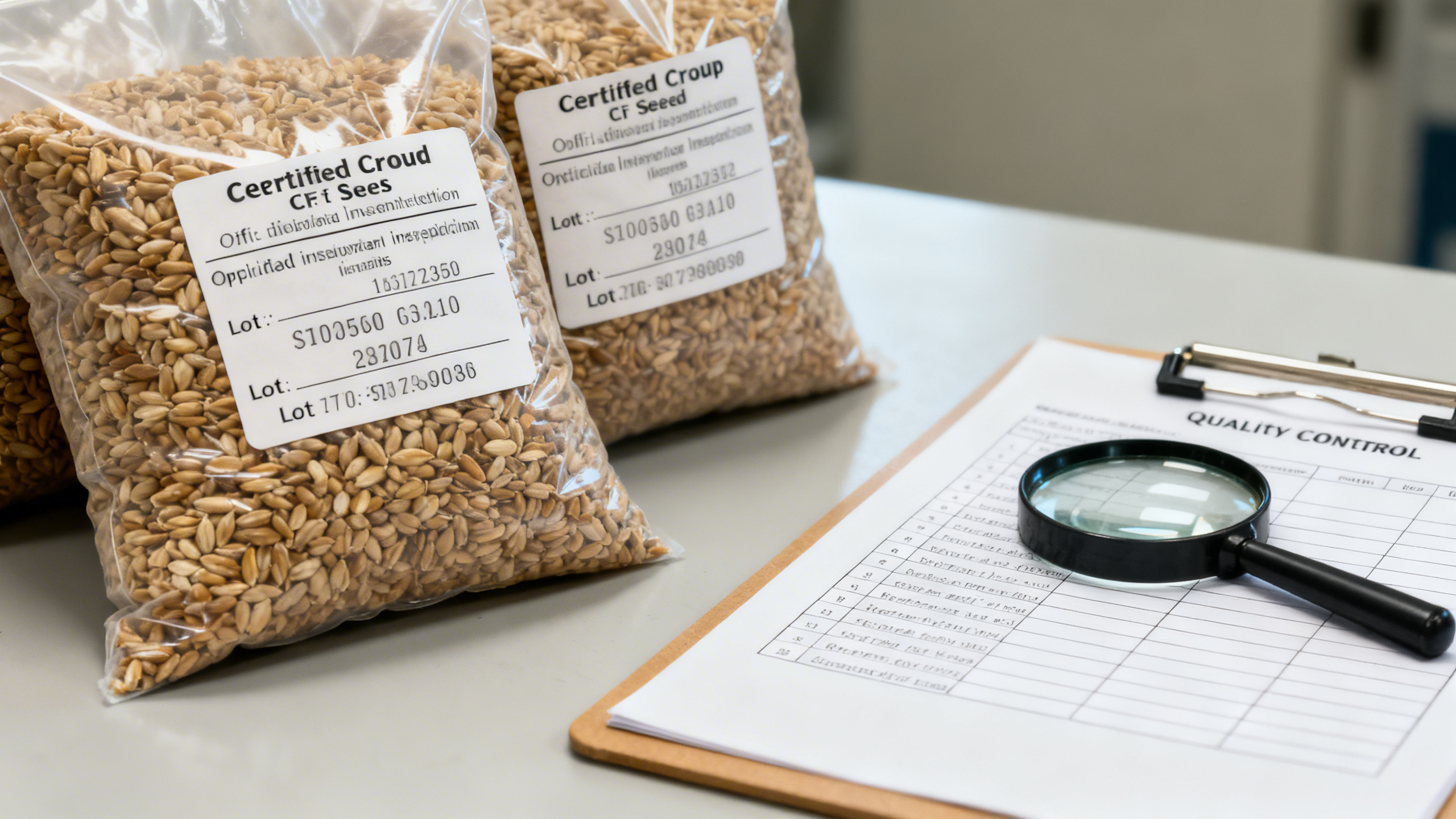
Interstate seed sales are having a “come to compliance” moment. After the 2025 planting season, more growers reported disappointing germination, off-type stands, and genetics marketed as “compliant” that later tested above state total-THC thresholds under post-decarboxylation methods. Those agronomic outcomes are now spilling into civil disputes (misrepresentation, breach of warranty, unfair trade practices) and into state seed law enforcement—especially where labels, test dates, and varietal claims do not match what was actually delivered.
This article explains how AOSCA-backed certification and state seed control rules fit together (and where they do not), what truth‑in‑labeling means for hemp seed lots shipped across state lines, and how to manage documentation and contract risk when buying or selling genetics marketed as “total‑THC compliant.” It’s informational only, not legal advice.
Several trends converged in 2025:
The result: a growing recognition that seed compliance is not branding—it’s a regulated supply chain discipline.
AOSCA (Association of Official Seed Certifying Agencies) is a standards body and coordinating organization for seed certification, with state seed certifying agencies carrying out the actual certification work. AOSCA describes seed certification as a third‑party process that tracks seed through eligibility, inspections, and standards so that buyers receive seed of a known variety produced under certification requirements. See AOSCA’s overview here: https://aosca.org/programs-services/seed-certification/ and https://aosca.org/certified-seed/.
AOSCA’s own FAQs emphasize that AOSCA does not certify seed varieties; certification is performed by official state agencies that are AOSCA members, following crop-specific standards and procedures. (AOSCA hemp FAQ PDF: https://aosca.org/wp-content/uploads/2022/09/HEMPFAQs_Mar2022.pdf)
If your marketing says “AOSCA certified,” what buyers and regulators usually want to see is:
AOSCA operates a Hemp Variety Review Board (VRB) process and publishes resources, eligible lists, and annual reports. The VRB helps address the “what is a variety?” question in a market that historically moved fast and documented slowly.
AOSCA’s hemp VRB page also posts application deadlines—for example, Hemp VRB Applications Due: October 3, 2025 (useful for breeders and variety owners planning future certification pipelines): https://aosca.org/programs-services/national-variety-review-boards/hemp/.
AOSCA also publishes lists such as “Hemp varieties eligible for seed certification,” with the important caveat that AOSCA makes no warranties about performance simply because a variety appears on a list. Example PDF: https://aosca.org/wp-content/uploads/2023/09/Hemp.VarietiesMbr-Agency-Rev.9.27.23.pdf.
In certified seed systems, the commonly recognized classes include Breeder, Foundation, Registered, and Certified. In practice, many grower disputes arise because marketing uses “certified” casually (meaning “we tested it”) rather than in the formal class sense.
AOSCA’s Certified Seed page notes that when a variety is sold as certified seed and tagged (commonly a blue tag for Certified class), buyers have assurances for quality attributes like germination and purity tied to certification standards: https://aosca.org/certified-seed/.
If you ship agricultural seed in interstate commerce, you are in Federal Seed Act (FSA) territory. The Agricultural Marketing Service (AMS) Seed Regulatory and Testing Division enforces FSA and provides seed testing and oversight information here: https://www.ams.usda.gov/services/seed-testing.
The FSA labeling framework is detailed, but several requirements repeatedly show up in enforcement and in private disputes:
See the Federal Seed Act text (AMS PDF): https://www.ams.usda.gov/sites/default/files/media/Federal%20Seed%20Act.pdf.
A frequent interstate pitfall: even when a lot meets the seller’s state rules, the destination state’s noxious‑weed seed restrictions can be stricter. USDA AMS publishes a consolidated reference used in administering FSA (updated periodically). Example: “2025 State Noxious‑Weed Seed Requirements Recognized in the Administration of the Federal Seed Act” PDF: https://www.ams.usda.gov/sites/default/files/media/StateNoxiousWeedsSeedList.pdf.
If your seed lot is rejected or embargoed due to prohibited/restricted noxious-weed seed content, the business impact is immediate—delays, relabeling costs, returns, and potential enforcement.
Even with FSA, states maintain seed laws and run seed control programs that inspect labels, sample lots, and take enforcement action. A good example of how states describe their role is the Colorado Department of Agriculture’s seed program: inspectors check labels for expired germination test dates and collect samples for lab analysis to verify label claims. https://ag.colorado.gov/plants/seed.
Other states build additional requirements into their codes (for example, sell-by labeling concepts, relabeling sticker rules, and state inspection fee labels). Pennsylvania’s seed program FAQ, for instance, states that germination test dates are valid for a nine-month period (excluding the month tested), and its code includes restrictions on relabeling stickers missing month/year. See: https://www.pa.gov/content/dam/copapwp-pagov/en/pda/documents/plants_land_water/plantindustry/agronomic-products/seed/documents/SeedProgramsFAQs.pdf and related statutory references surfaced via the Pennsylvania legislature site.
Texas provides another example of state-level overlays: Texas Agriculture Code Chapter 61 addresses inspection, labeling, and sale of agricultural seed, and Texas rules include mechanisms like “Texas Tested Seed Labels” and fees, with statutory language restricting sale by variety name unless certified by an official agency in some contexts. (Texas Ag Code PDF chapter): https://statutes.capitol.texas.gov/Docs/AG/pdf/AG.61.pdf.
The practical takeaway is simple: interstate seed sellers must comply with both federal and destination state seed rules, not just their home-state practices.
A major 2025 lesson: documentation failures are often easier to prove than agronomic failures.
A Certificate of Analysis (COA) is typically a lab report. It may document germination, purity, weed seed exam results, and other measures depending on the lab and requested tests.
However:
For seed testing methods, many labs and state programs follow Association of Official Seed Analysts rules. AOSA’s “Rules for Testing Seeds” (effective dates vary by volume) are a core technical reference used by seed labs (example publication reference found via seed lab and AOSA materials).
A certification tag (issued under an official seed certification program) is designed to provide:
For buyers, certification tags help separate “the label says so” from “an official system tracked and verified it.”
To reduce disputes:
Many seed disputes start with a marketing phrase like “compliant genetics” or “0.3% guaranteed.” The reality: total‑THC expression is influenced by genetics, environment, agronomy, harvest timing, and testing protocols.
USDA’s domestic production program and many state plans use total THC testing approaches, and USDA guidance requires labs to calculate and report measurement of uncertainty (MU) for compliance testing. USDA laboratory testing guidelines: https://www.ams.usda.gov/rules-regulations/hemp/information-laboratories/lab-testing-guidelines.
If a state uses post-decarboxylation or total THC calculations, THCA contributes to total THC equivalents. A variety that looks “safe” on delta‑9 alone can still be risky if THCA climbs late in flower, under stress, or if harvest is delayed.
Instead of accepting “total‑THC compliant,” require sellers to provide:
If a seller refuses to discuss realistic ranges and pushes only “guarantees,” treat that as a risk signal.
These are recurring failure points seed control officials and farm counsel frequently mention, and they map directly to enforcement triggers:
State seed inspectors regularly check for expired germination test dates (Colorado explicitly highlights this inspection activity). If the label’s test month/year is outdated, it can trigger stop‑sale orders, relabeling requirements, or penalties.
Using a variety name can be regulated more strictly than sellers realize—especially if the seed is not actually certified to that variety or the seller cannot substantiate identity. Some states also restrict or scrutinize “certified” claims.
A buyer receives seed labeled Lot A, invoice says Lot B, COA references Lot C. Even if the seed is fine, the paper trail looks like mislabeling.
Destination state noxious-weed restrictions can create surprises when sellers rely on generic weed exams that don’t align with destination lists.
Growers increasingly sample and test before planting. When independent results conflict, sellers often argue sample handling issues. That becomes expensive fast.
A well-written seed supply agreement can reduce litigation risk by clarifying what is promised, what isn’t, and what happens if things go wrong.
Key provisions to consider (work with your counsel):
Many seller templates now include aggressive warranty disclaimers. Buyers should read them carefully and negotiate where possible, especially if marketing materials made strong promises.
Use this checklist to reduce avoidable risk.
Even without quoting specific individuals by name here, a consistent message is emerging from seed control programs and producers:
If your organization sells across state lines, now is the time to treat seed compliance like a regulated product program—not a seasonal sales push.
For multi-state operators, seed sellers, and compliance teams, the fastest path to fewer disputes is a repeatable system: destination-state rule checks, label QA, lot traceability, and contract clauses that match real agronomic variability.
Use https://cannabisregulations.ai/ to monitor evolving federal and state compliance requirements, build internal checklists for seed labeling and certification, and reduce the enforcement and litigation risks that spiked after the 2025 planting season.