


Sign Up
Ready to replace complexity with clarity?
Answer your real world compliance questions (limited time) and save thousands in legal fees and avoided fines.
Automate Compliance Today

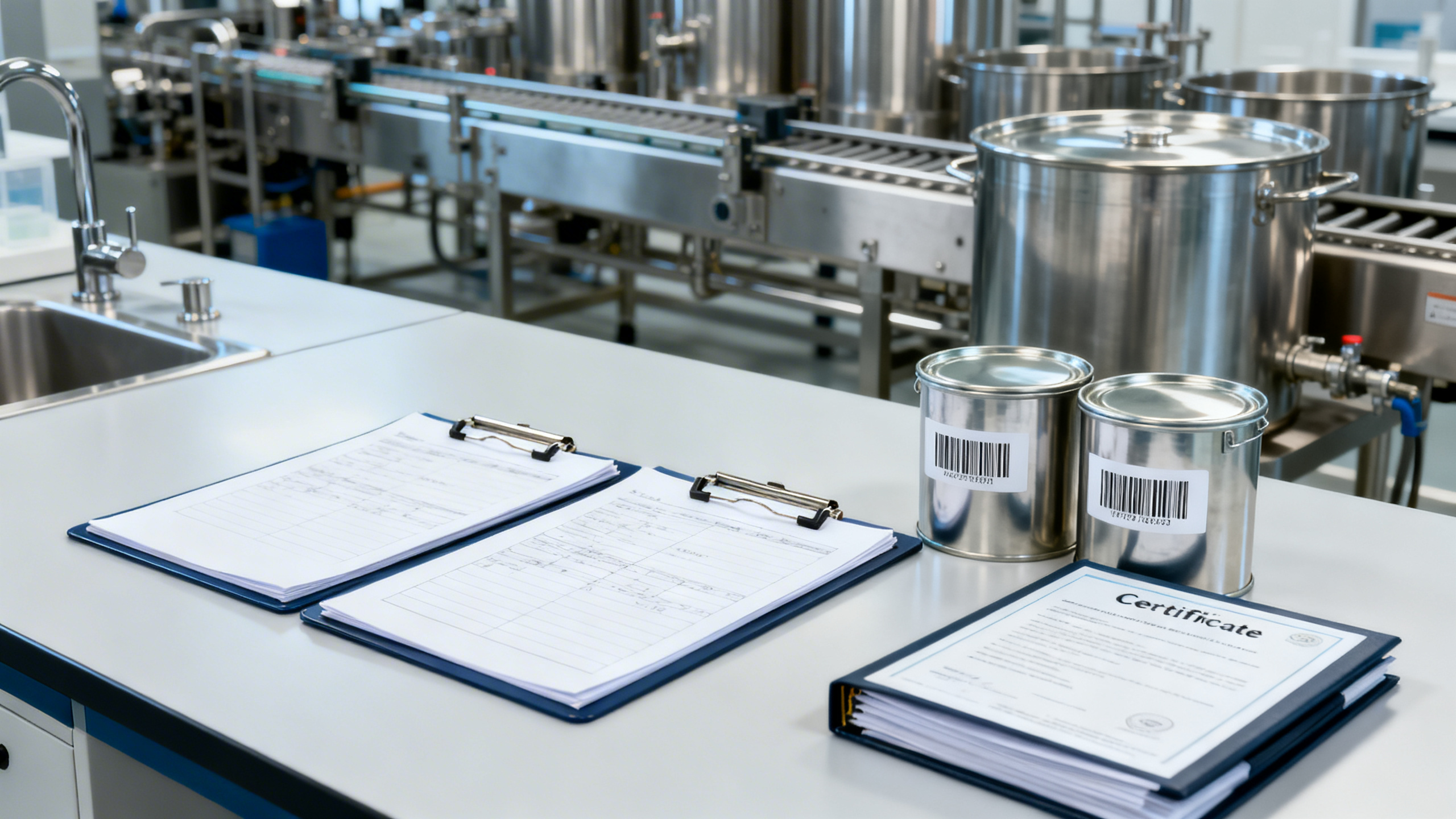
In 2025, kosher halal THC CBD beverage certification audit 2025 became a real operational discipline—not a marketing afterthought.
Why? Beverage brands are scaling fast, co-packers are consolidating, and regulators are tightening oversight on intoxicating and hemp-derived drink formats across the U.S. At the same time, retailers and consumers increasingly expect recognizable certification marks and defensible claim substantiation.
This post explains what is typically certifiable (and what often isn’t) when you’re seeking kosher and/or halal certification for cannabinoid beverages, and what to expect in audits, unannounced inspections, annual renewals, and change-control triggers.
Informational only—not legal advice.
Both kosher and halal programs evaluate:
Where they diverge is in how certifiers treat intoxicants, alcohol, and certain animal-derived materials.
Many kosher agencies are comfortable certifying beverages so long as:
Kosher agencies also emphasize that certification is about ingredients and process integrity—not a substitute for state testing or consumer-safety regulation.
An important data point for the U.S. market: the Orthodox Union has previously stated it granted certification to pharmaceutical-grade extract products for medical purposes, illustrating that some agencies can evaluate cannabinoid-derived inputs in a structured, ingredient-driven way (even if each product category is considered case-by-case). See: https://oukosher.org/blog/consumer-news/ou-medical-marijuana-statement/
Halal certification bodies vary, but many treat intoxicating products as categorically non-certifiable.
Some halal standards explicitly define alcoholic drinks (khamr) by ethanol thresholds; for example, the American Halal Foundation notes that drinks containing a minimum of 1% ethanol are categorized as khamr. https://halalfoundation.org/ahf-halal-standards/
For many companies, the key practical takeaway is:
Because halal certification is also an export enabler for certain markets, brands sometimes pursue certification primarily for facility capability and SKU eligibility, rather than trying to force a mark onto every product.
Certification outcomes depend on the certifier’s written standard and religious board, but the patterns below are consistent across U.S. audits.
CBD-only beverages tend to face fewer religious compliance barriers, assuming:
That said, federal food law risk still matters for commercialization strategy. The FDA continues to state that, aside from certain hemp seed ingredients, no other cannabis-derived ingredients have been approved for use in food via a food additive petition or evaluated GRAS notification. https://www.fda.gov/news-events/public-health-focus/fda-regulation-cannabis-and-cannabis-derived-products-including-cannabidiol-cbd
Certification bodies are not regulators, but many will ask whether your product is being sold in a way that triggers heightened enforcement exposure.
For kosher:
For halal:
Most beverage compliance failures are not about the active ingredient itself—they’re about the “small stuff” that appears at 0.1%–2%.
Flavor compounds often come in alcohol-based carriers. Your certifier will ask:
Also note that federal alcohol rules can intersect with formulation decisions. The TTB provides guidance on foods containing ethanol and evaluates formulas for nonbeverage products (27 CFR 17.133). https://www.ttb.gov/scientific-services-division/dbmenu8sub1
From a certification perspective, it’s less about TTB jurisdiction and more about whether the ethanol is acceptable and controlled under the chosen standard.
Gelatin shows up in surprising places (clarified juices, colors, encapsulated flavors, certain “cloud” systems).
Halal and kosher programs will ask:
IFANCA has published technical material on gelatin’s halal/haram risk factors and notes the heavy scrutiny around sources and acceptability. https://ifanca.org/resources/gelatin-manufacturing-uses-health-affects-and-issues-of-halal-haram/
Glycerin can be:
Kosher and halal auditors will typically require a clear statement of origin (and often supplier certification). As background, kosher industry education materials emphasize that glycerin’s source matters (vegetable vs. animal vs. synthetic). https://industrialkosher.org/2018/06/13/understanding-kosher-glycerin/
Nanoemulsions and encapsulation systems increase the number of sub-ingredients:
Your certification risk rises with every opaque “proprietary blend” that lacks a full disclosure package.
Most reputable kosher programs operate as a mix of:
A practical reference point: STAR-K’s compliance guideline describes audits where the inspector reviews raw materials, production facilities, finished goods, production records, batches, cleaning records, bulk receiving, and heat-using equipment as critical contamination points; it also notes the Letter of Certification is typically valid for a one-year term, renewable annually. https://www.star-k.org/articles/wp-content/uploads/kosher-compliance-requirements-06-22.pdf
Be ready with:
If a facility produces both certified and non-certified products, auditors will focus on:
Beverages add complexity because bulk liquids and shared transfer systems can create “hidden” cross-contact pathways.
Halal programs increasingly mirror structured quality systems, requiring a formal assurance program and records.
The American Halal Foundation describes a detailed certification process that includes cross-contamination risk analysis, implementation of a Halal Product Assurance System, and an auditing phase reviewed by a certification committee. https://halalfoundation.org/the-detailed-halal-certification-process/
Some programs also explicitly perform unannounced random inspections during the year to ensure ongoing compliance. (Example: HaPI/SGS process description.) https://halalpi.com/en/certifications/analytics-audit-processes
If your portfolio includes intoxicating products, many halal auditors will ask upfront whether the certification is intended for:
The most expensive certification projects are the ones that start after the product is already commercialized.
Map viability before you finalize formulation and packaging.
At minimum:
Beverage brands regularly hit a wall when a flavor supplier refuses to disclose carriers. If your certifier cannot approve the sub-ingredients, the SKU is dead for certification.
Practical tip: require a certification-disclosure addendum in supplier contracts for any flavor/emulsion system that will be used in a certified product line.
Symbol control is not “nice to have.” It is a trademark and certification-mark issue.
For example, OK Kosher states its symbol may only be used after a certification contract is executed, payment is received, and a kosher certificate is issued; it also warns that marketing language must not imply non-certified products are covered. https://www.ok.org/companies/guides/a-guide-to-the-proper-use-of-the-ok-kosher-symbol/
The OU similarly warns that unauthorized symbol usage can trigger legal penalties under trademark law. https://oukosher.org/blog/industrial-kosher/the-unauthorized-kosher-symbol/
Halal bodies publish similar logo-use rules and enforcement mechanisms (for example, AHF’s “Rules for the Use of Logo” discusses misuse detection and consequences). https://halalfoundation.org/wp-content/uploads/2025/09/AHF-P-06-Rules-for-the-Use-of-Logo.pdf
In beverages, formulation is rarely static. 2025 also saw rapid shifts in:
Certification bodies expect you to treat certain changes as “stop and re-approve.”
Operationally, your internal SOP should require:
Co-packing is now the norm for beverage scaling, and it is also where certification risk concentrates.
You should have:
Even outside certification, food and beverage lawyers increasingly recommend robust change-control and label control provisions in co-packing agreements, including requirements that critical changes be reviewed and approved under documented change control prior to implementation. https://www.cummings.law/legal-considerations-for-co-packing-agreements-in-the-food-and-beverage-industry/
For certified products, elevate this from “best practice” to non-negotiable.
Certification does not replace U.S. regulatory obligations. Beverage brands still must manage:
For example, California’s Department of Cannabis Control provides packaging and labeling requirement checklists and notes that products packaged/marketed in a manner attractive to children may face citations, fines, suspension, or revocation. https://www.cannabis.ca.gov/packaging/ and https://www.cannabis.ca.gov/posts/labeling-requirements-manufactured-cannabis-products-in-final-form/
Also note broader consumer product risk: California’s Proposition 65 short-form warning amendments took effect January 1, 2025, impacting how businesses provide warnings (including naming a chemical). https://www.productlawperspective.com/2025/01/californias-proposition-65-short-form-warnings-now-in-effect/
If you’re operating nationally, keep one eye on federal food law and one eye on state beverage policies.
Use this to pressure-test your program:
Managing kosher/halal certification alongside fast-changing U.S. beverage regulations requires disciplined documentation, vendor controls, and packaging/label governance.
Use https://www.cannabisregulations.ai/ to track state-by-state beverage compliance expectations, build audit-ready SOPs, and pressure-test your co-packer and label approval workflows—so your certification strategy supports growth instead of becoming a last-minute fire drill.