


Sign Up
Ready to replace complexity with clarity?
Answer your real world compliance questions (limited time) and save thousands in legal fees and avoided fines.
Automate Compliance Today

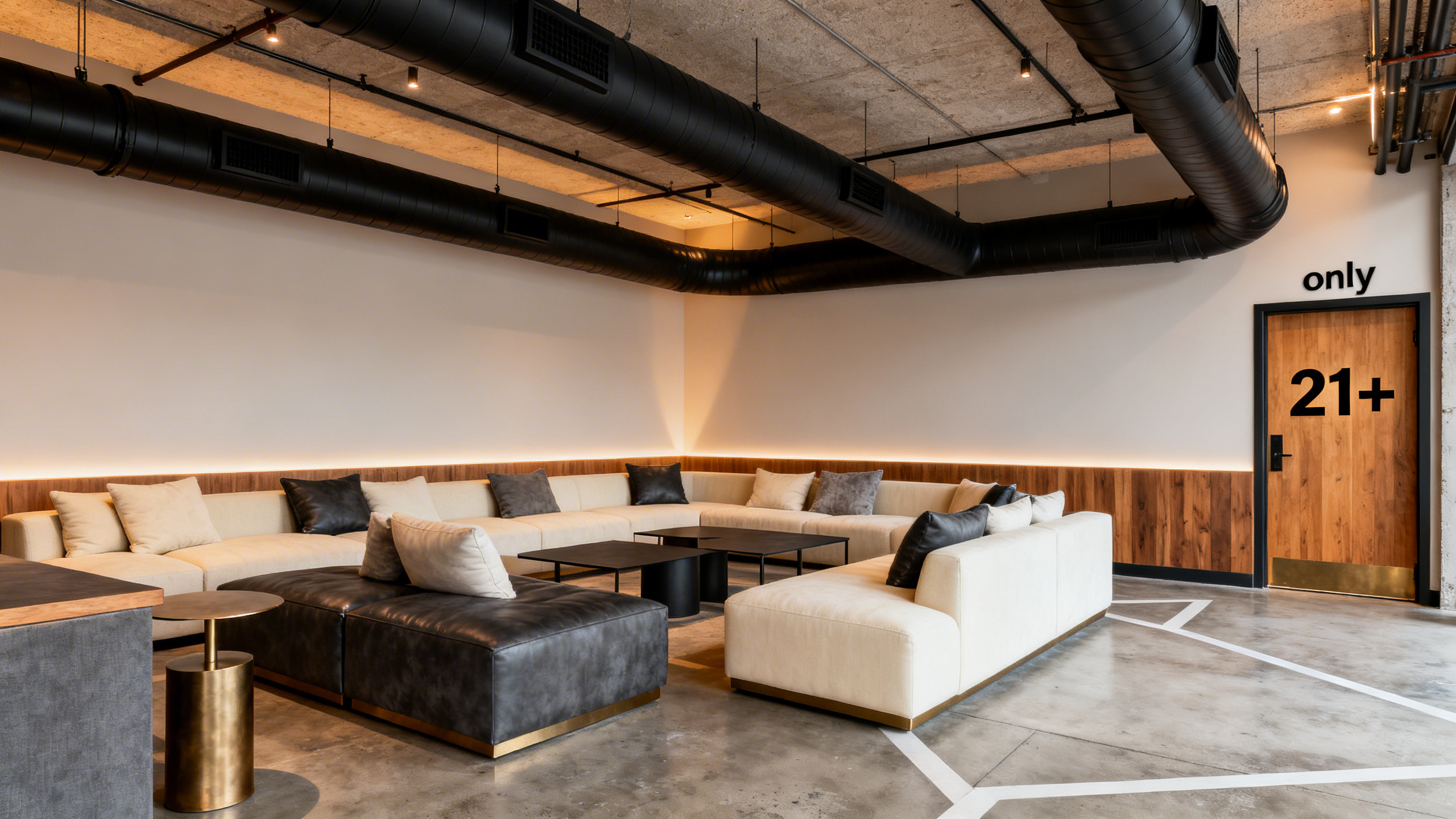
Massachusetts’ long-delayed on-site consumption framework moved from concept to actionable regulatory architecture in 2025—setting up a realistic “lounge” and events rollout that could begin to appear on the ground in 2026.
In late July 2025, the Massachusetts Cannabis Control Commission (CCC) voted to approve draft social consumption regulations and send them into the Secretary of the Commonwealth’s formal promulgation process (public comment, hearing, and a final vote anticipated in the fall). In December 2025, the CCC voted to approve final social consumption regulations, and the Secretary subsequently promulgated the rules effective January 2, 2026—while the CCC simultaneously emphasized that licenses were not yet available and an implementation phase would follow (applications, guidance, working groups, and local coordination).
For operators, the most important takeaway is that Massachusetts is building a multi-pathway social consumption market that blends traditional retail, hospitality-style host businesses, and temporary events—while keeping tight boundaries around age-gating, over-service/impairment, ventilation/odor, and local control.
This post is informational only and not legal advice.
Massachusetts’ social consumption program has been years in the making, rooted in the Commonwealth’s statutory authority to allow on-site consumption under tightly regulated circumstances. The 2025 draft and subsequent finalization created a workable structure that:
Key official sources you should keep bookmarked:
The CCC’s framework is built around three pathways, each with distinct operational and partnership implications.
This model is designed for an existing adult-use retailer (or similar licensed operator) to add a designated consumption area to its premises.
Why it matters:
This is the pathway that gets most of the headlines: a non-licensed host business (for example, an entertainment venue, studio, or hospitality concept) partners with a licensed social consumption operator.
Why it matters:
This pathway allows permitted, temporary events where consumption occurs under a regulated plan.
Why it matters:
Even with regulations effective January 2026, the CCC has been explicit that implementation is phased.
“Lounges could open as early as 2026” is plausible, but only if a business can align four moving parts:
1) the CCC’s application availability and review timelines2) municipal opt-in and local permitting3) build-out approvals (construction, fire, ventilation, occupancy)4) operating procedures that satisfy inspection and enforcement expectations
Massachusetts’ social consumption licenses are designed to expand participation by people disproportionately harmed by prior enforcement. The CCC has stated that these licenses will be available exclusively to:
…for a 36-month exclusivity period tied to program milestones (as described by the CCC in January 2026 communications). Source: https://masscannabiscontrol.com/2026/01/massachusetts-social-consumption-establishment-regulations-are-now-in-effect/
Practical operator takeaway: if you are not in one of these categories, your best near-term strategy may be to structure compliant partnerships, real estate arrangements, management services, and vendor relationships that respect CCC control/suitability rules—without becoming “hidden control” or creating prohibited ownership transfer conditions.
Across all models, Massachusetts is built around the concept of the designated consumption area—a defined space that is managed, monitored, and enforced.
Operators should plan for a designated area to drive:
Even where the rules allow multiple “consumption area categories” (as described in legal/industry analyses of the draft), in practice your compliance success will depend on making the designated area easy to supervise and hard to misuse.
One of the biggest open questions during the 2025 draft cycle was how 21+ rules would be enforced in mixed-use hospitality environments.
Because municipal approvals are required, operators should design to satisfy not just CCC inspectors but also local licensing boards, zoning officials, and police/fire reviewers.
Trade coverage and operator chatter often frame social consumption as a “BYO lounge” concept. In Massachusetts’ model, BYO can become complicated fast because:
Even if a concept markets itself as BYO, operators should build policies around:
If your concept involves a non-licensed host venue, assume your municipal reviewers will ask:
Beverages are a natural fit for social consumption because they reduce smoke/odor concerns and can work in hospitality settings. But beverages also bring potency/serving questions.
Massachusetts’ adult-use rules include specific limits on THC per serving and per package for edibles. Under 935 CMR § 500.150 (Edibles), the limit is:
Source: https://www.law.cornell.edu/regulations/massachusetts/935-CMR-500-150
Menu design implications:
Even though the CCC’s detailed social consumption POS rules may evolve in guidance, operators should anticipate:
A repeated theme in Massachusetts commentary is that social consumption sites are not intended to be “bars.” Industry and municipal commentary has highlighted that alcohol service is not allowed in social consumption establishments under the CCC’s rules.
That has major implications for business models built on pairings:
Even with statewide licensing, the real gating factor for many lounges will be municipal permitting and inspection readiness.
The CCC itself emphasizes local control—municipalities must opt in. The Massachusetts Municipal Association (MMA) also underscored that cities and towns need to opt in via local legal mechanisms before businesses can offer on-site consumption. Source: https://www.mma.org/ccc-approves-social-consumption-regulations/
Operator takeaway: plan early for engineering and code compliance, and budget time for iterative feedback from local inspectors.
The CCC has signaled that implementation will include updated training and procedures, including Responsible Vendor Training tailored to social consumption and impairment recognition (as referenced in public reporting and CCC implementation messaging).
Operators should be prepared to document:
In social consumption, regulators will evaluate not just “what you sell” but “how you manage what happens after.”
One of the open questions in 2025 draft discussions was whether intoxicating hemp-derived beverages could be permitted on-premise, and—more importantly—who regulates them.
1) Legislative activity in 2025 proposed a new framework for hemp-derived products and contemplated CCC involvement.
A Massachusetts legal analysis of pending reforms describes legislation that would modernize state laws and create a clearer framework for hemp-derived products, potentially charging the CCC with implementing new rules (including testing/labeling standards). Source: https://www.bipc.com/massachusetts-proposes-new-framework-for-hemp-derived-products
2) Alcohol-licensed premises restrictions create operational conflicts.
The Massachusetts Alcoholic Beverages Control Commission (ABCC) issued an advisory stating it is unlawful to manufacture and/or sell food or beverages containing hemp-derived CBD and/or THC on licensed premises. Source (PDF): https://www.mass.gov/doc/abcc-advisory-regarding-food-and-beverages-containing-hemp-derived-cbd-andor-thc-on-licensed-premises/download
If your host venue has any alcohol licensing angle, hemp beverages (and even some non-intoxicating products) can create compliance exposure depending on how the venue is licensed and how products are characterized.
For Massachusetts social consumption operators designing beverage menus in 2026:
The CCC has made municipal implementation visible via tools like its Municipal Zoning Tracker (referenced in CCC January 2026 communications), and municipalities have been told they must opt in for social consumption to operate.
Practical steps for operators:
Early-stage rollouts typically focus on the most observable public-safety risks. Expect Massachusetts enforcement priorities to include:
Businesses that treat social consumption as a hospitality experience while operating it like a tightly controlled regulated environment will have a durability advantage.
If you’re building a plan now, prioritize these workstreams:
As Massachusetts implements social consumption:
Massachusetts social consumption rules are now in effect, but practical compliance will be defined by implementation guidance, municipal opt-in decisions, and how the CCC operationalizes licensing in the Massachusetts Cannabis Industry Portal.
For ongoing updates, workflows, and policy monitoring, use https://www.cannabisregulations.ai/ to track Massachusetts licensing, cannabis compliance obligations, and the evolving rules around social consumption, designated areas, and THC beverages.