


Sign Up
Ready to replace complexity with clarity?
Answer your real world compliance questions (limited time) and save thousands in legal fees and avoided fines.
Automate Compliance Today

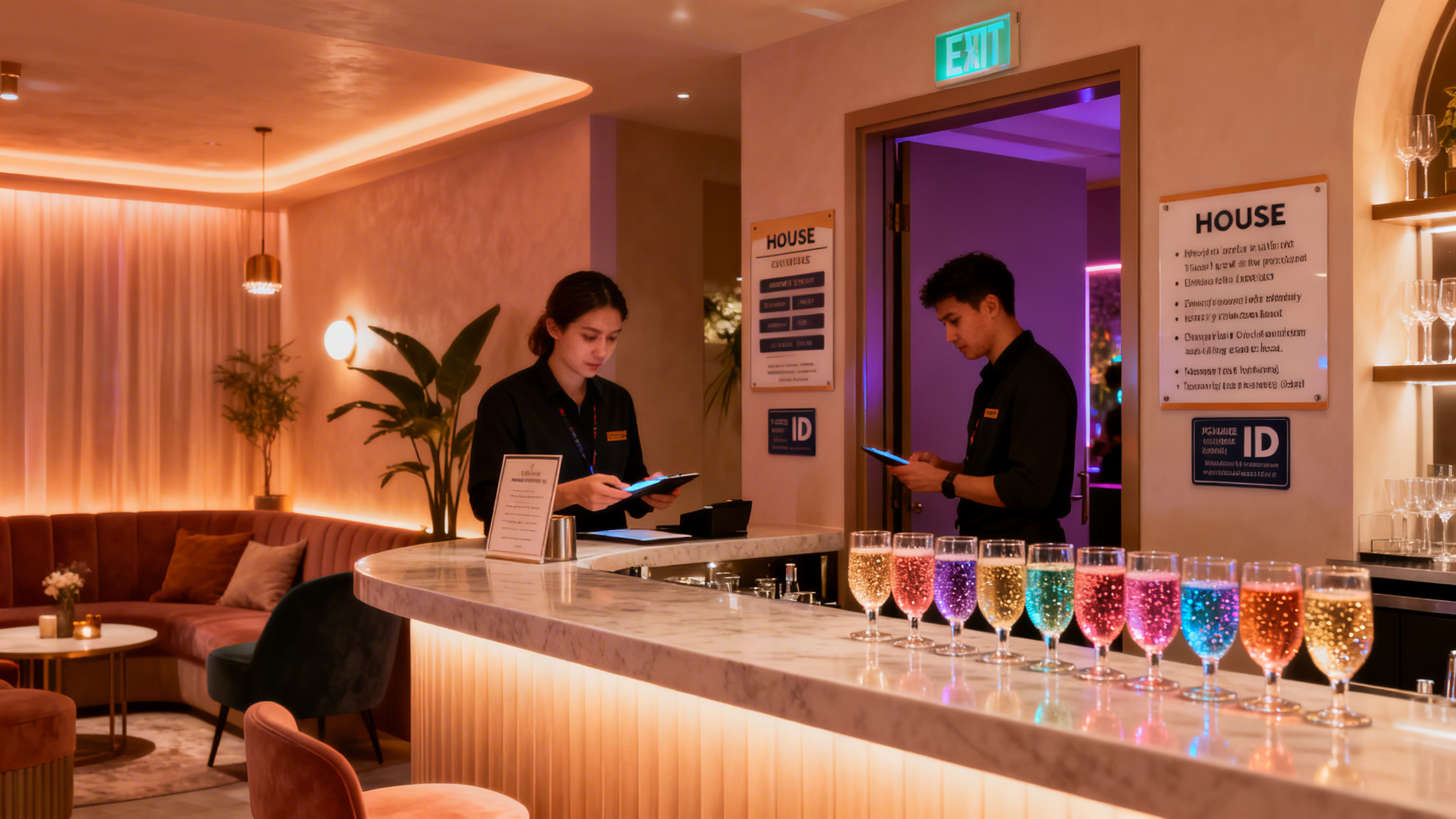
Massachusetts’ long-awaited move toward regulated social consumption is no longer theoretical—it is now an operational planning problem for beverage brands, venue operators, and event producers.
In mid-2025, the Massachusetts Cannabis Control Commission (CCC) voted to advance draft social consumption regulations, starting a formal promulgation process that included a public comment period and a public hearing with additional stakeholder engagement continuing into the fall. The CCC then approved final social consumption regulations on December 11, 2025, and the Secretary of the Commonwealth promulgated (made effective) the rules on January 2, 2026—while making clear that licenses are not yet available and no one may sell for on-site consumption until licensed.
This matters for a simple reason: the same building blocks that make social consumption workable—age-gating, dose management, service controls, and local approvals—also define how THC beverages and temporary events will function in Massachusetts.
At the same time, separate policy momentum has been pushing intoxicating hemp-derived beverages into more tightly regulated channels, with legislative concepts that would allow some hemp beverages in liquor-licensed stores while restricting certain hemp edibles. That parallel track sets up a potentially segmented market where on-premise “serving” norms start to resemble alcohol, but enforcement could involve multiple agencies.
This article is informational only, not legal advice.
If your focus keyword is Massachusetts social consumption 2025, the key point is that the “draft phase” in 2025 drove the policy contours that became final at the end of the year.
Per the CCC’s announcements, the framework creates three new license types that will allow adults 21+ to purchase and consume on-site in controlled settings:
Official CCC sources emphasize several universal guardrails:
For operators, that means the “effective date” of regulations (January 2026) is not the same as a functional market opening. The gap is where early movers can build SOPs, train staff, line up municipal approvals, and pressure-test menus.
Primary source links:
Even in states with robust lounge ecosystems, beverages often become the preferred on-premise format because they are:
In Massachusetts, this aligns with the hospitality intent of the rules and the reality of local control. Municipalities that hesitate to allow certain forms of consumption may still be more comfortable with low-dose beverage service paired with staff oversight and clear impairment policies.
The draft discussions and final framework strongly signal that Massachusetts will expect social consumption operators to prevent over-intoxication through operational controls, not just signage.
For beverage brands and venues, anticipate:
Even if specific numeric limits vary by final guidance, the compliance architecture is predictable: if you can’t track servings, you can’t credibly demonstrate control.
Massachusetts has years of retail compliance muscle memory around age verification. Social consumption adds new pressure points:
Expect a strong emphasis on:
The CCC has indicated that implementation will include new guidance, procedures, and training elements for social consumption operations. Many stakeholders expect staff requirements to look increasingly similar to responsible alcohol service frameworks:
This has two practical implications:
The Marijuana Event Organizer license class is the most disruptive (in a good way) because it creates a pathway for regulated consumption at time-limited events. But it also creates the heaviest burden of operational discipline.
In practical terms, event compliance can be summarized as: control the perimeter, control the product, control the people, control the leftovers.
Massachusetts social consumption is built on local control. Municipalities will determine whether, where, and under what additional constraints social consumption can occur.
Event operators should start by designing a site plan that is easy for a city/town to approve:
Because Massachusetts municipalities may require opt-in via bylaws, ordinances, or other local processes, your timeline needs to account for public meetings and local board review cycles.
Temporary does not mean informal. Your security plan should cover:
From a business perspective, the security plan is also your liability shield: it demonstrates reasonable steps to prevent diversion, underage access, and unsafe conditions.
Events create a unique compliance risk: product that is opened, partially used, or left behind.
Expect regulators to scrutinize:
Operators should write SOPs that specify:
Even before final event-specific guidance is published, you can prepare by implementing strict inventory logging and assigning a single accountable manager for product control.
Massachusetts has also been grappling with intoxicating hemp-derived products, and the policy direction has been to push these products into tighter regulatory frameworks.
A Massachusetts House reform proposal reported in 2025 drew headlines for an approach that would:
Separately, the Massachusetts Alcoholic Beverages Control Commission (ABCC) has issued advisories indicating that on licensed alcohol premises it is unlawful to manufacture and/or sell foods or beverages containing hemp-derived CBD and/or THC (as stated in ABCC advisory language). That enforcement posture is precisely why a new legislative framework—if enacted—would require careful coordination and clear lines of authority.
Key sources:
If intoxicating hemp beverages move into alcohol-regulated channels while regulated THC beverages are served under CCC social consumption licenses, venues and events could face:
Operationally, the safest strategy is to plan for a segmented on-premise landscape:
Whether you’re a future lounge operator, an event organizer, or a beverage brand, the fastest path to readiness is writing SOPs that mirror the likely regulatory expectations.
Include:
For beverage service:
Write down:
This is the operational equivalent of “responsible service,” and it will matter if an incident triggers a complaint, inspection, or enforcement action.
Massachusetts coverage of the final rules has referenced the need for transportation planning. Build this into operations:
Especially for events:
Beverage brands that want to win in Massachusetts social consumption should prepare for a world where venues are judged by regulators on control, clarity, and consumer safety.
Operators will prefer products that make compliance easy:
Massachusetts has long applied potency expectations in the edible category (commonly referenced as 5 mg per serving and 100 mg per package in adult-use contexts). While beverages can be packaged and served in different ways, the market expectation is that regulators will continue to favor consumer-understandable dosing.
If Massachusetts further segments intoxicating hemp beverage channels, merchandising discipline will become part of compliance:
Social consumption shifts liability from “take-home retail” to “on-premise service.” Brands and operators should evaluate:
As Massachusetts transitions from rules-on-paper to operating businesses, early enforcement typically focuses on high-visibility, high-risk issues:
The practical takeaway is that your first compliance investments should target access control, service tracking, and documented staff training.
The winners in Massachusetts social consumption will be those who treat 2026 as an execution year: municipal outreach, training, SOPs, insurance, and menu design—well before the first application window opens.
To track Massachusetts rule changes, local implementation, and evolving beverage compliance requirements, use https://www.cannabisregulations.ai/ for practical cannabis compliance workflows, licensing intelligence, and regulatory monitoring tailored to operators.