


Sign Up
Ready to replace complexity with clarity?
Answer your real world compliance questions (limited time) and save thousands in legal fees and avoided fines.
Automate Compliance Today

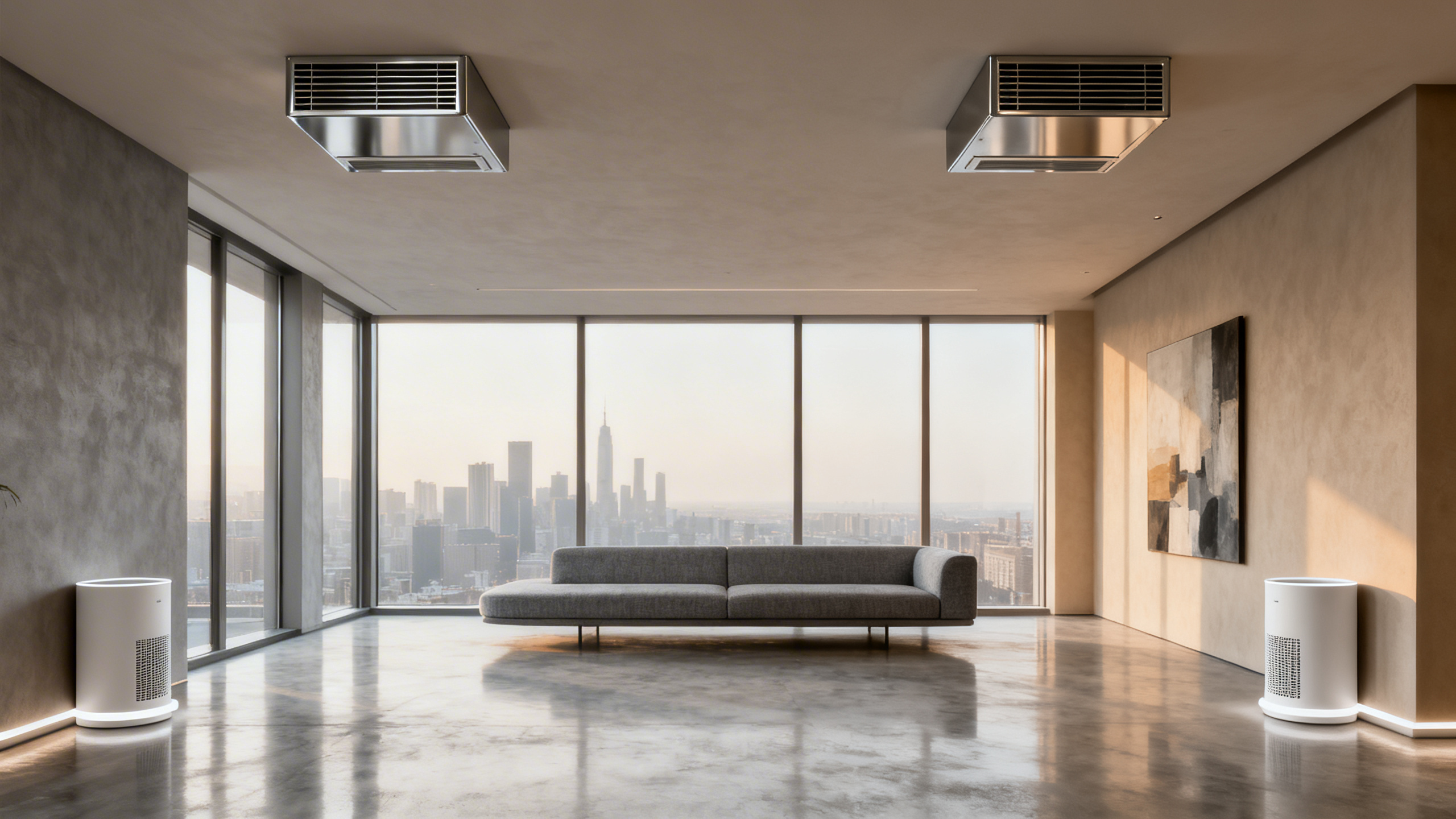
New Jersey’s on-site consumption concept moved from “someday” to operational reality in 2025. The state’s framework is not a standalone lounge license—it's a consumption area endorsement attached to an existing dispensary authorization, and it comes with strict operational controls, heavy municipal gatekeeping, and facility design expectations that can make or break a launch.
This article explains the New Jersey cannabis lounges rules 2025 landscape for operators and local stakeholders, with an emphasis on practical compliance: ventilation and odor mitigation, patron controls and “serving” limits tied to state purchase caps, and the local approval hurdles that have proven to be the true pacing item.
Informational only, not legal advice.
New Jersey’s NJ Cannabis Regulatory Commission (NJ-CRC) adopted consumption area rules in early 2024 (Resolution 2024-192) and began accepting endorsement applications in 2025. Applications opened January 2, 2025 under the NJ-CRC’s process, and the state’s rollout showed how quickly the compliance bar moved from “proposed rules” to “inspection-ready buildouts.”
By mid-2025, the NJ-CRC publicly confirmed that it approved the first four consumption area endorsements at a July 15, 2025 meeting—highlighting that applicants first obtained municipal approval and met facility, safety, and ventilation requirements described in the Commission’s addendum materials. External source: https://www.nj.gov/cannabis/news-events/20250715.shtml
New Jersey uses the term cannabis consumption area rather than “lounge” in its rules. The key structural point for compliance planning is that an on-site consumption space must be on the same premises as the retail operator and is accessed through the dispensary.
The endorsement process itself is codified in NJ rules under N.J.A.C. 17:30 (Subchapter 14 includes the endorsement application process and conduct requirements). A useful public index is here: https://www.law.cornell.edu/regulations/new-jersey/title-17/chapter-30/subchapter-14
A consumption area endorsement is a two-key system:
NJ’s rules provide a timeline for the local review step: within 28 days of receiving a complete endorsement application, the municipality determines whether it complies with local restrictions and whether it receives local endorsement, and informs the Commission of its determination. External source: https://www.law.cornell.edu/regulations/new-jersey/N-J-A-C-17-30-14-9
For municipalities, the NJ-CRC has also emphasized (via its municipal communications) that local approval is required and that a municipality may authorize or prohibit consumption areas by ordinance or regulation. Example municipal FAQ bulletin: https://content.govdelivery.com/accounts/NJCANNABIS/bulletins/3ef7afd
Even if your lounge project is “design-complete,” timing matters in New Jersey because application acceptance windows and phased access affect who can apply and when.
Industry reporting (and law firm compliance updates tracking the NJ-CRC rollout) described a phased acceptance approach in 2025, with applications opening January 2, 2025 and later expanding to broader pools of licensees. One summary of the July 2025 expansion: https://vicentellp.com/insights/new-jersey-opens-cannabis-consumption-area-endorsements-to-all-class-5-retailers/
What you should take away operationally:
The NJ-CRC’s posture is consistent with broader cannabis compliance priorities: prevent youth access, prevent diversion, protect neighbors, and keep the premises safe and monitorable.
For a consumption area endorsement, those themes show up in three main buckets:
1) Local approval and ongoing local political risk2) Ventilation/odor and nuisance prevention3) Operational controls (age 21 entry, purchase/serving limits, security, and exit rules)
Let’s break down each.
Municipalities in NJ have wide discretion over whether consumption areas are allowed at all, and if allowed, under what local conditions.
Common municipal gating issues (and where they bite your schedule) include:
A practical approach: treat the municipality as a co-regulator and plan for a public-facing operating model—especially around odor control and complaint response.
NJ-CRC’s public materials on consumption areas also emphasize that endorsements must be renewed annually and require both state and local approval. NJ-CRC overview: https://www.nj.gov/cannabis/highpoints/20230213.shtml
That means your lounge compliance program must be built to survive changing council membership, neighborhood concerns, and inspection cycles.
Ventilation is not a branding decision in New Jersey; it’s a licensing and renewal survivability issue.
NJ’s adopted consumption area rules link indoor smoking/vaping/aerosolizing ventilation expectations to requirements applicable to cigar lounges under New Jersey’s Smoke-Free framework, as reflected in NJ-CRC’s adoption memo language. External source (rule adoption memo): https://www.nj.gov/cannabis/documents/meetings/2024-01-17/Memorandum%20Recommending%20the%20Cannabis%20Consumption%20Areas%20Rule%20Adoption.pdf
Because “cigar lounge” ventilation standards are highly technical and can vary by design, building code interpretation, and mechanical engineering sign-off, your safest posture is:
Outdoor consumption areas are not “open patios.” Rules and guidance emphasize barriers/walls/fences sufficient to prevent reasonable public visibility and to control migration into prohibited spaces.
New Jersey’s compliance materials repeatedly circle back to odors and neighborhood impacts. NJ-CRC’s initial rules summaries have referenced expectations that businesses contain odors and engage with neighbors. For context (initial rules summary PDF): https://www.nj.gov/cannabis/documents/rules/Final%20Rule%20Summary.pdf
If you are designing a lounge, build an odor program that includes:
Operators often look for a simple ACH number to aim for. In NJ, the more compliance-safe approach is to:
Because enforcement and local approvals may hinge on nuisance outcomes, “it meets X ACH” is less persuasive than “it demonstrably controls migration and is commissioned and maintained.”
New Jersey’s retail rules require age verification via photo ID for adult-use purchases, and personnel must log that ID examination and age confirmation occurred. External source: https://www.law.cornell.edu/regulations/new-jersey/N-J-A-C-17-30-14-3
For lounges, build your entry control so it can be proven:
NJ’s consumption area conduct rule requires the operator to limit the amount sold to a person to be consumed in the consumption area (or brought in if permitted) to no more than the sales limits set by statute and rules. External source: https://www.law.cornell.edu/regulations/new-jersey/N-J-A-C-17-30-14-10
For adult-use, NJ consumer guidance summarizes per-transaction limits as up to the equivalent of 28.35 grams (1 ounce) of usable cannabis, and also notes possession limits and lounge-related policies. Official consumer guidance: https://www.nj.gov/cannabis/adult-personal/
Important nuance for operators: “serving limits” inside a lounge are not necessarily a separate dose cap like alcohol units in some jurisdictions; instead, New Jersey ties the ceiling to purchase limits and expects the lounge to enforce those ceilings and prevent diversion.
While local ordinances may impose fixed time limits, even without a specific statewide “two-hour rule,” operators should treat session-length controls as part of an impairment management program:
NJ-CRC and NJ consumer guidance compare lounge exits to “open container” rules for alcohol: patrons are not allowed to leave a consumption area with open packages. Official guidance: https://www.nj.gov/cannabis/adult-personal/
Operationally, this means you need:
NJ rules prohibit a dispensary/retailer from operating as a retail food establishment, and they prohibit sale of food, beverages, alcohol, or tobacco on the premises—with narrow exceptions. Critically, the rule permits consumption of food brought by or delivered to consumers in a consumption area, where allowed by law. External source: https://www.law.cornell.edu/regulations/new-jersey/N-J-A-C-17-30-9-5
The NJ-CRC also stated publicly that sale of food/alcohol/tobacco/nicotine products in consumption areas is prohibited, but patrons may bring in or order food. External source: https://www.nj.gov/cannabis/news-events/20240118.shtml
Takeaway:
NJ-CRC materials and rules are clear: alcohol is prohibited in consumption areas. NJ-CRC highpoints: https://www.nj.gov/cannabis/highpoints/20230213.shtml
If your broader venue concept includes alcohol elsewhere on the property, treat this as a high-risk design choice: separation, access control, signage, and staff training must prevent cross-over.
Your floorplan package should be prepared like a compliance exhibit—not like an architectural mood board.
At minimum, your plans should clearly show:
New Jersey requires robust security programs for cannabis businesses generally. The security rule at N.J.A.C. 17:30-9.10 addresses video surveillance systems monitoring critical control activities. External source: https://www.law.cornell.edu/regulations/new-jersey/N-J-A-C-17-30-9-10
Even if your lounge is “just a room,” regulators and local officials will expect the lounge to be covered by the same surveillance logic as retail: entrances, exits, transaction points, and any area where product is handled.
Practical compliance notes:
New Jersey’s rules do not ask operators to diagnose impairment. But you should assume regulators and municipalities expect a reasonable program to:
Build an impairment monitoring SOP that includes:
Also plan for the rule reality that on-duty personnel may not consume in the consumption area, with a limited accommodation concept for registered medical patients in private areas. External source: https://www.law.cornell.edu/regulations/new-jersey/N-J-A-C-17-30-14-10
A lounge can meet every technical requirement and still get stuck at renewal if neighbors complain and you can’t show responsiveness.
Your nuisance and complaint program should include:
This is also where ventilation maintenance logs become more than engineering artifacts—they become political insurance.
Insurance isn’t a state “endorsement requirement” in the same way as a security plan, but it is a practical necessity for lease negotiations, investors, and risk management.
For lounge operations, discuss with your broker:
Treat your impairment monitoring SOP and security plan as underwriting assets.
A consumption lounge is a public-facing space and should be treated as a place of public accommodation under ADA Title III concepts. Buildouts commonly fail on:
Do an ADA review before construction documents are finalized and again before opening.
Many operators want lounge check-ins, reservations, “VIP” tracking, or loyalty analytics. In New Jersey, that intersects with the New Jersey Data Protection Act (NJDPA), which became effective January 15, 2025 and creates obligations for certain businesses processing personal data.
For official consumer-facing information about the NJ data privacy law, see NJ Division of Consumer Affairs FAQs: https://www.njconsumeraffairs.gov/ocp/Pages/NJ-Data-Privacy-Law-FAQ.aspx
Practical lounge implications:
If you use ID scanning technology, ensure your vendor contracts address retention, security, and deletion.
Use this pre-opening checklist to pressure-test readiness before you invite inspectors—or the public.
New Jersey maintains a public Violations and Enforcement page for regulated businesses, illustrating that enforcement actions are documented and can cover sales/retail and safety issues. Official page: https://www.nj.gov/cannabis/businesses/violations-and-enforcement/
For lounges, the biggest “repeatable” enforcement risks tend to be:
If you’re planning (or operating) a New Jersey consumption area endorsement, use https://cannabisregulations.ai/ to centralize cannabis compliance workflows: SOP libraries, licensing and renewal checklists, surveillance and ventilation documentation trackers, staff training logs, and municipal readiness packets—so your lounge can open smoothly and stay open.