

Sign Up
Ready to replace complexity with clarity?
Answer your real world compliance questions (limited time) and save thousands in legal fees and avoided fines.
Automate Compliance Today

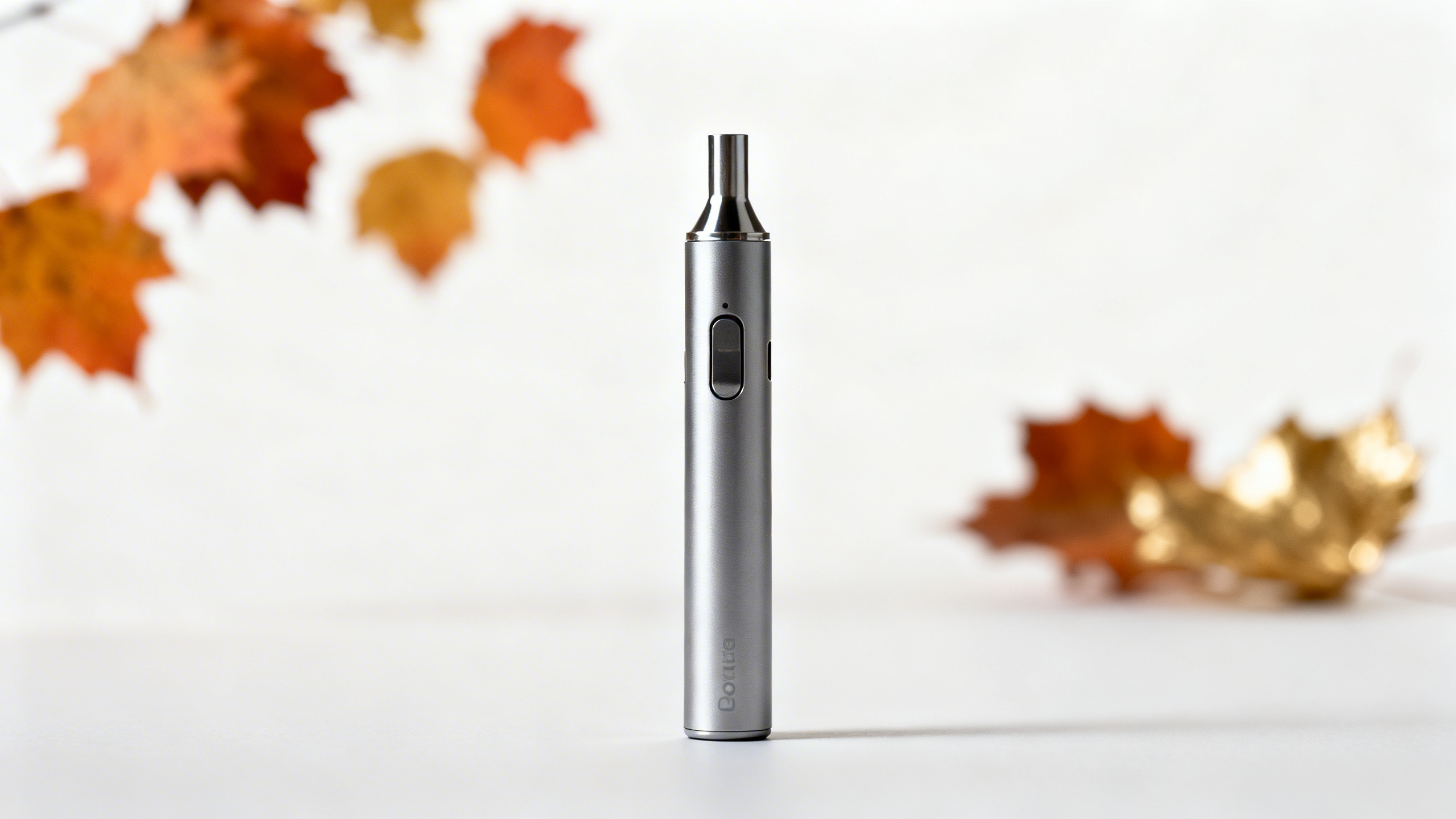
Quebec is preparing to introduce regulated vape cartridges and compatible devices through the province’s sole legal retailer, the Société québécoise du cannabis (SQDC), with availability targeted for fall 2025 and first sales beginning November 26, 2025 (as confirmed in SQDC’s November 18, 2025 media release). This is a significant policy and compliance shift for the province, which had previously prohibited these product formats.
For operators, the most important takeaway is that Quebec is not simply “catching up” to other jurisdictions. The province is launching this category under a uniquely restrictive framework anchored by two defining constraints:
That combination will shape formulation strategy, COA/attestation packages, labeling, and the commercial viability of many national vape SKUs that were designed for higher potency or flavored profiles.
This article is informational only and not legal advice.
Industry reporting and SQDC supplier notices align on a defined cartridge submission period. SQDC documentation for suppliers indicates:
These dates appear in SQDC supplier-facing information notes about adding vape products and the opening of the cartridges product call.
Practical implication: by the time the province announced retail availability for late November 2025, suppliers were already expected to have been in development, stability, and packaging-readiness months earlier. For brands still planning Quebec entry, the lesson is to build long lead times and treat SQDC calls as a gating item for launch.
SQDC’s media release (Nov. 18, 2025) confirms commercialization of vape products starting November 26, 2025 across its retail network and online.
External coverage (including major Quebec outlets) also reported a limited initial assortment (dozens of SKUs rather than hundreds), reinforcing the expectation of a controlled, conservative rollout.
External link (official): https://www.sqdc.ca/fr-CA/a-propos/M%C3%A9dias/2025/11/18/La-SQDC-d%C3%A9bute-la-commercialisation-des-produits-de-vapotage
Quebec applies a long-standing potency ceiling on non-edible formats. Under Quebec regulation, the THC concentration present in cannabis (excluding edible products) must not exceed 30% w/w.
This matters because inhaled extracts are often formulated well above 30% THC in other Canadian provincial markets. A Quebec-compliant vape portfolio therefore requires either:
External link (official Quebec regulation): https://www.legisquebec.gouv.qc.ca/en/ShowDoc/cr/C-5.3,%20r.%200.1/
At the federal level, Canada regulates inhaled extracts with rules that include package THC limits (commonly discussed as up to 1,000 mg THC per immediate container for extracts) and other requirements under the Cannabis Act and Cannabis Regulations.
Quebec’s 30% w/w cap is different: it’s a provincial product-class restriction that can be more limiting than the federal approach. Compliance teams should treat Quebec as its own specification set, not just “Canada minus one or two tweaks.”
External link (federal regulations): https://laws-lois.justice.gc.ca/eng/regulations/sor-2018-144/
A core theme of Quebec’s policy posture is minimizing youth appeal and normalization. In practice, that means vape offerings at SQDC are expected to avoid the flavored profiles common elsewhere.
Based on reporting and SQDC positioning, products are expected to be limited to cannabis-typical sensory profiles, with no non-cannabis flavorants. In other words:
From a compliance perspective, this is less about marketing language and more about what is inside the cartridge.
Even where a specific ingredient is not singled out by provincial text, SQDC technical specifications and procurement decisions can effectively ban or exclude certain inputs. Brands preparing Quebec submissions should have a defensible “nothing-to-hide” package addressing the ingredients that regulators and retailers most commonly scrutinize.
Controls to build into your quality system:
A best practice is to maintain:
Quebec is structurally different from most markets because SQDC is the exclusive legal retailer for adult-use products in the province. That creates a “single gate” commercialization model:
Early coverage of the launch indicated a relatively limited number of initial products and standardized device compatibility (notably common 510-thread cartridge formats).
This has two implications:
SQDC publishes extensive supplier guidance (general procurement and operational requirements). While not a statute, these documents often function as practical law for market entry.
Start here:
External link (SQDC supplier documents hub): https://www.sqdc.ca/en-CA/about-us/suppliers
Even if your packaging already complies federally (plain packaging, standardized symbol, health warnings, child-resistant requirements, etc.), Quebec businesses must also plan for French-first compliance.
Quebec’s language regime has been strengthened through reforms associated with Bill 96 (amending the Charter of the French Language), with phased implementation timelines beginning June 1, 2025 and additional requirements extending into later years.
While the precise application can vary depending on product type, trademark status, and what is considered “marked on the product,” the operational reality for regulated goods sold province-wide is straightforward:
If you are launching into Quebec for the first time, do not treat translation as the final step. It affects dielines, compliance copy reviews, print production, and inventory allocation.
External link (background on Bill 96 packaging/signage updates): https://www.mltaikins.com/insights/quebecs-new-legal-requirements-relating-to-packaging-and-signage/
Although this post focuses on the vape rollout, consumer rules in Quebec affect merchandising, education, and enforcement risk.
Quebec maintains one of the most restrictive age thresholds in Canada for adult-use access: 21+ to purchase.
Retailers and brands should expect strong emphasis on:
Quebec publishes penalty ranges for non-compliance with rules around possession and consumption in prohibited areas. These are not theoretical: they influence store policies, consumer education content, and how SQDC frames “responsible use.”
External link (official Quebec overview and fines): https://www.quebec.ca/en/health/advice-and-prevention/alcohol-drugs-gambling/recognizing-drugs-and-their-effects/cannabis/regulating-cannabis-in-quebec/cannabis-regulation-act
Below is a practical, submission-oriented checklist designed around the “swing factors” most likely to determine acceptance: potency, ingredient/flavor rules, documentation, and Quebec-specific labeling.
Expect SQDC and internal compliance reviewers to ask:
Build a single “source of truth” folder per SKU with:
Even with a confirmed launch date (Nov. 26, 2025), the compliance story continues. Businesses should monitor:
Staying current matters because in Quebec, policy and procurement can shift quickly—and changes can apply to existing SKUs, not just new submissions.
If you’re preparing a submission, reformulating to meet the 30% THC cap, or building a documentation package to support a “no added flavors” claim, use https://cannabisregulations.ai/ to track Quebec updates, compare provincial requirements, and operationalize cannabis compliance workflows across licensing, packaging/labeling, testing, and retail readiness.