


Sign Up
Ready to replace complexity with clarity?
Answer your real world compliance questions (limited time) and save thousands in legal fees and avoided fines.
Automate Compliance Today

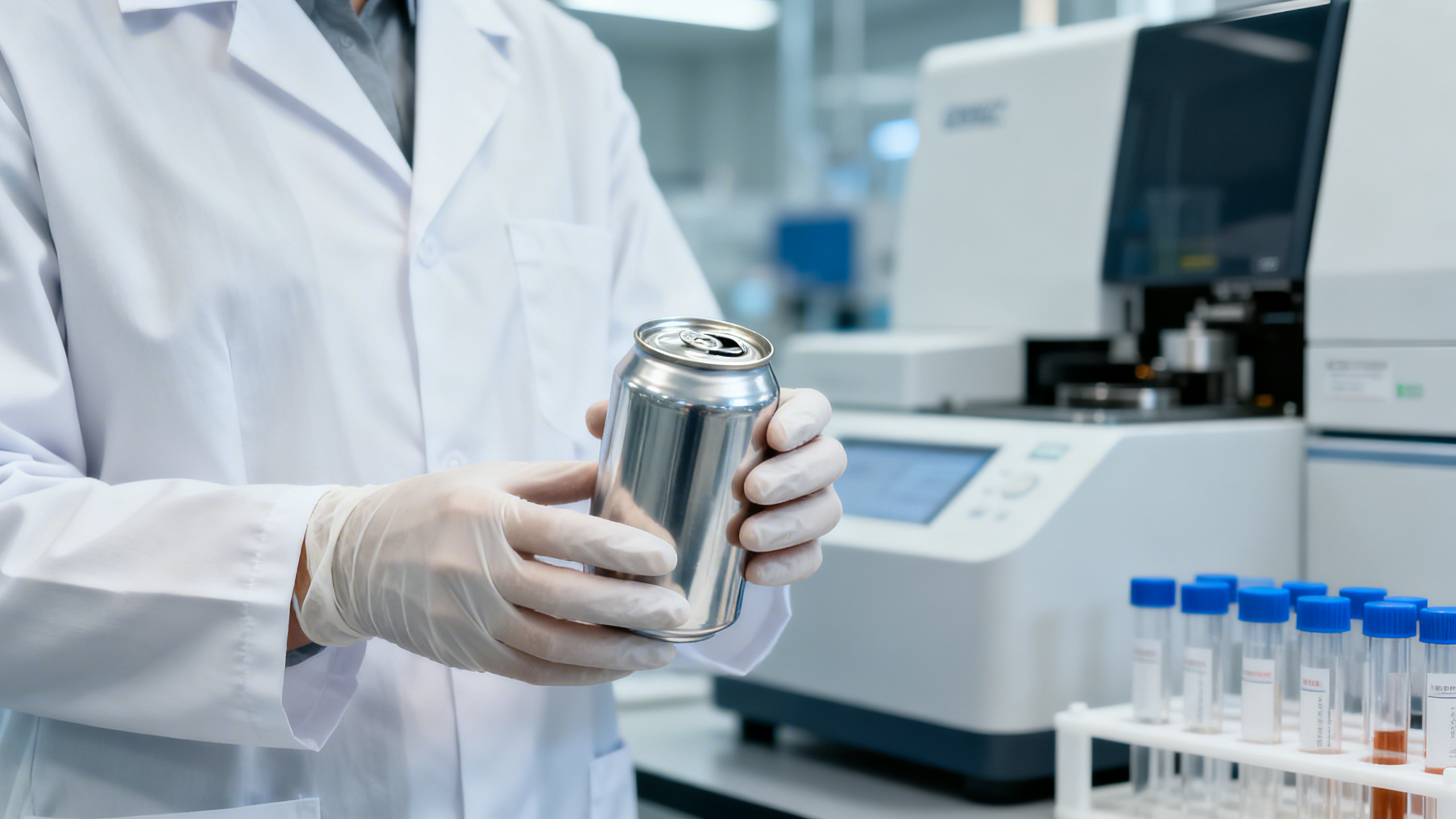
Across the U.S., the dispensary rollout of infused drinks has accelerated—and with it, scrutiny is shifting from “traditional” contamination (microbials, pesticides, residual solvents) toward packaging–product interactions that can change a drink over time.
Two risk categories are converging:
In other words, a beverage can pass release testing on day 0 and still become a recall candidate by day 60.
State regulators haven’t issued one unified national standard for can-liner migration in infused beverages, but enforcement trends show rising expectations for documented stability, traceability, and preventive controls. California’s regulator, for example, has publicly posted beverage recalls tied to packaging safety issues (a signal that packaging failures are already on the radar). See California’s official recall archive for examples of beverage-related actions: https://www.cannabis.ca.gov/consumers/cannabis-recalls-and-safety-notices/cannabis-recalls-archive/
Separately, mainstream beverage recalls for metal fragments/foreign material keep the broader category sensitive, and that sensitivity carries into infused drink oversight. Example consumer-facing recall coverage: https://www.today.com/food/recall/coca-cola-recall-2025-rcna239130
This post lays out a practical, audit-ready THC beverage can liner migration testing 2025 plan designed to reduce recall risk—particularly for acidic, surfactant-rich nanoemulsions.
Informational only. This is not legal advice and not a substitute for state-specific regulatory counsel or qualified laboratory/packaging engineering guidance.
1) Corrosion and metal exposure at vulnerable points
Even with modern aluminum cans, risk can concentrate at seams, scored openings, and any areas where coating coverage is imperfect. Low pH, chloride salts, and certain acids can increase corrosion potential—especially over warm storage.
2) Coating/liner interaction with surfactants and solvents
Nanoemulsions often rely on emulsifiers, surfactants, and solubilizers that can behave like “cleaners” against coatings over time. This may contribute to:
3) Potency drift and adsorption
Some formulations experience potency loss or distribution changes where actives partition into the liner or accumulate at the container interface. This complicates compliance because many states regulate potency with tolerance bands, and enforcement can occur after products have sat in retail.
A useful industry signal of this issue: reporting has highlighted that liner interactions can degrade potency over time in canned infused drinks. Example coverage: https://kstp.com/kstp-news/top-news/thc-beverage-makers-adapt-to-canning-quirk-that-degrades-potency/
Even where state rules focus primarily on contaminant panels and labeling, inspectors and buyers increasingly ask for:
This is consistent with the broader food and packaging compliance environment where documentation, preventive controls, and chemical hazard management are emphasized.
While Washington’s action is not beverage-can-specific, it’s a strong indicator of momentum toward broader metals risk control expectations. In June 2025, WSLCB announced rulemaking activity to consider expanding metals testing requirements (CR-101). Source: https://content.govdelivery.com/accounts/WALCB/bulletins/3e6b1e7
For beverage brands planning multistate expansion, this matters because your strictest state often becomes your national QA baseline.
The goal is to build a packaging validation program that stands up to:
Below is an actionable plan you can adapt.
Before testing, document exactly what you are testing.
At minimum, create a controlled specification that includes:
Build into your procurement and change control: no liner chemistry changes without requalification.
Use accelerated conditions to quickly identify “bad pairings” of formula and liner.
Common approaches include elevated temperature storage (e.g., 30–40°C) and light exposure if relevant. Your exact protocol should be justified scientifically and aligned with how the product is distributed.
Measure at minimum:
Run the product under intended storage conditions and your actual shelf life.
Minimum checkpoints many programs adopt:
Continue to end-of-shelf-life and, ideally, add a short post-shelf-life abuse window (e.g., +30 days) if your distribution chain is imperfect.
Most infused product metals testing programs focus on ingredient contamination. For cans, you also want to detect whether storage increases metals.
Work with an ISO/IEC 17025-accredited laboratory that can run ICP‑MS and can validate your beverage matrix.
At a minimum, screen for the “usual suspect” toxic elements that many state programs already emphasize (commonly including lead, cadmium, arsenic, mercury). Then add packaging-relevant elements often associated with alloys, coatings, inks, or process equipment contact, such as aluminum, tin, nickel, chromium, and others as justified by your materials.
Even if your state panel doesn’t require all of these, trending them over time is valuable for early warning.
ICP‑MS is widely used for trace elemental analysis and can achieve low detection limits appropriate for risk management in ingestibles.
While USP <232>/<233> are pharmaceutical chapters, they’re frequently referenced as a framework for elemental impurities control and analytical procedures. FDA has also issued guidance connecting elemental impurity control to these frameworks for drug products (useful as an analytical reference point, not a direct beverage rule). See FDA PDF: https://www.fda.gov/media/98847/download
The market shift away from BPA-based epoxy systems has increased focus on alternative chemistries, and globally there is heightened attention on bisphenols in food contact materials.
For perspective, the EU adopted Commission Regulation (EU) 2024/3190 addressing BPA and other bisphenols in certain food-contact materials, including transitional periods (not U.S. law, but it influences supplier documentation and retailer expectations). Commentary summarizing the regulation and transition windows: https://www.hoganlovells.com/en/publications/eu-bans-bpa-in-food-contact-materials-what-does-it-mean-for-industry
If you are using alternative liners, you should obtain from suppliers:
Migration testing is typically performed with food simulants or product itself, depending on your test plan, and should include:
The practical business goal is not academic perfection—it’s to define acceptance criteria and a requalification trigger that prevents surprises.
Infused drinks aren’t uniform solids; they’re dispersions that can separate subtly.
AOAC has published consensus performance requirements relevant to infused beverage matrices, including beverage sample preparation considerations and heavy metals in beverage matrices.
Examples:
Even if you are not “AOAC official method” compliant, aligning your internal validation and lab selection to these expectations strengthens defensibility.
For each checkpoint (open/30/60/90):
When you’re investigating metals or off-flavors, the can isn’t always the culprit. Canning lines can contribute residues (cleaners/sanitizers), carryover flavors, and metal ions from worn parts.
Your packaging safety plan should include:
Even in the broader food world, preventive controls guidance emphasizes monitoring, verification, and recordkeeping as a core expectation. If you operate under a co-packer’s SQF/BRCGS program, these elements are typically standard.
If you use a co-packer, your Quality/Supply Agreement should clearly define:
The biggest operational failure mode is ambiguity—especially when complaints hit.
Acceptance criteria should be set using:
When an out-of-spec result appears at day 60, the difference between a small correction and a brand-damaging recall is speed.
Build a playbook that includes:
California’s public recall postings show that enforcement is not theoretical; actions become public and can expand quickly if documentation is weak. Recall archive: https://www.cannabis.ca.gov/consumers/cannabis-recalls-and-safety-notices/cannabis-recalls-archive/
If you’re building or updating a beverage compliance program for 2025–2026, CannabisRegulations.ai can help you operationalize a packaging safety plan—study design, documentation templates, co-packer QSA clauses, and state-by-state compliance alignment—so you’re ready for inspections, retailer audits, and rapid scale.
Get support at https://www.cannabisregulations.ai/