


Sign Up
Ready to replace complexity with clarity?
Answer your real world compliance questions (limited time) and save thousands in legal fees and avoided fines.
Automate Compliance Today

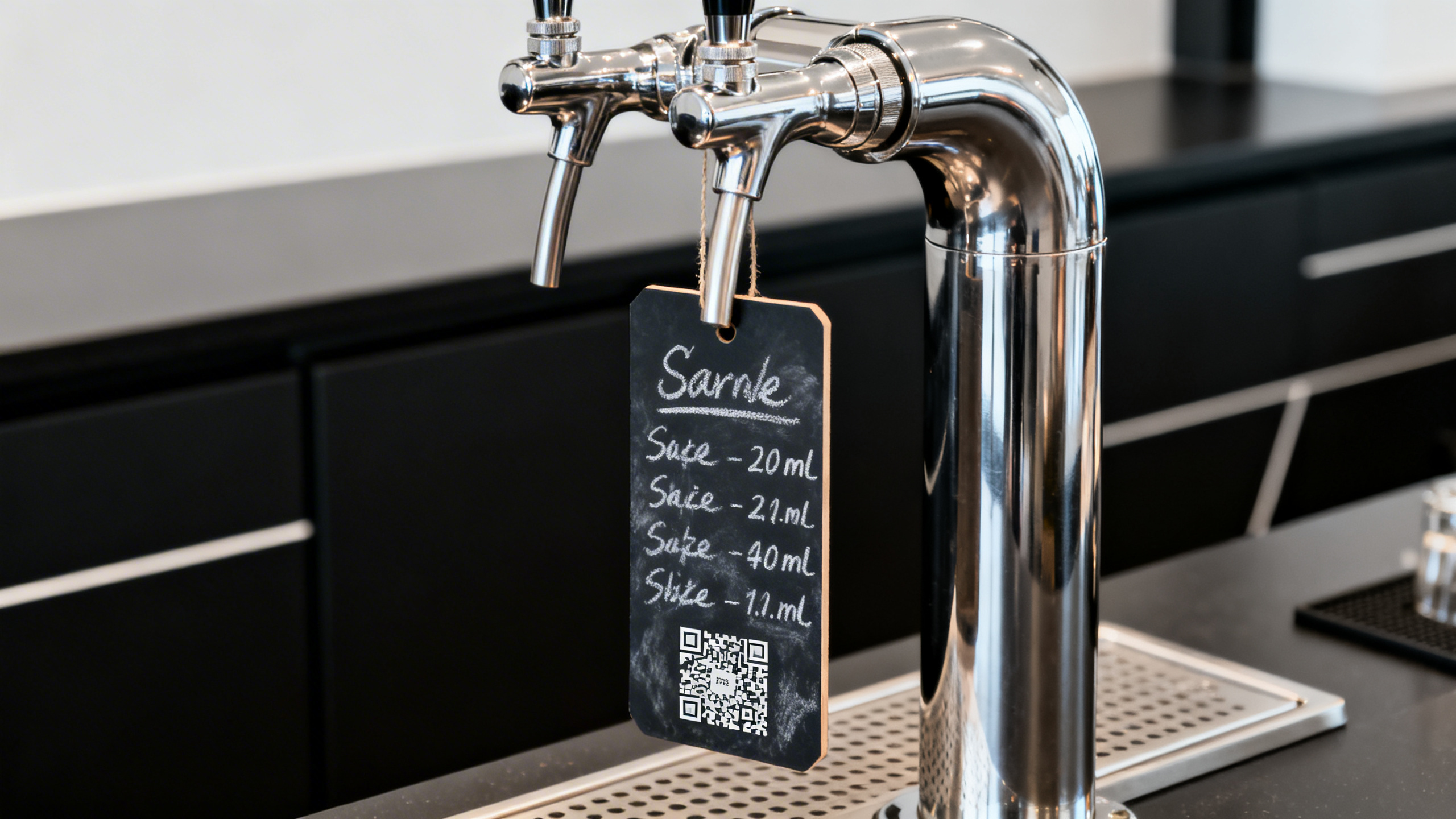
Draft (kegged) hemp‑derived THC seltzers are showing up in taproom conversations everywhere
But the compliance reality in the U.S is blunt: in most states, intoxicating hemp beverages are regulated like packaged consumer goods (or like alcohol), and those frameworks generally assume sealed, labeled, batch‑traceable containers sold through age‑gated channels
When a beverage is served “on tap,” key compliance pillars can break at once: the serving size becomes variable, statutory label warnings disappear at the point of service, and health departments may treat draft systems as food‑contact equipment that requires validated cleaning and contamination controls
This post is informational only and not legal advice
In 2025, whether THC beverages on tap are legal depends less on what is in the keg and more on how your state structures hemp‑THC beverage regulation
Across the country, three policy patterns dominate:
1) “Hemp as food” model (public health / agriculture agencies). These states often require manufacturing licensing, lab testing, and packaging/labeling rules that assume sealed retail units
2) “ABC‑style” model (alcohol regulators). More states are experimenting with alcohol‑style controls for intoxicating hemp beverages (producer/wholesaler/retailer tiers, 21+ rules, enforcement stings). These systems still typically contemplate packaged product rather than open dispensing
3) “Cannabis channel only” model (adult‑use cannabis regulators). Some jurisdictions treat intoxicating hemp cannabinoids as regulated cannabis and restrict sales to licensed cannabis retailers, where on‑tap service is generally not part of the standard retail permissions
Even where hemp‑THC beverages are lawful to sell, bulk dispensing (kegs, growlers, draft pours) is often not explicitly addressed—and when it is, it tends to be constrained by labeling, dosing, and food‑code requirements
Most hemp beverage frameworks require some combination of:
These requirements are straightforward for cans and bottles. They are hard for a pint glass or plastic cup
A good example of the “packaged product” assumption appears in Georgia’s consumable hemp rules, which direct that labels for beverages express total delta‑9 THC in milligrams per serving and per package and require ingredient disclosures and warning elements for products sold in final packaged form (Georgia rules portal, GAC 40‑32‑5) https://rules.sos.ga.gov/GAC/40-32-5
Similarly, Texas’ consumable hemp labeling rules contemplate retail products bearing information directly or via QR code/URL linking to required details (Texas DSHS Consumable Hemp Program) https://www.dshs.texas.gov/consumable-hemp-program-labeling and 25 TAC §300.402 https://www.law.cornell.edu/regulations/texas/25-Tex-Admin-Code-SS-300-402
Draft service turns those label requirements into an operational challenge: your point‑of‑sale signage and “auxiliary labeling” may need to carry the missing disclosures
State frameworks increasingly cap THC on a mg per serving and mg per package basis
Minnesota’s Office of Cannabis Management, for instance, explains that lower‑potency hemp edible products (including beverages) may contain up to 5 mg THC per serving and 50 mg THC per package, and that businesses had to apply during an October 2025 window to continue selling these products (MN OCM consumer page) https://mn.gov/ocm/consumers/lphe-products/index.jsp
If you pour from a keg:
This is why many regulators prefer sealed single‑serve containers: it locks dosing at the manufacturer level
Health departments don’t regulate THC, but they do regulate food safety. Tap systems, fittings, lines, and nozzles can be considered food‑contact surfaces that must be cleaned and sanitized at required frequencies
Most states base retail food safety on the FDA Food Code. The FDA Food Code 2022 includes detailed requirements on equipment design, protection of dispensing equipment, and cleaning/sanitizing frequency for food‑contact surfaces (FDA Food Code landing page) https://www.fda.gov/food/fda-food-code/food-code-2022
In addition, Food Code provisions address refilling returnables and preventing contamination during refill operations (commonly adopted by state and local health agencies). A “bring‑your‑own growler” program may trigger these rules in ways that a sealed can sale does not
Bottom line: if you want draft hemp‑THC service, you need an alcohol‑grade draft cleaning program plus documentation that will satisfy local inspectors, not just state hemp regulators
A number of states—especially in the South and adjacent regions—have been moving hemp‑THC beverages toward alcohol‑style oversight (licensing tiers, age‑21, enforcement authority, excise taxes)
But even in ABC‑style states, the rules usually target retail sales of packaged product rather than open dispensing
Texas provides a clear example of ABC involvement without a clear “draft service green light.” Under Executive Order GA‑56 implementation, TABC adopted emergency rules prohibiting TABC license/permit holders from providing consumable hemp products to minors and requiring ID verification
TABC also warns that selling/serving/delivering consumable hemp products to a person under 21 can result in cancellation of the alcohol license/permit (TABC Consumable Hemp Products page) https://www.tabc.texas.gov/texas-alcohol-laws-regulations/consumable-hemp-products/
This is a compliance reminder: even if your state allows the products generally, your alcohol license status can increase enforcement risk, and draft service raises additional issues (serving control, label transfer)
Kentucky’s SB 202 created an alcohol‑style distribution structure for cannabis‑infused beverages and, per Kentucky ABC FAQs, as of June 1, 2025 these products may only be sold by the package for off‑premise consumption at licensed quota retail package stores (KY ABC SB 202 FAQ PDF) https://abc.ky.gov/Documents/SB%20202%20FAQs.pdf
“By the package” is the opposite of a keg pour model—and it shows where regulators’ heads are: sealed, labeled, trackable units
Alabama lawmakers moved toward ABC regulation for consumable hemp products through legislation that places licensing authority with the Alabama ABC Board (industry coverage indicates an ABC‑led licensing structure and adult‑only retail environments) (Alabama Reflector coverage of ABC emergency rulemaking) https://alabamareflector.com/2025/12/19/abc-board-passes-emergency-rule-on-hemp-products-over-opposition-from-law-sponsor/
Tennessee enacted a major transition shifting oversight of hemp‑derived cannabinoid products toward the Tennessee Alcoholic Beverage Commission effective January 1, 2026 (analysis and compliance commentary are widely reported) (TN.gov hemp cannabinoid page reflects the evolving rules environment) https://www.tn.gov/agriculture/businesses/hemp/hemp-derived-cannabinoids.html
These shifts increase the likelihood that ABC concepts (age‑gating, licensed premises rules, enforcement stings) apply—but they do not automatically authorize “THC on tap.” Operators still need explicit permission under the governing license type and product rules
Even for hemp‑derived products that meet Farm Bill definitions, federal agencies can still shape risk
FDA continues to state that, aside from certain hemp seed ingredients, it has not approved cannabis‑derived ingredients for use in food and emphasizes food additive/GRAS pathways (FDA overview page) https://www.fda.gov/news-events/public-health-focus/fda-regulation-cannabis-and-cannabis-derived-products-including-cannabidiol-cbd
FDA warning letters in 2025 also show ongoing enforcement against products adding intoxicating cannabinoids to conventional foods (example warning letter referencing Delta‑8 THC in food) https://www.fda.gov/inspections-compliance-enforcement-and-criminal-investigations/warning-letters/latro-inc-698196-03252025
Why it matters for draft service: bulk dispensing can look more like “food service” than packaged retail, which may attract more scrutiny from local health departments and, in some cases, state food regulators
If you are a brewery, winery, distillery, or operate on TTB‑bonded premises, remember: TTB will not approve formulas/labels for alcohol beverages containing controlled substances under federal law, and it consults FDA on hemp ingredient use (TTB FAQ A29) https://www.ttb.gov/faqs/formulas-and-labels-a29 and TTB Industry Circular 2019‑1 https://www.ttb.gov/public-information/industry-circulars/ttb-industry-circulars-19-1
Practical takeaway: even a non‑alcoholic THC beverage program can become risky if it is produced, stored, or dispensed in ways that violate alcohol regulatory expectations or co‑location restrictions
If your business wants to serve hemp‑THC beverages on draft, plan for two oversight streams:
Expect questions in five areas:
Under FDA Food Code principles, dispensing equipment must be designed to protect food and be cleanable. Many local codes require scheduled cleaning and sanitizing, and inspectors may ask for cleaning logs, chemical concentrations, and maintenance records (Food Code reference hub) https://www.fda.gov/food/fda-food-code/food-code-2022
Shared manifolds, improper cleaning, or backflow issues can create contamination risk. If you serve other beverages on draft, demonstrate line segregation and validated cleaning procedures
“Bring‑your‑own container” programs can be restricted or conditioned by local health authorities. Some jurisdictions allow returnables only when the establishment controls cleaning/sanitizing; others require single‑use containers or prohibit refilling consumer‑owned containers
If you’re offering THC growler fills, assume you’ll need:
A policy to refuse visibly dirty or damaged containers
A documented cleaning/sanitizing process (or a requirement that only new containers be filled)
Tamper‑evident sealing and compliant auxiliary labels
If the beverage contains flavors or ingredients that are allergens, the lack of a package label becomes a consumer‑risk issue. Texas DSHS, for example, reminds businesses to comply with federal allergen labeling principles and broader food labeling rules when applicable (Texas DSHS labeling page) https://www.dshs.texas.gov/consumable-hemp-program-labeling
Inspectors may not test potency, but state regulators might. A defensible program will include calibrated dispensing volumes and staff training so the customer receives the advertised mg dose every time
The safest approach is to assume draft service is not permitted unless you can point to a statute, rule, or written agency guidance that clearly allows it for your license class
Here is an operational checklist that aligns with the realities regulators are enforcing in 2025
Verify whether your ABC license class allows on‑premise service of intoxicating hemp beverages, and whether it restricts you to “by the package” sales (Kentucky’s framework is a cautionary example of packaged-only sales) https://abc.ky.gov/Documents/SB%20202%20FAQs.pdf
Confirm whether a separate hemp retailer registration or product permit is required (Texas DSHS registration rules are a common pattern) https://www.dshs.texas.gov/consumable-hemp-program/consumable-hemp-products-frequently-asked-questions
Maintain a compliance binder (digital or physical) that includes:
COA for each batch/keg
Lot numbers and chain-of-custody documentation
Ingredient list and allergen statements
A copy of the exact consumer warnings that would appear on a can
For states like Texas that explicitly require label-linked info via QR/URL, replicate this at the tap handle or POS screen so consumers can access it immediately https://www.law.cornell.edu/regulations/texas/25-Tex-Admin-Code-SS-300-402
Do not rely on “bartender judgement.” Use one of:
Fixed-volume pour devices
Metered tap systems
Pre-measured service cups with line markers
Then define a serving size that matches the formulation and your state’s caps (e.g., Minnesota’s 5 mg per serving concept for lower-potency products) https://mn.gov/ocm/consumers/lphe-products/index.jsp
If you fill a growler or serve in an unsealed cup, you will likely need:
A printed label with mg THC per serving, total mg, ingredients, and warnings
A QR code that links to the COA
Tamper-evident sealing where required or advisable
If your state requires a universal symbol or specific warning language, confirm how that can be satisfied for a filled growler or crowler-style container
Implement a written program that includes:
Cleaning frequency schedule
Chemicals used and concentration verification
Line-cleaning logs with date/time/employee signature
Preventive maintenance checks (gaskets, faucets, connectors)
Health departments will not accept “we clean it sometimes” as a control. Be prepared to show records
ABC agencies are increasingly using alcohol-style enforcement for hemp beverages
Texas is a high-visibility example: TABC’s rules require age verification and impose severe penalties (cancellation) for sales to minors by TABC licensees https://www.tabc.texas.gov/texas-alcohol-laws-regulations/consumable-hemp-products/
Even if your state does not specify “cancellation,” expect stings and escalating penalties
Your “to-go” growler concept has a transportation risk: many states treat a resealed alcohol growler as an “open container” if the seal was broken. The same logic may be applied to an intoxicating hemp beverage, especially if state law uses broad “intoxicating beverage” language or if officers treat it analogously
Because open-container rules vary widely, operators should provide conservative consumer messaging such as:
Keep any resealed growler in a trunk or locked area
Do not consume in a vehicle
Do not drive impaired; impairment can be delayed
This is both a safety practice and a brand-protection practice
Draft programs tend to break when a state’s law is written around “package” sales or “final packaged form” labels
Kentucky’s ABC guidance for cannabis-infused beverages explicitly limits retail sales to by the package for off‑premise use (not open dispensing) https://abc.ky.gov/Documents/SB%20202%20FAQs.pdf
Minnesota’s lower-potency hemp edible product framework emphasizes serving limits and packaged product controls, and the licensing posture indicates retail oversight that is designed for packaged units, not variable pours https://mn.gov/ocm/consumers/lphe-products/index.jsp
Georgia’s labeling rules for consumable hemp products assume retail “final packaged form” labels carrying mg disclosures and warnings https://rules.sos.ga.gov/GAC/40-32-5
If your state’s law and guidance is built like this, a draft program is either unlawful or requires additional written permission and an engineered compliance workaround
Before investing in kegs, tap handles, and marketing, run these questions:
You can identify an explicit allowance for on‑premise dispensing under your license type or written agency guidance
You can deliver a consistent, auditable mg per serving
You can present label-equivalent warnings and COA access at point of service
Your health department signs off (or you have written confirmation) on the tap system sanitation and any growler/refill program
Your state requires “packaged only” sales for intoxicating hemp beverages
Your compliance plan relies on verbal disclosure rather than printed/QR-linked information
You cannot show cleaning logs and equipment controls for draft lines
Your staff training and ID verification is not already alcohol-grade (or better)
THC beverages on tap legal 2025 is usually a trick question: most states regulate these products for sealed, labeled, age‑gated packages, not draft pours
Even where hemp‑THC beverages are allowed, “on tap” introduces three core compliance risks: missing labels, variable dosing, and health‑code sanitation
ABC involvement (Texas, Kentucky, emerging Southern frameworks) often increases enforcement pressure and makes age‑21 compliance non-negotiable
Health departments may treat draft systems and growler refills as food safety issues requiring documentation, cleaning validation, and contamination prevention
For consumers, a resealed growler in a vehicle can create open-container-like risk, and impairment laws still apply
If you are considering a draft hemp‑THC beverage program—kegs, growlers, or “mocktail on tap” concepts—treat it as a multi‑agency compliance project, not a marketing gimmick
Use https://www.cannabisregulations.ai/ to monitor fast-changing state rules, track licensing requirements, and build a documented compliance program (labels, COAs, dosing controls, sanitation logs, and enforcement readiness) before you pour the first serving