


Sign Up
Ready to replace complexity with clarity?
Answer your real world compliance questions (limited time) and save thousands in legal fees and avoided fines.
Automate Compliance Today

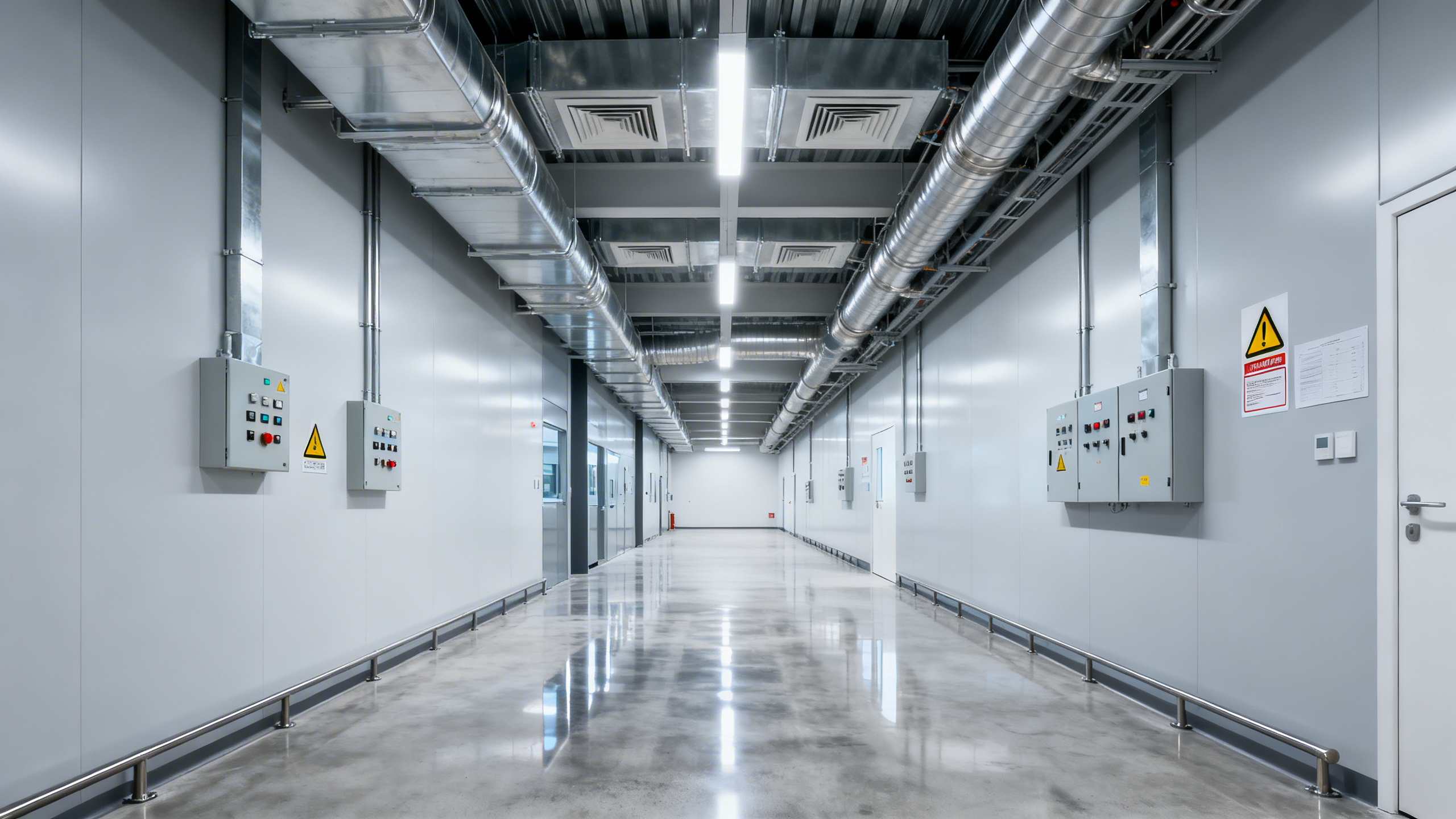
California’s energy and fire codes are converging in a way that is forcing project teams to stop treating “energy” and “life safety” as separate plan sets.
As of January 1, 2026, the 2025 California Building Energy Efficiency Standards (Title 24, Part 6) are in effect for new construction and many alterations, driving stricter requirements for lighting controls, ventilation/IAQ, and mechanical system performance. At the same time, many California jurisdictions are updating local ordinances and policies around the 2025 California Fire Code (Title 24, Part 9), which is based on the 2024 International Fire Code (IFC 2024) model language (with California amendments and local modifications).
For facilities that include hydrocarbon/volatile-solvent extraction, post-processing using flammable liquids or gases, and indoor cultivation rooms with CO₂ enrichment, this overlap has become a frequent source of plan check comments, rejected permits, and expensive redesign.
The biggest pattern we’re seeing in California: energy-optimized designs (variable-speed exhaust, demand-controlled ventilation, aggressive lighting reductions, and “smart” shutdown sequences) get flagged because they inadvertently reduce required minimum exhaust/ventilation, interfere with gas detection interlocks, or compromise emergency lighting and life-safety power intent.
This article is informational only (not legal advice). It’s written for owners, architects/engineers, contractors, and compliance managers who need a practical way to align IFC 2024 cannabis extraction Title 24 compliance into one coherent submittal.
California’s 2025 Building Standards Code cycle (Title 24) was published for an effective date of January 1, 2026—including updates to the Energy Code (Part 6) and Fire Code (Part 9). The California Building Standards Commission provides the statewide publication/effective-date framework here: https://www.dgs.ca.gov/bsc/codes
On the energy side, the California Energy Commission maintains the official 2025 energy code resources, manuals, and tools here: https://www.energy.ca.gov/programs-and-topics/programs/building-energy-efficiency-standards/2025-building-energy-efficiency
On the fire side, extraction and processing operations are regulated under IFC/CFC Chapter 39 (Processing and Extraction Facilities), with hazardous materials rules in Chapter 50, flammable/combustible liquids in Chapter 57, flammable gases in Chapter 58, and compressed gases (including CO₂ systems) in Chapter 53.
A key example of how specific the fire code is for extraction: IFC/CFC 3905.1 requires gas detection for flammable-gas solvent extraction processes (gas detection complying with Section 916). See the California Fire Code 2025 section reference: https://codes.iccsafe.org/s/CAFC2025P1/part-iv-special-occupancies-and-operations/CAFC2025P1-Pt04-Ch39-Sec3905.1
Meanwhile, the Energy Code is pushing projects toward advanced controls and lower power densities. That is positive—until an efficiency strategy undermines a prescriptive life-safety minimum.
The safest (and fastest) permitting strategy we see in California is:
This sequence matters because Title 24 compliance tools can make it tempting to “optimize away” airflow or operating time. But IFC/CFC requirements for hazardous exhaust and detection are generally minimum safety requirements that cannot be traded off.
Many plan check delays come from reviewers having to infer what you’re doing and where hazards exist.
Your narrative should clearly state:
If you’re working in a mixed-use building, MAQs and control areas often become the hinge point for whether you can remain in an F-1/S-1 style industrial context or trigger Group H construction requirements.
Below are the conflict patterns that show up repeatedly in California plan review.
Fire code intent: IFC/CFC Chapter 39 and hazardous materials provisions commonly require continuous mechanical exhaust ventilation for certain operations, including post-processing areas where flammable gases or liquids are used.
Energy code intent: Title 24 encourages efficient fans, variable-speed control, and operating schedules that reduce run time.
Common failure mode: A variable-frequency drive (VFD) is used to reduce airflow during “normal” operation, but the reduced airflow drops below the minimum exhaust rate required by the fire code basis-of-design (or below the rate assumed in a hazardous exhaust calculation).
Practical resolution:
Fire code intent: For flammable vapors/gases, detection systems are tied to alarms and mechanical responses. Many hazardous gas provisions reference thresholds like 25% of the LFL/LEL for continuing ventilation until levels drop (California Fire Code includes similar thresholds in various contexts; an example appears in CFC energy systems language noting ventilation remains on until below 25% LFL: https://codes.iccsafe.org/s/CAFC2025P1/chapter-12-energy-systems/CAFC2025P1-Pt03-Ch12-Sec1207.6.1.2.4)
Energy code intent: DCV reduces outside air based on occupancy (commonly CO₂-based), saving fan and conditioning energy.
Common failure mode: Designers implement CO₂-based DCV in a room that also has CO₂ enrichment or hazardous gas monitoring, creating confusion or unsafe interactions:
Practical resolution:
Fire/building code intent: Means of egress must remain safely illuminated and emergency systems must perform as required.
Energy code intent: Title 24 requires automatic shutoff, occupant sensing, daylighting controls, and other reductions in lighting energy.
Common failure mode: Energy controls are applied too aggressively in corridors, stair paths, lab aisles, or exterior egress discharge areas—leading to “dark path” concerns or conflicts with emergency lighting intent.
Practical resolution:
Fire code intent: Hazardous exhaust is typically discharged outdoors with defined separation requirements and is not treated like comfort-system return air.
Energy code intent: Heat recovery ventilators (HRVs/ERVs) and recirculation can offer major energy savings.
Common failure mode: Attempting to recover energy from, or recirculate, air streams that should be treated as contaminated/hazardous due to solvents, vapors, or process off-gassing.
Practical resolution:
If your facility uses CO₂ in compressed gas containers or bulk systems, you’re in IFC/CFC Chapter 53 territory, and NFPA standards (commonly NFPA 55) often appear as referenced requirements.
IFC 2024’s carbon dioxide enrichment provisions are in Section 5307. The ICC digital code chapter landing page provides the framework (subscription content may apply): https://codes.iccsafe.org/content/IFC2024V2.0/chapter-53-compressed-gases
A widely cited requirement (also reflected in many AHJ handouts) is that where insulated liquid CO₂ tanks/cylinders/piping are indoors and leakage could accumulate, the space is provided with mechanical ventilation and maintained at negative pressure relative to surrounding areas, or else gas detection is required.
Energy compliance impact: negative pressure and continuous ventilation can increase loads. Title 24 strategies must work around those life-safety-driven baselines, not erase them.
Even when the building permit set is approved, operational approvals can depend on showing ongoing compliance with state and local requirements.
California’s Department of Cannabis Control (DCC) requires manufacturers using closed-loop systems to implement SOPs and to ensure equipment and operations comply with fire, safety, and building code requirements; the California regulation (Title 4) is summarized in publicly available references, including Cornell’s hosted text of 4 CCR 17206: https://www.law.cornell.edu/regulations/california/4-CCR-17206
DCC also publishes its broader regulations and updates here: https://www.cannabis.ca.gov/cannabis-laws/dcc-regulations/
Practical takeaway: if your permit drawings show one ventilation and detection sequence, but your SOPs and actual BAS programming do another, you can run into inspection and compliance problems later.
Use this as a design-phase and submittal-phase checklist. It’s structured in the order reviewers tend to think.
For extraction/processing rooms:
For compressed gas/CO₂:
If you want reviewers to understand intent quickly, submit a coordinated package. These are not official forms—think of them as companion documents that make official forms easier to interpret.
Include:
Include headings for:
Provide:
Attach:
This “bundle” approach helps prevent a common reviewer complaint: “I see energy controls, but I don’t see how they maintain required safety ventilation and interlocks.”
California AHJs are increasingly focusing on system behavior:
Even if your equipment is properly listed, a missing or unclear SOO is one of the fastest ways to get a correction notice.
Permitting and operating these facilities in California is no longer just about passing Title 24 or passing the Fire Code—it’s about showing reviewers a single, coherent compliance story.
For practical compliance support, regulatory monitoring, and guidance on California licensing and facility obligations, visit https://cannabisregulations.ai/ and use our tools to organize your cannabis compliance, licensing, and regulations workflow from design through operations.