


Sign Up
Ready to replace complexity with clarity?
Answer your real world compliance questions (limited time) and save thousands in legal fees and avoided fines.
Automate Compliance Today

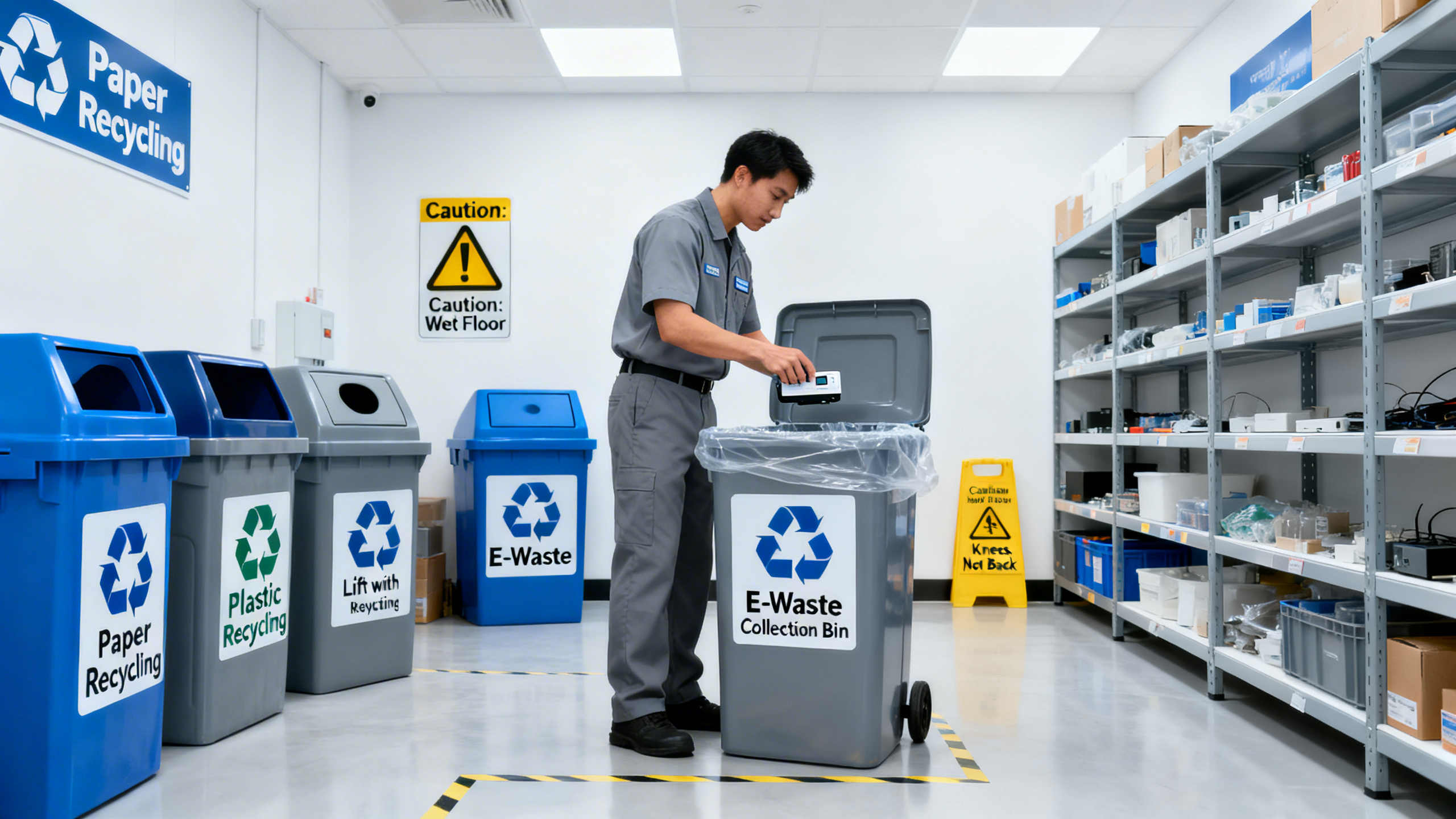
For years, many hemp retailers leaned on “send it back” workflows for defective or end‑of‑life vape hardware—especially for battery-in-device products. In 2025, that convenience started colliding with two hard realities:
The result is a reverse-logistics squeeze: retailers can’t easily mail returns, but they still have to manage customer experience, fire risk, and environmental compliance.
This article breaks down what’s changing at the federal level, why carrier acceptance is tightening, and how hemp operators can redesign reverse logistics around in‑store aggregation, contracted hazmat transport, and certified recyclers—without relying on consumer mail‑back.
Informational only; not legal advice. Rules can vary by state and by carrier contract.
Under the Resource Conservation and Recovery Act (RCRA), “universal waste” is a streamlined hazardous-waste framework for commonly generated items like batteries, lamps, mercury-containing equipment, recalled pesticides, and aerosol cans. EPA’s universal waste overview is here: https://www.epa.gov/hw/universal-waste.
For hemp retailers, the practical takeaway is that spent lithium batteries and battery-containing devices are frequently managed under universal-waste-style programs (depending on state adoption and facts), because it’s simpler than full hazardous waste rules—yet still imposes meaningful requirements.
EPA has publicly stated it is working to establish a new, distinct category of universal waste specifically tailored to lithium batteries, driven by the unique fire hazards of lithium chemistries and the growth of end‑of‑life battery volumes. EPA’s program page: https://www.epa.gov/hw/improving-recycling-and-management-renewable-energy-wastes-universal-waste-regulations-solar.
EPA’s rulemaking milestones have circulated in EPA materials and related docket summaries indicating:
(See an EPA issue-summary PDF that has been widely cited: https://www.epa.gov/system/files/documents/2025-02/universal-waste_olem_oct-2024_final.pdf.)
Even before final rules land, EPA already emphasizes that businesses should manage used lithium batteries carefully. The agency’s consumer-facing guidance on used lithium-ion batteries underscores separate collection and HHW options: https://www.epa.gov/recycle/used-lithium-ion-batteries.
In the vape segment, reverse logistics often involves:
A significant share of “returns” are not actually resale returns—they are end‑of‑life items (or at least treated that way operationally). Once that happens, you’re not just doing customer service; you’re running an end-of-life waste management program.
Retailers sometimes assume that returns are treated as “easier” than outbound shipments. Under DOT hazardous materials rules, that assumption is dangerous.
PHMSA (DOT) has published guidance explaining that the reverse logistics exception does not apply to lithium cells and batteries due to their risk profile (referencing 49 CFR § 173.185). See PHMSA’s reverse logistics brochure (“SAFE RETURNS”): https://www.phmsa.dot.gov/sites/phmsa.dot.gov/files/2024-04/Reverse-Logistics-Brochure-PHH50-0208-0224.pdf.
That guidance is one reason carrier networks are cautious: returns still have to meet full hazmat requirements when lithium batteries are involved.
The cornerstone for lithium cell/battery transport is 49 CFR § 173.185. A readable version is here: https://www.ecfr.gov/current/title-49/subtitle-B/chapter-I/subchapter-C/part-173/subpart-E/section-173.185.
Important themes for reverse logistics:
Carrier policies vary and they change frequently, but the direction is consistent: less tolerance for battery returns, more scrutiny, and more contractual controls.
Retailers are seeing restrictions show up in three ways:
A major structural reason is that parcel systems are optimized for speed and automation. Universal waste and DDR batteries are the opposite: they require manual segregation, special packaging, documentation integrity, and incident readiness.
Even if a retailer isn’t using USPS for returns, USPS standards illustrate the tightening environment.
USPS Publication 52 and associated updates have emphasized restrictions and special marking for certain pre-owned/used electronics containing lithium batteries, including requirements like “Restricted Electronic Device” and “Surface Transportation Only” for certain categories (and additional packaging standards). One 2025 Federal Register notice addresses updates to outer packaging requirements and lithium-battery mark elements: https://www.federalregister.gov/documents/2025/01/27/2025-01618/new-mailing-standards-for-hazardous-materials-outer-packaging-and-nonregulated-toxic-materials.
Publication 52 itself is here: https://pe.usps.com/cpim/ftp/pubs/pub52/pub52.pdf.
The practical business message: mail-back is increasingly fragile as a reverse-logistics channel when lithium batteries are involved.
EPA has repeatedly connected its lithium battery universal-waste work to fires caused by lithium-ion batteries in the waste management process. That’s a central motivation for a tailored universal-waste approach (see EPA’s rulemaking page: https://www.epa.gov/hw/improving-recycling-and-management-renewable-energy-wastes-universal-waste-regulations-solar).
Retailers aggregating returns onsite should treat it as a safety program, not just a bin behind the counter. OSHA’s lithium-ion battery safety fact sheet recommends controls like cool/dry storage, limiting quantities, segregating types, following DOT shipping guidance, and emergency planning: https://www.osha.gov/sites/default/files/publications/OSHA4480.pdf.
EPA has specific disposal guidance for e-cigarette-type products aimed at individuals, emphasizing they should not go in household trash or recycling and should go to HHW collection sites (because of lithium batteries and other hazards): https://www.epa.gov/hw/how-safely-dispose-e-cigarettes-information-individuals.
For hemp retailers, this affects store interactions: customers increasingly ask “Can I just throw this away?” and staff need a consistent, safety‑based script.
If carriers won’t accept your vape returns (or will only accept them under conditions you can’t operationalize), the pivot is:
Your SOP should differentiate between:
A common best practice in 2025–2026 is to:
At minimum, hemp retailers aggregating battery-containing returns should implement:
OSHA’s controls list is a strong baseline reference: https://www.osha.gov/sites/default/files/publications/OSHA4480.pdf.
Even under universal waste rules, you need core controls.
Key concepts to validate with your compliance team:
EPA has published training guidance for universal waste handlers (example PDF): https://rcrapublic.epa.gov/files/14598.pdf.
Also remember: state programs can be more specific than the federal baseline, and many retailers operate in multiple states. Build SOPs to the strictest common denominator where possible.
For most retailers, the path of least resistance in 2025–2026 is:
PHMSA’s lithium battery guide highlights that some packaging used for recycling shipments may require DOT special permits and emphasizes compliance with marking/packaging requirements: https://www.phmsa.dot.gov/sites/phmsa.dot.gov/files/2024-11/Lithium-Battery-Guide-2024.pdf.
Retailers should be prepared to show:
This isn’t just about audits; it’s also about brand and landlord risk if there is a fire incident.
Retailers are increasingly moving to language like:
Tie your policy to safety and carrier restrictions, not blame.
Train staff to ask:
If “yes,” the SOP should instruct staff to:
Many commercial leases and insurance programs now care about lithium battery storage. If you start aggregating returns onsite, consider:
As returns-by-parcel fail, reverse logistics costs shift. Expect 2025–2026 contract updates that:
This is also where your focus keyword becomes operational: lithium battery universal waste shipping 2025 cannabis vapes isn’t just SEO—it’s a budgeting and contracting reality for retailers.
While carrier timelines differ, federal signals to monitor include:
Reverse logistics for battery-containing devices is changing fast—at the intersection of cannabis compliance, hazardous materials shipping, and environmental regulations.
Use https://www.cannabisregulations.ai/ to:
If your organization is still relying on mail-back for end‑of‑life returns, now is the time to redesign the program—before your next wave of returns becomes a safety incident or a compliance scramble.