


Sign Up
Ready to replace complexity with clarity?
Answer your real world compliance questions (limited time) and save thousands in legal fees and avoided fines.
Automate Compliance Today

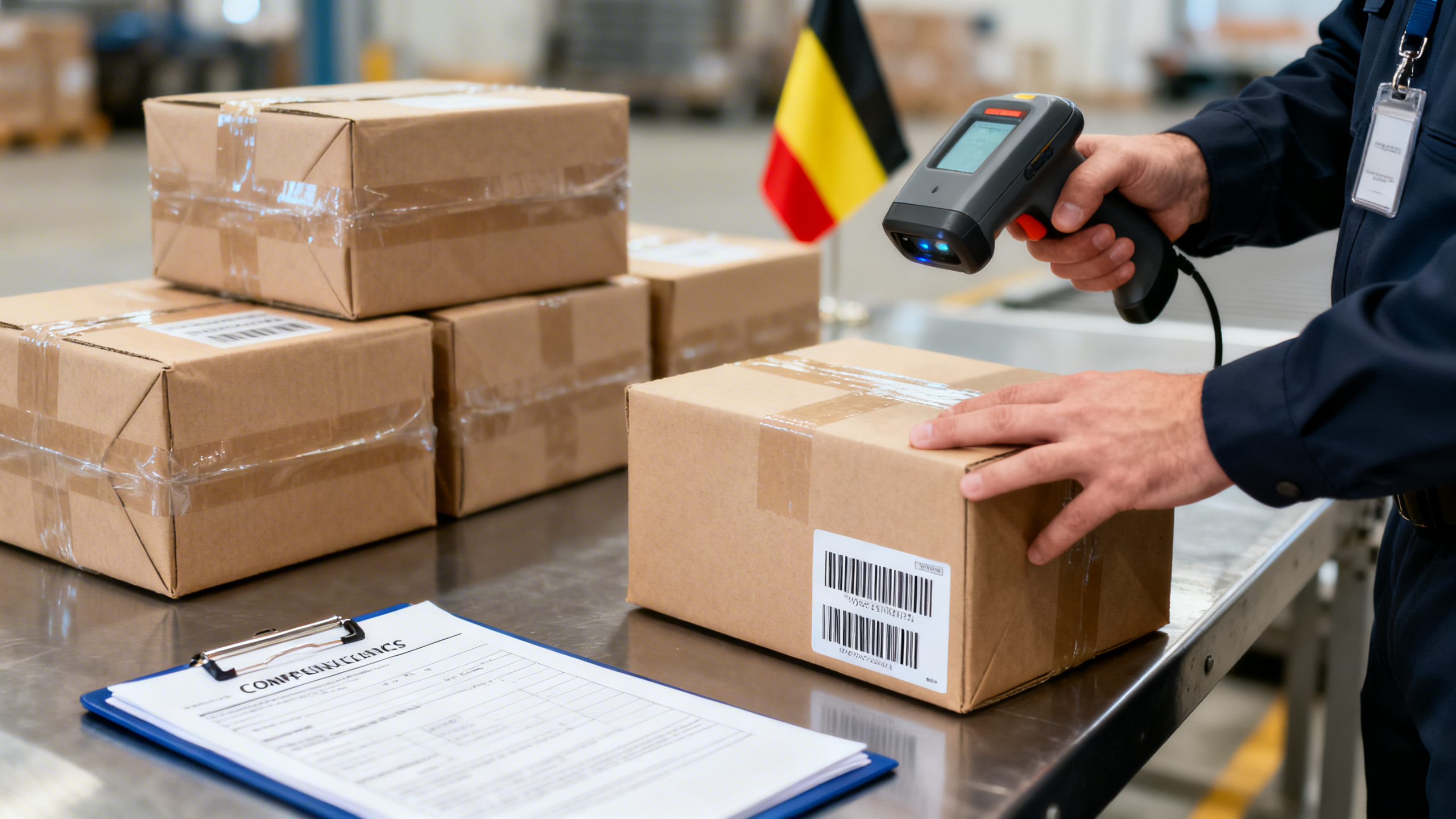
Belgium’s market for CBD products is entering a more formal—and less forgiving—phase. Public communications from the Federal Agency for Medicines and Health Products (FAMHP) and parallel positioning from the Federal Agency for the Safety of the Food Chain (FASFC/AFSCA) show a clear direction of travel: tighter classification controls, stronger inter‑agency coordination, and less tolerance for “grey area” ingestibles.
For retailers, importers, and brand owners, the practical risk in 2025 isn’t only whether a product is “allowed.” It’s whether your product is correctly classified, your claims and presentation avoid a medicinal framing, and your technical file can survive scrutiny at customs, during inspections, or in a complaint-driven enforcement event.
This article is informational only and not legal advice. Regulations can change quickly; always confirm requirements with counsel and the relevant competent authorities.
Belgium’s CBD oversight is split across different authorities depending on product type, intended use, and presentation.
FAMHP is Belgium’s medicines regulator. It publishes a dedicated page explaining how it views “medicines and other products based on … cannabidiol,” including the high‑risk boundary where a consumer product may be treated as a medicinal product due to composition, route of administration, or claims.
FAMHP also clarifies a key handoff point: products containing CBD or plant parts with Δ9‑THC and THCA not exceeding 0.3% fall under the competence of the FPS Public Health, Food Chain Safety and Environment—not FAMHP—unless they are medicines or otherwise regulated as such. In other words, staying under a THC/THCA threshold doesn’t automatically make a product “free to sell”; it often just determines which regulator will scrutinize it. Source: https://www.famhp.be/en/medicines_and_other_products_based_on_cannabis_or_cannabidiol
FASFC explains that Novel Food status is governed at EU level, with no special Belgian deviation, and points businesses to EU authorization channels. Source: https://www.fasfc.be/food/themes/european-legislation-regarding-novel-food
For ingestible CBD (oils, capsules, gummies, beverages), the practical implication is simple: if it’s considered a Novel Food and not authorized at EU level, Belgium is unlikely to treat it as “implicitly acceptable.”
Your research notes point to mid‑2025 parliamentary briefings and more visible inter‑agency coordination. Even without a single headline “ban,” this operational posture matters. When regulators tighten coordination, businesses typically see:
Belgium doesn’t decide Novel Food authorizations; the EU does. But Belgium does decide what is allowed on shelves in Belgian territory, and it enforces food law locally.
The European Food Safety Authority (EFSA) published an updated statement setting a provisional safe intake level for CBD as a novel food of 0.0275 mg/kg body weight/day (about 2 mg/day for a 70 kg adult) and reiterated that data gaps remain, particularly around toxicology and human data. Source: https://www.efsa.europa.eu/en/news/provisional-safe-level-cannabidiol-novel-food
This matters for Belgium because it affects:
If your ingestible product delivers doses far above EFSA’s provisional level, you should expect heightened scrutiny in 2025–2026—especially if the product is not clearly linked to an EU Novel Food authorization pathway.
Belgian enforcement pressure typically concentrates on product classification and presentation. That’s where many CBD businesses fail—not on the ingredient itself.
Authorities tend to assess a combination of:
If a product is presented as preventing, treating, or curing disease—or if it strongly implies pharmacological effects—it may be regulated as a medicine by function or presentation, triggering FAMHP jurisdiction.
FAMHP publishes materials on advertising rules for medicinal products that emphasize advertising must be accurate, not misleading, and cannot exaggerate properties. One recurring enforcement theme in health-adjacent products is implying that “natural” equals “safe” or “effective.” Source (general advertising rules PDF): https://www.fagg.be/sites/default/files/downloads/Advertising%20general%20rules%20EN.pdf
Even if your product is not a medicine, marketing that reads like a medicine can be used as evidence that it is being placed on the market as one.
In Belgium, “classification compliance” is a full-stack requirement: label + website + resellers + influencer scripts. Your compliant label won’t save you if your product page makes disease claims.
Importers should prepare for closer review at the border and in post‑market controls. Your research notes highlight the expectation that customs and agencies will scrutinize:
Belgian customs and enforcement statistics routinely show large volumes of drug seizures overall, which tends to support a stricter enforcement environment broadly at ports and airports (even though this is not specific to low‑THC CBD consumer goods). Businesses should assume misclassification or thin paperwork increases seizure and delay risks.
If you sell in Belgium in 2025—or ship into Belgium from another EU country—you should assemble a “ready-to-show” file that matches how Belgian authorities actually evaluate risk.
Create a concise memo that states:
Link your internal reasoning to FAMHP’s public explanation of competence boundaries and product categories. Source: https://www.famhp.be/en/medicines_and_other_products_based_on_cannabis_or_cannabidiol
Keep:
A credible pack typically includes:
Remember: FAMHP’s public note references Δ9‑THC and THCA—not just “total THC.” Ensure labs report what regulators reference.
Prepare:
If you sell or plan to sell ingestibles:
Belgium’s food authority points businesses to the EU framework for Novel Food authorizations; there is no Belgian “shortcut.” Source: https://www.fasfc.be/food/themes/european-legislation-regarding-novel-food
Based on public regulator posture and EU safety dynamics, businesses should anticipate three practical trends.
Expect more attention to:
With EFSA maintaining that significant data gaps remain and setting a low provisional intake, Belgian authorities have strong grounds to challenge high‑dose ingestibles on safety and authorization status. Source: https://www.efsa.europa.eu/en/news/provisional-safe-level-cannabidiol-novel-food
In practice, enforcement often starts with paperwork:
Consumers are likely to see:
If you operate in Belgium, the fastest path to reducing enforcement risk is to treat compliance as an operational system—not a one-time label review.
Use https://www.cannabisregulations.ai/ to monitor Belgium and EU updates, generate jurisdiction-specific compliance checklists, and keep your cannabis compliance documentation and claims controls audit-ready across product lines and import channels.