


Sign Up
Ready to replace complexity with clarity?
Answer your real world compliance questions (limited time) and save thousands in legal fees and avoided fines.
Automate Compliance Today

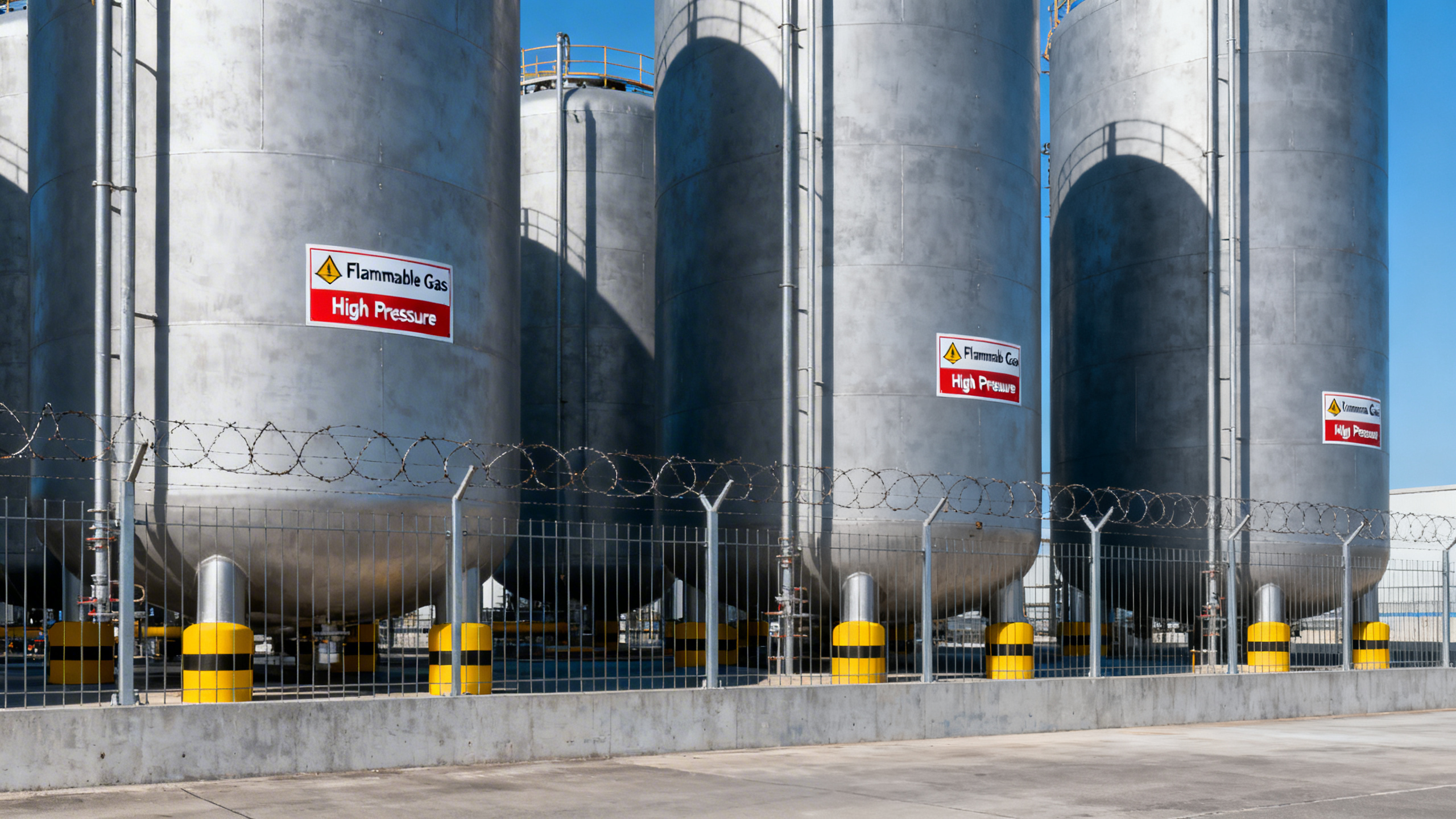
If your extraction or infused-product operation stores butane or propane in bulk, the most important federal question to answer in 2026 is no longer “Do we have a local fire permit?”—it is also: Do we cross EPA’s Risk Management Program (RMP) thresholds, and if so, what program level and new 2027 obligations apply?
EPA’s 2024 RMP amendments—formally titled “Safer Communities by Chemical Accident Prevention”—tightened accident-prevention, emergency response, and information-availability requirements for covered facilities under Clean Air Act section 112(r) and 40 CFR Part 68. EPA later announced (March 12, 2025) that it is reconsidering aspects of the 2024 final rule, but the rule remains in effect unless and until it is changed through further rulemaking.
This article is informational only, not legal advice. It provides an RMP applicability checklist tailored to extraction and processing operators using LPG solvents (butane/propane), with practical examples of how the 10,000‑lb threshold can be met, and how RMP connects to OSHA PSM and local fire code.
External starting points:
EPA’s RMP rule applies to a stationary source with a covered process that has a listed regulated substance at or above the threshold quantity (TQ) in 40 CFR §68.130.
For most extraction environments, the critical trigger is EPA’s listing for regulated flammable substances, where butane and propane have a 10,000‑pound TQ.
When you trigger RMP, you must implement a risk management program and submit an RMP to EPA (in addition to maintaining prevention and emergency response systems at the site). A covered process is not limited to “the extractor.” It can include storage, handling, and on-site movement of the regulated substance.
EPA emphasizes that the definition of “process” can combine equipment in ways operators don’t expect—especially if vessels are interconnected or co-located such that a release could involve multiple vessels. See EPA’s definition and related guidance:
For RMP threshold determination, you are not only counting solvent “in the extractor.” You should map:
RMP’s process definition includes interconnected vessels and potentially co-located vessels that could be involved in a single release. Facilities should document their basis for whether separate vessels constitute one process.
The RMP threshold is in pounds, while operations often think in gallons or tank size. Industry propane charts commonly show that a “500‑gallon” propane tank holds roughly 400 gallons usable at typical fill limits; propane weighs about 4.2 lb/gallon (temperature dependent). That means:
The exact conversion depends on product composition, temperature, and fill practices—so treat these as planning numbers and confirm with your supplier and engineering data.
Many facilities cross 10,000 lb not because they buy one massive tank, but because inventory slowly expands:
If your operations model depends on business continuity stockpiles of LPG, you should evaluate whether the continuity plan itself drives you into RMP.
EPA RMP assigns covered processes into Program 1, Program 2, or Program 3. In general:
A key practical point: if your LPG process is subject to OSHA PSM, there is a meaningful possibility your covered process will be Program 3 under RMP.
OSHA PSM can apply when you have 10,000 pounds or more of certain flammables (and for many other listed highly hazardous chemicals). PSM’s definition of process and aggregation concepts are also broad.
Helpful OSHA PSM references:
Why this matters: Many operators build robust PSM-like systems for worker safety or insurance requirements, but RMP adds environmental/community protection elements—including off-site consequence analysis, coordination with emergency responders, and RMP submissions—plus the 2024 rule’s added requirements.
EPA’s 2024 final rule (effective in 2024) added and expanded requirements in several areas. The details vary by program level and facility circumstances, but the major themes include:
Covered facilities generally must coordinate with local emergency response organizations and conduct exercises on set frequencies, with documentation requirements. These provisions are central to “dispensary rollout” style site selection in densely populated areas because response capability and community interfaces become part of compliance planning.
The 2024 rule strengthened incident investigation expectations, including root cause analysis for qualifying incidents.
The final rule expanded audit concepts and, for certain triggering situations (e.g., following specific accidents), introduces third-party compliance audit expectations.
The 2024 rule expanded what must be addressed in Program 2 hazard reviews and Program 3 PHAs, including explicit consideration of:
EPA has described these changes through its rule page and supporting materials: https://www.epa.gov/rmp/risk-management-program-safer-communities-chemical-accident-prevention-final-rule
Operators should build an RMP implementation plan backward from the rule’s multi-year compliance dates. Many of the major new provisions are structured to require compliance three years after the rule’s effective date—commonly discussed in the compliance community as landing in 2027 for several key updates.
What to do now (2026):
Because EPA announced reconsideration in March 2025, some operators are tempted to “wait and see.” That is risky. Do not assume rollbacks. Until EPA completes a new rulemaking and the legal requirements change, the prudent compliance posture is to plan for the existing deadlines.
EPA’s statement on reconsideration is posted here: https://www.epa.gov/rmp/risk-management-program-safer-communities-chemical-accident-prevention-final-rule
EPA also announced a new proposal in 2026 (“Common Sense Approach…”) indicating the agency is considering further revisions, but this does not automatically remove current obligations: https://www.epa.gov/rmp/common-sense-approach-chemical-accident-prevention-proposed-rule
Use this as a practical screen. If you answer “yes” to any bolded item, escalate to a formal RMP/PSM applicability determination.
If this checklist suggests possible coverage, do not treat it as a paperwork exercise. RMP is a system: engineering controls, training, operating procedures, incident investigation, and emergency preparedness.
These examples illustrate why “we only use small cylinders” can be misleading.
Even if individual machines use only a fraction at a time, your maximum quantity “in a process” may exceed the threshold depending on how cylinders are connected/co-located and how you define the process boundary.
The compliance lesson: project design choices intended to improve operations can become the compliance trigger.
Two separate LPG systems can still create RMP coverage if each system crosses 10,000 lb in its own covered process (or if EPA’s process boundary analysis treats them as one).
Most operators are already familiar with fire code requirements, which may reference standards such as NFPA codes for LPG storage and use, hazardous location classification, gas detection, ventilation, and emergency shutdown. These are critical for safe operation and permit approvals.
But RMP is a federal environmental accident prevention and emergency planning program. You can be fully permitted locally and still be out of compliance federally if you cross RMP thresholds.
Key takeaway: Treat fire code compliance as the baseline engineering and life-safety system, and RMP/PSM as the management system that proves you can safely operate and respond.
Even though this article focuses on federal RMP, operators with California sites should understand the enforcement ecosystem:
California’s Unified Program overview: https://calepa.ca.gov/cupa/
Practical point for multi-state operators: compliance teams often discover RMP applicability during local hazardous materials permitting/inspection cycles. Build RMP screening into facility expansion approvals so it doesn’t appear as a surprise finding.
Even if you expect the rule to change, the safest planning assumption is that 2027 compliance work (PHA updates, emergency exercise planning, documentation systems) will consume real time and capital.
Extraction operations frequently rely on contractors for installation, maintenance, and calibrations. Program-level prevention program elements place significant weight on written procedures and qualification.
Facilities that store LPG at scale should treat EPA Risk Management Program cannabis extraction butane propane applicability as a board-level compliance item in 2026. The trigger is simple—10,000 pounds—but the analysis is not, because “process” boundaries and co-located/interconnected vessels can make inventory counting counterintuitive.
EPA’s 2024 rule increased expectations around hazard evaluation (including siting and natural hazards), incident investigations, emergency response exercises, information availability, and—under specific triggers—more robust audit approaches. EPA’s 2025 reconsideration announcement is real, but it is not a compliance strategy.
Need help turning this into a site-specific compliance workflow—threshold calculations, document requests for PHA/PSM alignment, emergency response coordination trackers, and audit-readiness checklists?
Use https://cannabisregulations.ai/ to build and manage a cannabis compliance plan that connects federal chemical accident prevention rules with state and local licensing realities—so expansion projects don’t become enforcement surprises.