


Sign Up
Ready to replace complexity with clarity?
Answer your real world compliance questions (limited time) and save thousands in legal fees and avoided fines.
Automate Compliance Today

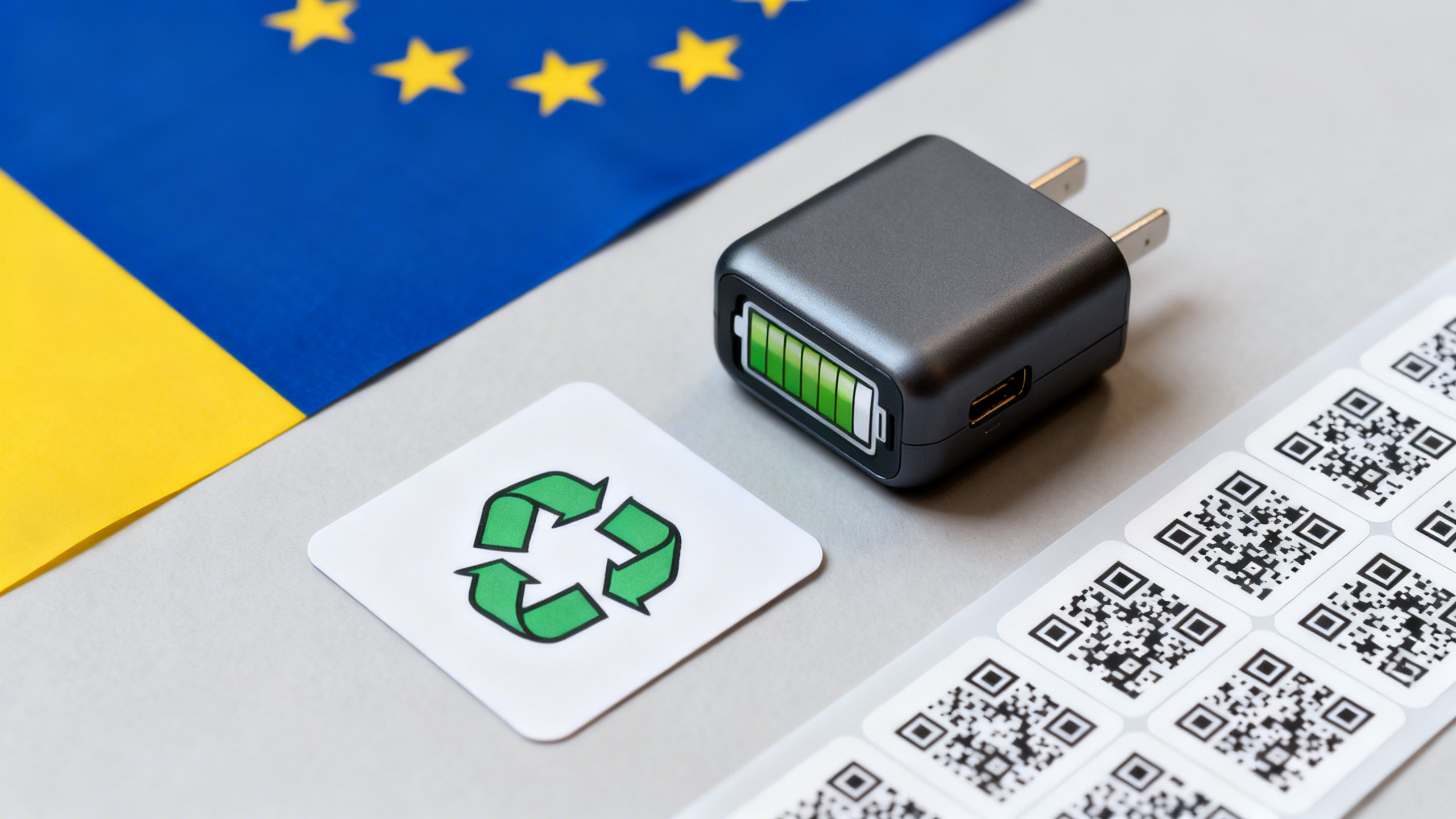
If you place rechargeable, battery‑powered inhalation devices (or bundled kits that include them) on EU markets, the EU Battery Regulation is no longer a “future” sustainability initiative—it is an operational compliance program with registration, labeling, and take‑back requirements that tighten in 2025–2026.
Regulation (EU) 2023/1542 replaces the prior Batteries Directive and applies across the full lifecycle of batteries—design, placing on the market, information and labeling, waste collection, and recycling. It covers all categories of batteries placed on the EU market, including portable batteries that are incorporated into products. That is the key reason many compact devices—especially those with embedded, rechargeable portable cells—are in scope. See the official text on EUR‑Lex: https://eur-lex.europa.eu/eli/reg/2023/1542/oj/eng
For U.S. brands shipping hardware into the EU (direct‑to‑consumer, via distributors, or through marketplaces), the high‑risk compliance gap is usually not technical battery safety—it’s producer responsibility and member‑state registration, plus the practical realities of reverse logistics and take‑back.
This post is informational only and not legal advice.
Under the old Batteries Directive, core concepts (like collection and producer responsibility) were implemented through national laws—sometimes with uneven enforcement. Regulation (EU) 2023/1542 is directly applicable across the EU and is designed to harmonize rules, raise collection and recycling performance, and increase traceability.
The European Commission’s overview highlights that the Regulation takes a full life‑cycle approach and introduces more stringent requirements on sustainability, labeling, collection, and due diligence: https://environment.ec.europa.eu/news/new-law-more-sustainable-circular-and-safe-batteries-enters-force-2023-08-17_en
Most compact inhalation devices with an internal lithium‑ion cell are treated as products containing a portable battery. That triggers obligations for:
The regulation applies to batteries “incorporated into or added to products,” and it captures importers and distance sellers as “producers” in many national implementations.
The Battery Regulation phases in by topic. For teams building a compliance roadmap, the following dates drive near‑term action:
Many requirements began applying in 2024, and the market has been shifting toward stronger enforcement and better data expectations since then.
Industry guidance and compliance schemes consistently flag 18 August 2025 as a major milestone when the Regulation’s extended producer responsibility requirements become applicable in practice across Member States.
By 2025, online marketplaces and B2B buyers increasingly expect you to provide member‑state battery registration numbers (and often WEEE numbers too) before listings remain active.
In some Member States, 2025–2026 is not just “business as usual”—it is a transition from older national systems to new registration data fields, new battery categories, and stronger linkages between producer registrations and approved compliance schemes.
A clear example is Germany, where registration and scheme linkage requirements tighten into early 2026 (details below).
You are usually treated as a producer if you are the first entity to place batteries (including batteries built into devices) on a national market. This often includes:
The practical takeaway is: don’t assume your EU distributor is handling battery EPR unless your contracts explicitly allocate responsibility and you can validate registrations.
The Regulation requires producer responsibility to function at Member State level. That means there is no single EU‑wide battery EPR number.
Below are high‑signal examples of how major markets operationalize producer registration and take‑back.
Germany’s competent authority for producer registration is stiftung ear. Its guidance is explicit that you must be registered before placing batteries on the market and that foreign companies generally need an authorized representative to register on their behalf.
Germany also adopted a new national framework to align with Regulation (EU) 2023/1542 (BattDG), replacing the prior Batteries Act focus. The German Federal Ministry for the Environment summarizes how take‑back flows through producer responsibility organizations and how distributors must accept returns: https://www.bundesumweltministerium.de/en/law/batteries-act
2025–2026 risk point in Germany: Multiple compliance updates highlight that producers must update and transition registrations and link them to a compliance solution/PRO as Germany moves into the new regime.
France runs battery EPR via approved eco‑organizations (PROs). Foreign sellers commonly need a local representative structure to fulfill EPR obligations.
Practical French compliance expectation (2025–2026): be prepared for PRO contracting, reporting, and eco‑fee payments aligned to France’s category definitions and reporting calendars.
Belgium’s main PRO is Bebat, which clearly outlines that batteries sold separately or built into devices are subject to EPR and that producers selling via marketplaces still must comply.
The Netherlands provides unusually clear, public guidance. The Dutch Chamber of Commerce (KVK) summarizes that producers/importers must comply and describes registration pathways, including Stichting OPEN for light/portable batteries.
Sweden’s system often runs through service providers like El‑Kretsen/Batterikretsen that register producers and handle reporting.
Italy requires producer registration with national structures and ongoing reporting.
For non‑EU businesses, many Member States require an authorized representative (sometimes called an “EPR authorized representative”) to act in the country for battery EPR compliance.
Germany’s authority (stiftung ear) explicitly says foreign companies need an authorized representative to register and fulfil obligations.
When you structure an authorized representative agreement, treat it like a regulated compliance outsourcing contract, not a generic reseller arrangement. At a minimum, define:
Battery labeling under Regulation (EU) 2023/1542 expands over time and is supported by implementing acts that harmonize formats and technical specifications.
Even before QR code requirements fully apply across all battery categories, brands should build a controlled labeling and documentation file that covers:
While the most public discussion around QR codes is tied to 2027, many compliance teams are already implementing QR‑based “digital access” layers earlier to manage space constraints on small devices and align with evolving expectations.
A key point: QR codes are a bridge to digital information obligations, and the EU is simultaneously building broader digital product passport infrastructure. For certain battery categories (notably EV, LMT, and industrial batteries >2 kWh), a digital battery passport becomes mandatory in 2027 and is accessed via QR code.
Action in 2025–2026: even if your embedded portable cells do not require a full battery passport, you should design packaging and instruction layouts assuming a scannable code will be expected and that digital content must be maintained (language versions, hosting uptime, version control).
Implementation specifics depend on category and implementing acts, but operationally you should be ready to host:
Extended producer responsibility is not just paperwork. You must ensure consumers can return waste batteries free of charge through a compliant network and that the waste flows to proper treatment.
For devices with embedded portable batteries, the “take‑back” question becomes: are you taking back the device, the battery, or both?
In many Member States, your best operational path is to:
Most brands use a collective scheme because building an individual collection network across multiple countries is cost‑prohibitive.
Some PROs provide consumer‑facing “where to return” pages, collection boxes at retail, and municipal drop‑off infrastructure. Your support pages and inserts should not promise mail‑back if your PRO does not support it.
These devices are typically also in scope of WEEE rules as electrical and electronic equipment. The European Commission’s WEEE overview is here: https://environment.ec.europa.eu/topics/waste-and-recycling/waste-electrical-and-electronic-equipment-weee_en
In practice, your compliance stack may involve:
When returns are handled, you want to avoid consumers putting devices into general battery bins if the device must be treated as WEEE. Your customer instructions should clearly distinguish “return device intact” vs “return loose battery,” and you should make sure this matches local collection pathways.
For compact battery devices, write a standard operating procedure that addresses:
A major forward‑looking requirement is that products incorporating portable batteries must be designed so batteries are readily removable and replaceable.
Industry summaries and Commission guidance focus on Article 11’s requirement that, by 18 February 2027, portable batteries in products must be removable/replaceable by the end user (with limited exemptions), while certain other categories (like LMT batteries) must be removable by an independent professional.
Why this matters now (2025–2026): your product development cycle may already be locking the designs that will be sold in 2027. If your current business relies on fully sealed, non‑serviceable embedded cells, you should start a redesign assessment immediately.
The Regulation introduces due diligence obligations for certain in‑scope economic operators concerning raw materials (e.g., cobalt, lithium, nickel, graphite), aligned with OECD due diligence concepts. In 2025, the EU adopted an amendment that delays certain due diligence obligations.
For most compact device brands, due diligence may not be the immediate blocker compared to EPR registration and take‑back, but investors and larger retail partners increasingly ask for supply chain ESG controls. Treat 2025–2026 as the time to build supplier questionnaires, material declarations, and traceability processes.
Even before regulators knock on your door, you may feel enforcement through commercial channels:
Large marketplaces increasingly require proof of EPR registrations. If you cannot provide country‑specific battery registration numbers (and often WEEE/packaging numbers), listings may be restricted.
If your files are incomplete (producer registration, PRO participation proof, labeling masters, EU responsible party/authorized representative details), shipments can be delayed.
EU distributors and wholesalers often refuse to carry products where producer responsibility obligations are unclear—because the liabilities can “flow upstream” during audits.
Use this as an internal project plan for cannabis compliance teams managing hardware accessories sold into the EU.
Start with your top markets (commonly Germany, France, Netherlands, Belgium, Spain, Italy, Sweden) and expand. Expect separate portals, languages, and documentation formats.
To keep your EU expansion on track, you need a single source of truth for multi‑jurisdiction requirements, evidence files, and reporting calendars.
Use https://cannabisregulations.ai/ to monitor cannabis compliance obligations that intersect with hardware distribution, build checklists for licensing and market entry, and maintain an audit‑ready record of EPR registrations, labeling versions, and take‑back operations across the EU.