


Sign Up
Ready to replace complexity with clarity?
Answer your real world compliance questions (limited time) and save thousands in legal fees and avoided fines.
Automate Compliance Today

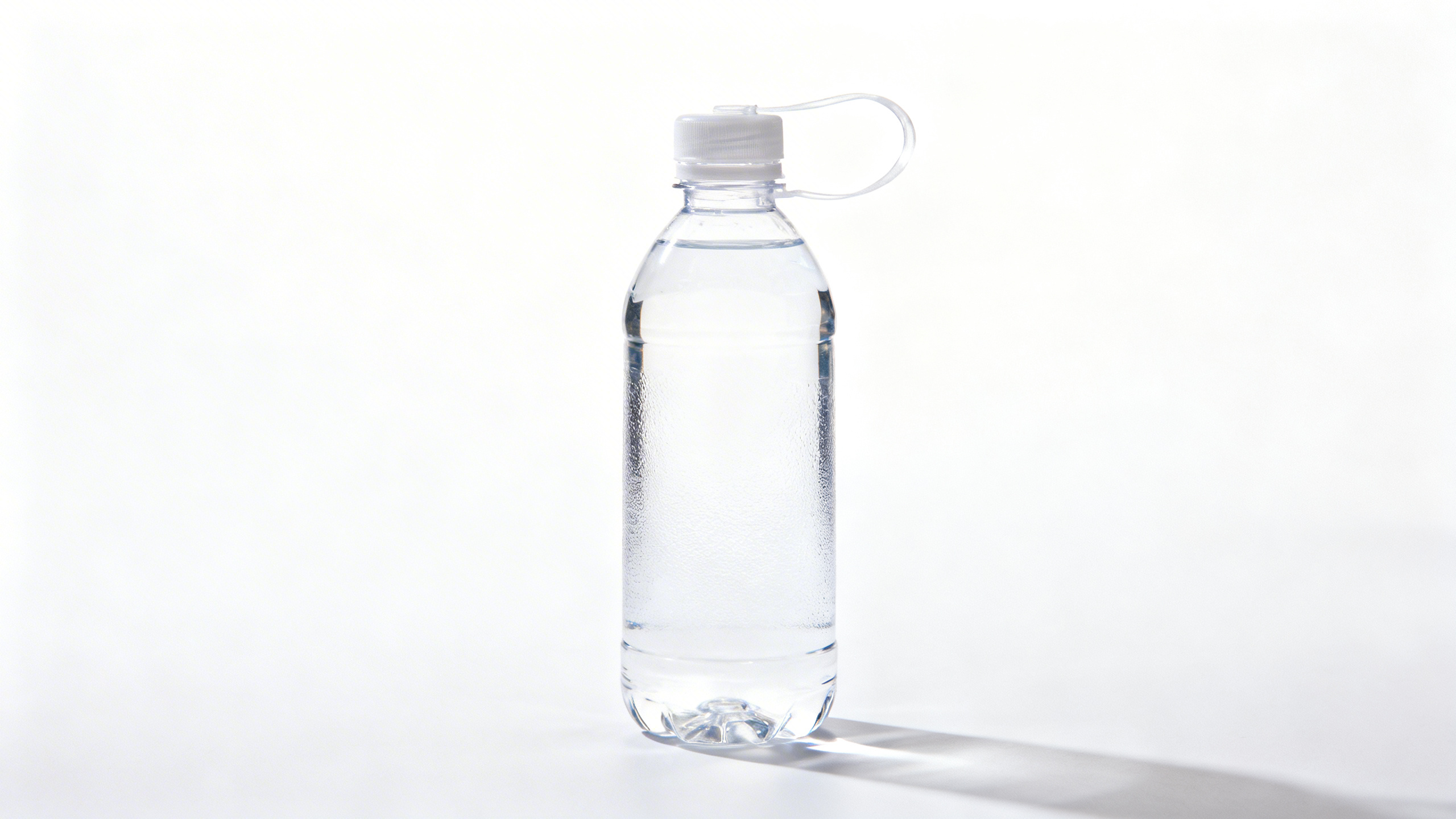
The EU Single-Use Plastics Directive (Directive 2019/904 / SUPD) requires tethered caps on plastic beverage containers up to 3 litres since 3 July 2024 and a minimum 25% recycled PET content in PET beverage bottles by 2025. The 30% recycled content target applies to all beverage bottles by 2030. THC and CBD drink exporters to the EU must meet both. See the European Commission's SUPD policy hub for the latest implementing measures.
If you place THC/CBD-infused beverages on the EU market—or you're a U.S. exporter selling to an EU importer—your packaging is already being judged against the EU Single‑Use Plastics Directive (Directive (EU) 2019/904, commonly SUPD). Two requirements are especially urgent for drink brands:
These are not "future" circularity ambitions. They are market-access conditions that importers and co-packers are applying right now—often more strictly than minimum legal language—because nonconforming packaging is a commercial and enforcement risk.
Primary EU references:
Under Article 6(1) of SUPD, single-use plastic products listed in Part C of the Annex (including certain beverage containers with plastic caps/lids) may only be placed on the market if the caps and lids remain attached during the product's intended use stage.
Key practical takeaways:
Even where a container body is not plastic (e.g., cartons or composite packaging), the compliance analysis can become nuanced. In practice, buyers typically treat the rule broadly for beverage packs with plastic closures unless a clear exclusion applies.
Below are packaging formats frequently used for THC/CBD beverages, with how they usually map to SUPD risk. (Always validate against the specific member state's transposition and your packaging definition.)
Important nuance for drink brands: if your EU buyer is standardizing on tethered closures for the entire portfolio, they may require tethering even for formats that might be arguable—because the cost of misclassification is higher than the cost of harmonizing packaging.
The SUPD does not say "use a specific tether design." It requires an outcome: during intended use, the cap/lid must remain attached to the container.
To show conformity, brands and packaging suppliers increasingly use CEN EN 17665 ("Packaging — Test methods and requirements to demonstrate that plastic caps and lids … remain attached"). While EN 17665 is a standard (not a law), it is widely treated as the engineering proof point.
When you're sourcing caps for EU-bound beverage exports, you'll generally see these design families:
A hinge connects the cap to a retaining ring and keeps the cap attached after opening.
A flexible strap links cap to ring. Often used on screw caps.
A loop feature keeps the cap attached and swings it away.
Used where snap features are compatible with container mouth geometry.
A tethered-cap conversion isn't just a cap swap. For many drink brands it impacts:
Packaging suppliers and line OEMs have published readiness materials and product lines around tethered solutions. As examples of market availability (not endorsements):
The SUPD introduced mandatory minimum recycled-content targets for beverage bottles:
The Commission also tracks related implementing measures on calculation/verification and reporting.
Starting point (Commission page listing relevant implementing decisions): https://environment.ec.europa.eu/topics/plastics/single-use-plastics_en
Under Article 9 of SUPD, member states must achieve separate collection for recycling of:
These targets are a major driver behind deposit return systems (DRS) and why EU brand owners focus on highly recyclable bottle/closure combinations.
Commission explainer highlighting the 77% and 90% targets: https://environment.ec.europa.eu/news/5-things-you-should-know-about-single-use-plastics-2025-07-01_en
Industry context on DRS growth (example): https://www.sensoneo.com/waste-library/deposit-return-schemes-overview-europe/
Many U.S. regulated THC beverage programs (state-by-state) expect child-resistant (CR) features—especially for multi-serve bottles. Common approaches include:
ISO 8317 reference: https://www.iso.org/standard/61650.html
The tension:
For multi-serve THC beverages (e.g., 250–1000 mL with multiple servings), EU buyers/importers may demand tethering while your U.S. compliance team expects CR. The combined requirement can create engineering and documentation issues:
What to do:
Informational note: EU-wide "THC beverage" legality is not harmonized the way packaging rules are. Market access for cannabinoid ingredients can depend on food law, novel food authorization status, and national enforcement. EFSA continues to treat CBD extracts as novel food candidates with significant data expectations; consult the official EFSA and Commission sources for current status.
EFSA CBD novel food safety communications (example): https://www.efsa.europa.eu/en/news/provisional-safe-level-cannabidiol-novel-food
EU importers typically want evidence in two layers:
1) Food-contact compliance for the bottle (and sometimes the cap/liner)2) Recycled-content traceability/attestation that supports claims and regulatory reporting
Regulation (EU) No 10/2011 (plastic materials and articles intended to come into contact with food) is the core plastics measure.
Official text: https://eur-lex.europa.eu/eli/reg/2011/10/oj/eng
Regulation (EU) 2022/1616 (recycled plastic materials/articles intended to come into contact with food) updated the EU framework for recycled plastics.
Commission explainer landing page: https://circular-cities-and-regions.ec.europa.eu/support-materials/eu-regulations-legislation/commission-regulation-eu-20221616-recycled-plastic
These frameworks are why "we bought rPET" isn't enough. Importers want to see that your recycled resin and process pathway is aligned with EU food-contact rules.
The EU does not mandate one private certification scheme, but in practice, documentation often relies on widely recognized systems:
RecyClass (traceability and recycling-process certifications; ISO 22095 chain-of-custody alignment is referenced in RecyClass materials)
RecyClass resources and certification info: https://recyclass.eu/resources/
Chain-of-custody concept: https://recyclass.eu/our-approach/chain-of-custody/
EuCertPlast (certification of plastics recyclers; often used as a recycler-level assurance)
ISCC PLUS (mass balance / chain-of-custody for circular and bio-based materials)
https://www.iscc-system.org/certification/iscc-certification-schemes/iscc-plus/
Mass balance background: https://www.iscc-system.org/news/mass-balance-explained/
Your buyer may accept different combinations (e.g., recycler certification + converter statements + transaction certificates). The key is that your proof must be auditable, SKU-specific, and consistent with your on-pack and marketing claims.
Use this as a working checklist for your EU importer file and internal QA release. It's informational and should be adapted to the member state(s) where the products will be placed on the market.
EU enforcement increasingly expects documentation to be available to authorities upon request.
For packaging articles containing SVHCs above thresholds, SCIP notification obligations may apply (supply-chain dependent).
While SUPD sets EU-level targets, operational obligations often sit in national EPR and DRS systems.
Even if penalties and inspection intensity vary by member state, the practical risks for nonconforming beverage packaging are consistent:
The safest approach for U.S. exporters is to treat tethered caps and rPET proof as release gates—not as post-launch improvements.
The EU has adopted the Packaging and Packaging Waste Regulation (PPWR) as Regulation (EU) 2025/40, which will apply broadly from August 2026 (with phased requirements). It will add EU-wide packaging conformity, labeling, design-for-recycling and recycled-content obligations beyond beverage bottles.
But SUPD obligations on tethered caps and bottle recycled content are already in force. Waiting for PPWR timelines is a common—and expensive—mistake.
1) Audit your portfolio: list every beverage format (bottle size, polymer, closure type, single-serve vs multi-serve).2) Lock tethered closures for all in-scope containers (≤3 L) and validate performance to an EN 17665-aligned test plan.3) Secure rPET documentation now—especially if you sell PET bottles—so your importer can defend recycled-content assertions and reporting.4) Separate your EU and U.S. packaging specs where child-resistance expectations conflict with tethering and usability.5) Build an importer compliance dossier (DoCs + rPET attestations + traceability + supplier certifications) before your first shipment.
This article is for informational purposes only and does not constitute legal advice. Requirements can differ by member state implementation and by product-specific facts.
Packaging rules are now a frontline issue in cannabinoid beverage commercialization—especially for cross-border trade. For ongoing updates on cannabis compliance, licensing, regulations, and dispensary rollout impacts on packaging and beverage products, use https://www.cannabisregulations.ai/ to track requirements, build documentation checklists, and reduce launch risk.