

June 16, 2026


For retailers and processors, the practical distinction between HHC vs THC is no longer about effects or potency. It is about legal status, and in 2026 that status is moving fast. This guide compares how the law treats HHC and THC, where the two diverge, and what the difference means for compliance.
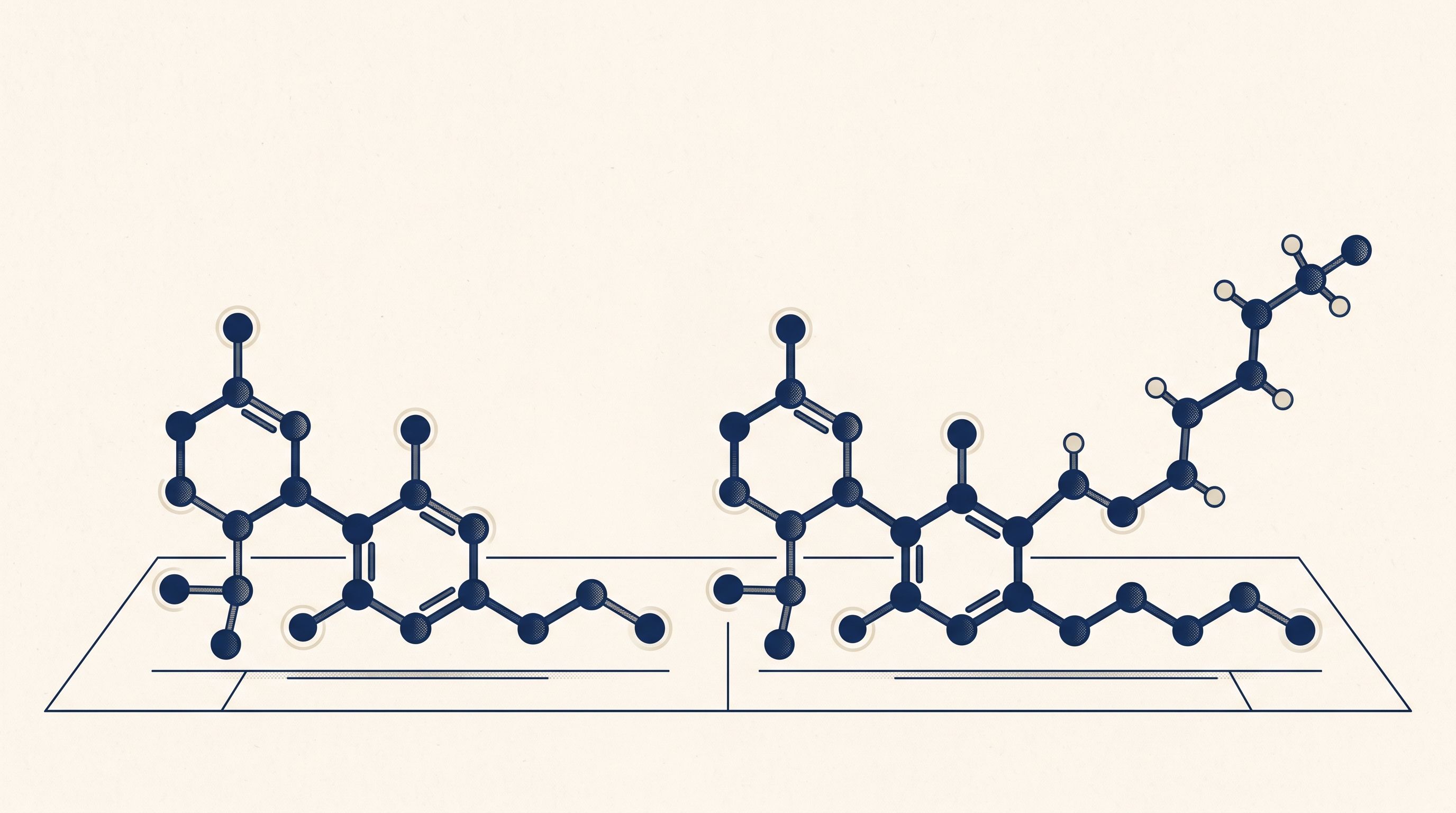
THC, tetrahydrocannabinol, is the primary intoxicating compound in cannabis. The form most people mean by "THC" is delta-9 THC, the molecule the federal hemp definition is built around. HHC, hexahydrocannabinol, is a hydrogenated cannabinoid that can occur in trace amounts in cannabis but is produced commercially by adding hydrogen to cannabinoids derived from hemp. That manufacturing step is exactly what regulators have seized on.
This is where HHC and THC genuinely part ways, and where the comparison matters for operators.
Delta-9 THC sits at the center of federal cannabis law. The 2018 Farm Bill defines hemp as cannabis containing no more than 0.3% delta-9 THC by dry weight; above that line, material is marijuana and federally controlled. A separate and significant change is scheduled for later in 2026, when a federal shift toward a "total-THC" hemp standard and a strict per-container cap is set to pull many intoxicating hemp products out of the legal market. Operators tracking the difference between HHC and THC should read that change as the dominant variable for the entire intoxicating-hemp category.
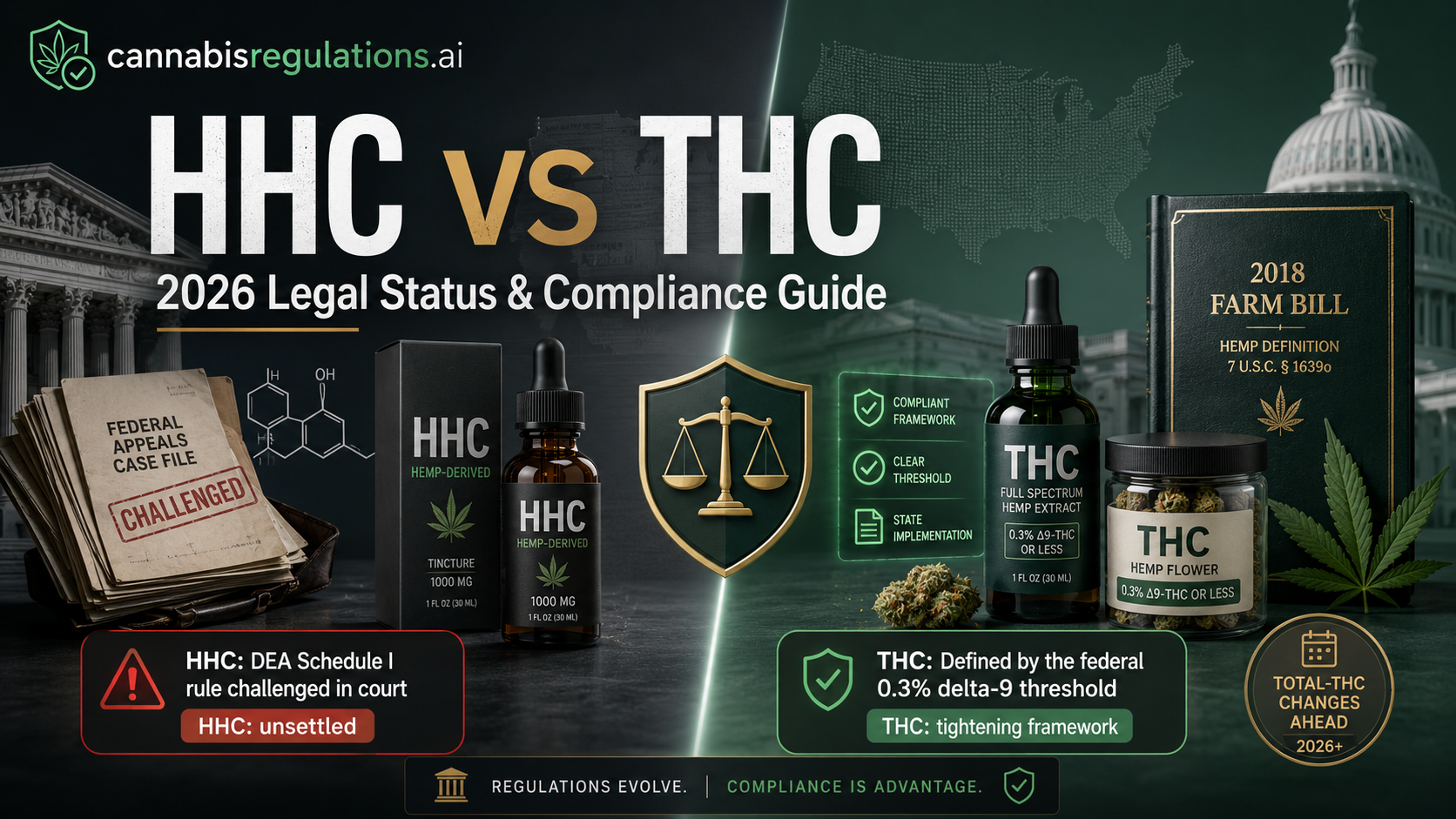
HHC's status is now openly contested. On May 4, 2026, the DEA published a final rule listing HHC in Schedule I, treating it as a synthetic controlled substance. In early June 2026, two hemp companies, IHC Investments and Bluestar Operations, filed petitions for review in the Ninth and Fourth Circuits arguing that HHC is a Farm Bill–protected hemp derivative, not synthetic THC. The litigation is unresolved, but the rule is in effect. The short version: delta-9 THC is governed by a known (and tightening) statutory framework, while HHC is governed by a fresh agency ban that is being challenged in court.
The HHC lawsuits turn on whether a hydrogenated, hemp-derived cannabinoid counts as "synthetic." If courts accept the DEA's reading, the same logic could threaten other converted cannabinoids. If the petitioners prevail, it would reinforce a broad interpretation of the Farm Bill's protection for hemp "derivatives, extracts, cannabinoids, and isomers." Either way, HHC's legal footing is far less settled than delta-9 THC's, which is defined directly in statute.
Users and trade reporting generally describe HHC as producing intoxicating effects broadly comparable to THC, with anecdotal reports that it is somewhat less potent than delta-9 THC. Robust clinical comparison data is limited. This guide makes no health or medical claims; the regulatory difference, not the high, is what should drive business decisions.
FactorDelta-9 THCHHCStatutory basisDefined in the 2018 Farm Bill (0.3% dry-weight line)No specific statutory definition; addressed by DEA ruleCurrent federal statusHemp if ≤0.3% delta-9; marijuana if aboveListed in Schedule I (May 4, 2026 final rule)2026 trajectoryTotal-THC standard + per-container cap pendingSchedule I listing under court challengePrimary legal riskTotal-THC cutover reclassifying productsRule upheld, leaving HHC federally banned
Treat the two cannabinoids as separate compliance problems. For delta-9 THC products, the central task is preparing for the total-THC cutover: reformulation, inventory sell-through, and state-channel strategy. For HHC, the central task is deciding whether to hold, restrict, or sunset product lines while the DEA rule stands and the litigation plays out. Document supply chains for both, and check state-level rules, which increasingly diverge from the federal baseline.
Watch three things: the federal total-THC cutover later in 2026, the Ninth and Fourth Circuit HHC petitions, and state legislatures, several of which are independently restricting semi-synthetic cannabinoids. Each can change an operator's exposure on its own.
This is not legal advice. Talk to your counsel before making product or distribution decisions based on the HHC or THC frameworks.
Is HHC stronger than THC? Reporting generally describes HHC as somewhat less potent than delta-9 THC, but rigorous comparative data is limited.
Is HHC legal if THC is legal in my state? Not necessarily. HHC and delta-9 THC are treated separately under both federal and many state laws; a state that allows certain THC products may still restrict HHC.
What is the main legal difference between HHC and THC? Delta-9 THC is defined directly in the federal hemp statute, while HHC is governed by a 2026 DEA Schedule I listing that is currently being challenged in court.
Will the November 2026 federal changes affect HHC? The pending total-THC standard primarily targets THC content in hemp products, but operators should expect the broader crackdown to increase scrutiny of all intoxicating hemp cannabinoids, including HHC.
For retailers and processors, the practical distinction between HHC vs THC is no longer about effects or potency. It is about legal status, and in 2026 that status is moving fast. This guide compares how the law treats HHC and THC, where the two diverge, and what the difference means for compliance.
THC, tetrahydrocannabinol, is the primary intoxicating compound in cannabis. The form most people mean by "THC" is delta-9 THC, the molecule the federal hemp definition is built around. HHC, hexahydrocannabinol, is a hydrogenated cannabinoid that can occur in trace amounts in cannabis but is produced commercially by adding hydrogen to cannabinoids derived from hemp. That manufacturing step is exactly what regulators have seized on.
This is where HHC and THC genuinely part ways, and where the comparison matters for operators.
Delta-9 THC sits at the center of federal cannabis law. The 2018 Farm Bill defines hemp as cannabis containing no more than 0.3% delta-9 THC by dry weight; above that line, material is marijuana and federally controlled. A separate and significant change is scheduled for later in 2026, when a federal shift toward a "total-THC" hemp standard and a strict per-container cap is set to pull many intoxicating hemp products out of the legal market. Operators tracking the difference between HHC and THC should read that change as the dominant variable for the entire intoxicating-hemp category.
HHC's status is now openly contested. On May 4, 2026, the DEA published a final rule listing HHC in Schedule I, treating it as a synthetic controlled substance. In early June 2026, two hemp companies, IHC Investments and Bluestar Operations, filed petitions for review in the Ninth and Fourth Circuits arguing that HHC is a Farm Bill–protected hemp derivative, not synthetic THC. The litigation is unresolved, but the rule is in effect. The short version: delta-9 THC is governed by a known (and tightening) statutory framework, while HHC is governed by a fresh agency ban that is being challenged in court.
The HHC lawsuits turn on whether a hydrogenated, hemp-derived cannabinoid counts as "synthetic." If courts accept the DEA's reading, the same logic could threaten other converted cannabinoids. If the petitioners prevail, it would reinforce a broad interpretation of the Farm Bill's protection for hemp "derivatives, extracts, cannabinoids, and isomers." Either way, HHC's legal footing is far less settled than delta-9 THC's, which is defined directly in statute.
Users and trade reporting generally describe HHC as producing intoxicating effects broadly comparable to THC, with anecdotal reports that it is somewhat less potent than delta-9 THC. Robust clinical comparison data is limited. This guide makes no health or medical claims; the regulatory difference, not the high, is what should drive business decisions.
FactorDelta-9 THCHHCStatutory basisDefined in the 2018 Farm Bill (0.3% dry-weight line)No specific statutory definition; addressed by DEA ruleCurrent federal statusHemp if ≤0.3% delta-9; marijuana if aboveListed in Schedule I (May 4, 2026 final rule)2026 trajectoryTotal-THC standard + per-container cap pendingSchedule I listing under court challengePrimary legal riskTotal-THC cutover reclassifying productsRule upheld, leaving HHC federally banned
Treat the two cannabinoids as separate compliance problems. For delta-9 THC products, the central task is preparing for the total-THC cutover: reformulation, inventory sell-through, and state-channel strategy. For HHC, the central task is deciding whether to hold, restrict, or sunset product lines while the DEA rule stands and the litigation plays out. Document supply chains for both, and check state-level rules, which increasingly diverge from the federal baseline.
Watch three things: the federal total-THC cutover later in 2026, the Ninth and Fourth Circuit HHC petitions, and state legislatures, several of which are independently restricting semi-synthetic cannabinoids. Each can change an operator's exposure on its own.
This is not legal advice. Talk to your counsel before making product or distribution decisions based on the HHC or THC frameworks.
Is HHC stronger than THC? Reporting generally describes HHC as somewhat less potent than delta-9 THC, but rigorous comparative data is limited.
Is HHC legal if THC is legal in my state? Not necessarily. HHC and delta-9 THC are treated separately under both federal and many state laws; a state that allows certain THC products may still restrict HHC.
What is the main legal difference between HHC and THC? Delta-9 THC is defined directly in the federal hemp statute, while HHC is governed by a 2026 DEA Schedule I listing that is currently being challenged in court.
Will the November 2026 federal changes affect HHC? The pending total-THC standard primarily targets THC content in hemp products, but operators should expect the broader crackdown to increase scrutiny of all intoxicating hemp cannabinoids, including HHC.
