
April 16, 2026

Thank you! Your submission has been received!
Oops! Something went wrong while submitting the form.

Last Updated: August 2026
Updated August 6, 2026: corrected the marijuana possession penalty tiers under G.S. 90-95 (up to 0.5 oz is a Class 3 misdemeanor; more than 0.5 oz up to 1.5 oz is a Class 1 misdemeanor).
Quick Answer — August 2026
| Question | North Carolina status (Aug 2026) |
|---|---|
| THCA flower, vapes, edibles legal? | Yes — if ≤0.3% delta-9 THC (SB 455 / SL 2022-32) |
| State total-THC test? | No — delta-9-only standard; no decarboxylation conversion in NC statute |
| Retailer license required? | No — HB 607 would add one ($15,000 initial) if enacted |
| Statewide age minimum? | None yet — SB 328 (age 21) still parked in House Rules |
| Serving/package caps? | None — HB 607 proposes 10 mg/serving, 100 mg/package for edibles |
| After Nov 12, 2026 (federal) | Most THCA flower fails the post-decarboxylation total-THC test — no grandfather clause |
Yes — THCA hemp products are legal in North Carolina under state law as of August 2026. NC adopts the federal Farm Bill 0.3% delta-9 threshold and applies no total-THC test. There is no state retailer license requirement for hemp products. The controlling statute is SB 455 / Session Law 2022-32, signed by Governor Roy Cooper on June 30, 2022, which permanently excludes "tetrahydrocannabinols found in hemp or hemp products" from G.S. 90-94 of the NC Controlled Substances Act. The headline development for North Carolina retailers is federal, not state: P.L. 119-37 §781 takes effect November 12, 2026 and redefines hemp using a post-decarboxylation total-THC test, removing most THCA flower from federal hemp protection.
SB 455, ratified as Session Law 2022-32, did one decisive thing: it made permanent the exclusion of hemp-derived tetrahydrocannabinols from North Carolina's controlled-substance schedule. The carve-out sits inside G.S. 90-94 and is not time-limited. North Carolina hemp is defined by the federal Farm Bill standard — Cannabis sativa with a delta-9 THC concentration of not more than 0.3% on a dry-weight basis. There is no separate state total-THC test, no post-decarboxylation conversion factor in NC statute, and no per-serving milligram cap on hemp consumables.
The North Carolina Industrial Hemp Commission was sunset when the federal Domestic Hemp Production Program took over cultivator licensing, and the state operates under the USDA-approved plan for growers. Retail of hemp-derived consumer products — THCA flower, vapes, edibles, tinctures, beverages — is unlicensed at the state level. NC has no Chapter 18D today. Counties and municipalities cannot impose their own hemp licensing requirements that conflict with state law.
The current legal posture is corroborated by the UNC School of Government. Phil Dixon's Winter 2026 Cannabis Update (January 14, 2026) concludes: "state law in this area has not changed and all the hemp products discussed above remain legal as a matter of state law." That confirmation matters because much of the noise around NC hemp law in 2025 came from agency statements and proposed bills, not enacted statutes.
| Bill | What it would do | Status (Aug 2026) |
|---|---|---|
| HB 607 | Chapter 18D licensing: $15,000 manufacturer license, ALE enforcement, 10 mg/100 mg edible caps, child-resistant packaging, QR-linked COAs | Pending — in House Rules; proposed July 1, 2026 date has passed unenacted |
| SB 328 | Age 21 minimum for hemp consumables | Pending — re-referred to House Rules June 2025, no movement |
| SB 265 | Alternative hemp regulation framework | Dead — failed crossover |
Three NC bills sit in the 2025-26 General Assembly session. None has been enacted. Each would alter the framework above if signed.
HB 607 was filed March 31, 2025 and currently sits in House Rules. As filed (bill text v1), it would create a new Chapter 18D of the General Statutes establishing a regulated hemp consumables framework. Proposed effective date: July 1, 2026 — but only if enacted before then. Key proposed provisions:
Critically: HB 607 as filed retains the 0.3% delta-9 threshold at the state level. It does not move North Carolina to a total-THC standard. The total-THC change is a federal change only.
SB 328 would set 21 as the minimum age for purchasing hemp-derived consumables in North Carolina. Proposed effective date October 1, 2025 if signed; the bill was re-referred to House Rules on June 23, 2025 and has not moved since. Until enacted, age-of-sale for NC hemp products is governed by individual retailer policies, not state mandate.
SB 265 failed to clear the crossover deadline and is not a live vehicle in the current session.
Governor Josh Stein signed Executive Order No. 16 in June 2025, creating the NC Advisory Council on Cannabis. The Council issued an Interim Report in April 2026 recommending that North Carolina move to a total-THC testing standard for hemp products. The Interim Report is a recommendation. It has no force of law. Implementation would require legislative action — HB 607 as currently filed does not adopt the total-THC standard the Council recommended.
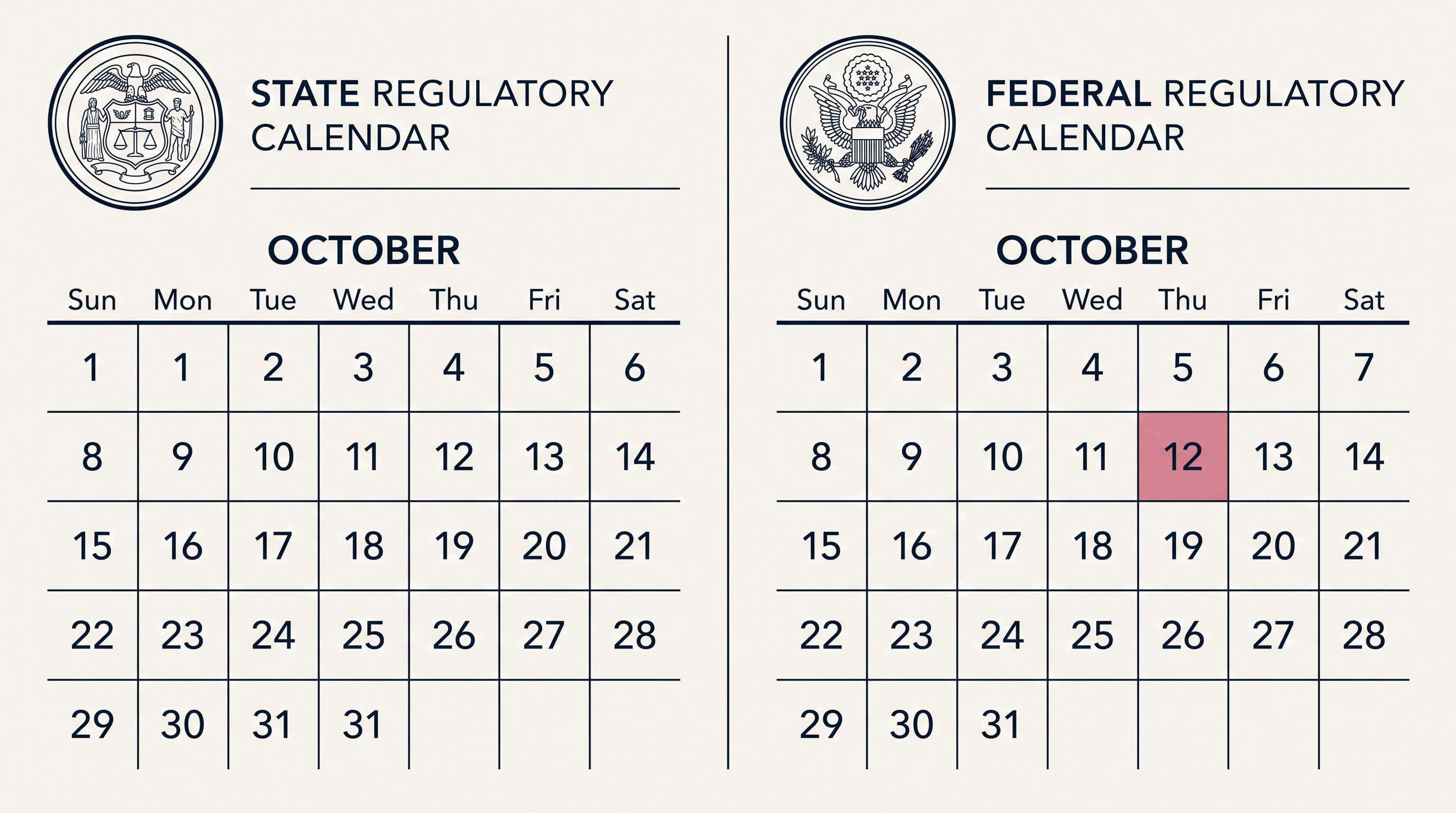
The single most important date for North Carolina hemp operators is November 12, 2026. P.L. 119-37 §781 — Section 781 of the Continuing Appropriations and Extensions Act, 2026, signed November 12, 2025 — rewrites the federal hemp definition.
Two operative changes:
For North Carolina retailers, the practical implication is direct. State law does not change on November 12, 2026 — SB 455 / SL 2022-32 still uses the 0.3% delta-9 standard. But federal law does. Any THCA flower, pre-roll, or finished product that fails the post-decarboxylation total-THC test on November 12, 2026 becomes Schedule I marijuana under the Controlled Substances Act, 21 U.S.C. § 812, regardless of NC's permissive state framework. There is no grandfather clause in Section 781. Congressional proposals to delay or repeal the provision remain pending as of early August 2026, but none has been enacted — November 12, 2026 remains the operative date.
Through November 11, 2026, North Carolina retailers can continue selling THCA hemp products under the current state framework: 0.3% delta-9 threshold, no state license required, no total-THC test, no serving caps. Standard age-of-sale, labeling, and product-liability rules still apply, and retailers should keep current Certificates of Analysis on file as a routine practice even though state law does not mandate them.
Three operational priorities for the rest of 2026:
Hemp-derived THCA flower, vapes, edibles, and tinctures are legal to purchase and possess in North Carolina under current state law if they meet the 0.3% delta-9 threshold. There is no state-mandated age limit yet — SB 328 would set it at 21 if enacted, but until then retailer policies control. Federal law will tighten the definition of what qualifies as legal hemp on November 12, 2026; products that meet the federal post-decarboxylation total-THC test will continue to be available, while THCA flower that fails the test will not. Non-hemp cannabis (marijuana) remains a controlled substance under G.S. 90-95: possession of up to 0.5 ounce is a Class 3 misdemeanor, and possession of more than 0.5 ounce up to 1.5 ounces is a Class 1 misdemeanor.
Yes. Hemp-derived THCA meeting the 0.3% delta-9 standard is legal under SB 455 / Session Law 2022-32. There is no state total-THC test and no state retailer license requirement.
SB 455 / Session Law 2022-32, signed June 30, 2022, which permanently excludes hemp-derived tetrahydrocannabinols from G.S. 90-94.
There is no statewide age minimum today — SB 328 would set it at 21 if enacted, but it remains parked in House Rules. Individual retailer policies control until then.
Not enacted as of August 2026. HB 607's proposed July 1, 2026 effective date passed without enactment; the bill remains in House Rules and would need a new effective date if revived.
November 12, 2026. P.L. 119-37 §781 rewrites the federal hemp definition using a total-THC test and a 0.4 mg per-container finished-product cap. NC state law does not change on that date; federal law does.
No. North Carolina does not license hemp retailers. HB 607 would change that if enacted.
No. North Carolina uses the federal Farm Bill 0.3% delta-9 standard. The April 2026 NC Advisory Council on Cannabis Interim Report recommended adopting total-THC, but that recommendation has no force of law and HB 607 as filed does not adopt it.
This page is informational, not legal advice. North Carolina hemp law is in active legislative flux and the federal hemp definition changes November 12, 2026. Verify with a NC-licensed cannabis attorney before acting. Last reviewed: August 6, 2026.
Last Updated: August 2026
Updated August 6, 2026: corrected the marijuana possession penalty tiers under G.S. 90-95 (up to 0.5 oz is a Class 3 misdemeanor; more than 0.5 oz up to 1.5 oz is a Class 1 misdemeanor).
Quick Answer — August 2026
| Question | North Carolina status (Aug 2026) |
|---|---|
| THCA flower, vapes, edibles legal? | Yes — if ≤0.3% delta-9 THC (SB 455 / SL 2022-32) |
| State total-THC test? | No — delta-9-only standard; no decarboxylation conversion in NC statute |
| Retailer license required? | No — HB 607 would add one ($15,000 initial) if enacted |
| Statewide age minimum? | None yet — SB 328 (age 21) still parked in House Rules |
| Serving/package caps? | None — HB 607 proposes 10 mg/serving, 100 mg/package for edibles |
| After Nov 12, 2026 (federal) | Most THCA flower fails the post-decarboxylation total-THC test — no grandfather clause |
Yes — THCA hemp products are legal in North Carolina under state law as of August 2026. NC adopts the federal Farm Bill 0.3% delta-9 threshold and applies no total-THC test. There is no state retailer license requirement for hemp products. The controlling statute is SB 455 / Session Law 2022-32, signed by Governor Roy Cooper on June 30, 2022, which permanently excludes "tetrahydrocannabinols found in hemp or hemp products" from G.S. 90-94 of the NC Controlled Substances Act. The headline development for North Carolina retailers is federal, not state: P.L. 119-37 §781 takes effect November 12, 2026 and redefines hemp using a post-decarboxylation total-THC test, removing most THCA flower from federal hemp protection.
SB 455, ratified as Session Law 2022-32, did one decisive thing: it made permanent the exclusion of hemp-derived tetrahydrocannabinols from North Carolina's controlled-substance schedule. The carve-out sits inside G.S. 90-94 and is not time-limited. North Carolina hemp is defined by the federal Farm Bill standard — Cannabis sativa with a delta-9 THC concentration of not more than 0.3% on a dry-weight basis. There is no separate state total-THC test, no post-decarboxylation conversion factor in NC statute, and no per-serving milligram cap on hemp consumables.
The North Carolina Industrial Hemp Commission was sunset when the federal Domestic Hemp Production Program took over cultivator licensing, and the state operates under the USDA-approved plan for growers. Retail of hemp-derived consumer products — THCA flower, vapes, edibles, tinctures, beverages — is unlicensed at the state level. NC has no Chapter 18D today. Counties and municipalities cannot impose their own hemp licensing requirements that conflict with state law.
The current legal posture is corroborated by the UNC School of Government. Phil Dixon's Winter 2026 Cannabis Update (January 14, 2026) concludes: "state law in this area has not changed and all the hemp products discussed above remain legal as a matter of state law." That confirmation matters because much of the noise around NC hemp law in 2025 came from agency statements and proposed bills, not enacted statutes.
| Bill | What it would do | Status (Aug 2026) |
|---|---|---|
| HB 607 | Chapter 18D licensing: $15,000 manufacturer license, ALE enforcement, 10 mg/100 mg edible caps, child-resistant packaging, QR-linked COAs | Pending — in House Rules; proposed July 1, 2026 date has passed unenacted |
| SB 328 | Age 21 minimum for hemp consumables | Pending — re-referred to House Rules June 2025, no movement |
| SB 265 | Alternative hemp regulation framework | Dead — failed crossover |
Three NC bills sit in the 2025-26 General Assembly session. None has been enacted. Each would alter the framework above if signed.
HB 607 was filed March 31, 2025 and currently sits in House Rules. As filed (bill text v1), it would create a new Chapter 18D of the General Statutes establishing a regulated hemp consumables framework. Proposed effective date: July 1, 2026 — but only if enacted before then. Key proposed provisions:
Critically: HB 607 as filed retains the 0.3% delta-9 threshold at the state level. It does not move North Carolina to a total-THC standard. The total-THC change is a federal change only.
SB 328 would set 21 as the minimum age for purchasing hemp-derived consumables in North Carolina. Proposed effective date October 1, 2025 if signed; the bill was re-referred to House Rules on June 23, 2025 and has not moved since. Until enacted, age-of-sale for NC hemp products is governed by individual retailer policies, not state mandate.
SB 265 failed to clear the crossover deadline and is not a live vehicle in the current session.
Governor Josh Stein signed Executive Order No. 16 in June 2025, creating the NC Advisory Council on Cannabis. The Council issued an Interim Report in April 2026 recommending that North Carolina move to a total-THC testing standard for hemp products. The Interim Report is a recommendation. It has no force of law. Implementation would require legislative action — HB 607 as currently filed does not adopt the total-THC standard the Council recommended.
The single most important date for North Carolina hemp operators is November 12, 2026. P.L. 119-37 §781 — Section 781 of the Continuing Appropriations and Extensions Act, 2026, signed November 12, 2025 — rewrites the federal hemp definition.
Two operative changes:
For North Carolina retailers, the practical implication is direct. State law does not change on November 12, 2026 — SB 455 / SL 2022-32 still uses the 0.3% delta-9 standard. But federal law does. Any THCA flower, pre-roll, or finished product that fails the post-decarboxylation total-THC test on November 12, 2026 becomes Schedule I marijuana under the Controlled Substances Act, 21 U.S.C. § 812, regardless of NC's permissive state framework. There is no grandfather clause in Section 781. Congressional proposals to delay or repeal the provision remain pending as of early August 2026, but none has been enacted — November 12, 2026 remains the operative date.
Through November 11, 2026, North Carolina retailers can continue selling THCA hemp products under the current state framework: 0.3% delta-9 threshold, no state license required, no total-THC test, no serving caps. Standard age-of-sale, labeling, and product-liability rules still apply, and retailers should keep current Certificates of Analysis on file as a routine practice even though state law does not mandate them.
Three operational priorities for the rest of 2026:
Hemp-derived THCA flower, vapes, edibles, and tinctures are legal to purchase and possess in North Carolina under current state law if they meet the 0.3% delta-9 threshold. There is no state-mandated age limit yet — SB 328 would set it at 21 if enacted, but until then retailer policies control. Federal law will tighten the definition of what qualifies as legal hemp on November 12, 2026; products that meet the federal post-decarboxylation total-THC test will continue to be available, while THCA flower that fails the test will not. Non-hemp cannabis (marijuana) remains a controlled substance under G.S. 90-95: possession of up to 0.5 ounce is a Class 3 misdemeanor, and possession of more than 0.5 ounce up to 1.5 ounces is a Class 1 misdemeanor.
Yes. Hemp-derived THCA meeting the 0.3% delta-9 standard is legal under SB 455 / Session Law 2022-32. There is no state total-THC test and no state retailer license requirement.
SB 455 / Session Law 2022-32, signed June 30, 2022, which permanently excludes hemp-derived tetrahydrocannabinols from G.S. 90-94.
There is no statewide age minimum today — SB 328 would set it at 21 if enacted, but it remains parked in House Rules. Individual retailer policies control until then.
Not enacted as of August 2026. HB 607's proposed July 1, 2026 effective date passed without enactment; the bill remains in House Rules and would need a new effective date if revived.
November 12, 2026. P.L. 119-37 §781 rewrites the federal hemp definition using a total-THC test and a 0.4 mg per-container finished-product cap. NC state law does not change on that date; federal law does.
No. North Carolina does not license hemp retailers. HB 607 would change that if enacted.
No. North Carolina uses the federal Farm Bill 0.3% delta-9 standard. The April 2026 NC Advisory Council on Cannabis Interim Report recommended adopting total-THC, but that recommendation has no force of law and HB 607 as filed does not adopt it.
This page is informational, not legal advice. North Carolina hemp law is in active legislative flux and the federal hemp definition changes November 12, 2026. Verify with a NC-licensed cannabis attorney before acting. Last reviewed: August 6, 2026.