


Sign Up
Ready to replace complexity with clarity?
Answer your real world compliance questions (limited time) and save thousands in legal fees and avoided fines.
Automate Compliance Today

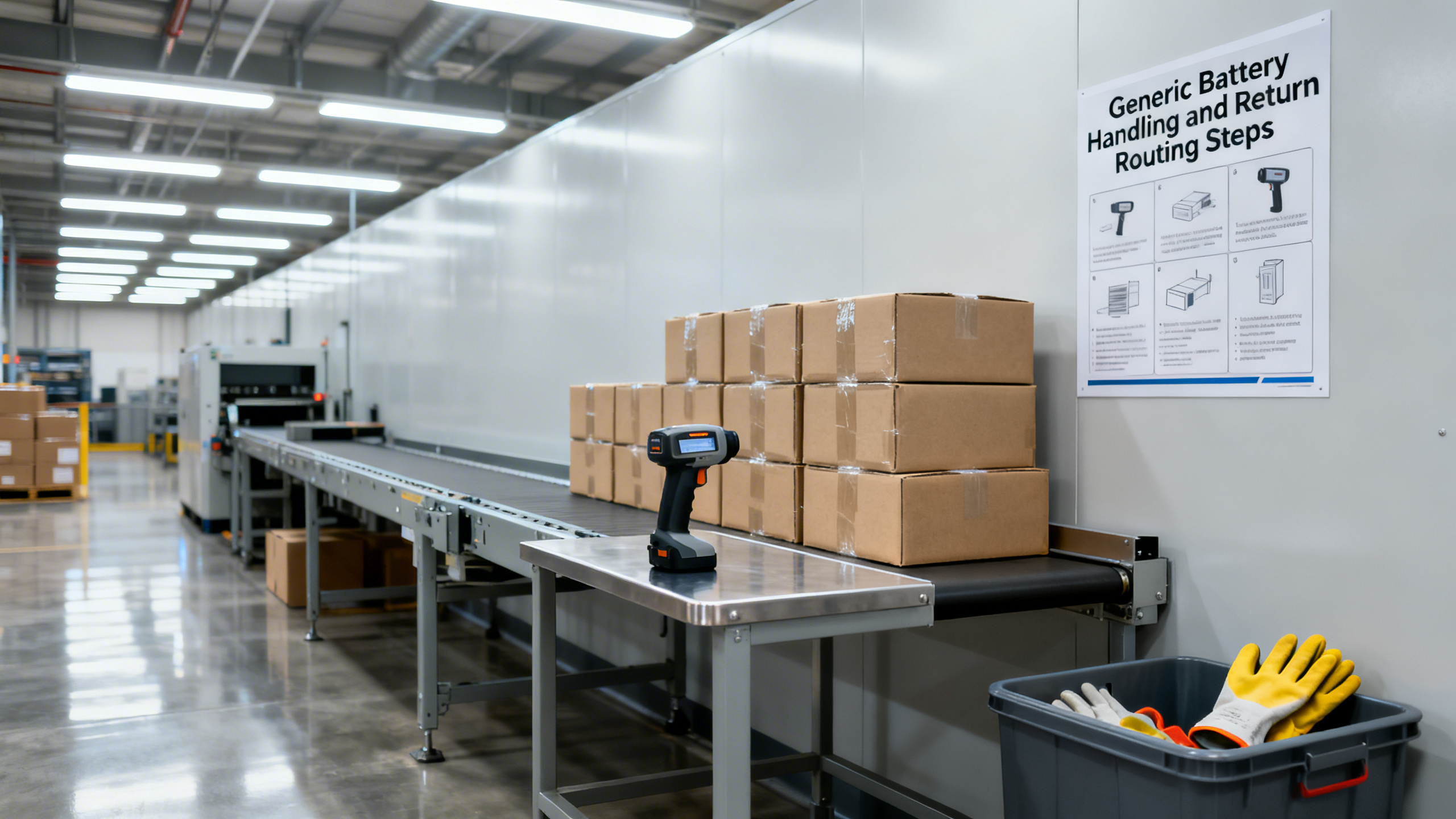
Businesses that sell battery-powered handheld devices are increasingly feeling the compliance squeeze in the returns stream. When consumers mail back a defective pen-style device, or when a retailer consolidates returns for refurbishment or recycling, that shipment can trigger U.S. DOT / PHMSA hazardous materials requirements—especially when lithium batteries are involved.
On July 1, 2025, PHMSA published a large package of rulemakings—17 NPRMs—aimed at updating and, in many cases, reducing burdens in the Hazardous Materials Regulations (HMR). While several proposals are deregulatory, the practical effect for retailers and third-party logistics providers (3PLs) handling battery-powered consumer devices is not “less compliance.” Instead, the July 2025 NPRMs, paired with PHMSA’s ongoing lithium battery safety focus and international harmonization efforts, are driving a set of operational expectations that most reverse-logistics programs will need to tighten well before peak season 2025 and into 2026.
This post explains what the July 2025 NPRM package signals for reverse logistics of lithium-battery devices, what to change in hazmat training, documentation, and packaging/marking, and how to plan for air shipment state-of-charge changes taking effect in 2026.
Informational only, not legal advice. Always confirm mode- and carrier-specific requirements, and consult qualified hazmat counsel or a dangerous goods advisor for program design.
PHMSA’s July 2025 set of NPRMs spans multiple parts of 49 CFR and touches documentation, recordkeeping, special permits/approvals, limited quantities, and certain exception frameworks. PHMSA summarized the package in its training newsletter, noting that 17 NPRMs were published on July 1, 2025.
Key July 1, 2025 NPRMs that frequently intersect with battery-powered device logistics include:
At the same time, it’s critical to understand a foundational point for returns programs:
PHMSA has been explicit that lithium cells and batteries are not eligible for the hazmat reverse logistics exception. PHMSA’s “SAFE RETURNS” brochure states that lithium cells and batteries are not eligible due to transportation risks.
That single fact drives most of the operational changes retailers and 3PLs need to implement: you cannot treat consumer mail-backs of battery-powered devices as a light-touch reverse logistics stream when lithium batteries are present.
Most returns workflows break in predictable places:
The HMR treatment depends heavily on condition:
Reference: 49 CFR 173.185 (Cornell Law): https://www.law.cornell.edu/cfr/text/49/173.185
PHMSA also provides shipper guidance that highlights how often DDR shipments require special handling and, frequently, DOT Special Permit-based packaging solutions.
Even if your reverse logistics program is “ground-only,” many organizations discover too late that:
International air rules have been tightening around state of charge (SoC) for years. A 30% SoC limit already applies to certain standalone lithium ion batteries shipped by air, and the industry has been moving toward extending SoC controls to additional configurations.
By 2026, the SoC standard becomes more operationally unavoidable:
References:
Separately, PHMSA’s international harmonization rulemaking pipeline (HM-215 series) is continuing to align the HMR with ICAO/UN changes. On February 10, 2026, PHMSA published HM-215R, proposing harmonization with updated international standards and referencing new state-of-charge provisions for certain lithium and sodium ion batteries transported by air. The comment period is open until April 13, 2026.
Takeaway: build returns workflows that assume SoC controls and air prohibitions will be enforced more consistently in 2026, even if your policy is to ship returns by ground.
Below are practical changes that align with PHMSA’s stated safety posture on lithium battery returns and with the direction of travel in federal and international standards.
If a consumer can drop any condition of device into the mail stream, you will eventually receive a damaged/defective unit shipped improperly.
Operational alternatives:
If a consumer reports damage indicators (swelling, cracks, overheating, liquid intrusion), route them to a different workflow (local drop-off, hazardous waste collection guidance, or recycler-directed program), not parcel mail.
Your SOP should force a classification decision early:
Tie each category to:
PHMSA’s shipper guide emphasizes that DDR shipments often require special packaging and may be moved under DOT Special Permits depending on the design.
Carrier restrictions can be more limiting than baseline DOT rules.
For example, UPS guidance indicates that damaged, defective, or recalled lithium battery shipping is restricted to ground and accepted only under certain conditions.
Similarly, USPS has strict rules for devices containing lithium batteries—particularly for damaged/defective or pre-owned electronics—often requiring ground services. Always confirm the most current USPS Publication 52 instructions applicable to your scenario.
Action: configure your label system so that return labels for battery-powered devices default to ground-only, and prevent frontline staff from “upgrading” service levels.
Retailers often optimize packaging for outbound fulfillment, not returns. For reverse logistics, you need packaging that can be issued (or stocked in stores/3PLs) that supports:
PHMSA’s lithium battery guidance materials and 49 CFR 173.185 are the starting points for deciding whether you qualify for an exception or must ship fully regulated.
A common compliance miss is assuming “small batteries” means “no marks.” Many exceptions still require a lithium battery mark depending on configuration, quantity, and mode.
Even when you don’t ship directly to a recycler, your program may stage and aggregate returns before sending to a downstream processor.
What to formalize:
Many electronics recyclers use R2 (Responsible Recycling) certification as a baseline environmental, health/safety, and chain-of-custody framework.
Practical takeaway: even if you are not seeking certification, align your battery return staging, segregation, and downstream qualification to the kinds of controls R2 facilities expect—because that is often where your returns ultimately go.
PHMSA’s July 2025 NPRM package includes items intended to reduce burden for specific groups, but the baseline training structure remains.
Under 49 CFR 172.704, hazmat employers must train, test, and certify hazmat employees before they perform regulated functions. Training must include:
Training must be repeated at least once every three years (with certain timing details depending on role changes and updates).
References:
Typical roles that become “hazmat employees” in reverse logistics include:
Peak season drives more consumer returns, more temporary staff, and more routing mistakes. Use this checklist before Q4 2025:
The exact effective dates of PHMSA’s July 2025 NPRMs depend on when (and whether) they are finalized, but businesses can still plan against a realistic implementation arc.
References:
PHMSA adjusts civil penalty maximums annually. For 2025, PHMSA published updated civil penalty amounts. Civil penalties can be significant per violation, with higher maximums where an incident results in serious injury or substantial property damage.
Also note that PHMSA enforcement actions are public and often reference packaging, hazard communication, and training failures for battery shipments.
If your organization sells battery-powered handheld devices, the safest assumption is that reverse logistics will be scrutinized more—not less—through 2026 as PHMSA continues its rulemaking agenda and as international air standards tighten.
To operationalize these changes, use https://cannabisregulations.ai/ to map your reverse logistics workflow, identify where hazmat requirements attach, generate role-based training checklists, and maintain an audit-ready compliance record for packaging, labeling, and documentation.