


Sign Up
Ready to replace complexity with clarity?
Answer your real world compliance questions (limited time) and save thousands in legal fees and avoided fines.
Automate Compliance Today

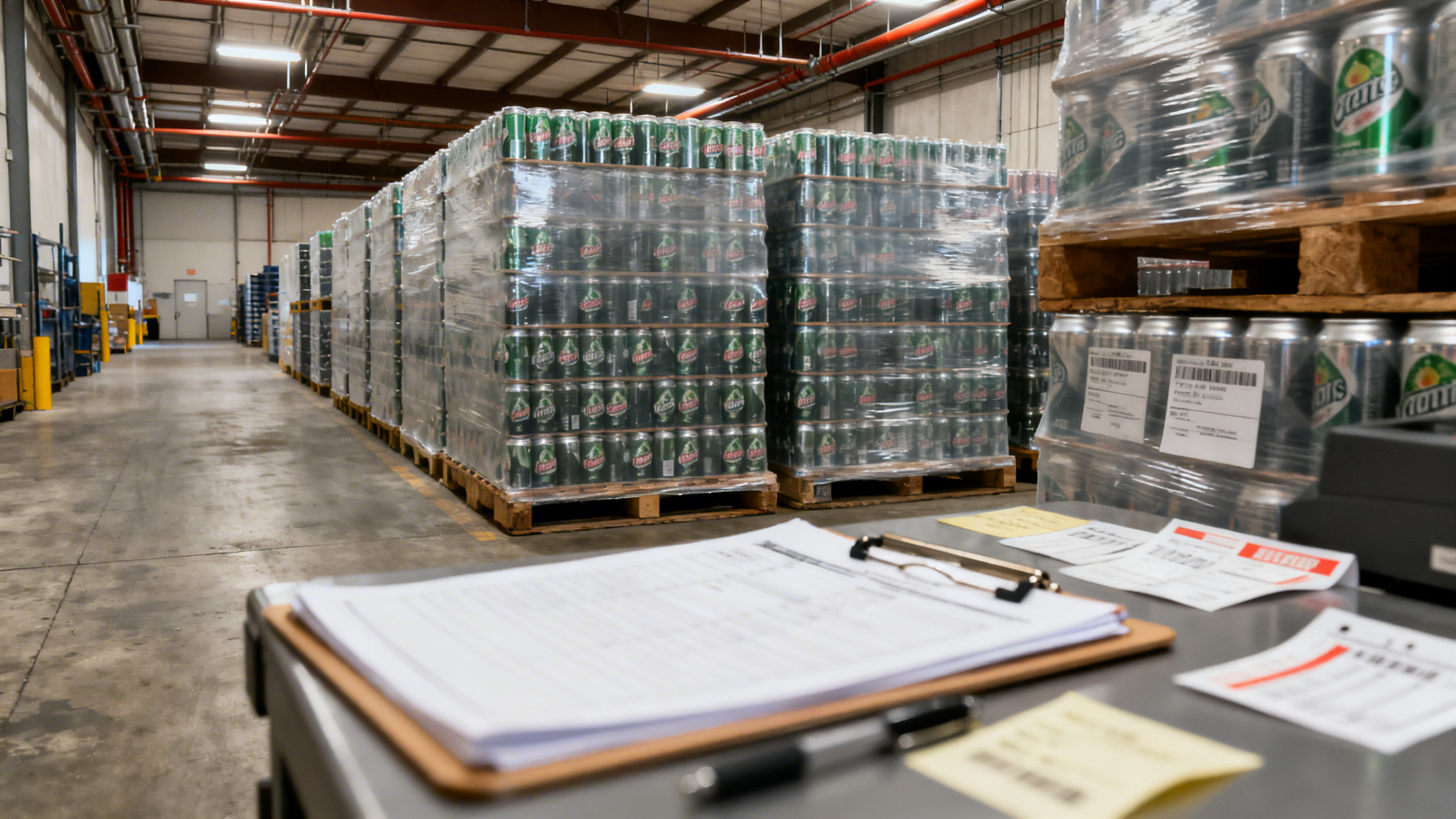
In 2025, rapid state and local pivots on intoxicating hemp rules turned what used to be a normal inventory risk (slow sell-through, seasonal flavors, distributor issues) into a compliance event. Brands woke up to emails from retailers: “We can’t sell this anymore.” Distributors paused pickups. Payment processors asked questions. Carriers started flagging shipments. And suddenly a warehouse full of finished, packaged, shelf-stable (or not-so-stable) drinks became stranded inventory.
At the federal level, the core legal backdrop still starts with the 2018 Farm Bill’s definition of hemp (≤0.3% delta-9 THC on a dry-weight basis) and the Controlled Substances Act (CSA) exclusion for “hemp.” But federal legality does not equal marketability:
This post maps a practical, federal-focused decision framework for what to do when you’re stuck with unsaleable batches of hemp-derived THC beverages. It’s informational only, not legal advice.
At a high level, you have three disposition paths:
The correct path depends on (1) where the product is sitting, (2) what the product contains (especially alcohol), (3) how it’s labeled and tested, and (4) what downstream parties (retailer/distributor/insurer/tax advisor) will require for documentation.
Document the event that caused strandings. Common triggers include:
Action: Create a “Stranding Memo” that captures:
This memo becomes your anchor document for auditors, insurers, and tax records.
If the jurisdiction treats the product as contraband, your options narrow:
Action: before moving anything, confirm whether product is subject to a stop-sale/embargo or quarantine at the retailer/distributor.
Different beverage formats create different transportation and disposal constraints.
Key issues:
If your drinks contain alcohol (even modest ABV), transportation becomes a DOT hazardous materials classification question depending on ABV and packaging.
Under the Hazardous Materials Regulations, 49 CFR § 173.150 provides exceptions for certain Class 3 flammable liquids and includes alcohol-by-volume thresholds and limited quantity conditions. This matters because:
Operational takeaway: if alcohol is in the formula, involve a hazmat-trained shipper and confirm whether your return/diversion load qualifies for a limited quantity exception or requires full hazmat papers/marking.
Concentrates increase compliance risk because:
Operational takeaway: concentrates are more likely to be routed to controlled destruction with stronger chain-of-custody documentation.
Large volume packaging creates:
For these, third-party destruction with witnessed disposal is often the cleanest route.
A common misconception is that unsaleable beverages are always just “food waste.” Sometimes they are, but the moment you’re managing discarded product at scale, federal waste rules can become relevant.
Under 40 CFR § 261.2, a “solid waste” includes discarded material. Once you decide to throw away unsaleable product (or you abandon it), you’re usually in “discarded” territory.
Source: https://www.ecfr.gov/current/title-40/chapter-I/subchapter-I/part-261/subpart-A/section-261.2
If it’s a solid waste, the generator must make an accurate hazardous waste determination under 40 CFR § 262.11.
Source: https://www.law.cornell.edu/cfr/text/40/262.11
This is where beverages can surprise teams:
Practical heuristic:
If you’re crushing, shredding, or recycling containers, know that RCRA empty container provisions at 40 CFR § 261.7 can determine whether residuals in containers remain regulated.
Source: https://www.law.cornell.edu/cfr/text/40/261.7
Operational takeaway: For large destruction events, work with a vendor that can document whether containers are “RCRA empty,” how residual liquid was managed, and where scrap metal/aluminum went.
The compliance reality: even if law doesn’t explicitly require a “certificate of destruction,” your supply chain often does.
Expect requests for:
If you need a credible chain-of-custody format, NIST provides a sample chain-of-custody form that can be adapted to commercial product destruction.
Source: https://www.nist.gov/document/sample-chain-custody-formdocx
Pro tip: Align your COD fields with your retailer’s credit policy. Many disputes happen because the COD lists “pounds destroyed” while the retailer credits by “units,” or because lot codes don’t match the invoice.
Tax treatment depends on your accounting method, inventory capitalization, insurance recoveries, and whether you receive retailer credits.
General concepts to discuss with your tax professional:
Inventory write-off / loss deduction: Losses may be deductible under IRC § 165 if sustained during the taxable year and not compensated by insurance or otherwise.
Statute: https://irc.bloombergtax.com/public/uscode/doc/irc/section_165
Credits vs. destruction: If the retailer issues a credit memo and returns product, your loss position changes (you may be “made whole” in part).
Timing: The deduction often depends on when the inventory became worthless and when you actually disposed/destroyed it.
A widely cited discussion of inventory donations and deductions (and the importance of basis and documentation) can be found here:
Source: https://www.thetaxadviser.com/issues/2010/jun/clinic-story-01-jun-2010/
Operational takeaway: treat your destruction packet (Stranding Memo + lot list + COD + invoices + communications) as tax support. If you can’t substantiate quantities and disposition, you may not be able to support the write-off.
Even when product is lawful in the destination jurisdiction, carriers and 3PLs may refuse loads based on internal policy. That means diversion plans should include a carrier acceptance check before you schedule pickups.
As noted earlier, 49 CFR § 173.150 (limited quantity exceptions) is a key reference point for alcohol-containing products.
If you use USPS in any capacity, Publication 52 includes a dedicated hemp-based products section and requires retention of lab test results and other documentation.
Operational takeaway: For stranded inventory, USPS is rarely a practical channel for bulk returns, but the USPS documentation framework is a good model for what carriers increasingly expect: COAs, origin licensing, and legal compliance attestations.
Whether you’re moving product to another state warehouse, a co-packer, or a destruction vendor, use these controls:
Donation sounds attractive—less waste, better optics, potential tax benefits—but for hemp-THC beverages it’s typically constrained by:
That said, there is federal liability protection for food donation under the Bill Emerson Good Samaritan Food Donation Act, codified at 42 U.S.C. § 1791.
Statute: https://www.law.cornell.edu/uscode/text/42/1791
USDA overview: https://www.usda.gov/about-usda/news/blog/good-samaritan-act-provides-liability-protection-food-donations
Important: The Emerson Act provides liability protection when donating “apparently wholesome food” or “apparently fit grocery products” in good faith, subject to conditions. It does not override state prohibitions on distributing restricted intoxicants.
Operational takeaway: donation is generally only plausible when (1) the product is lawful to distribute where the recipient operates, (2) the recipient can handle age-gated distribution, and (3) you can provide COAs, ingredient statements, and traceability.
Some operators explore:
These can reduce losses, but introduce regulatory risks:
Source: https://www.ecfr.gov/current/title-21/chapter-I/subchapter-B/part-111/subpart-N
Operational takeaway: if you’re considering recovery, treat it as a formal quality event with documented QC disposition, not an ad hoc warehouse project.
Below is a practical SOP outline you can adapt for your operation and vendor. Tune it to your state rules and your waste handler’s permit conditions.
Define standardized steps to manage and document destruction of stranded beverage inventory in a way that supports cannabis compliance-adjacent retail requirements, environmental compliance obligations, and tax substantiation.
Applies to all finished goods, WIP, concentrates, and promotional samples deemed unsaleable due to legal or policy changes.
COD must include:
Maintain destruction packet for at least the longer of:
Include: Stranding Memo, lot list, photos, BOLs, COD, disposal receipts, communications.
Even the best playbook can’t make stranded inventory painless. The goal for 2026 planning is to design your operations so bans and caps don’t strand months of product.
Source: https://www.nist.gov/pml/owm/packaging-and-labeling
Federal definitions and enforcement priorities continue to evolve. Many industry observers closely watch congressional and appropriations activity that could change how intoxicating hemp products are treated. If you operate nationally, plan for federal change risk in addition to state change risk.
If your team is dealing with a stop-sale, a sudden state ban, or distributor pullbacks, use CannabisRegulations.ai to organize your response: track jurisdiction changes, generate compliant SOPs, and standardize chain-of-custody and destruction documentation across your footprint.
Visit https://cannabisregulations.ai/ to turn reactive scramble into a repeatable compliance system.