

February 23, 2026


UPDATE — August 3, 2026: On July 31, 2026, DSHS's reinstated 2021 controlled-substance schedule took effect. Delta-8, delta-10, THCP, and THCA flower are now Schedule I in Texas; only hemp delta-9 at or below 0.3% dry weight remains legal at hemp retail. Statements below that predate July 31 may no longer reflect current law. Full report: Texas Delta-8 and THCA Ban: 10 Things to Know.
If you operate in Texas’s fast-moving hemp-derived product market, 2026 started with a regulatory gut-check. The Texas Department of State Health Services (DSHS), through the Texas Health and Human Services Commission (HHSC) executive commissioner, published a sweeping set of proposed amendments to 25 Texas Administrative Code (TAC) Chapter 300 governing the manufacture, distribution, and retail sale of consumable hemp products.
The proposal aims to tighten consumer protection (recalls, labeling, packaging, age gating) while also changing the core chemistry rule that determines legality: how THC compliance is calculated. The draft also contemplates order-of-magnitude fee increases that could reshape who can afford to participate in the market.
This article summarizes what’s in the proposal, the comment/approval timeline, practical business impacts, and rapid mitigation strategies—especially around total THC testing and a likely smokable product crackdown. It also flags where businesses must align SOPs across agencies, contrasting DSHS’s proposal with TABC’s already-final retail rules for alcoholic beverage license holders.
Informational only, not legal advice.
DSHS regulates “consumable hemp products” under Texas Health & Safety Code Chapter 443 and the implementing rules in 25 TAC Chapter 300. The proposed rule package published in the Texas Register (Dec. 26, 2025 issue) is the most significant rewrite since the market’s expansion and subsequent public safety scrutiny.
Two changes drive most of the commercial impact:
The rest of the package (recall authority, packaging upgrades, warning statements, batch/ID systems, expanded definitions) creates compliance work—but it’s the chemistry definition and economics (fees) that may force immediate SKU decisions.
Primary source: the proposed text in the Texas Register: https://www.sos.state.tx.us/texreg/archive/December262025/Proposed%20Rules/25.HEALTH%20SERVICES.html
DSHS proposes adding definitions such as “tetrahydrocannabinol acid (THCA)”, “decarboxylation”, and “total THC” to the rule’s definition section (proposed amendments to §300.101).
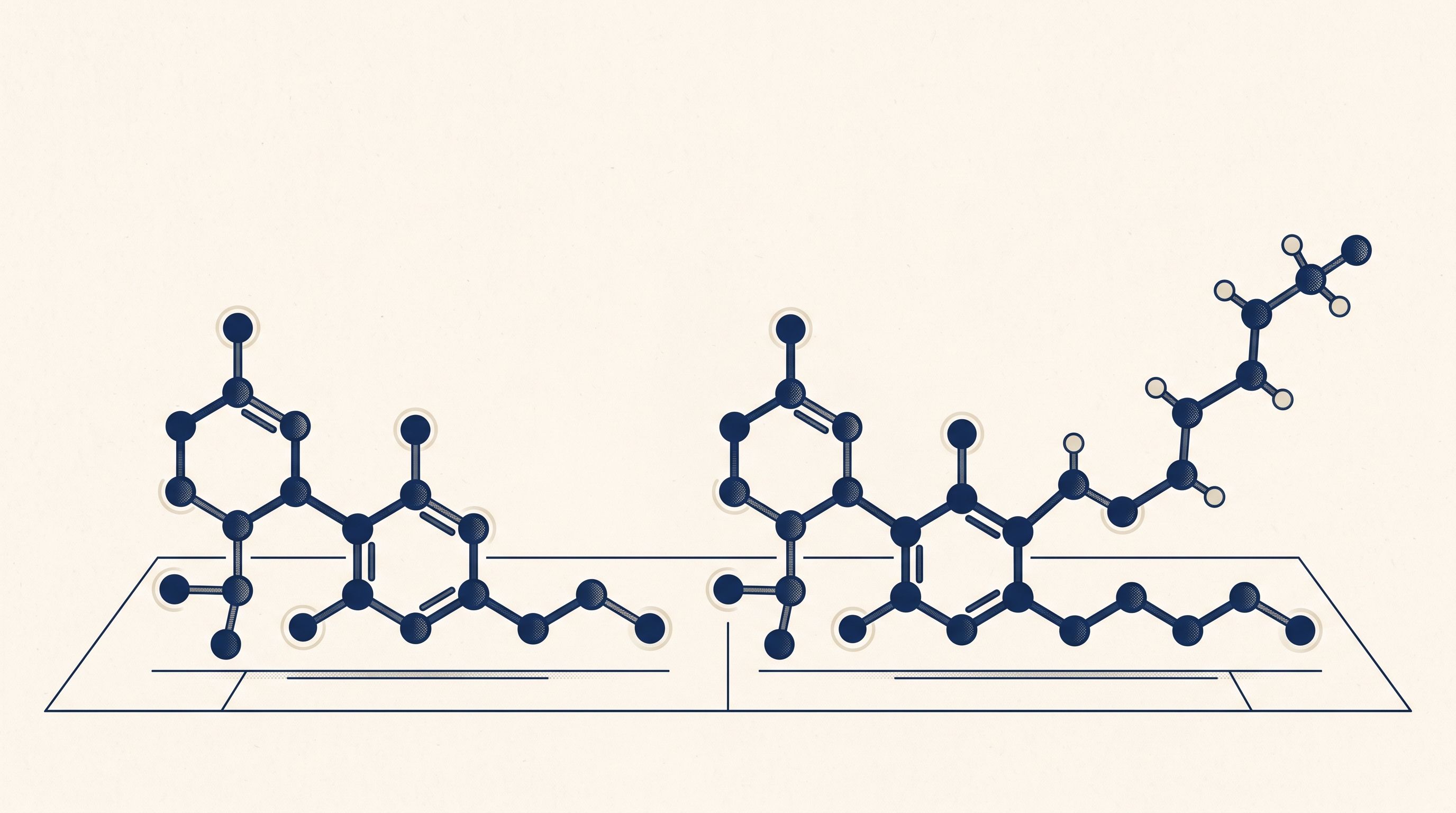
The operational effect: compliance would be evaluated using a total‑THC approach that counts THCa potential (i.e., what converts to delta‑9 THC when heated) rather than focusing only on measured delta‑9 THC as-sold.
A substantial share of Texas’s inhalable market is built around products that test below the delta‑9 threshold but contain significant THCa. Under a total‑THC standard, many of those products can cross the allowable limit—even if they were previously supported by lab COAs using delta‑9-only reporting.
The proposed rules expand and refine definitions including “smoking” and create new product categories such as “hemp-derived cannabinoid product”. Reporting from multiple outlets indicates the combined effect of the proposal (total‑THC plus “smoking” definitions) would effectively outlaw most smokable flower and similar inhalable formats sold in Texas.
Public reporting notes DSHS’s proposal could remove smokable products quickly once adopted, with some coverage suggesting implementation could occur as early as late January depending on final adoption timing.
If you sell inhalable products (flower, pre-rolls, certain concentrates or vapes), prepare for:
If your revenue relies heavily on inhalables, risk management usually means migrating customers to product classes less exposed to THCa-driven total-THC calculations.
Common migration approaches (operational, not product advice):
News coverage of the DSHS proposal highlights very large fee increases—often framed as 10,000% to 13,000% depending on the license/registration category.
Reported examples include:
These figures have been widely reported by Texas media outlets summarizing the proposed rules and agency documents.
Sources (media summaries):
For multi-location retailers, fee hikes function like a location tax and can change expansion math overnight.
Consider building three budgets:
Key decision levers:
DSHS’s proposal—along with related agency communications—signals a shift toward more explicit consumer protection controls:
For baseline labeling requirements and how DSHS approaches label elements, see DSHS’s labeling guidance page: https://www.dshs.texas.gov/consumable-hemp-program-labeling
Multiple reports note the proposal includes mandatory recall concepts and more explicit enforcement mechanisms around unsafe/noncompliant products.
Operationally, recall readiness means you should be able to answer, within hours:
If your inventory system can’t isolate by batch ID, prioritize that upgrade immediately.
Texas moved toward a 21+ framework via emergency actions in late 2025. DSHS’s Consumable Hemp Program page notes emergency rules adopted on Oct. 2, 2025 to prohibit sales to customers under 21 and require valid government-issued ID verification prior to purchase.
Source: https://www.dshs.texas.gov/consumable-hemp-program
Even if the 2026 proposal evolves, businesses should treat 21+ with ID verification as a settled compliance baseline.
The proposed rules were published in the Texas Register on Dec. 26, 2025.
Source (proposal publication): https://www.sos.state.tx.us/texreg/archive/December262025/Proposed%20Rules/25.HEALTH%20SERVICES.html
Industry groups tracking the docket reported that written public comment remained open through Jan. 26, 2026.
Source (industry call-to-action citing the deadline): https://texashempbusinesscouncil.com/public-comment-for-dshs-hemp-rules-is-still-open-your-voice-matters-take-action-now/
Media coverage suggested the rules could take effect quickly after finalization, with some reporting referencing late-January timing as a possibility depending on the state’s rulemaking steps and filing.
Business takeaway: don’t plan around “later.” Plan around fast adoption and phased enforcement as distinct possibilities.
For each SKU, capture:
Then classify:
Even if DSHS is the primary regulator for consumable hemp products, many retailers fall under other agencies too.
Your SOP should specify:
Draft templates now:
Even before fee schedules are finalized:
Texas’s consumable hemp market now operates under a multi-agency environment. A key development: TABC finalized its rules affecting alcoholic beverage license holders that also sell consumable hemp products.
According to reporting, TABC’s finalized rules include:
Source (TABC finalization reporting): https://www.texastribune.org/2026/01/20/texas-tabc-hemp-rules-finalized/
If you’re a retailer that holds a TABC permit/license and sells consumable hemp products, you need a unified compliance system:
Otherwise, conflicting SOPs create the most common failure mode in regulated retail: staff follow the “wrong binder” on the wrong shift.
Over the next several weeks, Texas businesses should monitor:
Start with the DSHS program hub for updates and official notices: https://www.dshs.texas.gov/consumable-hemp-program
And review the proposed rule text directly (don’t rely only on summaries): https://www.sos.state.tx.us/texreg/archive/December262025/Proposed%20Rules/25.HEALTH%20SERVICES.html
Rule proposals move quickly, and Texas is now a state where cannabis compliance, licensing economics, and agency overlap can change your operating model in a single quarter. If you want help translating proposed and final rules into store-ready SOPs, COA checklists, recall workflows, and license/renewal calendars, use https://cannabisregulations.ai/ to monitor updates and build a compliance program that scales.
UPDATE — August 3, 2026: On July 31, 2026, DSHS's reinstated 2021 controlled-substance schedule took effect. Delta-8, delta-10, THCP, and THCA flower are now Schedule I in Texas; only hemp delta-9 at or below 0.3% dry weight remains legal at hemp retail. Statements below that predate July 31 may no longer reflect current law. Full report: Texas Delta-8 and THCA Ban: 10 Things to Know.
If you operate in Texas’s fast-moving hemp-derived product market, 2026 started with a regulatory gut-check. The Texas Department of State Health Services (DSHS), through the Texas Health and Human Services Commission (HHSC) executive commissioner, published a sweeping set of proposed amendments to 25 Texas Administrative Code (TAC) Chapter 300 governing the manufacture, distribution, and retail sale of consumable hemp products.
The proposal aims to tighten consumer protection (recalls, labeling, packaging, age gating) while also changing the core chemistry rule that determines legality: how THC compliance is calculated. The draft also contemplates order-of-magnitude fee increases that could reshape who can afford to participate in the market.
This article summarizes what’s in the proposal, the comment/approval timeline, practical business impacts, and rapid mitigation strategies—especially around total THC testing and a likely smokable product crackdown. It also flags where businesses must align SOPs across agencies, contrasting DSHS’s proposal with TABC’s already-final retail rules for alcoholic beverage license holders.
Informational only, not legal advice.
DSHS regulates “consumable hemp products” under Texas Health & Safety Code Chapter 443 and the implementing rules in 25 TAC Chapter 300. The proposed rule package published in the Texas Register (Dec. 26, 2025 issue) is the most significant rewrite since the market’s expansion and subsequent public safety scrutiny.
Two changes drive most of the commercial impact:
The rest of the package (recall authority, packaging upgrades, warning statements, batch/ID systems, expanded definitions) creates compliance work—but it’s the chemistry definition and economics (fees) that may force immediate SKU decisions.
Primary source: the proposed text in the Texas Register: https://www.sos.state.tx.us/texreg/archive/December262025/Proposed%20Rules/25.HEALTH%20SERVICES.html
DSHS proposes adding definitions such as “tetrahydrocannabinol acid (THCA)”, “decarboxylation”, and “total THC” to the rule’s definition section (proposed amendments to §300.101).
The operational effect: compliance would be evaluated using a total‑THC approach that counts THCa potential (i.e., what converts to delta‑9 THC when heated) rather than focusing only on measured delta‑9 THC as-sold.
A substantial share of Texas’s inhalable market is built around products that test below the delta‑9 threshold but contain significant THCa. Under a total‑THC standard, many of those products can cross the allowable limit—even if they were previously supported by lab COAs using delta‑9-only reporting.
The proposed rules expand and refine definitions including “smoking” and create new product categories such as “hemp-derived cannabinoid product”. Reporting from multiple outlets indicates the combined effect of the proposal (total‑THC plus “smoking” definitions) would effectively outlaw most smokable flower and similar inhalable formats sold in Texas.
Public reporting notes DSHS’s proposal could remove smokable products quickly once adopted, with some coverage suggesting implementation could occur as early as late January depending on final adoption timing.
If you sell inhalable products (flower, pre-rolls, certain concentrates or vapes), prepare for:
If your revenue relies heavily on inhalables, risk management usually means migrating customers to product classes less exposed to THCa-driven total-THC calculations.
Common migration approaches (operational, not product advice):
News coverage of the DSHS proposal highlights very large fee increases—often framed as 10,000% to 13,000% depending on the license/registration category.
Reported examples include:
These figures have been widely reported by Texas media outlets summarizing the proposed rules and agency documents.
Sources (media summaries):
For multi-location retailers, fee hikes function like a location tax and can change expansion math overnight.
Consider building three budgets:
Key decision levers:
DSHS’s proposal—along with related agency communications—signals a shift toward more explicit consumer protection controls:
For baseline labeling requirements and how DSHS approaches label elements, see DSHS’s labeling guidance page: https://www.dshs.texas.gov/consumable-hemp-program-labeling
Multiple reports note the proposal includes mandatory recall concepts and more explicit enforcement mechanisms around unsafe/noncompliant products.
Operationally, recall readiness means you should be able to answer, within hours:
If your inventory system can’t isolate by batch ID, prioritize that upgrade immediately.
Texas moved toward a 21+ framework via emergency actions in late 2025. DSHS’s Consumable Hemp Program page notes emergency rules adopted on Oct. 2, 2025 to prohibit sales to customers under 21 and require valid government-issued ID verification prior to purchase.
Source: https://www.dshs.texas.gov/consumable-hemp-program
Even if the 2026 proposal evolves, businesses should treat 21+ with ID verification as a settled compliance baseline.
The proposed rules were published in the Texas Register on Dec. 26, 2025.
Source (proposal publication): https://www.sos.state.tx.us/texreg/archive/December262025/Proposed%20Rules/25.HEALTH%20SERVICES.html
Industry groups tracking the docket reported that written public comment remained open through Jan. 26, 2026.
Source (industry call-to-action citing the deadline): https://texashempbusinesscouncil.com/public-comment-for-dshs-hemp-rules-is-still-open-your-voice-matters-take-action-now/
Media coverage suggested the rules could take effect quickly after finalization, with some reporting referencing late-January timing as a possibility depending on the state’s rulemaking steps and filing.
Business takeaway: don’t plan around “later.” Plan around fast adoption and phased enforcement as distinct possibilities.
For each SKU, capture:
Then classify:
Even if DSHS is the primary regulator for consumable hemp products, many retailers fall under other agencies too.
Your SOP should specify:
Draft templates now:
Even before fee schedules are finalized:
Texas’s consumable hemp market now operates under a multi-agency environment. A key development: TABC finalized its rules affecting alcoholic beverage license holders that also sell consumable hemp products.
According to reporting, TABC’s finalized rules include:
Source (TABC finalization reporting): https://www.texastribune.org/2026/01/20/texas-tabc-hemp-rules-finalized/
If you’re a retailer that holds a TABC permit/license and sells consumable hemp products, you need a unified compliance system:
Otherwise, conflicting SOPs create the most common failure mode in regulated retail: staff follow the “wrong binder” on the wrong shift.
Over the next several weeks, Texas businesses should monitor:
Start with the DSHS program hub for updates and official notices: https://www.dshs.texas.gov/consumable-hemp-program
And review the proposed rule text directly (don’t rely only on summaries): https://www.sos.state.tx.us/texreg/archive/December262025/Proposed%20Rules/25.HEALTH%20SERVICES.html
Rule proposals move quickly, and Texas is now a state where cannabis compliance, licensing economics, and agency overlap can change your operating model in a single quarter. If you want help translating proposed and final rules into store-ready SOPs, COA checklists, recall workflows, and license/renewal calendars, use https://cannabisregulations.ai/ to monitor updates and build a compliance program that scales.
