

June 16, 2026


The difference between THCA vs delta-9 used to be a chemistry footnote. In 2026 it has become the hinge of federal hemp policy. As the law moves toward measuring "total THC," the gap between these two molecules is closing, and operators who sell THCA flower are the most exposed. This guide compares the two and explains why the November federal change matters.
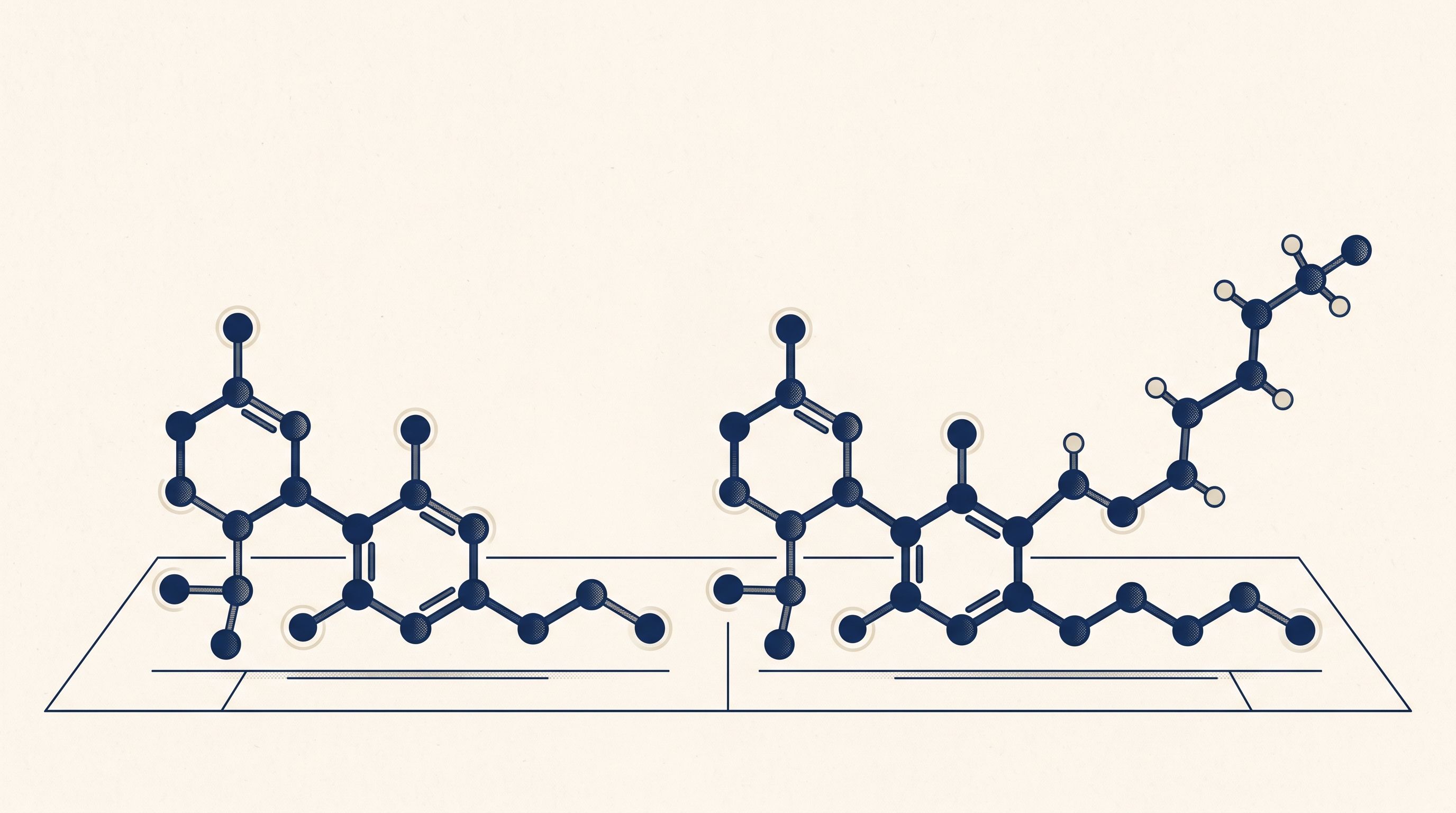
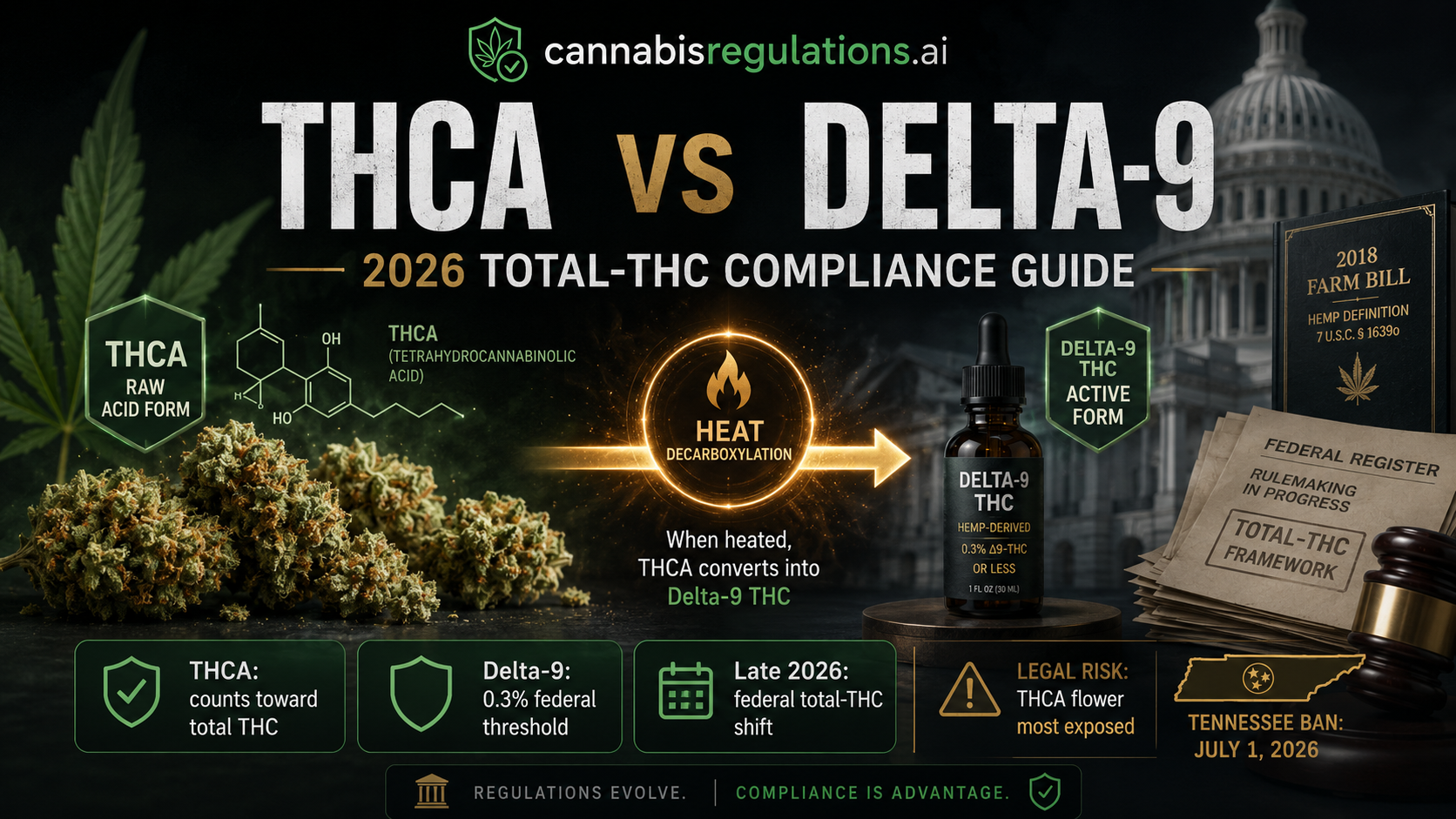
THCA, tetrahydrocannabinolic acid, is the raw, non-intoxicating acid form of THC found in living and freshly harvested cannabis. Delta-9 THC is the intoxicating compound THCA becomes when heated. The conversion is called decarboxylation: apply heat through smoking, vaping, or cooking, and THCA loses a carboxyl group and turns into delta-9 THC. In other words, high-THCA flower is, for practical purposes, a delta-9 THC product the moment a consumer uses it.
The 2018 Farm Bill defines hemp by its delta-9 THC content: no more than 0.3% by dry weight. Because raw THCA flower can test under 0.3% delta-9 while carrying very high THCA, a large market grew around selling intoxicating THCA flower as federally compliant hemp. That arbitrage depended entirely on the law measuring delta-9 alone, not the THCA that converts into it.
That arbitrage is ending. The federal hemp framework is moving toward a "total-THC" standard that accounts for THCA's conversion potential, paired with a strict per-container cap on THC. Under a total-THC formula, THCA is multiplied by a conversion factor and added to delta-9, which pushes most THCA flower well over the legal limit. This change is scheduled to take effect in late 2026, and it is the single most important development for THCA sellers.
States are moving on the same logic, sometimes faster. Tennessee finalized rules making THCA and other hemp-derived cannabinoid products illegal to sell starting July 1, 2026, and other states have adopted or proposed total-THC measurement. The direction is consistent: regulators increasingly treat high-THCA flower as what it functionally is, a delta-9 THC product.
FactorTHCADelta-9 THCIntoxicating as soldNo (raw acid form)YesIntoxicating after heatingYes (converts to delta-9)YesCurrent federal test basisOften under 0.3% delta-9 today0.3% dry-weight delta-9 lineUnder total-THC standardCounted toward THC via conversion factorCounted directly2026 trajectoryMost THCA flower becomes non-compliantDefinition tightens via total-THC and per-container cap
If your business depends on selling high-THCA flower as compliant hemp, the total-THC standard removes the legal basis for that model. Practical steps to take with counsel: recalculate your products under a total-THC formula now, not after the deadline; map which SKUs survive and which do not; plan inventory sell-through against the federal effective date and any earlier state deadlines such as Tennessee's July 1; and evaluate whether to pivot certain lines into state-licensed adult-use or medical channels where they may still be sold legally.
The federal change sets a national floor, but states are not waiting for it. Some, like Tennessee, have finalized bans with hard 2026 dates; others are adjusting testing methodology to capture total THC. The result is a patchwork in which a THCA product can be lawful in one state, restricted in a neighbor, and federally non-compliant once the total-THC standard lands. Operators shipping across state lines carry the most complex exposure.
Track the federal effective date for the total-THC standard and per-container cap, state-level deadlines (Tennessee's July 1, 2026 ban is the nearest hard date), and any testing-methodology guidance that defines the conversion factor. Each determines whether a given THCA product remains sellable.
This is not legal advice. Talk to your counsel about how the total-THC standard applies to your specific products and the states you serve.
Is THCA the same as delta-9 THC? No, but THCA converts into delta-9 THC when heated. That conversion is why regulators are moving to count THCA toward total THC.
Why is THCA flower being banned if it tests under 0.3% delta-9? Because the law is shifting from measuring delta-9 alone to measuring total THC, which includes THCA's conversion potential.
When does the federal total-THC change take effect? It is scheduled for late 2026. Some states, such as Tennessee, have earlier deadlines (July 1, 2026).
Will my THCA products still be legal somewhere? Possibly, through state-licensed adult-use or medical channels, depending on the state. They are unlikely to remain compliant in the hemp market once the total-THC standard applies.
The difference between THCA vs delta-9 used to be a chemistry footnote. In 2026 it has become the hinge of federal hemp policy. As the law moves toward measuring "total THC," the gap between these two molecules is closing, and operators who sell THCA flower are the most exposed. This guide compares the two and explains why the November federal change matters.
THCA, tetrahydrocannabinolic acid, is the raw, non-intoxicating acid form of THC found in living and freshly harvested cannabis. Delta-9 THC is the intoxicating compound THCA becomes when heated. The conversion is called decarboxylation: apply heat through smoking, vaping, or cooking, and THCA loses a carboxyl group and turns into delta-9 THC. In other words, high-THCA flower is, for practical purposes, a delta-9 THC product the moment a consumer uses it.
The 2018 Farm Bill defines hemp by its delta-9 THC content: no more than 0.3% by dry weight. Because raw THCA flower can test under 0.3% delta-9 while carrying very high THCA, a large market grew around selling intoxicating THCA flower as federally compliant hemp. That arbitrage depended entirely on the law measuring delta-9 alone, not the THCA that converts into it.
That arbitrage is ending. The federal hemp framework is moving toward a "total-THC" standard that accounts for THCA's conversion potential, paired with a strict per-container cap on THC. Under a total-THC formula, THCA is multiplied by a conversion factor and added to delta-9, which pushes most THCA flower well over the legal limit. This change is scheduled to take effect in late 2026, and it is the single most important development for THCA sellers.
States are moving on the same logic, sometimes faster. Tennessee finalized rules making THCA and other hemp-derived cannabinoid products illegal to sell starting July 1, 2026, and other states have adopted or proposed total-THC measurement. The direction is consistent: regulators increasingly treat high-THCA flower as what it functionally is, a delta-9 THC product.
FactorTHCADelta-9 THCIntoxicating as soldNo (raw acid form)YesIntoxicating after heatingYes (converts to delta-9)YesCurrent federal test basisOften under 0.3% delta-9 today0.3% dry-weight delta-9 lineUnder total-THC standardCounted toward THC via conversion factorCounted directly2026 trajectoryMost THCA flower becomes non-compliantDefinition tightens via total-THC and per-container cap
If your business depends on selling high-THCA flower as compliant hemp, the total-THC standard removes the legal basis for that model. Practical steps to take with counsel: recalculate your products under a total-THC formula now, not after the deadline; map which SKUs survive and which do not; plan inventory sell-through against the federal effective date and any earlier state deadlines such as Tennessee's July 1; and evaluate whether to pivot certain lines into state-licensed adult-use or medical channels where they may still be sold legally.
The federal change sets a national floor, but states are not waiting for it. Some, like Tennessee, have finalized bans with hard 2026 dates; others are adjusting testing methodology to capture total THC. The result is a patchwork in which a THCA product can be lawful in one state, restricted in a neighbor, and federally non-compliant once the total-THC standard lands. Operators shipping across state lines carry the most complex exposure.
Track the federal effective date for the total-THC standard and per-container cap, state-level deadlines (Tennessee's July 1, 2026 ban is the nearest hard date), and any testing-methodology guidance that defines the conversion factor. Each determines whether a given THCA product remains sellable.
This is not legal advice. Talk to your counsel about how the total-THC standard applies to your specific products and the states you serve.
Is THCA the same as delta-9 THC? No, but THCA converts into delta-9 THC when heated. That conversion is why regulators are moving to count THCA toward total THC.
Why is THCA flower being banned if it tests under 0.3% delta-9? Because the law is shifting from measuring delta-9 alone to measuring total THC, which includes THCA's conversion potential.
When does the federal total-THC change take effect? It is scheduled for late 2026. Some states, such as Tennessee, have earlier deadlines (July 1, 2026).
Will my THCA products still be legal somewhere? Possibly, through state-licensed adult-use or medical channels, depending on the state. They are unlikely to remain compliant in the hemp market once the total-THC standard applies.
