


Sign Up
Ready to replace complexity with clarity?
Answer your real world compliance questions (limited time) and save thousands in legal fees and avoided fines.
Automate Compliance Today

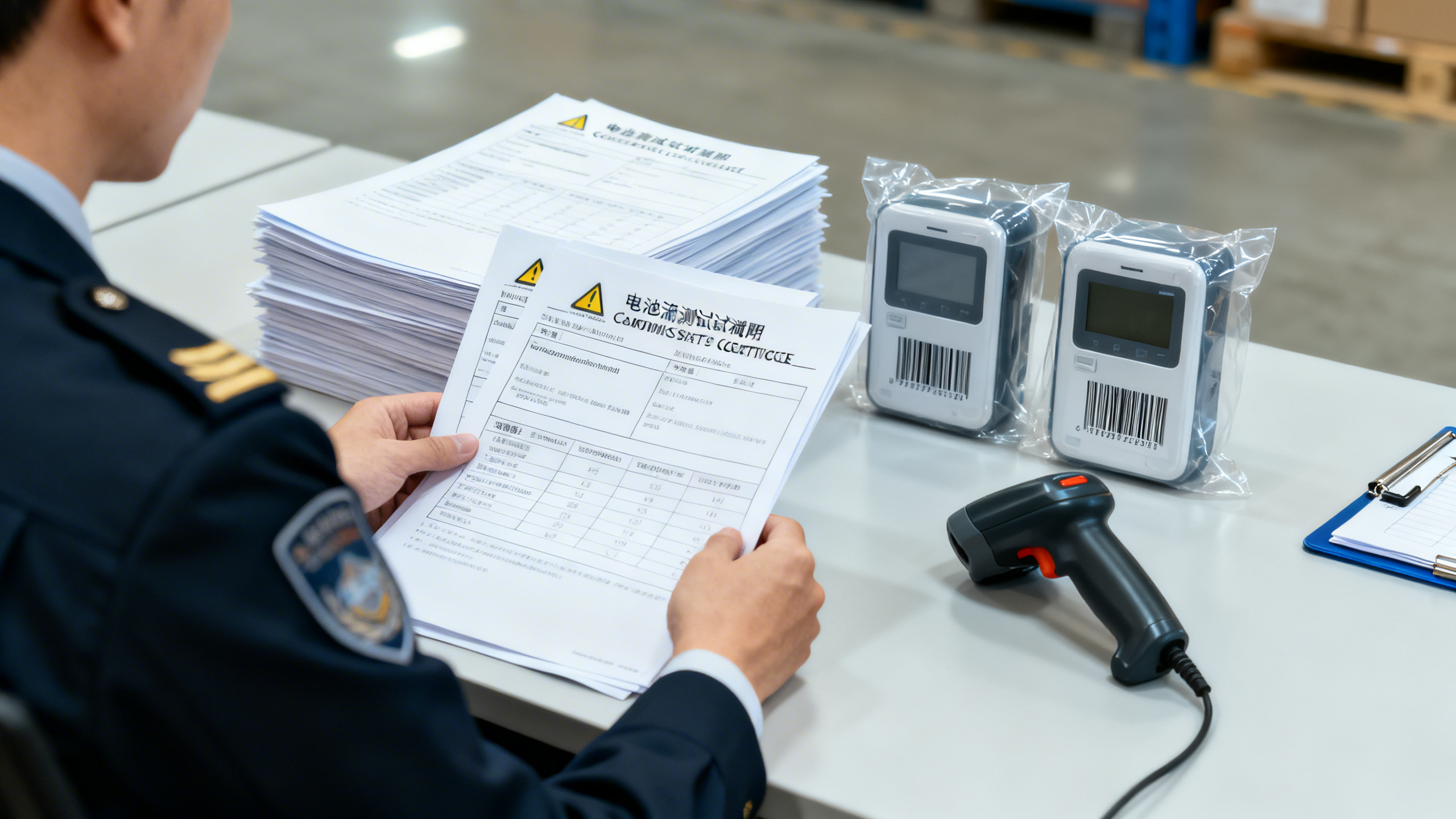
Retailers and distributors selling vape batteries, cartridges, and all-in-one devices in the United States are operating in a tighter risk environment than they were even a year ago. Two trends are converging:
For 2025 procurement, the most defensible approach is to treat vape hardware like any other high-liability consumer electronics product: require independent safety certifications, verify transport test documentation, and maintain traceability so that if something goes wrong you can contain it fast.
This post provides an informational (not legal advice) checklist built around three standards/documents that increasingly show up in retailer due diligence:
The focus keyword, used intentionally throughout: UL 8139 cannabis vape retailer liability 2025.
Retailers have always carried product liability exposure, but 2025 has brought more “downstream accountability” in three practical ways:
A battery failure is not just a “warranty issue.” It can become a premises incident, a consumer injury claim, a regulatory reporting event, and a hazmat shipping violation all at once.
UL 8139 is a safety standard used to evaluate the electrical, heating, battery, and charging systems of electronic cigarette/vape devices. UL describes UL 8139 as covering the electrical system including batteries and chargers, and evaluates protection circuits and controls to address hazards like fire and electric shock.
From a retailer liability perspective, UL 8139 matters because it’s a system-level evaluation. Many battery incidents are not just a “bad cell” problem—they’re a mismatch among:
Procurement takeaway: If you’re trying to reduce UL 8139 cannabis vape retailer liability 2025 exposure, the question is not “does the vendor say it’s safe?” but “can the vendor prove the device’s electrical system was evaluated to an appropriate safety standard by a credible lab?”
Ask for:
Also require in writing that:
IEC 62133-2 is a widely used international standard covering requirements and tests for the safe operation of portable sealed secondary lithium cells and batteries under intended use and reasonably foreseeable misuse.
Retailers usually don’t buy bare cells, but many vape devices include small lithium-ion cells where quality varies dramatically across suppliers.
Procurement takeaway: UL 8139 helps address system-level risk; IEC 62133-2 helps address cell and pack-level safety integrity. Together, they reduce the odds that a cheap cell or poorly assembled pack becomes the weak link.
Ask for:
Red flags:
UN 38.3 is part of the UN Manual of Tests and Criteria and is globally used to show that lithium cells/batteries can withstand conditions encountered during transport. The UN 38.3 test series includes eight tests (commonly described as T.1 through T.8), including altitude simulation, thermal testing, vibration, shock, external short circuit, impact/crush, overcharge, and forced discharge.
In the U.S., DOT’s Pipeline and Hazardous Materials Safety Administration (PHMSA) provides guidance on lithium battery test summaries and the requirement to make them available under the hazardous materials rules.
Procurement takeaway: UN 38.3 is not a “nice to have.” If you ship devices, handle returns, or move inventory between facilities, transport compliance becomes operational. Lack of UN 38.3 documentation can convert a normal logistics workflow into a hazmat exception workflow.
Ask for:
If a vendor sends you a “UN 38.3 certificate” with no test summary elements, treat it as incomplete. PHMSA’s guidance emphasizes a standardized set of elements for traceability and accountability.
Even if your state allows retail sales, shipping devices and components can trigger additional constraints.
USPS incorporated statutory restrictions on mailing ENDS into Publication 52 (effective October 21, 2021), and Pub 52 continues to treat ENDS as generally nonmailable except for limited exceptions.
Retailer takeaway: If your returns program involves mailing devices back to a vendor or sending replacements to customers, you need a written, compliant pathway. Don’t assume “we can just ship it back” is acceptable.
FedEx’s published guidance states that tobacco and tobacco products are prohibited for shipment.
Practically, many vendors treat vape hardware as falling within restricted categories for certain services or accounts.
Retailer takeaway: Your SOP should specify which carriers/services your business is allowed to use for device shipments and which are prohibited.
Even though this post is U.S.-wide, retailers should remember that product compliance is state-specific. Hardware due diligence does not replace state packaging/labeling/testing rules; it complements them.
A few examples of state-level “overlay” areas that often intersect with hardware decisions:
California’s Department of Cannabis Control provides a checklist and guidance for packaging requirements and includes specific statutory references for vape cartridges and integrated vaporizers.
Retailer takeaway: If you private label or co-pack, make sure your hardware/packaging combination meets child-resistant packaging and state-specific labeling restrictions.
Washington’s Liquor and Cannabis Board has published guidance on vapor product ingredient disclosures and related rules.
Retailer takeaway: For cartridges and any inhalable product sold in your stores, ingredient conformity is increasingly part of the safety conversation. In 2025 procurement, you should ask for ingredient documentation for diluents/terpenes/flavorants, not just potency.
New York OCM has published a document focused on requirements for flavored vaporized or inhaled products.
Retailer takeaway: Even if you are only buying hardware, your procurement team should coordinate with merchandising so you don’t end up with incompatible SKUs (e.g., devices designed to pair with products that cannot be sold in a given state).
Use the checklist below to operationalize UL 8139 cannabis vape retailer liability 2025 controls.
For each device SKU:
For each cartridge/consumable SKU (where applicable):
Update your supply and brand agreements to include:
At receiving:
Why this matters: Many state recall communications and enforcement actions are lot-number driven. If you can’t map inventory and sales to lots, containment becomes slow and expensive.
Train staff on:
Also set an SOP for customer interactions:
If you operate e-commerce or multi-state distribution, consider having a designated hazmat-trained shipping role or 3PL support for any battery-containing returns.
If an incident occurs, a retailer’s best defense is usually not a perfect product (no one can guarantee that), but a documented, reasonable compliance program.
A defensible file typically includes:
This is the practical core of reducing UL 8139 cannabis vape retailer liability 2025—showing that you did not ignore foreseeable risks.
If you’re updating your 2025 procurement standards, vendor agreements, and store-level SOPs, CannabisRegulations.ai can help you turn these requirements into repeatable controls—so your team can buy, sell, and handle returns with confidence.
Build and maintain your compliance checklists, documentation requirements, and recall-ready traceability workflows with https://www.cannabisregulations.ai/.